Blog

A Deeper Look into The Effects of Body Tempering

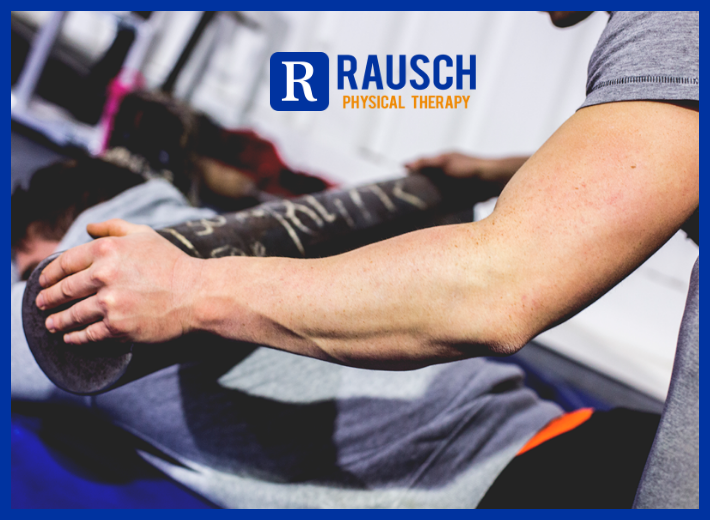
Body tempering is an emerging method of myofascial treatment that involves applying a weighted steel cylinder to a muscle group to manipulate the tissue passively under the device. Unlike foam rolling, which is an active process, body tempering is passive, allowing the client to relax and, by knowing the mass of the device in use, the pressure can be controlled and consistent. 

Laguna Niguel PT Dr. Patrick conducted a comprehensive study to scientifically explore the additional benefits of body tempering on soreness, range of motion (ROM), vertical jump performance, and maximal strength in D1 football players — and his efforts, process, and data are recently published!

The premise of the study:

There has been limited research to explore the use of body tempering and when the use of this modality would be most appropriate. This study aimed to determine if a body tempering intervention would be appropriate pre-exercise by examining its effects on perceived soreness, range of motion (ROM), and force production compared to an intervention of traditional stretching.

The subjects for this study were ten Division 1 (D1) football linemen from Sacred Heart University (Age: 19.9 ± 1.5 years, body mass: 130.9 ± 12.0 kg, height: 188.4 ± 5.1 cm, training age: 8.0 ± 3.5 years). Subjects participated in three sessions with the first session being baseline testing. The second and third sessions involved the participants being randomized to receive either the body tempering or stretching intervention for the second session and then receiving the other intervention the final week. Soreness using a visual analog scale (VAS), ROM, counter movement jump (CMJ) peak force and jump height, static jump (SJ) peak force and jump height, and isometric mid-thigh pull max force production were assessed.

The results of the study concluded that body tempering does not have a negative effect on muscle performance but did practically reduce perceived muscle soreness. Since body tempering is effective at reducing soreness in athletes, it can be recommended for athletes as part of their pre-exercise warmup without negatively affecting isometric or dynamic force production.

Have a further look at this fantastic accomplishment and valuable information here: https://www.mdpi.com/2411-5142/7/1/9/htm

The entire team at Rausch Physical Therapy is committed to providing the best patient care, and we will explore the most effective methods of treatment ourselves to ensure we deliver! Come and see us for outstanding personalized care to improve your health and well-being! Call us today at (949) 276-5401 or visit our Facebook page here.

Power Training for Older Adults

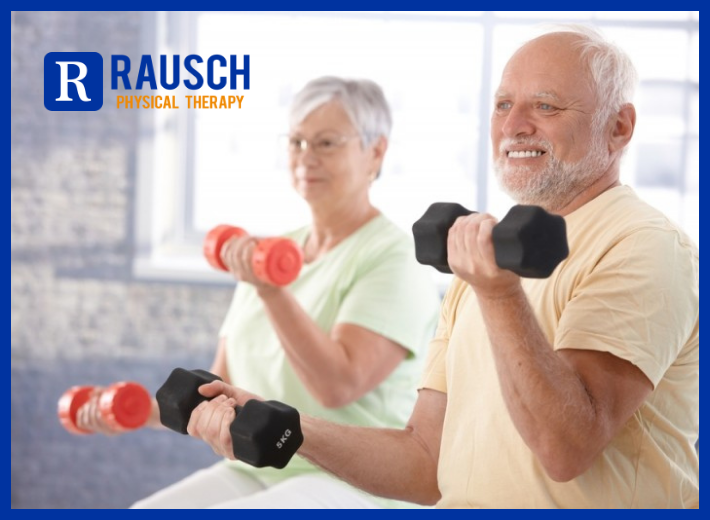
One of the main issues facing older adults is balance. Falling — or fear of falling — can lead to activity avoidance, ultimately resulting in a loss of function and independence. Power training is an indispensable and often underutilized training method for older adults.

Power is strength multiplied by speed. Strength is an important focus, though if your foot is not fast enough to get into position to maintain your balance, then it doesn’t matter how strong you are. The opposite is also true; if you can move your foot fast enough to increase your base of support, but do not have the strength to keep yourself up, then a fall is likely.

A combination of strength and speed training is vital for staying upright and remaining functional. Talk to a physical therapist today if you feel unsteady or are fearful of falling.

Rausch Physical Therapy remains your caring team and can accommodate you with a specific, personalized plan that suits your needs and goals. Visit our Facebook page or call us at (949) 276-5401. 

7 Easy Ways Runners Actually Make Their Morning Workouts Happen

When it comes to exercise, the best time of day to get in a workout session is one time when you can get it done with any kind of consistency. The “right” time depends on factors like your preference, lifestyle, and body (and kids and work — they fall into that ‘lifestyle’ category, but they really could have their own!!). While there isn’t a one-size-fits-all answer, an early morning workout offers numerous benefits, both to your health and to your daily schedule. Let’s look at the potential perks of an early sweat session.

Runners who regularly log their miles before the sun rises may seem super motivated, super disciplined, and super human.

In reality though, most of the time they’ve just found that special sauce that makes morning workouts doable. But how? According to the a.m. runners below, there are a few things you can do to up your odds of making those sunrise sweat sessions happen.

Read on for 7 tips to motivate your own morning runs.

1. Get seriously psyched

“Get excited for life! Leap out of bed! The world is waiting! I find that if you approach your day with open energy, you’ll see how the day meets you back,” says Olivia Young, owner of Box+Flow fitness studio in New York City. “I prefer lacing up my sneakers and taking on the world while everyone else is sleeping. I get a head-start on my day, and I feel free. Remember, the only thing stopping you is you. So change that, and go.”

2. Stop telling yourself you’re too tired

“When my alarm goes off, all I can think about is resetting [it] to sleep just a little more before I go to work—which would cause me to either significantly shorten or entirely skip an early morning run,” says Emily Saul, co-leader of the November Project Boston. “So I remind myself that that small amount of sleep is not going to make me bright-eyed and refreshed! But I know for certain that starting my day with a run will make me feel more alive, awake, and ready to take on my day.”

3. Consider how the rest of your day will go

“Getting up and out of my nice, warm bed each morning to run is definitely hard,” admits Janae Baron, AKA Hungry Runner Girl. “So I remind myself that by going out for a run and doing the hard thing, my entire day will actually be a lot easier. I’m more patient with my kids, I have more energy, I feel happier, and I get in some much-needed alone time. Just knowing I’ll feel better the entire day if I get up and work out motivates me to get out there and work hard toward my goals.”

4. Change “have to” to “get to”

“Watching the day come to life is a moment most people don’t get to experience when they’re cozy in their beds,” says Saul. “And yeah, sometimes I just don’t want to. I don’t pretend I do want to—I remind myself that wanting to and choosing to are independent experiences. On the days I’ve planned to run and my alarm goes off and I just don’t want to run, I acknowledge the statement, let go of the judgment that creeps in, and shift my perspective. I don’t have to go running, and I may not want to, but I can. I get to. Running is a privilege not to take for granted.”

5. Plan, plan, plan

“I plan everything the night before,” explains Bianna Golodryga, CBS News correspondent and CNN contributor. “I check the weather forecast and I lay out my clothes accordingly so they’re easily accessible and my charged, wireless headphones out so they, too, are quick to find and put on. I’m a huge fan of podcasts, so I mentally pick the ones I plan on listening to, depending on the distance I’m running that morning. Finally, I set my alarm 10 to 15 minutes early so I can afford myself a few minutes of snooze time before I get up.”

6. Remember your why

“It’s important for me to think about why I run, and when I don’t feel like getting out there, my why helps to motivate me,” Baron says. “I also love having a coach that sends me my workouts each week. Knowing that I have somebody to report back to about getting out there and running each morning makes jumping out of bed a lot easier.” 

7. Buddy up

“I never skip the workouts I’ve agreed to do with someone,” says Saul. “When I know my friend is getting up, too, I find it easier to just commit to getting up and showing up. At November Project, we call these people our ‘accountabilibuddies’—and they work!”

Push your limits and elevate your performance  — and eliminate pain while increasing mobility — with a customized physical therapy program.  Let us help you perfect your form and increase your performance. Contact our experts today at (949) 597-0007 and join our Facebook community here. Remember — you don’t need a doctor’s prescription to see us!


Reference: [https://www.wellandgood.com/breakfast-on-the-go-walmart/]

How To Avoid Exercise Injuries

If you’re one of the many who have made a goal to live life with less pain (aka — all of us!), we’re here to encourage you to choose physical therapy! PT can get you on the path to functioning better and to a higher quality of life while helping you reach some important goals. Here, we bring you some tips on how to avoid exercise injuries. With a little planning, you can stay safe during your activities and start the new year pain-free. Come and see us to learn first-hand how to avoid repetition injuries and maintain excellent form. No prescription is needed — AND we are a super fun group to get healthy with!

Regular exercise is good for your body and safe for most everyone. However, with any type of activity, there is a chance you can get hurt. Exercise injuries can range from strains and sprains to back pain.

With a little planning, you can prevent injury and stay safe during exercise.

What Causes Exercise Injuries?

Some of the most common causes of exercise injuries include:

  • Exercising before your body has warmed up
  • Repeating the same motion over and over again
  • Not having proper form for your exercise
  • Not resting in between workouts
  • Pushing your body too hard or too quickly
  • Doing an exercise that is too strenuous for your level of fitness
  • Not using proper equipment

Warm up and Cool Down

Warming up before exercise gets your blood flowing, warms up your muscles, and helps you avoid injury. The easiest way to warm up is to exercise slowly for the first few minutes, then pick up the pace. For example, before running, walk briskly for 5 to 10 minutes.

You should also cool down after exercise to bring your heart rate and body temperature back to normal. Cool down by ending your routine at a slower pace for the last 5 to 10 minutes.

To Stretch or not to Stretch

To stay flexible, you should stretch at least 2 times a week. But it is unclear whether stretching really helps reduce injury.

You can stretch either after you have warmed up or after you exercise.

  • Do not stretch cold muscles.
  • Hold stretches for no longer than 15 to 30 seconds.
  • Do not bounce.

Choose Your Exercise Wisely


If you have not been active, or have a health condition, talk with your health care provider to make sure you are healthy enough for exercise. Ask what types of exercise might be best for you.

If you are new to exercise, you may want to start with low-intensity options such as:

  • Walking
  • Swimming
  • Riding a stationary bike
  • Golf

These types of exercise are less likely to cause injury than higher-impact activities like running or aerobics. Contact sports like soccer or basketball are also more likely to cause injury.

Use the Right Equipment

Using safety equipment can greatly reduce your risk of injury.

Safety equipment for your sport may include:

  • Footwear
  • Helmets
  • Mouth guards
  • Goggles
  • Shin guards or other protective guards
  • Kneepads

Be sure you use the right type of equipment for your sport. For example, do not play tennis in running shoes. Wear a ski helmet, not a bike helmet, when downhill skiing.

Make sure your exercise equipment:

  • Fits you properly
  • Is the right design for your sport or activity
  • Is in good working condition
  • Is used correctly and consistently

Learn Good Form

If you are new to an exercise or sport, consider taking lessons to learn the basics. Learning the right way to do an exercise or sport can help prevent injury. Look for lessons in your community or through sports or outdoors organizations. You can also consider hiring a personal trainer.

Cross Train

To help prevent overuse injuries, vary your workouts. For example, instead of running 3 days a week, cycle 1 day and run 2. You will use a different set of muscles, and still get a good workout.

Listen to Your Body

Forget the old saying “no pain, no gain.” Of course, to build strength and stamina, you will need to push your body. The key is to push slowly and gradually. You can expect sore muscles after your workout. But you should never feel pain when exercising. If you feel pain, stop right away.

Being tired all the time can also be a sign that you may be overdoing it. In general, avoid increasing these 3 things all at the same time:

  • Number of days you exercise
  • Length of time you exercise
  • How hard you work out

If you do have an injury, you can try to treat strains and sprains at home.

When to Call the Doctor

Call your provider for any muscle or joint pain that does not go away after self-care.

Go to the hospital right away or call 911 or the local emergency number if:

  • You have chest pain during or after exercise.
  • You think you have a broken bone.
  • The joint appears out of position.
  • You have a serious injury or severe pain or bleeding.
  • You hear a popping sound and have immediate problems using the joint.

2022 is the year to push your limits and elevate your performance with a customized physical therapy program. Let us help you perfect your form and increase performance. Contact our experts today at (949) 597-0007 and join our Facebook community here.


Reference:[https://medlineplus.gov/ency/patientinstructions/000859.htm]

What To Know About Exercise And How To Start

January is a great month to start exercising and sticking to it. This is the year, darn it! Figuring out how to start a workout regime, however, can be a challenge. A significant part of staying healthy and strong is keeping physically active. An exercise program should be a regular activity when it comes to maintaining your general health. Learn more about exercising and how to get started. Remember; we are here to help and support — especially as it relates to making sure your exercise journey is pain-free! 

Exercise involves engaging in physical activity and increasing the heart rate beyond resting levels. It is an important part of preserving physical and mental health.

Whether people engage in light exercise, such as going for a walk, or high intensity activities, for example, uphill cycling or weight training, regular exercise provides a huge range of benefits for the body and mind.

Taking part in exercise of any intensity every day is essential for preventing a range of diseases and other health issues.

In this article, we explain the different types of exercise and their benefits, as well as the considerations for designing a fitness regime.

Types and benefits

People divide exercise into three broad categories:

  • aerobic
  • anaerobic
  • agility training

We describe each of these categories below.

Aerobic exercise


Aerobic exercise aims to improve how the body uses oxygen. Most aerobic exercise takes place at average levels of intensity over longer periods.

An aerobic exercise session involves warming up, exercising for at least 20 minutes, and then cooling down. Aerobic exercise mostly uses large muscle groups.

Aerobic exercise provides the following benefits:

  • improves muscle strength in the lungs, heart, and whole body
  • lowers blood pressure
  • improves circulation and blood flow in the muscles
  • increases the red blood cell count to enhance oxygen transportation
  • reduces the risk of diabetes, stroke, and cardiovascular disease (CVD)
  • improves life expectancy and symptoms for people with coronary artery diseases
  • stimulates bone growth and reduces the risk of osteoporosis when at high intensity
  • improves sleep hygiene
  • enhances stamina by increasing the body’s ability to store energy molecules, such as fats and carbohydrates, within muscle

Anaerobic exercise

Anaerobic exercise does not use oxygen for energy. People use this type of exercise to build power, strength, and muscle mass.

These exercises are high-intensity activities that should last no longer than around 2 minutes. Anaerobic exercises include:

  • weightlifting
  • sprinting
  • intensive and fast skipping with a rope
  • interval training
  • isometrics
  • any rapid burst of intense activity

While all exercise benefits the heart and lungs, anaerobic exercise provides fewer benefits for cardiovascular health than aerobic exercise and uses fewer calories. However, it is more effective than aerobic exercise for building muscle and improving strength.

Increasing muscle mass causes the body to burn more fat, even when resting. Muscle is the most efficient tissue for burning fat in the body.

Agility training

Agility training aims to improve a person’s ability to maintain control while speeding up, slowing down, and changing direction.

In tennis, for example, agility training helps a player maintain control over their court positioning through good recovery after each shot.

People who take part in sports that heavily rely on positioning, coordination, speed, and balance need to engage in agility training regularly.

The following sports are examples of ones that require agility:

  • tennis
  • American football
  • hockey
  • badminton
  • volleyball
  • basketball
  • soccer
  • martial arts
  • boxing
  • wrestling

Stretching and flexibility


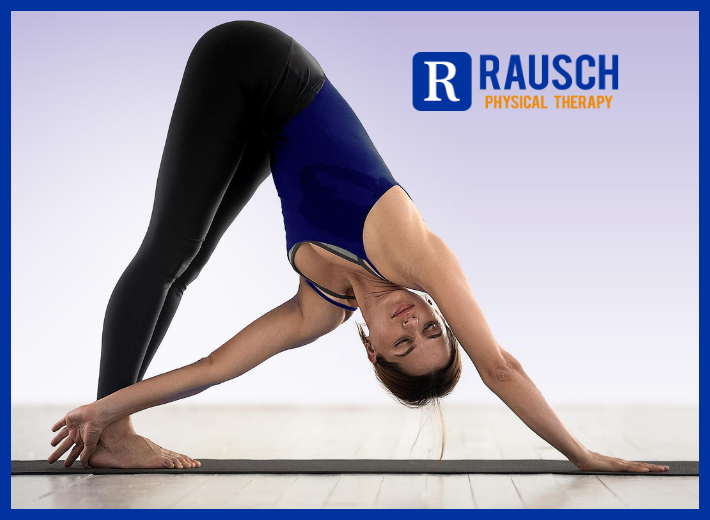
Some exercises combine stretching, muscle conditioning, and balance training. A popular and effective example is yoga.

Yoga movements improve balance, flexibility, posture, and circulation.

The practice originated in India thousands of years ago and aims to unify the mind, body, and spirit. Modern yoga uses a combination of meditation, posture, and breathing exercises to achieve the same goals.

A yoga practitioner can tailor a course for individual needs.

A person looking to manage arthritis might need gentle stretches to improve mobility and function. Someone with depression, on the other hand, may need more emphasis on the relaxation and deep breathing elements of yoga.

Pilates is another stretching option that promotes flexibility and core strength. Tai chi is also an effective option for exercise that promotes calm stretching rather than intensity.

Rausch PT professionals have the skill and expertise you need to correct your posture, decrease pain, and increase mobility. We provide treatments that help improve and restore function and get you pain-free — with no prescription from a doctor required. Call our experts today at (949) 276-5401 and make an appointment. We would also love to have you join our Facebook community where you can get health and wellness updates and learn about what we have to offer ongoing!


Reference: [https://www.medicalnewstoday.com/articles/153390]

Why Ideal Posture May Help Relieve Your Back Pain

We usually underestimate how the physical demands from our daily life can affect our posture. Lifting, carrying, and sitting poorly can cause repetitive stress injuries and affect our back health. By becoming aware of how you’re moving and adopting some good habits, you can start to promote better posture and overall health. Learn more about how your ideal posture might help relieve your back pain. Need help? We are here to help you solve your back issues once and for all — not a mere band-aid! 

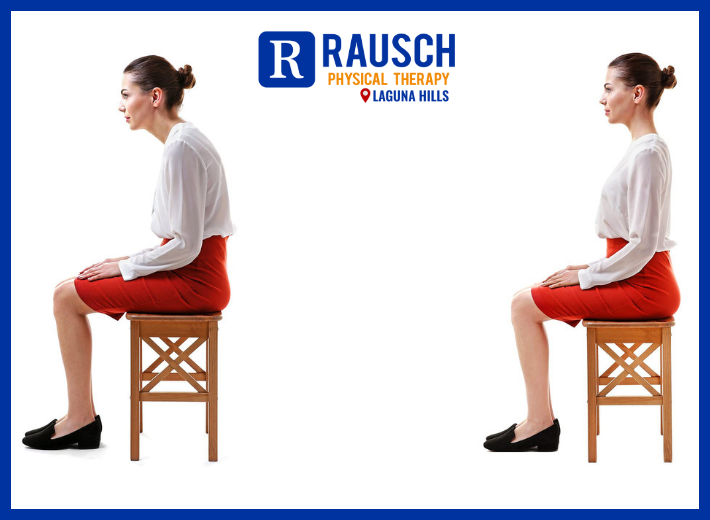
If it seems like the perfect, ideal posture, where the upper back is straight and not rounded, and the lower back has a gentle sweeping curve that neither slouches nor over arches, is more the exception than the rule, you may not be too far off from the truth. Most people don’t know that getting good posture takes work. Without making daily efforts towards an ideal posture, you may over time find that moving around without pain requires even more work than would a preventative program.

What Ideal Posture and Good Body Alignment Have in Common

Ideal posture is really about body alignment; in other words, the way your structural parts such as head, trunk, hips, knees, etc., relate to your form as a whole.

Whether you’re standing, sitting, lying down or moving, the body parts need to be balanced in order for ideal posture to take place.

Types of Posture

When you’re sitting or standing still, posture is considered to be static, and when you’re moving, it’s considered dynamic. Both static and dynamic postures are categorized as active postures.

If you’re lying down and doing nothing, this is known as inactive posture.

Proper Alignment Underlies Ideal Posture

You’re probably pretty close to ideal posture when you can get your head, shoulders, spine, hips, knees, and ankles to all line up well with one another. Also called proper alignment, this state of body balance underlies everything from a good workstation and industrial ergonomics to successful back surgery. In general, though, establishing and maintaining good body alignment may be one way you can reduce, or even eliminate, undue stress on your spine.

Any of the above types of posture may be ideal or non-ideal. This where body alignment comes in.

Ideal alignment is a standard and (mostly theoretical) position in which all joints of the body are centered and balanced. Ideal alignment is the most mechanically efficient position for any given activity, whether static or dynamic.

Why is this important? Because mechanical efficiency enables the muscles that surround your joints to work in balance, which in turn, may help reduce strain, tension, and injury. Balanced muscles conserve energy, too.

Instead, most of us are “creatures of habit”—meaning over time, we’ve developed certain habits in our joint positioning that may lead to imbalanced muscles. When this is the case, some muscles become chronically stretched while others become chronically tight—all in an effort to hold you up or move you around. Imbalanced muscles often lead to pain or movement limitation.

Have You Had a Posture Assessment?

According to physical therapists Kendall and Kendall, in their landmark reference book, Muscles: Testing and Function (with Posture and Pain) the best way to determine if one’s posture is ideal or less than ideal is by looking at joint positions and gathering visual information about the planes into which parts of each joint move, as well as the axes around which those movements occur. This is called a posture assessment.

In a posture assessment, your body alignment is compared with the ideal standard, which is in the form of a plumb line. The plumb line is usually a string with a small weight attached to the bottom to help keep it straight. The other end of the string is affixed to the ceiling so that it can be used as an accurate reference for ideal alignment.

During a posture assessment, you stand next to the plumb line while your evaluator compares the relative positions of the following parts to it:

  • ears
  • shoulder joint
  • spine
  • hip joint
  • knee joint
  • ankle joint
  • feet

If any of the parts don’t line up with the reference, this may signify misalignments in one or more areas.

The good news is that body misalignments such as these can quite often be addressed by stretching, strengthening, and developing core strength, along with developing good sitting, standing and resting posture habits. That said, it’s important to work with a qualified, licensed physical therapist in order to use exercise to achieve ideal posture.

Rausch PT Laguna Hills professionals have the skill and expertise you need to correct your posture. We provide treatments that help improve and restore function and reduce pain – with no prescription from a doctor required. Call our experts today at (949) 597-0007 and make an appointment. We would also love to have you join our Facebook community where you can get health and wellness updates and learn about what we have to offer ongoing!


Reference: [https://www.verywellhealth.com/ideal-alignment-296929]

Patient Spotlight – Dr. Kristen & Emily

During Emily’s annual OBGYN exam she mentioned the pain she was feeling during intercourse to her gynecologist. When her gynecologist examined her she asked Emily to relax while doing so and that is when Emily realized she had no idea how to relax her pelvic floor muscles. Her gynecologist informed her that her pelvic muscles were tighter than normal! That is when she was referred to Physical Therapy. Emily’s gynecologist assured her that she wasn’t alone and that pain during sex was NOT normal. She told her that she would benefit from Pelvic Floor Physical Therapy and Emily was willing to do anything that might help!

After Emily’s first visit at Rausch Physical Therapy, her pelvic floor therapist, Dr. Kristen, diagnosed her with vaginismus. Dr. Kristen made it very clear that visits with her were not scary, she was there to help her physically and mentally. Through Pelvic Floor Physical Therapy, Emily learned reverse kegle exercises that helped her relax before and during sex. Through these exercises and realizing that she shouldn’t try intercourse without being aroused, she believes that she is starting to heal! Emily’s life has changed astronomically through pelvic floor therapy. She no longer endures pain during sex, allows herself to be fully aroused before sex and she believes her sex drive is slowly coming back due to no longer associating pain with sex!