
Blog

Home Exercise Programs: The Key to Recovery

LF-BLOG
BY LYNDSAY DEFILIPPO, DPT, RAUSCH PHYSICAL THERAPY

If you have ever undergone physical therapy, chances are that at one time or another you have received a home exercise program (HEP) from your therapist. As a physical therapist, I do my best to stress to my patients how crucial HEPs are to their recovery, but despite my best efforts I’ve found that only a small percentage of patients ever complete their program. And I get it! The whole reason you schedule a PT appointment is so you can focus on your recovery for a solid hour because outside those clinic doors you have a busy life and schedule. Sure you’ll plan to do your HEP after work, or after you put the kids to sleep, or before bed, or you’ll wake up early tomorrow… but slowly it disappears off the “to-do” list. Unfortunately when that happens, your recovery ebbs and flows instead of you making continued progress.

So, stop sabotaging your recovery! Completing your HEP will aid in a quicker, more successful long-term recovery. Once you’ve decided to commit yourself to your health, wellness and recovery, it’s actually very easy to incorporate a program into your daily routine, even with the busiest of schedules and with little to no equipment.

I’ve made a list of the four most common HEP-related complaints I hear on a daily basis, as well as some accompanying tips and tricks on how to stay compliant with your HEP simply by getting creative and making the choice to commit to YOU!

Complaint 1: I don’t have time to perform the program every day.

Solution: Incorporate portions of your program throughout your day.

If you don’t have time to complete all your exercises in one sitting, try spreading them throughout the day instead. Practice your single leg balance, heel raises, toe yoga, arch lifts, etc. while brushing your teeth. While you’re waiting in line for your morning coffee, stuck in traffic, or taking a break from the computer, do your chin tucks, neck stretches, or shoulder squeezes. If you’re a student and are unable to participate in the demands of gym class or sports because of your injury, perform your home program during practice/class time. Finding those little spaces in your day to sneak in an exercise or two will ensure you are keeping up with your program—without jeopardizing your free time.

Complaint 2: There are just so many exercises…

Solution: Ask your PT to prioritize your exercise list.

As you get better and are able to do more, your HEP also progresses and consequently might seem more lengthy than it was in the first few sessions. I find that a huge list of exercises often gives patients anxiety, which is one of the reasons I tend to start my patients off with two to three exercises, then build accordingly. Although the basic fundamentals are always important as they are your building blocks, you can discuss with your therapist the most important exercises for you to complete at your current status and break them up throughout the day.

Complaint 3: How am I supposed to perform the exercises if I don’t have the equipment!?

Solution: Not all exercises require the exact equipment we have at the clinic—get creative!

By substituting in household items, you can still target certain muscle groups and movements and ensure you continue making progress without any clinical equipment. For example:

Clinic Equipment Household Substitute
STRETCH OUT STRAP Yoga strap, dog leash, belt from a bathrobe, regular belt, or long beach towel
1 LB. WEIGHT Full water bottle or soup can
CABLE COLUMN Resistance bands strapped over a door
FOAM MAT Bath towel folded multiple times or a pillow on a carpeted or secure surface
(Avoid placing on slick surfaces to decrease your chances of slipping!)
CUFF WEIGHT Insert a soup can or other weighted object in a purse or small bag; hang off your ankle for leg lifts, knee extensions, etc.
SLIDERS Washcloth or towel on a hardwood floor
CALF SLANT BOARD Using a yoga strap/leash/belt/towel, perform the calf stretches in sitting position

**IMPORTANT** As with all exercise safety, please ask your therapist if you can substitute equipment, as this blog is only a recommendation and does not apply to all medical cases.

Complaint 4: I’m going on a work trip/vacation, so I won’t be able to do my HEP
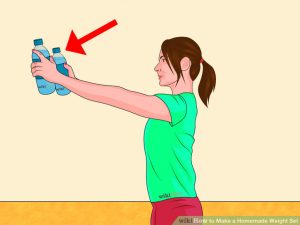
Photo Credit: WikiHow
Solution: Home exercise programs are designed to be done anywhere.

Most clinics will give you a print out of your home exercise program sheet, or in our clinic’s case, make it accessible online at homeprograms.net. This means that your HEP is accessible anywhere.The substitutions above are also great ways to stick to your program while you’re traveling, as most hotels offer water bottles, bathrobes with belts, towels, etc.

With summer coming up, incorporate and utilize your environment.

  • If your family lives in the pool all summer… Ask your PT if you would benefit from a water program.
  • Heading on a tropical vacation? Sand acts as an unstable/uneven surface to promote balance and proprioceptive training.
  • If your trip requires a long flight… It’s always good to incorporate a program to avoid prolonged sitting and potential for blood clots, such as frequent walking breaks, ankle pumps, heel raises, marching in place, etc.


BONUS QUESTION! BUT, if I were to purchase items, which do you recommend most?

Depending on the injury you are recovering from and the outlined program that your PT has developed for you, a few must have items I would recommend for continued health include:

  • Foam roller
  • Lacrosse ball
  • Stretch out strap
  • Portable resistance-style bands

At the end of the day, your PT cares about your recovery and s/he would not personally create your individualized home program if s/he didn’t think it would be beneficial. It’s important to also invest in your health and take all aspects of recovery seriously. Like all things, once you make the changes and incorporate your exercises into daily life, it will become routine and therefore easier to adhere to on a daily basis. You will also reap the rewards, and return to the things you love most that have inevitably been altered since your injury.

StaffHeadshot-Lynds
Lyndsay DeFilippo PT, DPT, CKTP received her Doctorate of Physical Therapy from New York University in 2010. She’s a Graston Practitioner and a Certified Kinesiotaping Practitioner. Lyndsay looks at each injury as a constantly changing puzzle, which is only solved when her patient returns to what s/he loves doing. She enjoys helping with the full recovery process, which includes providing the education, tools and fundamentals to prevent re-injury and the potential for new injuries.

Click to learn more about Lyndsay and our other physical therapists »

 

So, You Want to Be a Physical Therapist?

Blog-Jess
BY JESSICA SNYDER, DPT, RAUSCH PHYSICAL THERAPY

Hi, I’m Jessica, and I’m a doctor of physical therapy.

Jess-DPT
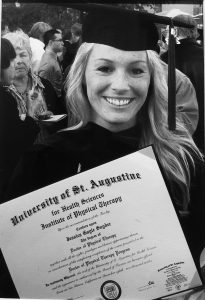
Rausch PT physical therapist Jessica Snyder receiving her doctorate in physical therapy in 2012.

As a licensed DPT, I treat many high school-aged patients (or their parents) who will often ask me what it takes to become a physical therapist. Since June is graduation month and there are thousands of high school students out there wrapping up one chapter of their life and looking to the next, let’s talk career planning and professional education for the field of physical therapy.

The Path to Becoming a Physical Therapist

Before you can even start down this career path, you must first complete your undergraduate education. After that, you’re on to… yep, more school! “PT school” is a graduate-level program that typically takes three years to complete. However, just like any other graduate program, getting in to PT school is a tough process. So, set yourself up for success and research the requirements for different PT schools while you’re still an undergrad.

Generally, all PT schools will require:

  1. Bachelor’s Degree
  2. Prerequisite Courses

Again, PT school is a graduate level, doctorate degree, so upon graduation, your formal title is “Doctor of Physical Therapy.” It is not a PhD.

Picking the Right Major for Your Future

The undergrad years are essentially “prep time” for anyone who is PT school-bound (or Physician’s Assistant school or Med school, for that matter.) You’ll spend your first few years completing your general education courses, and then you’ll move on to any and all courses required for your declared major.

As far as PT school is concerned, certain undergraduate degrees will transfer better than others into a graduate-level physical therapy program. For instance, most of the required PT school courses are already built in to an Applied Health, Kinesiology or Athletic Training/Sports Medicine major. So, of those three, which should you pick?

Applied Health

Essentially, pre-med. Applied Health is a great major if you think you may be interested in becoming a nurse (can be a undergrad/grad combo), occupational therapist (Master’s Degree), physician assistant (Master’s Degree), or some other healthcare profession (e.g. pharmacology, radiology, etc.) Pro: you have so many options and opportunities for grad school! BUT, you do have to go on to grad school. Applied Health is pre-med—something else has to follow 🙂

Kinesiology

Kinesio is a bit more targeted in your professional career options, but the coursework is not as demanding as Applied Health (there’s less emphasis on the “hard sciences.”) This would be a good option if you think you may want to go into biotech, product development or prosthetic device/adaptive equipment design. You could also go into teaching at the high school-level, however this would require that you complete a credentialing program (another two years of schooling after undergrad.)

Athletic Training

The biggest advantage to completing an Athletic Training Education Program (ATEP) is the amount of on-field, clinical experience you get as a student. You are hands-on with athletes and patients from the start, learning valuable evaluation, assessment and treatment skills , plus you get to spend less time in the lab and more time on the field! Pros: When you graduate, you can start working (and getting paid!) right away; you can work with sports teams at the high school, college, or professional level, or you can work in a PT clinic, hospital, or sports performance facility. Many ATEP graduates take the national board exam to become certified athletic trainers, which is something I highly recommend as it makes you more desirable both as an employee and as a PT school applicant.

The overarching “pro” of all of these majors is that you know that the majority of PT school prerequisites are already built into your undergraduate degree. Just remember that there may be a few classes that you will need to take as electives.

Planning for Prerequisite Courses

Every PT school has its own prerequisite coursework listed as a part of their application criteria, so check those lists and make sure you take all the necessary classes to avoid having to take those classes after you graduate (i.e. at a local junior college) before being able to apply to grad school. The Physical Therapy Centralized Application Service (PTCAS) website is a good tool for researching the general classes required by the majority of PT Schools (e.g. Anatomy, Physiology, one year of Chemistry, one year of Physics, certain psychology classes, etc.) so get organized early to ensure you at least take these classes. However, don’t forget to also check the program websites for your PT School(s) of choice to see if they might require some additional coursework. For instance, some schools require Trigonometry, while others are satisfied with College Algebra, so make sure you check!

Actions Speak Louder than Transcripts

While signing up for the right class or major can boost your chances of making it into PT School, your attitude and actions will inevitably decide whether you get that doctorate degree or not. As someone who’s been down this path before, here are my last bits of personal advice for realizing your dream of becoming a licensed doctor of physical therapy.

Graduates

  • Go the extra mile. PT school (well, graduate school in general) is getting more and more competitive! Take every opportunity to participate in research, internships, and volunteer opportunities to make yourself a more desirable candidate.
  • Be memorable and recommendable. You will need letters of recommendation from your professors and employers when applying to PT school, so earn them! Work hard, network, and stand out (in a good way.)
  • Act with your future in mind. In any healthcare field you must qualify for licensure, and all accrediting/licensing bodies—federal and state—will perform thorough background checks. Drug and alcohol use/violations, such as DUIs, are not taken lightly and can delay or even prevent you from receiving your license. Have fun in college, be “well-rounded,” but DON’T be stupid.
  • Think before you post. In our current time of social media, it’s good to remember that what happens on the internet, stays on the internet (Yes, even Snap Chat!) Trust me, I didn’t just make this up, I have friends in high tech places who will tell you that everything on the internet lives forever. Is it your dream to be a licensed doctor of physical therapy? Then keep that in mind when posting on social media.


StaffHeadshot-Jessica copyJessica Snyder (PT, DPT, ATC, CSCS) received her Doctor of Physical Therapy degree at the University of St Augustine for Health Sciences – with an emphasis on orthopedics, movement science, and manual therapy. Jessica started her career as a Certified Athletic Trainer working with high school, college and professional athletes. She is also a Certified Strength and Conditioning Specialist (enhancing her ability to build custom strength, stability and performance-centered rehabilitation and return-to-sport programs) and Certified Natural Running Coach. Being a runner herself, Jessica specializes in running-related injuries, including the entire lower extremity. She is also passionate about treating headaches and neck/shoulder pain.

Click to learn more about Jessica and our other physical therapists »
Rausch Physical Therapy Celebrates 10 Years of Innovation and Growth

LAGUNA NIGUEL, CA (May 2, 2016) – Rausch Physical Therapy & Sports Performance (Rausch PT)—a leader in the physical therapy field that specializes in taking patients from injury, to recovery, to peak performance—today announces the tenth anniversary of the company’s founding.

Kevin Rausch, president and owner of Rausch Physical Therapy & Sports Performance.Rausch PT was founded in 2006 by president and licensed physical therapist Kevin Rausch when he was 27 years old. While other privately-owned physical therapy clinics have seen little-to-no growth in recent years, with many having to close their doors, Rausch PT stands out in the field thanks to its president’s unique vision for operating physical therapy practices.

Since the start Rausch has aimed to be an innovator in the field of physical therapy. Rather than rely on a broken health care system and physician referrals, Rausch wanted to provide a holistic option for rehabilitation, preventative health and wellness. After moving from a 2,000 sq. ft. suite to a 9,000 sq. ft. one, the company not only expand its physical therapy practice, but also to added an on-site, full-service Pilates studio and massage therapist wing. An on-site sports performance lab was added a couple years later, boasting the kinds of technologies that one can typically only access as a professional athlete, including an AlterG® Anti-Gravity Treadmill® and Hypoxico Altitude Training System. In ten years Rausch PT has grown from one physical therapist and 2,500 annual visits, to six licensed PTs on staff and more than 18,000 annual visits.

“Our clinic has taken the lead by not only offering the most thorough and specific rehabilitation programs in the field, but also by integrating the latest rehab technology and on-site wellness offerings that you just cannot find anywhere else under one roof,” Rausch said. “I’m proud of what we’ve been able to accomplish as a company in the past 10 years, but more importantly I look forward to continuing to expand people’s minds on what physical therapy can be.”

While most people think of hospitals and nursing homes when they think of physical therapy, Rausch PT specializes in active patients who want to get back to doing what they love, whether that be completing an IRONMAN, jogging a 5K, or simply chasing after their kids. Instead of being clinical and sterile, Rausch modeled the feel of his PT clinic after his grandfather’s sports bar—a welcoming, intimate escape for therapy.

“We’re in the business of making people feel good, and I don’t just mean their injuries,” Rausch said. “I want patients to look forward to coming here because it’s social and fun, everyone knows your name, and everyone is rooting for you to achieve your goals.”

By offering the highest quality rehab programs and latest technological advances, Rausch PT has earned its reputation as the “go-to” clinic for Orange County triathletes, runners, swimmers and cyclists, in addition to patients who live active, on-the-go lifestyles. Clients include everyone from ultra-trail runners and amateur cyclists, to weekend warriors and moms-on-the-go.


About Rausch Physical Therapy

Founded in 2006, Rausch Physical Therapy & Sports Performance in Laguna Niguel, Calif. specializes in taking patients from injury, to recovery, to peak performance. Its sport-specific, licensed physical therapists combine their expertise in human mechanics with the clinic’s innovative rehabilitation and performance technologies to help its patients stay healthy and reach their goals.

For more information, contact casey@rauschpt.net (949) 276-5401 x 106 or visit rauschpt.net.

RauschPT-Logo

My Own Worst Patient

Blog-Jess
BY JESSICA SNYDER, DPT, RAUSCH PHYSICAL THERAPY

A college running injury is what originally introduced me to the field of physical therapy. I remember being so frustrated that I could not run and no one seemed able to “fix” it. I was bounced around between the university’s medical staff with no resolution. It wasn’t their fault; they had a lot of athletes to cover and I simply fell through the cracks. But, I was also extremely stubborn and continued running. In pain. Because no one had a better solution.

It was finally my mom who intervened. She did some research and found a physical therapist that she thought could help me. The physical therapist was the first person who took the time to listen to my symptoms, evaluate my injury, and explain to me what was going on and what needed to be done in order to get me running again. Finally! A diagnosis, an explanation, and a plan.

That’s when I knew I wanted to become a physical therapist.

On Top of the World

When I received my doctorate of physical therapy degree, I couldn’t help but think about how I’d come full circle—how I was now going to be that person that helps someone get back to doing what they love. I felt so grateful that this is what I was going to do with my life.

Flash forward, and I’ve now been working at Rausch Physical Therapy & Sports Performance for four years. I still run daily, and I haven’t really had to deal with any of the major, sidelining injuries that plagued me back in college. I’ll admit that I started to lose sight of PT from the perspective of a patient. It took a recent personal injury to remind me why I love this field so much.

Last month I was snowboarding at June Mountain when I fell on my butt and completely threw out my SI joint. That’s when I got my worst patient of all time: Me.

The Fall

I couldn’t walk, let alone run. Getting in-and-out of the car was terrible. I couldn’t bend down to wash off the dog’s muddy paws, and I also couldn’t mop up the floor. I couldn’t even chase after my best friend’s daughter when she took off running towards the street—half a step and shooting pain across my back.

At first, I was okay with it. As a PT, I was able to self-diagnose myself with a badly sprained SI joint, which I knew would require time for the inflammation to go down and scar tissue to form in order to stabilize it. But, this professional practicality quickly faded into personal distress. By the end of the first week, I was in the anger phase of my depression. I was constantly on the verge of tears, I was ready to give up trying to stay active, I had even convinced myself that I would never run again (Completely irrational! It had only been a week!)

Then, something amazing happened. One of my favorite parts of being a PT is chatting with my patients while I’m treating them, and inevitably my frustration with my injury came up. That’s when my patients started repeating all the things that I had at some point told them during their recovery:

“Jessica, you know tissue healing takes a minimum of four weeks.”

“Be patient, Jess! Why don’t you take this time to focus on strengthening?”

“Allow your body to heal properly; you don’t want to push it too early and create a chronic problem.”

I was transported back to that time in college, when someone was able to pull me out of my injury-induced spiral when I felt hopeless. But this time, that person was myself! Coming through my incredible patients! I was so grateful for their explanations and words of encouragement, and I was finally able to tell myself, “Pull it together and stop acting crazy!”

Getting Back Up

So, I made a plan. I started to focus on what I could do, and used this injury as an opportunity to be more creative with my exercise routine. I started to be grateful for the little things that I was slowly able to do, walk with less pain, finally lie down on my back, and almost lift my foot to put on a shoe.

Recovery is a process. As a patient, I think it’s important to know that your physical therapist has chosen their professional field for a reason: we’ve been there, we get it, and thanks to this recent fall of mine, I am more motivated than ever to get you back to feeling your best.


StaffHeadshot-Jessica copyJessica Snyder (PT, DPT, ATC, CSCS) received her Doctor of Physical Therapy degree at the University of St Augustine for Health Sciences – with an emphasis on orthopedics, movement science, and manual therapy. Jessica started her career as a Certified Athletic Trainer working with high school, college and professional athletes. She is also a Certified Strength and Conditioning Specialist (enhancing her ability to build custom strength, stability and performance-centered rehabilitation and return-to-sport programs) and Certified Natural Running Coach. Being a runner herself, Jessica specializes in running-related injuries, including the entire lower extremity. She is also passionate about treating headaches and neck/shoulder pain.

Click to learn more about Jessica and our other physical therapists »

Seven Myths About Physical Therapy: Debunked

KR-BLOG
BY KEVIN RAUSCH, PT, PRESIDENT OF RAUSCH PHYSICAL THERAPY

If you haven’t been ordered to see a physical therapist by an MD, chances are you don’t know much about this particular field of health care. You probably only think of us when you’re fresh off an injury or in a hospital after surgery. You might think physical therapists, massage therapists, personal trainers and athletic trainers are all the same thing. Well, guess what? YOU ARE WRONG. Don’t feel bad! There are many, many people who are in the same misguided boat as you.

There are many types of physical therapy: neurological, in-hospital, pediatrics, and orthopedic, just to name a few. With so much variety and a lot of long-held misconceptions, most folks simply don’t know what a physical therapist does or realize how s/he can help them. So here are the top seven myths you hear about physical therapy: debunked.


Myth 1: Physical therapists are just personal trainers who do massages.

It takes a lot more than a weekend certification course to become a licensed physical therapist. Your physical therapist has had at least seven years of schooling (four years of undergrad and three years of “PT school.”) Some physical therapists—like the majority of our staff—actually have a doctorate degree. After nearly a decade of schooling, physical therapists then have to pass national and state licensing exams. So trust me when I say it takes a lot of time, money and perseverance before a physical therapist is allowed to get his/her hands on you!


Myth 2: You need a doctor’s prescription to come to physical therapy.

In the past you needed a doctor’s prescription before you could go to a physical therapy clinic for treatment. However, two years ago California enacted a law that allows full “Direct Access to Physical Therapy.” This means Californians can now go directly into a physical therapy clinic at any time for any aches, pains, sprains, etc. without having to get permission from their doctor first. Of course, there are some injuries that do require a doctor’s exam and treatment (and sometimes even surgery,) which is why we work closely with the absolute best physicians in our area.


Myth 3: You can only get treated at the physical therapy clinic your doctor recommends

While your doctor may recommend you go to a specific physical therapy clinic, you do not have to go there. You can request to go to any physical therapy clinic you want. Do your research and find the clinic that’s right for you, matches your lifestyle, and will be the best fit for your goals.


Myth 4: Physical therapy is only for post-surgery patients and old people.

Did you know physical therapy can fix stuff like migraines, chronic back pain, and old injuries? Most people simply don’t realize that physical therapists are able to alleviate things like chronic headaches. Physical therapists work on backs, knees, necks, ankles, elbows, shoulders… basically if it moves, we can fix it. If it’s stiff, weak or painful, you should already be in here.

“Pre-hab” is also a thing! In fact, most elite athletes work with a physical therapist on a weekly basis to prevent potentially-sidelining injuries. And no, we don’t order you to stop everything you’re doing, in fact we like you exercising! Your physical therapist can review your current regime and offer some suggestions for modifications to help keep you active.


Myth 5: Physical therapy is just a bunch of stretching.

If this is what you know as physical therapy, then you should go somewhere else. Physical therapy treatment should consist of a great exam, some soft tissue work, joint mobilization, biomechanical corrections, and activity or sport-specific exercise. Basically, your physical therapist should have his/her hands on you during every appointment and should come up with a goal-specific treatment plan to get you back to doing what you love.


Myth 6: Physical therapy hurts.

Many people are scared to see a physical therapist because they think we’re mean drill sergeants who want to torture you back to health. The truth is that the old saying “No Pain, No Gain” has no place in a physical therapy clinic! PT does not stand for “pain and torture” (Unless you forget to pay your copay.) Physical therapy is not supposed to hurt! It does often challenge you physically, but it should make you feel better, every time.


Myth 7: Chronic pain is something you have to live with.

So many people have a defeatist attitude when it comes to their bodies; they think that if their pain has been around for so long, their only option is to have surgery or just live with it. I see it often in ex-collegiate athletes who think because they’re not competing anymore, there’s no point in addressing their chronic pain/injuries; they “accept” they’ve “ruined” their bodies and settle for day-to-day pain and limited activity. I love it when I get a patient who tells me they had to give up playing their favorite sport years ago because of chronic pain, and then after a few months of physical therapy they’re back to doing what they love.

Remember, pain medication and surgery are not your only options, and you don’t have to suffer! It’s never too late to start physical therapy. In fact, fixing the tough, been-there-forever stuff is our favorite challenge at Rausch Physical Therapy.

[Click to view or download the PT Myth Infographic]

So, now that we’ve demystified physical therapy, take control of your wellness, pick up your phone and make an appointment to take care of YOU. Oh, and don’t forget to do your home exercise program!

All the best to your health,

Inbox-35061-messages-1987-unread


Kevin RauschAs the president and founder of Rausch Physical Therapy & Sports Performance, Kevin Rausch, PT, MPT takes great pride in the care of every single patient he treats. Kevin specializes in sacroiliac joint dysfunctions, running and cycling injuries, and return-to-sport planning for athletes. Since the first day he opened his clinic in 2006, Kevin has strived to provide the best in care, service and technology so as to strengthen his patients’ total body health and get them back to doing what they love.

Find Kevin on Google+

How to Alleviate Tender Trigger Points

We’ve all felt it, that radiating pain that shoots throughout your head and neck when you touch a small spot in your back muscle. You may have heard of trigger points, but what are they exactly, how do they impact your body, and—most importantly—how do you get rid of them?

Trigger points are bands of muscle fibers that are not happy; it’s like a traffic jam of tension that fatigues your body of energy. Trigger points are essentially are a build up of metabolic waste products that blocks blood flow, short circuiting the motor units with excessive neuronal impulses. Or, plain and simple, trigger points are those tender bits you always massage at the end of the day that never really seem to go away.

Active trigger points are tender without physical touch. The latent trigger points only hurt when pressed on them, like when you get a massage. The latter are more common with acute injuries and are a way for the body to protect itself, so be nice to these ones if you try to work them out yourself.

So now that you better understand why trigger points hurt, now how do you get rid of them? For my patients suffering from active or latent trigger points, I suggest the following three solutions:

Fix #1: Straighten Up

Poor posture is the root cause of trigger points for the majority of people. Start thinking about your posture throughout your day; whether you’re sitting at your desk or working out, correct postural alignment will reduce chronic strain. A good illustration of how the muscle acts according to your posture is the Upper Crossed Syndrome diagram. I show this picture to my patients to help them understand which are the stretched out, weaker muscles vs. the bound up, tight muscles.

Proper Posture 101

Try to imagine that there is a cable pulling you upward by the back of your head. Gently tuck your chin and roll your shoulders back and all-the-way down (Ease off a little so no strain is felt.) Next, find your neutral pelvis position: place your hands on your hips and find the middle between arching your back and rounding your back. This middle ground is the neutral pelvis that takes stress out of the muscles, ligaments, discs, and joints of the lower back.

Perfect posture is not easy to hold for long periods of time, so try building a new habit of getting up every 20 to 30 minutes to correct your posture. After about three months of actively correcting your posture, your body will automatically correct itself and with less difficulty.

Fix #2: Cross Train

Cross training is a great way to balance the body; by strengthening the opposite muscles used during your typical sport/activity, you’ll avoid overuse or burn out patterns. If you play a sport that requires a lot of lower body power, such as soccer, take a couple days to focus on working out your upper body.

Cross Training for Cyclists

If you’re a cyclist, a great cross training workout for scapular strengthening is what I call the “Three-way Band Exercise.” Start your workout on a trainer with a resistance band in your hands. Organize your posture and spread the band with thumbs facing backward with a slight shoulder-blade pinch. Don’t let the arms come forward; keep them in that “T” position to build the back muscles in parallel fiber alignment, which helps you keep your shoulders back during postures on the bike. Personally, I don’t start counting to 15 until I start to feel the burn. Don’t forget to get those shoulders down away from your ears when your doing this, just like they should be when you ride.

Fix #3: Have a Ball

I either have a tennis ball or lacrosse ball with me at all times to roll out knots. I typically like to lie on the ball and shop around until I find the tender bits along the inside of the shoulder blade (scapulae.) Then I’ll breath deeply into the tender area. I usually wait for about 50% reduction in pain or stiffness, and then move to another spot. Don’t do one spot for too long or it will get irritated later. Keep a ball in your car and soften up those spots as you drive home from work or a workout.

Trigger points are nasty, annoying things, but with a visit to a massage therapist, consult with a physical therapist, or just a little effort on your own part, you can work through it.


DustinDustin Hancock, DPT graduated from San Diego State University with a bachelor’s degree in kinesiology/nutrition. He went on to receive his doctorate in physical therapy in 2011 from University of St. Augustine, and began his career at Rausch Physical Therapy and Sports Performance in 2012. As a snowboarder and mountain bike enthusiast, Dustin specializes in treating extreme sport athletes. As a physical therapist, Dustin says he looks forward to being a companion every step of the way on his patient’s path to recovery.

Click to learn more about Dustin and our other physical therapists »
 

Understanding Frozen Shoulder and How to Fix It

A question that I commonly hear from patients with shoulder pain (and access to Google) is, “What is frozen shoulder?” The truth is, “frozen shoulder” is a common term that’s thrown around, but few people understand the condition or its causes.

What is “Frozen Shoulder?”

The medical term for frozen shoulder is “Adhesive Capsulitis,” and it effects the joint capsule of the shoulder. Every joint within the body contains a capsule surrounding it to provide structural stability; the shoulder joint is special in that it’s one of the most mobile joints in the body, which consequently requires a great deal of ligamentous (capsule) and muscular support to stabilize it.

Like all tissues within the body, the shoulder capsule will attempt to repair itself if damaged, going through the three phases of tissue regeneration: inflammation (swelling), proliferation (scar-tissue), and remodeling.

However, Adhesive Capsulitis is an abnormal inflammatory response; basically, the shoulder thinks it’s damaged, so it sends an unnecessary amount of new collagen (i.e. scar tissue) to the joint. This transforms the typically-mobile shoulder joint into a thick and adhesive one, which ultimately leads to pain and loss of mobility.

Signs You May Have Frozen Shoulder

While a stiff, painful shoulder could be caused by a number of things, many patients or their doctors will incorrectly diagnose it as frozen shoulder. However, the number one indicator that you truly have a frozen shoulder is if there’s a significant decrease in external rotation, especially compared to your other arm. Some other common symptoms include:

  • Significant decrease in range of motion, especially loss of external rotation (ability to life your arm overhead)
  • Gradual onset of pain lasting at least one month
  • Progressive pain in the shoulder that worsens and is not relieved at rest
  • Pain that interrupts sleep and/or makes it impossible to sleep on affected side

Again, it’s important to note that these symptoms can also be indicative of other shoulder issues, so you should have your physician or physical therapist do an evaluation to find out the true cause to ensure you get the proper treatment.

Causes of Frozen Shoulder

There are currently two categories of Adhesive Capsulitis, Primary Adhesive Capsulitis and Secondary Adhesive Capsulitis. Primary affects between 2% to 5.3% of the general population and has no known cause; it’s only characterized by a subtle and gradual onset that worsen over time and then resolves, usually within one to three years.

Secondary Adhesive Capsulitis is more common, affecting between 4.3% to 38% of the general population. It occurs in people who have incurred trauma or impingement to the shoulder, or who have had to immobilize their shoulder for a long period, such as after surgery or injury. People who have systemic complications, such as Thyroid Disease or Diabetes Mellitus, are also at risk.

While doctors aren’t sure why this happens to some people, it is more common to occur in:

  • People 40 and older, particularly women
  • People who have had a previous episode of Adhesive Capsulitis in the opposite shoulder
  • People who have concurrent systemic complications (i.e. Thyroid Disease, Diabetes Mellitus, Parkinson’s Disease, etc.)


Stages of Frozen Shoulder and Their Symptoms

Due to the naturally-occurring inflammatory condition of Adhesive Capsulitis, it’s important to understand which stage of “Frozen Shoulder” you’re in so you can make sure you get the appropriate treatment.

[one_third]

Stage 1: Freezing

Key indicator is pain with movement and at rest

Usually lasts for three to nine months

Gradual loss of motion in all directions

[/one_third]

[one_third]

Stage 2: Frozen

Characterized by pain with movement

Usually lasts for nine to 15 months

Inflammation of the joint capsule begins to lessen

[/one_third]

[one_third_last]

Stage 3: Thawing

Characterized by resolution of pain with residual stiffness

Usually lasts 15 to 24 months after onset

[/one_third_last]

Top Three Ways to Treat Frozen Shoulder

Depending on which stage you are in, the treatment for Adhesive Capsulitis can vary. Here are three of the most common and effective treatments for regaining a full, pain-free range of motion.

1. Take Anti-Inflammatory Medication

Because of this condition’s correlation with join inflammation, coupled with its gradual progressiveness, inflammatory medication (such as Advil, Motrin IB, etc.) can help relieve pain. For more severe cases, a cortisone injection (a localized injection of an anti-inflammatory medication) is available; consult with your primary care physician or physical therapists about this option.

2. If You’re in Pain: Modify Your Activity

During the painful freezing stage, you should modify the way you move throughout your day to help reduce the amount of irritation and inflammation to the joint. If a certain movement, such as reaching to grab a dish or swinging a tennis racket, causes a significant increase in pain, avoid it.

3. If You’re Just Stiff: Stretch It Out!

Once you’ve progressed into the thawing stage and can lift your arm without pain, then it’s time to start aggressively stretching out that shoulder! Since the shoulder capsule is comprised of dense connective tissue, it requires a prolonged stretch (five to 10 minutes) to create a lasting change in tissue length. As long as you are just feeling tightness/stiffness, NOT pain, then keep stretching. Research has shown that improving external rotation can improve motion in all directions and help get you pain free.

If you’re unsure, come visit us here at Rausch Physical Therapy; we can evaluate your particular and come up with a great home exercise program to get you back to pain-free movement.


StaffHeadshot-Sean2Sean Swopes graduated from CSU Fullerton with a bachelor of science in kinesiology. He went on to receive his doctorate in physical therapy in 2015 from University of St. Augustine, and began his career here at Rausch Physical Therapy and Sports Performance. Sean is also a certified Strength and Conditioning Specialist. As a physical therapist, Sean’s goal is to help his patients understand their musculoskeletal impairments and work together to improve them.

Click to learn more about Sean and our other physical therapists >>