
Client Spotlight: Chris Powers

Client Spotlight | Chris Powers
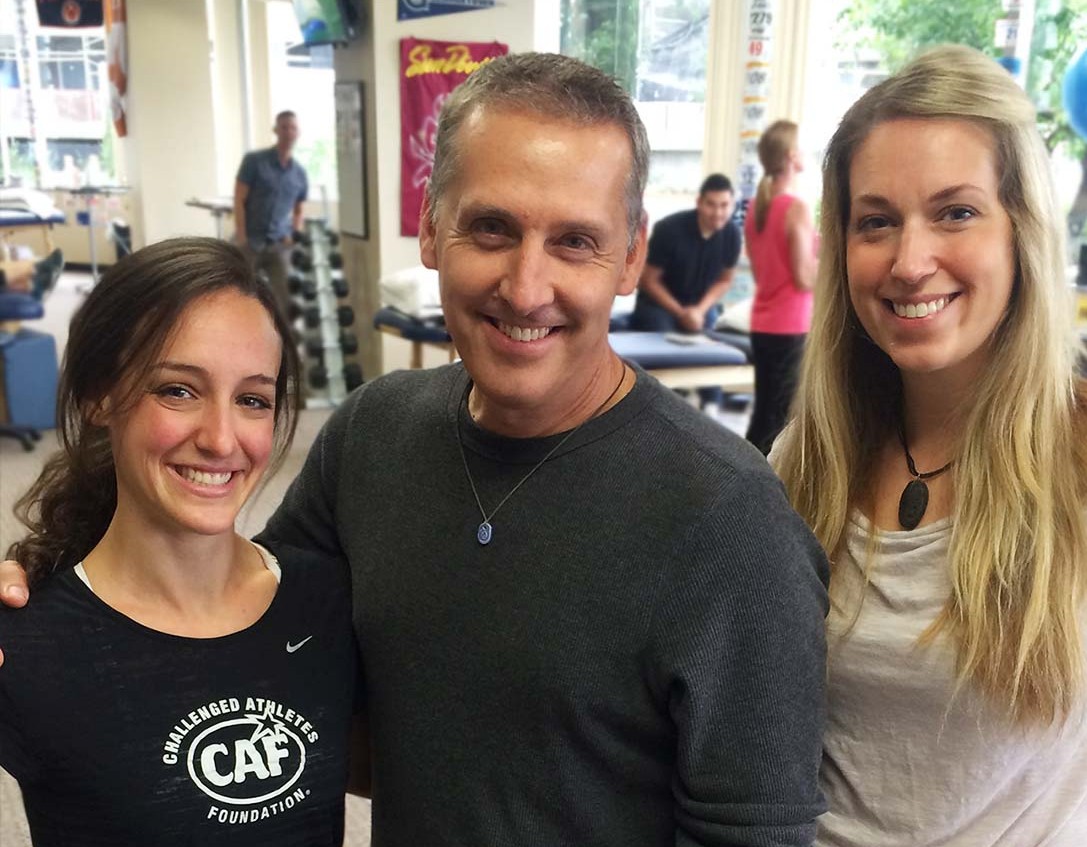
Chris says his PT Lyndsay and Aide Ciena were instrumental in getting him back in rocking shape after his accident.
You never plan on ending up in the emergency room on your morning commute, but as Rausch Physical Therapy patient Chris Powers knows, you can’t plan for much in life.

Last September, Chris was on his way to work when a drunk driver slammed into his car, sending it flipping across the freeway until finally coming to a rest, upside down, blocking the I-5 freeway at 3:30 a.m. The other driver was arrested at the scene, and Chris was transported to the hospital with a possible C-5 fracture.

Luckily, Chris survived the crash with “only” some soft tissue damage to the neck, head and back. Though, if you ask him, the worst injury he sustained was terrible pain from his wrist to elbow—an utter tragedy for a guy who’s played the drums since he was 10 years old.

As life would have it, Chris was set to play a gig at a bar with his 80’s/90’s cover band One Hot Mess just one week after his accident. Determined to still rock it, he did his best to ignore the pain that made sitting at his drums nearly impossible and managed to bang out what simplistic patterns his injured arm could muster.

“I remember popping a ton of Advil before and after the show,” he said. “I was stressed out knowing that if I don’t get this arm fixed, I’m probably looking at having to hang up the sticks and find another drummer for the group.”
Rausch PT | Chris Powers
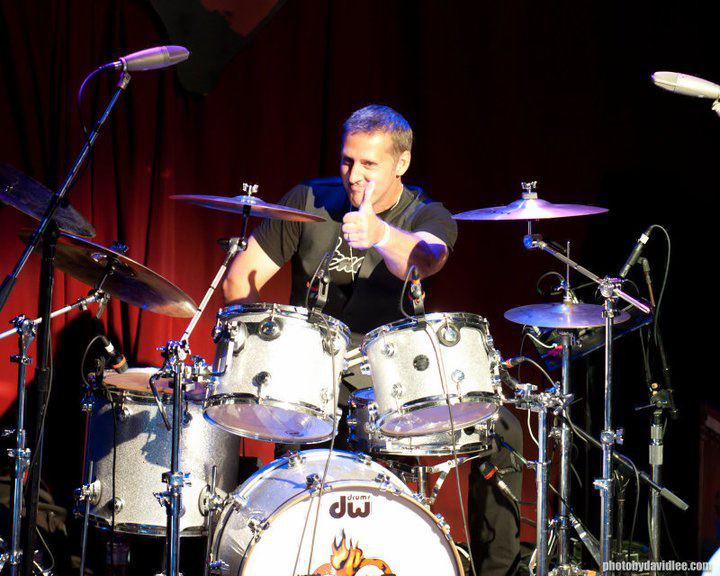
Chris Powers back behind the drums with his 80’s cover band, One Hot Mess.

So, after barely getting through that set, Chris set out to find a physical therapist who could help get him back into rockstar shape. On a recommendation from a co-worker he decided to give Rausch PT a try, with high hopes but low expectations ingrained from past PT-experiences.

However, Chris says that after working with Lyndsay for just a few months, the pain in his arm was gone. Now, less than a year later, he’ll be back up on stage this Saturday—this time at the House of Blues in Anaheim.

I’m where I’m at today thanks to Lyndsay. Her course of treatment and plan of action—designed by her and enacted upon by the aides—has given me the ability to feel better and do the things I loved prior to my collision.”

Like so many of our patients, Chris and his wife, Jeanine, also love running and hiking. While he jokes that he hasn’t yet crossed over into the ranks of “those who believe there is something good in running full marathons,” Chris also came into our clinic with the goal of lessening the pain in his neck and back so he could return to participating in 10K’s and Half-Marathons.
Chris and Jeanine Powers
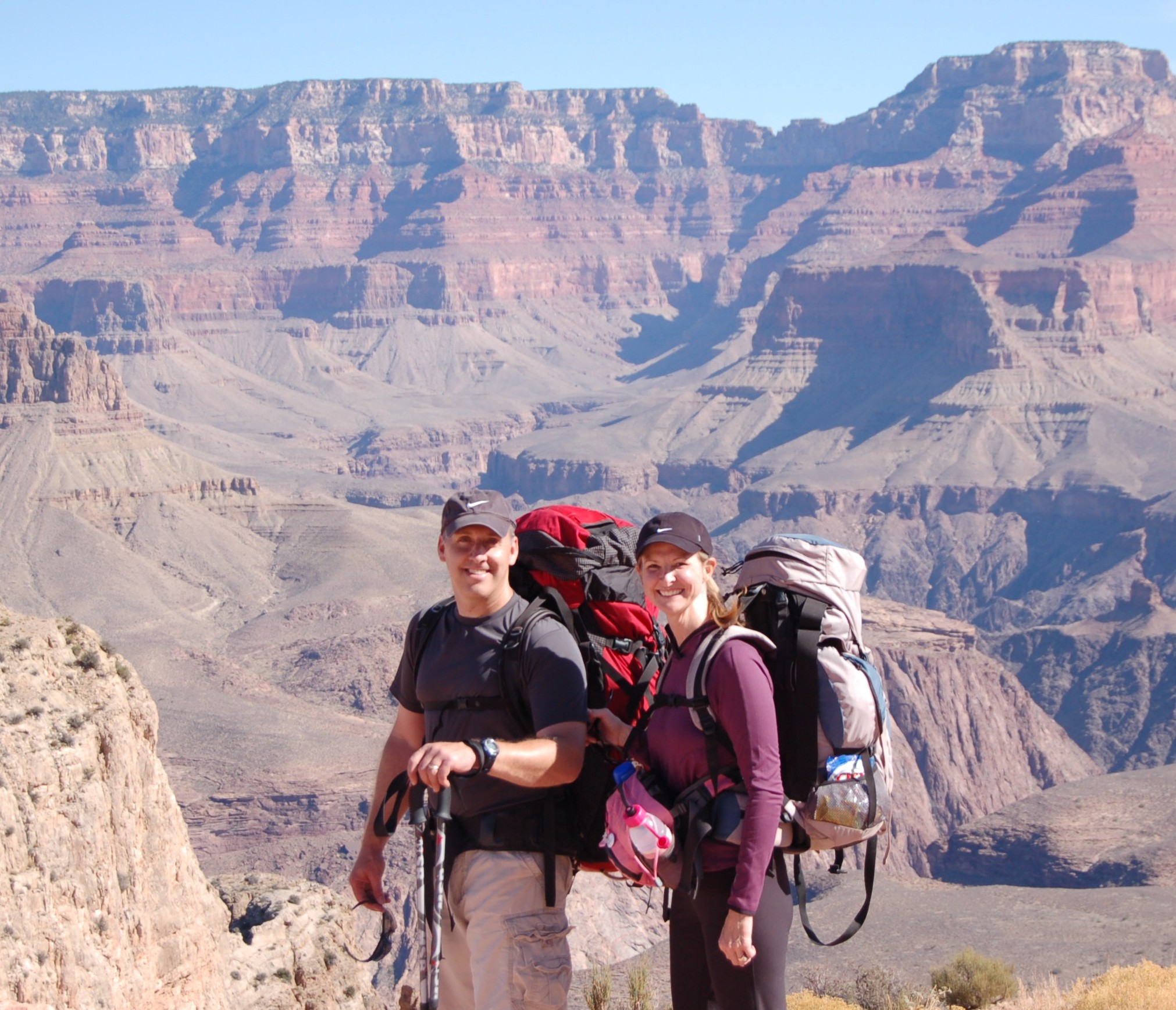
Chris and Jeanine Powers hiking the Grand Canyon.

After some tissue work with his PT Lyndsay, a few sessions on the Alter-G Anti-Gravity Treadmill, and a great exercise program led by his aide Ciena, Chris says he’s back to normal. He and Jeanine have even registered to run the Zion National Park Half next year.

“I love drumming, I love running, and I love not hurting!” he said. “I have gone back to all of my passions since my treatment at Rausch PT. Lyndsay, thank you from the bottom of my heart for helping me get through what I needed to get through. My drums thank you, too!”


How to Get Race Ready in Five Steps

When was the last time you rolled up on race day feeling 100% prepared? Think back to your last big race, were you healthy, well-rested and happy with your training? There are so many factors to getting race ready; it takes a lot of planning to get it right, but it is possible.

Unfortunately, I normally work with athletes who don’t get it right. They end up hurt, bummed and sulking into our physical therapy office. The funny thing is, all I usually hear during that first appointment is, “I know better,” or  “Yeah, I felt this pain starting a couple months ago, but…”

Enough with the buts! Here are five easy steps to follow to make sure you get it right for your next big race. These steps work for any kind of race—running, cycling, triathlon, ultra or IRONMAN.

Step 1: Start training sooner.

Don’t rush into a long distance race without giving your body enough time to train to adapt. Your body is amazing and it will adapt to what you ask it to do; you just have to give it the right amount of stimulus and time. It’s pure physiology from there. Tough workouts break down muscle fibers and cause micro-inflammation in your tissues; the recovery time in between workouts allows your body to heal and subsequently get stronger each week.

However, this could be a lot to ask of your body if you decided to just go hard every day for a month in anticipation for a big race. That’s where the magical taper time comes in (See Step 5.)

Step 2: Pilates & Yoga count during your training.

Don’t skip core and flexibility training—those two are the keys to injury prevention.

Step 3: Love your tissues.

Stretch every night, use the foam roller and/or massage stick, and make regular appointments to get worked on by a manual physical therapist or therapeutic massage therapist.

Step 4: Recover.

In between every work out, use recovery tights, Norma-tech, Compex, hydrate, and eat like an athlete.

Step 5: STOP! Taper Time.

sports-massagePlan for a “tapering period” and build it into your training schedule. Tapering periods can be one week for short races and up to three weeks for longer races. Start to taper by decreasing the distances/time of your workouts, then use that saved time for MORE TISSUE WORK (See Step 3.) At minimum, get one massage during your taper period, but a couple would be better!

Benefits of training tapering

By scheduling in a tapering period toward the end of your training block, you give your body the final healing and prep time it needs before a race. However, this can only occur if you take advantage of the “extra” time you have because your training volume is lower. If you get massage work done, stretch, and use strategies to benefit from this tapering period, then your body will do its final recovery from all your months training.

Finding out how much taper time your body needs is a balancing act that you’ll get better at every year. Working with an intuitive coach can help, but remember that you are the only one your body talks to, so it’s up to you to listen to what your body is trying to tell you and act accordingly.

FINAL STEP: Enjoy the heck out of your race!

Once you get into the groove of well-planned training, core work, tissue work, recovery, and tapering, you’ll realize how much easier it is to be a successful racer.

All the best to your health,

Inbox-35061-messages-1987-unread


Kevin RauschAs the president and founder of Rausch Physical Therapy & Sports Performance, Kevin Rausch, PT, MPT takes great pride in the care of every single patient he treats. Kevin specializes in sacroiliac joint dysfunctions, running and cycling injuries, and return-to-sport planning for athletes. Since the first day he opened his clinic in 2006, Kevin has strived to provide the best in care, service and technology so as to strengthen his patients’ total body health and get them back to doing what they love.

Find Kevin on Google+