
Client Spotlight: Amy Hansen


Amy Hansen initially came to Rausch Physical Therapy & Sports Performance so she could start hiking. The journey she took instead is more incredible than any of us could have predicted.
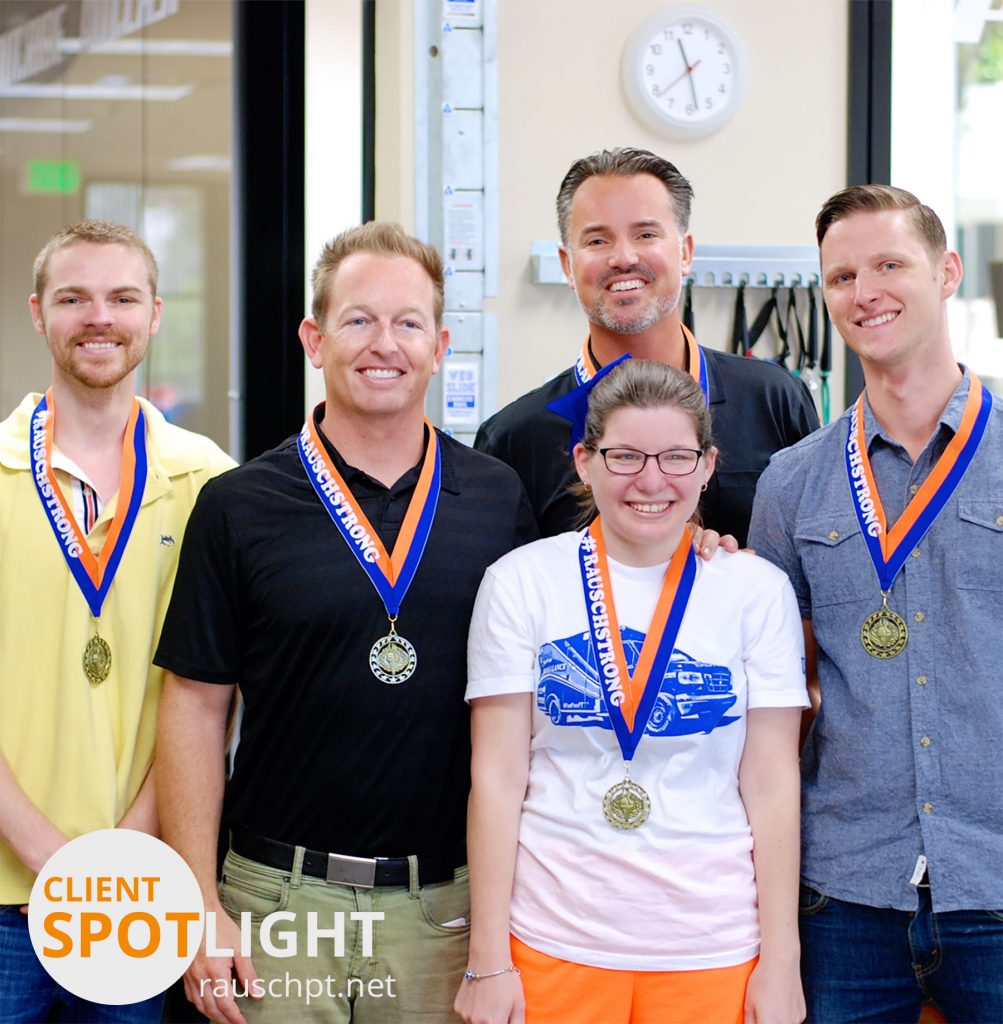
ClientSpotlight-Amy
Team Titanium Amy.

“It feels like I can do anything.” – Amy Hansen

July 27, 2015 was a big day for Amy Hansen. Walking in to the clinic, decked in Rausch orange and blue from the bow in her hair to the socks on her feet, you could tell she was celebrating something. With her trademark mischievous smile, Amy rushed to hand out her #RauschStrong #TeamTitaniumAmy medals to her physical therapists and aides. After getting settled in, she steadily walked over to the Performance Lab, zipped in to the Alter-G® Anti-Gravity Treadmill®, and ran for the first time in a year.

It was a stark contrast from July 27, 2014—the day Amy was carried out of the clinic on a stretcher, flanked by emergency personnel, after snapping her femur during an appointment.

Amy’s Fight

Amy has been fighting the odds since she was born. She has a rare bone disease that only five people have ever had, and she’s the only person in the whole world who’s ever had this disease as well as a neurological condition. Originally, Amy came to Rausch Physical Therapy to work with Dustin Hancock, DPT, who specializes in patients with neurological issues. Amy says her goal was to be able to go hiking, so they began working on getting stronger and building muscle. Amy’s mother Janice says she got so much more out of coming here.

“I expected her to gain more flexibility and balance, to be able to walk better, but what she got out of it was more of an essence of herself as a healthy person. It’s challenged our whole family to do more physical things.”

In addition to the physical changes that were taking place, Janice began noticing that Amy’s personality really began to come out—something that rarely happened in medical settings. She talked freely with her aides Chris and Brent, playfully joked around with Dustin, and became increasingly more independent.

“Imagine being told you were unhealthy your whole life, and then people here [at Rausch PT] tell you that you ARE healthy and you CAN do things. Dustin and everyone at Rausch constantly encourage her to do her best.”

July 27, 2014
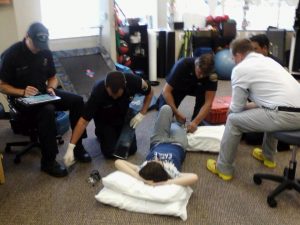
After breaking her leg, Amy stayed very calm as the EMTs worked on her with Dustin by her side the entire time.

A few days before Amy broke her leg, she had told her mom that she was experiencing some pain in her leg. This was not uncommon for Amy, so Janice took note and then went about their normal life. A few hours before her leg broke, Amy and Janice were walking around the mall; Amy still complaining about the dull pain. The moment she broke her leg, Amy was walking from one exercise to the next when her leg finally gave out. It could have happened anywhere at anytime, but Janice says she’s forever grateful that it happened at Rausch PT.

“It was completely unexpected,” Janice said. “Sometimes there’s pain, but nobody [with this disease] has had a bone break. We’re just lucky that it happened here with people who know what to do. You think of it as a traumatic experience, but it wasn’t. Everyone was so calm.”

After she was released from the hospital, Amy was eager to get back to her favorite place, Rausch PT, to be with her friends and start working to get better. She was in for a difficult recovery, longer than most because of her bone disease. Despite the titanium rod placed in her leg, her injury refused to heal. However, Janice says the most difficult part was overcoming her fear.
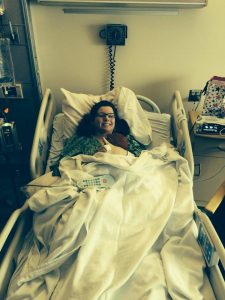
Amy in her usual high spirits recovering in the hospital after breaking her leg.

“A year ago it was a lot more about fear, ‘What I can’t do,’ and not trusting her body,” Janice said. “A year later, she’s much more conscious of what she can do and what she’s looking forward to doing next.

July 27, 2015

After running on the Alter-G, Amy said she felt less stressed; she thought it was going to be harder, but it was fun to get back to running.

“It feels exciting [to run again,]” she said. “It feels like I can do anything.”

The thing the Hansens say they like most about Rausch PT is that the goals that Amy and her team set are less about, ‘What’s the next clinical step?’ but rather ‘What’s the next thing you want to do, place you want to go, or activity you want to try?”

So, what’s next for Amy? She says she wants to run a Disneyland 5k Marathon next year and go paddle boarding with her friend Dustin (Although, she says she’s still not sure about the sharks.) One thing is for sure, Amy has become part of the Rausch PT Family.

“They were there for me when I broke my leg, and they continue to be there for me,” Amy says. “We’re all a good team.”

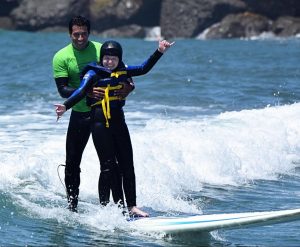
After a lot of hard work at Rausch PT, Amy was able to get back to surfing thanks to Best Day Foundation.

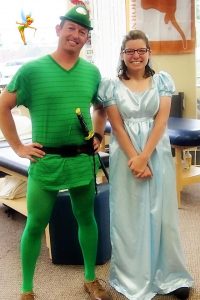
Amy and Dustin on Halloween 2014. “You know you have a good PT when he’ll wear tights for you!” Amy said.

Amy checking off one of her post-op goals: being able to walk around Disneyland again.


2015 San Diego Triathlon Challenge: Help Us Support CAF

CAF2015-flyer

Dine at BeachFire  between 2 to 5 PM on September 20 and 20% of the proceeds will go towards our team fundraising goal for CAF. We will also be holding a silent auction during the fundraising event with all proceeds going toward CAF.

You can provide people with physical challenges with the tools necessary to find success in sports — and life!

Directions to BeachFire

204 Avenida Del Mar – at Ola Vista
San Clemente, CA 92672

ABOUT TEAM RAUSCH PT

On October 18, Rausch Physical Therapy will be competing in the San Diego Triathlon Challenge, which helps raise funds for challenged athletes around the world. Our team is made up of local CAF athletes, Rausch PT staff and patients.

You can learn more about Team Rausch PT and make a donation to help us reach our fundraising goal by visiting our team page: Team Rausch PT Team Page.

[button link=”http://caf1.convio.net/site/TR/2015SDTCEvents/General?company_id=1060&pg=company&fr_id=1050″ size=”small” color=”blue” align=”center” target=”_blank” ]DONATE NOW[/button]


1050804_2711121459525107

ABOUT CAF & San Diego Triathlon Challenge

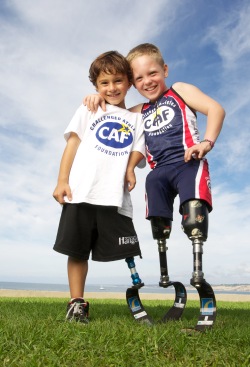
Established in 1997, the Challenged Athletes Foundation (CAF) recognizes the athletic greatness inherent in all people with physical challenges and supports their athletic endeavors by providing unparalleled sports opportunities that lead to success in sports — and in life.

The Aspen Medical Products San Diego Triathlon Challenge is one of the most highly-regarded and motivational events in the triathlon world. Since its first event 20 years ago, the Tri Challenge has been instrumental in raising the funds that have allowed more than 9,500 challenged athletes around the world to make it to the starting line and inspired a new generation to realize they have no limits.


Proper Pitcher’s Hip Rotation and How to Get It


Remember that game Twister? Every time that spinner landed on a new color, you were forced to reach your hand behind your back, underneath a leg, and across the board, all while trying not to fall. While incredibly entertaining, this silly game can also be a valuable lesson about positional torques, balance, rotation and flexibility—especially when it comes to baseball.

Looking at the specific qualities to win this game can be related to the critical components of the throwing motion in baseball. Often times when assessing a pitcher’s mechanics, there’s a miss in relating the lower half to the upper half of the body.  It is crucial for a pitcher—no matter the age—to begin to learn the importance of max hip rotation in order to achieve full torque of the trunk and obtain maximal velocity through the pitch.

The Sling Shot Effect

The rubber band of a sling shot is wound up with so much tension so that when it’s released, a massive amount of kinetic energy hurls the rock (or projectile of your choice) forward. The pitching motion in baseball is similar in that the lower half of the body, starting with proper foot placement and maximal hip rotation, will create a buildup of kinetic energy through the trunk, shoulder blades, shoulder and finally release through the fingers.

Proper Hip Rotation and How to Get It

Without proper hip rotation, a pitcher’s hips will fly open, which creates torque at the elbow. To avoid this, we want proper hip rotation, which occurs when:

  • The hips are fully rotated just before the lead foot strikes the ground
  • The shoulders are closed with arm extended out into the cocked phase of throwing.

Proper rotation allows for maximal hip-to-shoulder separation, which in turns creates the most amount of torque and velocity possible. There are two specific keys to obtaining this position and preventing further stress on the arm, the lead leg and posture.

The lead leg

The lead leg must be relaxed from the knee down and have proper landing position. Proper landing position includes:

  • Toes pointing slightly towards the right-handers box (if a right-handed pitcher.)
  • The hips will remain closed until just before lead foot strikes the ground.
  • At this time they will lead their front hip towards the plate and really turn open the front hip at the latest possible time.
  • If done properly, the pitcher shoulder feel tightness along their oblique muscles, NOT their back.

Posture

When a pitcher transitions from early-stance phase to the cocked position, their posture can completely affect their ability to rotate through their hips and finish off a throw. For example, if a pitcher is bent too far forward when their foot lands, they will not have the ability to achieve full pelvic rotation, thus not allowing this maximal hip/shoulder separation.

The key for good throwing posture is to focus on balancing and creating extension or back-bending through the middle part of the athlete’s back. It has been statistically proven and correlated that the optimal position of posture is the thoracic spine slightly extended, slight lean towards the back leg, and non-throwing hip flexed up. Therefore, it is important to not allow early rotation of the trunk or shift the center of gravity towards the throwing arm, as both will cause the trunk and shoulders to “open early.” before the hips, and create abnormal stresses on the shoulder and arm.

Maintaining proper foot landing position and rotation of the hips will create the maximal amount of separation leading to good pitching mechanics and increased velocity. Posture is also considerably important and must be taken into account when looking at the ability to create this hip to shoulder separation.

Suggested Training and Exercises


StaffHeadshot-JonJonathan Meltzer graduated from the University of Redlands with a bachelor of arts in biology and a minor in physical education. Following graduation, Jonathan discovered his passion for physical therapy while working as a Physical Therapy Aide. After graduating top of his class from Loma Linda University in 2012 with a Doctorate in Physical Therapy, Jonathan began his career at Rausch Physical Therapy and Sports Performance. Jonathan’s goals are to identify limitations and treat his patients with the most recent and innovative techniques in order to maximize functional independence and obtain his patients’ individual goals.