
Breaking the Cycle of Injury
How You Can Prevent Running Injuries for Good
[framedbox][one_third]
When
Wednesday, July 27
7 – 8:30 PM
[/one_third][one_third]
Where
28202 Cabot Rd. Suite 150
Laguna Niguel, CA 92677
[/one_third][one_third_last]
Cost
$15 per person
[button link=”https://clients.mindbodyonline.com/classic/ws?studioid=18756&stype=-106&sView=day&date=07/27/16″ size=”small” color=”blue” align=”center” target=”_blank” ]SIGN UP NOW[/button]
[/one_third_last][/framedbox]
We get it; when you’re a runner, there’s nothing worse than suffering an injury that keeps you from doing what you love. Did you know 85% of runners get injured at least once during a year? Did you know you DON’T have to be one of them??
Topics include:
- The three “non-negotiables” every runner needs to combat injury
- Identifying any muscular imbalances that may be impacting your running
- Specific exercise programs and run form tips to reduce injury risk and improve performance
So lace up your running shoes and join us at the clinic on July 27 and learn how you can continue to run—pain free—for a long, long time.
[button link=”https://clients.mindbodyonline.com/classic/ws?studioid=18756&stype=-106&sView=day&date=07/27/16″ size=”small” color=”blue” align=”center” target=”_blank” ]SIGN UP NOW[/button]
How to Avoid and Manage Arthritis in Your Knee
BY SEAN SWOPES, DPT, RAUSCH PHYSICAL THERAPY
The term arthritis, or more specifically Osteoarthritis (OA), refers to degeneration of the articular cartilage of the knee. While OA is most commonly associated with knee pain in 40-60 year olds, it is not something specific to old age. In fact, most people—regardless of their age—have some form of OA, but it’s the severity that usually determines the onset of pain.
What causes arthritis in the knee?
OA can also form through injury to the intra-articular (joint) surface of the knee. Injury to the (tibiofemoral) joint can lead to bleeding within the joint, which leads to further degeneration of the knee.
How can I avoid arthritis in the knee?
While many people may think arthritis is just a part of growing old, there are steps you can take to help minimize the risk of arthritis effecting your knee or your quality of life.
Improve strength in your core, not just your legs
Since humans walk upright, our pelvic and core stability can determine the effectiveness of those knee stabilizing muscles. Hip strengthening exercises can improve the stability of the legs and decrease abnormal stress to the knee joint.
Activity modification
If you knee is painful and inflamed, switch to lower impact activities. For example, if running is irritating your knee, go for a swim or bike ride instead; these two activities still allow for good cardiovascular training but decreases stress to the knee.
Strengthen your legs
The body adapts to the daily stress we place upon it. While we can often tolerate our day-to-day routine without over-stressing our knee, we are all one-weekend-trip-at-Disneyland away from causing damage to the knee joint. As simple as it sounds, strengthening the muscle surrounding the knee can help to reduce the risk for arthritis. The goal of strengthening is to place the load into the muscle, which takes the stress away from the knee joint.
Four ways to improve arthritis-related pain and function
While unfortunately this condition is degenerative and non-reversible, those who are diagnosed with OA can still address limitations to improve knee function and manage pain. Four ways to improve function with OA-related related pain include:
1. Adequate range of motion (ROM)
Home Exercise Programs: The Key to Recovery

BY LYNDSAY DEFILIPPO, DPT, RAUSCH PHYSICAL THERAPY
If you have ever undergone physical therapy, chances are that at one time or another you have received a home exercise program (HEP) from your therapist. As a physical therapist, I do my best to stress to my patients how crucial HEPs are to their recovery, but despite my best efforts I’ve found that only a small percentage of patients ever complete their program. And I get it! The whole reason you schedule a PT appointment is so you can focus on your recovery for a solid hour because outside those clinic doors you have a busy life and schedule. Sure you’ll plan to do your HEP after work, or after you put the kids to sleep, or before bed, or you’ll wake up early tomorrow… but slowly it disappears off the “to-do” list. Unfortunately when that happens, your recovery ebbs and flows instead of you making continued progress.
So, stop sabotaging your recovery! Completing your HEP will aid in a quicker, more successful long-term recovery. Once you’ve decided to commit yourself to your health, wellness and recovery, it’s actually very easy to incorporate a program into your daily routine, even with the busiest of schedules and with little to no equipment.
I’ve made a list of the four most common HEP-related complaints I hear on a daily basis, as well as some accompanying tips and tricks on how to stay compliant with your HEP simply by getting creative and making the choice to commit to YOU!
Complaint 1: I don’t have time to perform the program every day.
Solution: Incorporate portions of your program throughout your day.
If you don’t have time to complete all your exercises in one sitting, try spreading them throughout the day instead. Practice your single leg balance, heel raises, toe yoga, arch lifts, etc. while brushing your teeth. While you’re waiting in line for your morning coffee, stuck in traffic, or taking a break from the computer, do your chin tucks, neck stretches, or shoulder squeezes. If you’re a student and are unable to participate in the demands of gym class or sports because of your injury, perform your home program during practice/class time. Finding those little spaces in your day to sneak in an exercise or two will ensure you are keeping up with your program—without jeopardizing your free time.
Complaint 2: There are just so many exercises…
Solution: Ask your PT to prioritize your exercise list.
As you get better and are able to do more, your HEP also progresses and consequently might seem more lengthy than it was in the first few sessions. I find that a huge list of exercises often gives patients anxiety, which is one of the reasons I tend to start my patients off with two to three exercises, then build accordingly. Although the basic fundamentals are always important as they are your building blocks, you can discuss with your therapist the most important exercises for you to complete at your current status and break them up throughout the day.
Complaint 3: How am I supposed to perform the exercises if I don’t have the equipment!?
Solution: Not all exercises require the exact equipment we have at the clinic—get creative!
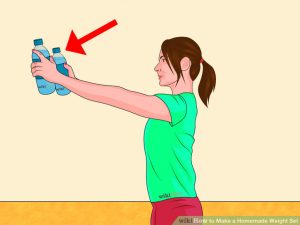
By substituting in household items, you can still target certain muscle groups and movements and ensure you continue making progress without any clinical equipment. For example:
| Clinic Equipment | Household Substitute |
|---|---|
| STRETCH OUT STRAP | Yoga strap, dog leash, belt from a bathrobe, regular belt, or long beach towel |
| 1 LB. WEIGHT | Full water bottle or soup can |
| CABLE COLUMN | Resistance bands strapped over a door |
| FOAM MAT | Bath towel folded multiple times or a pillow on a carpeted or secure surface (Avoid placing on slick surfaces to decrease your chances of slipping!) |
| CUFF WEIGHT | Insert a soup can or other weighted object in a purse or small bag; hang off your ankle for leg lifts, knee extensions, etc. |
| SLIDERS | Washcloth or towel on a hardwood floor |
| CALF SLANT BOARD | Using a yoga strap/leash/belt/towel, perform the calf stretches in sitting position |
**IMPORTANT** As with all exercise safety, please ask your therapist if you can substitute equipment, as this blog is only a recommendation and does not apply to all medical cases.
Complaint 4: I’m going on a work trip/vacation, so I won’t be able to do my HEP
Solution: Home exercise programs are designed to be done anywhere.
Most clinics will give you a print out of your home exercise program sheet, or in our clinic’s case, make it accessible online at homeprograms.net. This means that your HEP is accessible anywhere.The substitutions above are also great ways to stick to your program while you’re traveling, as most hotels offer water bottles, bathrobes with belts, towels, etc.
With summer coming up, incorporate and utilize your environment.
- If your family lives in the pool all summer… Ask your PT if you would benefit from a water program.
- Heading on a tropical vacation? Sand acts as an unstable/uneven surface to promote balance and proprioceptive training.
- If your trip requires a long flight… It’s always good to incorporate a program to avoid prolonged sitting and potential for blood clots, such as frequent walking breaks, ankle pumps, heel raises, marching in place, etc.
BONUS QUESTION! BUT, if I were to purchase items, which do you recommend most?
Depending on the injury you are recovering from and the outlined program that your PT has developed for you, a few must have items I would recommend for continued health include:
- Foam roller
- Lacrosse ball
- Stretch out strap
- Portable resistance-style bands
At the end of the day, your PT cares about your recovery and s/he would not personally create your individualized home program if s/he didn’t think it would be beneficial. It’s important to also invest in your health and take all aspects of recovery seriously. Like all things, once you make the changes and incorporate your exercises into daily life, it will become routine and therefore easier to adhere to on a daily basis. You will also reap the rewards, and return to the things you love most that have inevitably been altered since your injury.
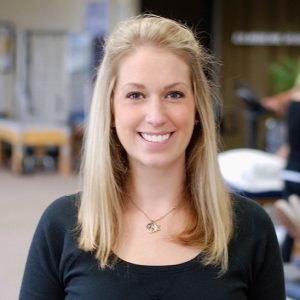
Lyndsay DeFilippo PT, DPT, CKTP received her Doctorate of Physical Therapy from New York University in 2010. She’s a Graston Practitioner and a Certified Kinesiotaping Practitioner. Lyndsay looks at each injury as a constantly changing puzzle, which is only solved when her patient returns to what s/he loves doing. She enjoys helping with the full recovery process, which includes providing the education, tools and fundamentals to prevent re-injury and the potential for new injuries.
Click to learn more about Lyndsay and our other physical therapists »
Client Spotlight: Todd Clarke
After falling from 14 feet in the air, Todd Clarke was quite lucky to be alive. It was the following series of happenstance that led Todd to his perfect physical therapist, and with that a renewed appreciation for his body and its wellness.
On December 3, 2015, Todd Clarke was hanging Christmas lights on the roof of his Laguna Niguel home when an ill-fated step sent him plummeting to the ground. Luckily Todd survived, however he did suffer a concussion, tears in his shoulder, and about 30 bone fractures in both wrists and thumbs, face, skull and spine. After surgery and an eight-day stay in the hospital, Todd, a husband and father of two, was just grateful to be home in time for Christmas. Still, the accident left him unable to drive or go back to work as a teacher and multi-sport coach, and all together Todd was on disability for five months.
At about six weeks after his accident, Todd started physical therapy out of his orthopedic doctor’s office, focusing on treatment to restore function in his hands and shoulder so he could begin to take care of himself again. However, as time went on the nature of Todd’s true injuries became more apparent and unpredictable, and his focus shifted from his obvious hand and wrist injuries to the pain and stiffness in his neck and back. He also began experiencing vertigo, as the concussion he suffered caused lingering issues in the form of BPPV. Todd says that the “ever-changing landscape” of his injuries required a change in PTs, since his previous PT didn’t have a neck or back specialist on staff.
So, as soon as his hand and wrist function improved, Todd hopped on his computer to research local physical therapy clinics, which is when he stumbled upon Rausch Physical Therapy & Sports Performance. With seven physical therapists on staff, Todd had a 14% chance of being matched with Ashley Heller, MPT, but Todd says he’s glad he wound up on her table by happenstance.
It was seemingly an innate connection that led the two down a path of discovery littered with fun coincidences: Ashley had attended sixth grade at the same school where Todd was a fifth grade teacher; both attended UCSD and have a passion for surfing; they even share the same birthday!
“If Ashley was not friendly and thoughtful, we would have never had the conversations that led us to discover these wonderful connections,” Todd said.
Fueled by their fateful bond, these two kindred spirits have been hard at work to get Todd back to 100%, although with the multitude of his injuries Todd says this will likely take at least a year to fully recover. However, Todd has made great progress in just a short time; in the two months since starting treatment with Ashley, Todd says he hasn’t had any dizziness or balance issues from BPPV, which has allowed him to do what he loves most: spending time with his wife and two children. Todd is also back to doing most of the activities he enjoys, such as golfing, surfing, hiking, playing guitar and volleyball—and yes—even doing a few handy projects around the house.
“The best part [of PT at Rausch Physical Therapy] has been seeing positive results in my body and awakening the desire to be physically fit again,” he said. “Ironically, I am more active and feel healthier than I have in 10 years.”
In the end, Todd is lucky he survived his fall, it was chance he was matched up with his PT Ashley, and we’re very fortunate to have him as a client and to be a part of his recovery written in the stars.
“Heaven forbid it, but if I ever need PT again, Rausch PT will be the first place I go and I’ll look forward to going… as strange as that sounds.”
So, You Want to Be a Physical Therapist?

BY JESSICA SNYDER, DPT, RAUSCH PHYSICAL THERAPY
Hi, I’m Jessica, and I’m a doctor of physical therapy.
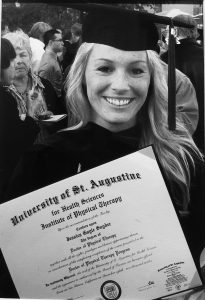
As a licensed DPT, I treat many high school-aged patients (or their parents) who will often ask me what it takes to become a physical therapist. Since June is graduation month and there are thousands of high school students out there wrapping up one chapter of their life and looking to the next, let’s talk career planning and professional education for the field of physical therapy.
The Path to Becoming a Physical Therapist
Before you can even start down this career path, you must first complete your undergraduate education. After that, you’re on to… yep, more school! “PT school” is a graduate-level program that typically takes three years to complete. However, just like any other graduate program, getting in to PT school is a tough process. So, set yourself up for success and research the requirements for different PT schools while you’re still an undergrad.
Generally, all PT schools will require:
- Bachelor’s Degree
- Prerequisite Courses
Again, PT school is a graduate level, doctorate degree, so upon graduation, your formal title is “Doctor of Physical Therapy.” It is not a PhD.
Picking the Right Major for Your Future
The undergrad years are essentially “prep time” for anyone who is PT school-bound (or Physician’s Assistant school or Med school, for that matter.) You’ll spend your first few years completing your general education courses, and then you’ll move on to any and all courses required for your declared major.
As far as PT school is concerned, certain undergraduate degrees will transfer better than others into a graduate-level physical therapy program. For instance, most of the required PT school courses are already built in to an Applied Health, Kinesiology or Athletic Training/Sports Medicine major. So, of those three, which should you pick?
Applied Health
Essentially, pre-med. Applied Health is a great major if you think you may be interested in becoming a nurse (can be a undergrad/grad combo), occupational therapist (Master’s Degree), physician assistant (Master’s Degree), or some other healthcare profession (e.g. pharmacology, radiology, etc.) Pro: you have so many options and opportunities for grad school! BUT, you do have to go on to grad school. Applied Health is pre-med—something else has to follow 🙂
Kinesiology
Kinesio is a bit more targeted in your professional career options, but the coursework is not as demanding as Applied Health (there’s less emphasis on the “hard sciences.”) This would be a good option if you think you may want to go into biotech, product development or prosthetic device/adaptive equipment design. You could also go into teaching at the high school-level, however this would require that you complete a credentialing program (another two years of schooling after undergrad.)
Athletic Training
The biggest advantage to completing an Athletic Training Education Program (ATEP) is the amount of on-field, clinical experience you get as a student. You are hands-on with athletes and patients from the start, learning valuable evaluation, assessment and treatment skills , plus you get to spend less time in the lab and more time on the field! Pros: When you graduate, you can start working (and getting paid!) right away; you can work with sports teams at the high school, college, or professional level, or you can work in a PT clinic, hospital, or sports performance facility. Many ATEP graduates take the national board exam to become certified athletic trainers, which is something I highly recommend as it makes you more desirable both as an employee and as a PT school applicant.
The overarching “pro” of all of these majors is that you know that the majority of PT school prerequisites are already built into your undergraduate degree. Just remember that there may be a few classes that you will need to take as electives.
Planning for Prerequisite Courses
Every PT school has its own prerequisite coursework listed as a part of their application criteria, so check those lists and make sure you take all the necessary classes to avoid having to take those classes after you graduate (i.e. at a local junior college) before being able to apply to grad school. The Physical Therapy Centralized Application Service (PTCAS) website is a good tool for researching the general classes required by the majority of PT Schools (e.g. Anatomy, Physiology, one year of Chemistry, one year of Physics, certain psychology classes, etc.) so get organized early to ensure you at least take these classes. However, don’t forget to also check the program websites for your PT School(s) of choice to see if they might require some additional coursework. For instance, some schools require Trigonometry, while others are satisfied with College Algebra, so make sure you check!
Actions Speak Louder than Transcripts
While signing up for the right class or major can boost your chances of making it into PT School, your attitude and actions will inevitably decide whether you get that doctorate degree or not. As someone who’s been down this path before, here are my last bits of personal advice for realizing your dream of becoming a licensed doctor of physical therapy.
- Go the extra mile. PT school (well, graduate school in general) is getting more and more competitive! Take every opportunity to participate in research, internships, and volunteer opportunities to make yourself a more desirable candidate.
- Be memorable and recommendable. You will need letters of recommendation from your professors and employers when applying to PT school, so earn them! Work hard, network, and stand out (in a good way.)
- Act with your future in mind. In any healthcare field you must qualify for licensure, and all accrediting/licensing bodies—federal and state—will perform thorough background checks. Drug and alcohol use/violations, such as DUIs, are not taken lightly and can delay or even prevent you from receiving your license. Have fun in college, be “well-rounded,” but DON’T be stupid.
- Think before you post. In our current time of social media, it’s good to remember that what happens on the internet, stays on the internet (Yes, even Snap Chat!) Trust me, I didn’t just make this up, I have friends in high tech places who will tell you that everything on the internet lives forever. Is it your dream to be a licensed doctor of physical therapy? Then keep that in mind when posting on social media.
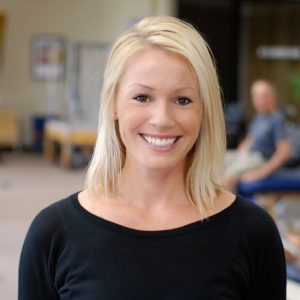 Jessica Snyder (PT, DPT, ATC, CSCS) received her Doctor of Physical Therapy degree at the University of St Augustine for Health Sciences – with an emphasis on orthopedics, movement science, and manual therapy. Jessica started her career as a Certified Athletic Trainer working with high school, college and professional athletes. She is also a Certified Strength and Conditioning Specialist (enhancing her ability to build custom strength, stability and performance-centered rehabilitation and return-to-sport programs) and Certified Natural Running Coach. Being a runner herself, Jessica specializes in running-related injuries, including the entire lower extremity. She is also passionate about treating headaches and neck/shoulder pain.
Click to learn more about Jessica and our other physical therapists »
Five Exercises to Increase Surfers’ Paddling Strength and Endurance

BY ASHLEY, MPT, RAUSCH PHYSICAL THERAPY
How well did your shoulders hold up to the El Niño this winter? Building strength through your shoulders and upper back to improve paddling endurance is your key to paddling out in bigger surf, catching bigger waves, and being able to stay out for longer surf sessions.
Strengthening the rotator cuff, scapular stabilizers and upper back are all key components to improve paddling strength. The rotator cuff muscles are extremely important for stabilizing the shoulder joint, which is the most mobile joint in the body. Specifically, strengthening the external rotators of the rotator cuff act to counterbalance the more dominant internal rotators (pecs & lats), minimize muscle imbalances when paddling, and promote good shoulder mechanics. Enhancing strength and endurance of the scapular stabilizers will also help you maintain good shoulder mechanics to prevent injury during extended periods of paddling.
Exercises for paddling endurance should focus on high reps and low weight, while exercises for paddling power should focus on increased weight with lower reps to maximize overall strength. As you build strength, it’s important to maintain shoulder mobility and flexibility by stretching and foam rolling before and after every session to minimize any joint stiffness throughout the shoulder and upper back, as well as to minimize muscle fatigue and soreness. Check out my previous surfing blog for the Best Foam Rolling Exercises for Surfers’ Shoulders.
Five Exercises to Target Muscles for Paddling
While the best way to gain paddling strength is actually getting out in the water, these five exercises can help compliment the work you do in the water, on dry land:
Exercise 1: Scaps Clocks
Promotes endurance of the upper back and shoulder
- Start with the right arm. Pull tension in the band to 1 → 3 → 5 o’clock. Repeat with left arm, pull band to 11 → 9 → 7 o’clock. Make sure to keep your shoulders down and back; standing against the wall is a good cue for upright posture.
- Perform 10-15 reps on each side.
Exercise 2: Alternating Rows with cables or bands
Promotes stabilization and endurance of the shoulder blade while paddling
- Keeping your elbow at your side, pull the band back while squeezing the shoulder blades together.
- Perform 2 sets of 20, increase resistance if you’re not fatigued by the end of the set
Exercise 3: Alternating Lat Pull-Downs with cables or bands
Builds paddling endurance through lats for a strong pull through the water
- Stand in a partial squat to activate your core. Pull the band down towards your hip, keeping your elbow straight. Let the tension out of the band slowly to return to starting position. Alternate arms.
- Perform 2-3 sets of 20 on each side alternating strokes
Exercise 4: Prone external rotation/internal rotation on swiss ball
Promotes rotator cuff strengthening while paddling
- Lay prone on the swiss ball, keeping your back straight and chin tucked. Start with the shoulder abducted and externally rotated in the ‘90/90 position’ (as shown in photo.) Internally rotate your shoulder to simulate paddling while keeping your shoulder and elbow aligned.
- Perform 2-3 sets of 10, add light weight (1-3 lbs. dumbells) as strength improves
Exercise 5: Simulated paddling on swiss ball with band
- Keep chin tucked and shoulders back and keeping your elbow straight while pulling. Slowly let tension out of band to return to overhead position, alternate arms.
- Perform 2-3 sets of 20 on each side alternating strokes
Training to build muscle strength to help you paddle longer and faster will improve your overall surfing endurance. The best way to practice paddling is getting out in the water; these specific paddling exercises are to help compliment the work you do in the waves. See you in the water!
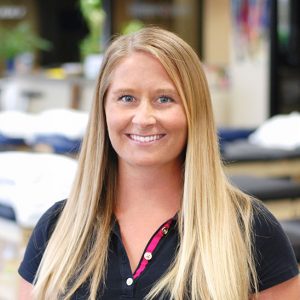 Ashley Heller, MPT is the newest member of the Rausch PT team. She received her Masters of Physical Therapy degree at California State University, Long Beach and is passionate about working with patients with shoulder, knee and ankle injuries. With background in orthopedic-related injuries and post-operative rehabilitation, Ashley believes that the combination of manual therapy and personalized therapeutic exercise program is vital to recovery. As a physical therapist, it’s Ashley’s goal to help her patients better understand their injuries and the plan for their road to recovery.
Click to learn more about Ashley and our other physical therapists »
Rausch Physical Therapy Celebrates 10 Years of Innovation and Growth

LAGUNA NIGUEL, CA (May 2, 2016) – Rausch Physical Therapy & Sports Performance (Rausch PT)—a leader in the physical therapy field that specializes in taking patients from injury, to recovery, to peak performance—today announces the tenth anniversary of the company’s founding.
Kevin Rausch, president and owner of Rausch Physical Therapy & Sports Performance.Rausch PT was founded in 2006 by president and licensed physical therapist Kevin Rausch when he was 27 years old. While other privately-owned physical therapy clinics have seen little-to-no growth in recent years, with many having to close their doors, Rausch PT stands out in the field thanks to its president’s unique vision for operating physical therapy practices.
Since the start Rausch has aimed to be an innovator in the field of physical therapy. Rather than rely on a broken health care system and physician referrals, Rausch wanted to provide a holistic option for rehabilitation, preventative health and wellness. After moving from a 2,000 sq. ft. suite to a 9,000 sq. ft. one, the company not only expand its physical therapy practice, but also to added an on-site, full-service Pilates studio and massage therapist wing. An on-site sports performance lab was added a couple years later, boasting the kinds of technologies that one can typically only access as a professional athlete, including an AlterG® Anti-Gravity Treadmill® and Hypoxico Altitude Training System. In ten years Rausch PT has grown from one physical therapist and 2,500 annual visits, to six licensed PTs on staff and more than 18,000 annual visits.
“Our clinic has taken the lead by not only offering the most thorough and specific rehabilitation programs in the field, but also by integrating the latest rehab technology and on-site wellness offerings that you just cannot find anywhere else under one roof,” Rausch said. “I’m proud of what we’ve been able to accomplish as a company in the past 10 years, but more importantly I look forward to continuing to expand people’s minds on what physical therapy can be.”
While most people think of hospitals and nursing homes when they think of physical therapy, Rausch PT specializes in active patients who want to get back to doing what they love, whether that be completing an IRONMAN, jogging a 5K, or simply chasing after their kids. Instead of being clinical and sterile, Rausch modeled the feel of his PT clinic after his grandfather’s sports bar—a welcoming, intimate escape for therapy.
“We’re in the business of making people feel good, and I don’t just mean their injuries,” Rausch said. “I want patients to look forward to coming here because it’s social and fun, everyone knows your name, and everyone is rooting for you to achieve your goals.”
By offering the highest quality rehab programs and latest technological advances, Rausch PT has earned its reputation as the “go-to” clinic for Orange County triathletes, runners, swimmers and cyclists, in addition to patients who live active, on-the-go lifestyles. Clients include everyone from ultra-trail runners and amateur cyclists, to weekend warriors and moms-on-the-go.
About Rausch Physical Therapy
Founded in 2006, Rausch Physical Therapy & Sports Performance in Laguna Niguel, Calif. specializes in taking patients from injury, to recovery, to peak performance. Its sport-specific, licensed physical therapists combine their expertise in human mechanics with the clinic’s innovative rehabilitation and performance technologies to help its patients stay healthy and reach their goals.
For more information, contact casey@rauschpt.net (949) 276-5401 x 106 or visit rauschpt.net.
May Wellness Workshop: Does Your Bike Fit?
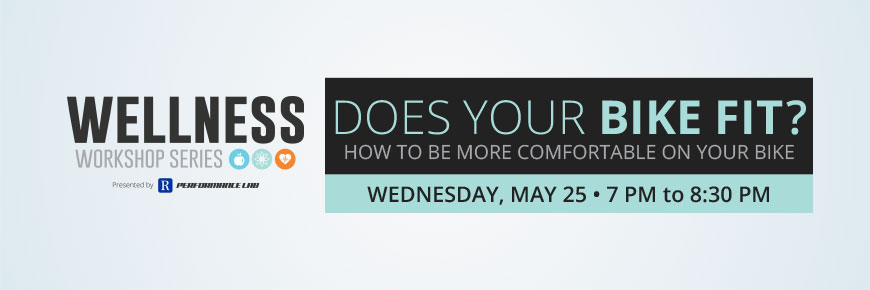
Does Your Bike Fit? How to Be More Comfortable on Your Bike
[framedbox][one_third]
When
Wednesday, May 25
7 – 8:30 PM
[/one_third][one_third]
Where
28202 Cabot Rd. Suite 150
Laguna Niguel, CA 92677
[/one_third][one_third_last]
Cost
$15 per person
[button link=”https://clients.mindbodyonline.com/classic/ws?studioid=18756&stype=-106&sView=day&date=05/25/16″ size=”small” color=”blue” align=”center” target=”_blank” ]SIGN UP NOW[/button]
[/one_third_last][/framedbox]
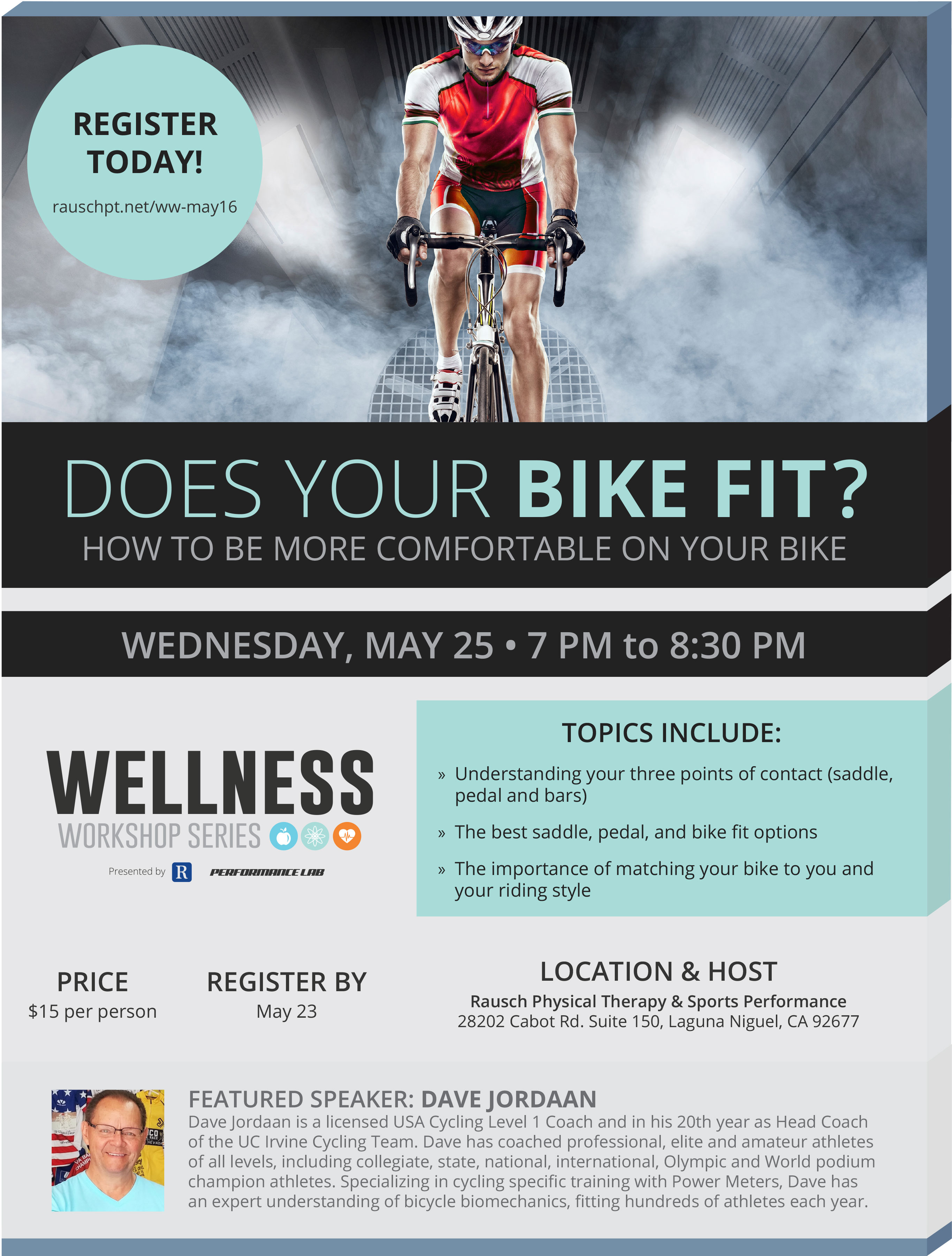
The May Wellness Workshop features Dave Jordaan, a licensed USA Cycling Level 1 Coach and the Head Coach of the UC Irvine Cycling Team. Dave has coached professional, elite and amateur athletes of all levels, including many collegiate, state, national, international, Olympic and World podium champions; and on May 25 he will be visiting Rausch PT to teach you how to be more comfortable on your bike.
Participants will:
- Hear in-depth explanations about proper bike fit from Dave Jordaan, USA Cycling Level 1 Coach
- Learn how to avoid pain from the three points of contact (saddle, pedal and bars)
- Learn about the best saddle, pedal, and bike fit options
- Understand the importance of matching your bike to you and your riding style
Come join us for a night of interactive learning where you will learn how to out ride the competition and have more enjoyable, pain-free rides!
[button link=”https://clients.mindbodyonline.com/classic/ws?studioid=18756&stype=-106&sView=day&date=05/25/16″ size=”small” color=”blue” align=”center” target=”_blank” ]SIGN UP NOW[/button]
My Own Worst Patient
BY JESSICA SNYDER, DPT, RAUSCH PHYSICAL THERAPY
A college running injury is what originally introduced me to the field of physical therapy. I remember being so frustrated that I could not run and no one seemed able to “fix” it. I was bounced around between the university’s medical staff with no resolution. It wasn’t their fault; they had a lot of athletes to cover and I simply fell through the cracks. But, I was also extremely stubborn and continued running. In pain. Because no one had a better solution.
It was finally my mom who intervened. She did some research and found a physical therapist that she thought could help me. The physical therapist was the first person who took the time to listen to my symptoms, evaluate my injury, and explain to me what was going on and what needed to be done in order to get me running again. Finally! A diagnosis, an explanation, and a plan.
That’s when I knew I wanted to become a physical therapist.
On Top of the World
When I received my doctorate of physical therapy degree, I couldn’t help but think about how I’d come full circle—how I was now going to be that person that helps someone get back to doing what they love. I felt so grateful that this is what I was going to do with my life.
Flash forward, and I’ve now been working at Rausch Physical Therapy & Sports Performance for four years. I still run daily, and I haven’t really had to deal with any of the major, sidelining injuries that plagued me back in college. I’ll admit that I started to lose sight of PT from the perspective of a patient. It took a recent personal injury to remind me why I love this field so much.
Last month I was snowboarding at June Mountain when I fell on my butt and completely threw out my SI joint. That’s when I got my worst patient of all time: Me.
The Fall
I couldn’t walk, let alone run. Getting in-and-out of the car was terrible. I couldn’t bend down to wash off the dog’s muddy paws, and I also couldn’t mop up the floor. I couldn’t even chase after my best friend’s daughter when she took off running towards the street—half a step and shooting pain across my back.
At first, I was okay with it. As a PT, I was able to self-diagnose myself with a badly sprained SI joint, which I knew would require time for the inflammation to go down and scar tissue to form in order to stabilize it. But, this professional practicality quickly faded into personal distress. By the end of the first week, I was in the anger phase of my depression. I was constantly on the verge of tears, I was ready to give up trying to stay active, I had even convinced myself that I would never run again (Completely irrational! It had only been a week!)
Then, something amazing happened. One of my favorite parts of being a PT is chatting with my patients while I’m treating them, and inevitably my frustration with my injury came up. That’s when my patients started repeating all the things that I had at some point told them during their recovery:
“Jessica, you know tissue healing takes a minimum of four weeks.”
“Be patient, Jess! Why don’t you take this time to focus on strengthening?”
“Allow your body to heal properly; you don’t want to push it too early and create a chronic problem.”
I was transported back to that time in college, when someone was able to pull me out of my injury-induced spiral when I felt hopeless. But this time, that person was myself! Coming through my incredible patients! I was so grateful for their explanations and words of encouragement, and I was finally able to tell myself, “Pull it together and stop acting crazy!”
Getting Back Up
So, I made a plan. I started to focus on what I could do, and used this injury as an opportunity to be more creative with my exercise routine. I started to be grateful for the little things that I was slowly able to do, walk with less pain, finally lie down on my back, and almost lift my foot to put on a shoe.
Recovery is a process. As a patient, I think it’s important to know that your physical therapist has chosen their professional field for a reason: we’ve been there, we get it, and thanks to this recent fall of mine, I am more motivated than ever to get you back to feeling your best.
Jessica Snyder (PT, DPT, ATC, CSCS) received her Doctor of Physical Therapy degree at the University of St Augustine for Health Sciences – with an emphasis on orthopedics, movement science, and manual therapy. Jessica started her career as a Certified Athletic Trainer working with high school, college and professional athletes. She is also a Certified Strength and Conditioning Specialist (enhancing her ability to build custom strength, stability and performance-centered rehabilitation and return-to-sport programs) and Certified Natural Running Coach. Being a runner herself, Jessica specializes in running-related injuries, including the entire lower extremity. She is also passionate about treating headaches and neck/shoulder pain.
Click to learn more about Jessica and our other physical therapists »
Quick Fix for Dead Spots in Your Pedal Stroke
BY DUSTIN HANCOCK, DPT, RAUSCH PHYSICAL THERAPY
When cycling, there are two things that can improve your velocity: power output and turnover cadence. However, the overall power output can be weakened if at some point during your pedal stroke, you have inconsistencies during that full, circular motion. Inconsistent torque forces, or dead spots, typically occur at the initiation of the upstroke. You can determine if you have dead spots by using a power meter or by doing a test like our Performance Lab’s Bike Right, but a simple indicator if your stroke has dead spots is smashing and hammering of the pedals.
Like most exercise movements, a healthy pedal stroke relies on the stretch shortening cycle (SSC) to be efficient. SSC occurs when a muscle stores elastic energy as a muscle lengthens; this stored-up energy is then used when the muscle immediately shortens. Since SSC is a myofascial and nervous system stretch reflex, if the body has adequate mobility and dynamic stiffness, the SSC will allow for any athlete to access free kinetic energy, i.e. more power for less work! Improving SSC can not only be a huge efficiency booster, it can also help improve joint stability and congruency to save those knees from arthritic changes.
Quick One-Legged Exercise to Improve Dead Spots
Here’s a great neuromuscular recalibration drill that you can do on a trainer to improve those dead spots.
Step 1: Hop on a trainer and warm up with the smooth circular stroke pattern focused on relaxing your legs especially your ankles.
Step 2: When you feel warm and ready, pick up the cadence to 92-95 rounds per minute (RPM) and take one foot off the pedal. Place that foot in the center frame.
Step 3: Maintain the cadence for 30-second intervals, working up to 90-second intervals for three to five rounds.
This exercise ensures the leg pulls up at the bottom of your stroke, allowing the hamstring to apply more power into the equation. It also improves the circular stroke pattern and gets you away from that less effective “smashing pedal” form. Try to apply this exercise to your warm up and see what it can do for your cycling efficiency and overall speed.
Enjoy one more thing to think about on your ride!
 Dustin Hancock, DPT graduated from San Diego State University with a bachelor’s degree in kinesiology/nutrition. He went on to receive his doctorate in physical therapy in 2011 from University of St. Augustine, and began his career at Rausch Physical Therapy and Sports Performance in 2012. As a snowboarder and mountain bike enthusiast, Dustin specializes in treating extreme sport athletes. As a physical therapist, Dustin says he looks forward to being a companion every step of the way on his patient’s path to recovery.
Click to learn more about Dustin and our other physical therapists »
April Wellness Workshop: POSTPONED TO LATER DATE
Coast to Canyon: Pedaling 700 Miles for Joan
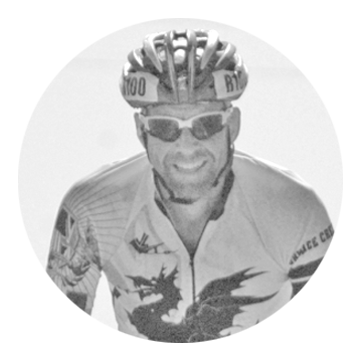
BY COLIN STOKES, ULTRA CYCLIST
“Grant me the serenity to accept the things I cannot change, the courage to change the things I can, and the wisdom to know the difference”.
A mission statement for life, but often a difficult path to navigate. Having recently passed 50 years old, I still feel very much like an apprentice seeking that elusive wisdom to know the difference. As an endurance junkie and ultra-distance cyclist I seldom do things the easy way. I regularly find myself signing up for 500-mile bike races (sober.) I recently raced non-stop for 1,000 miles in Texas because—let’s face it—what middle-aged man wouldn’t want a T-shirt from an event called “No Country for Old Men?” And in 2013 I competed in the solo division of the 860-mile Race Across the West (RAW) from Oceanside, CA to Durango, CO, which follows the same desert and mountain roads as the mother-of-all endurance races: the 3,000-mile Race Across America (RAAM). RAW was an epic struggle through 125 degree temperatures in the Sonoran desert, sand blasting in the Navajo Nation, and frigid night-time temperatures across the high desert.
I ride my bike more miles in a year than many drive their car. I’ve climbed a million feet in 12 months and on the summer solstice plan to ride 40,000’ in a day (and night.) I do these things not so much because I choose to; it’s more a case of, “I have to.” An addiction that must be satiated. Once the idea starts geminating in my head, there is only way to expunge it: give in to the inevitable!
As a toddler, my Mum transported me everywhere by bike and later chaperoned me as I powered myself on two-wheels. I was 40 years old before I broke her cycling distance record for a day. It’s her genes that power my passion for the bike on a never-ending geographical, physical and emotional journey.
Now on May 20, I’ll be retracing my RAW steps. This time, instead of continuing east from Flagstaff, I will branch north to intersect the south rim of the Grand Canyon. It’s been three years so I’m just a little wiser; I’m bringing along some friends to share the wind, and we’ll be spending a few hours each night in hotels (instead of collapsed in fetal position on the bed of my mini-van.) That said, this still won’t be a picnic. We’ll leave the pier at Oceanside, CA and ride 700 miles with almost 40,000 ft. of climbing; approximately 65 hours of riding coast to canyon. We plan to ride 300 miles the first day and then 200 miles the next two days. But, a plan is just a plan. If ultra racing has taught me anything over the years, it is to expect the unexpected and to roll with the punches that Mother Nature and the road throw in your direction.
Still, it’s reassuring to know on this particular adventure I will have a heavenly V.I.P. watching my back.
Mum lived in the tightening grip of Parkinson’s disease for more than 15 years until she passed this last Christmas. She is the reason why I am making this epic little adventure—to raise awareness and funds for the National Parkinson Foundation. It seems only fitting that I use a bicycle to raise money on her behalf.
I am proud to support the National Parkinson Foundation (NPF) and Parkinson Canada and their mission to help people with Parkinson’s live their best lives now until there is a tomorrow without Parkinson’s. I have raised almost $6,000 in a month, and I am aiming for a total goal of $15,000; that’s $21 per mile, or approximately 5 cents per pedal stroke. Donations can be made directly to NPF at the Joan Stokes Memorial Team Hope Fundraising Page.
We are who we are. A product of nature and nurture. We cannot escape our genes, and why would I want to? Pedaling for a cause just makes the adventure that much sweeter!