Why Early Sport Specialization is Unhealthy and Ineffective


Is early sport specialization actually hurting your child’s chances at a college scholarship?

Early sport specialization continues to be a troubling trend in youth sports, despite research and studies showing it is actually more detrimental to a young athlete’s elite athletic goals than it is helpful. Ashley Heller, PT, MPT unpacks the numerous problems associated with early sport specialization and provides solutions for how to set your child up for success in high school and college athletics.

Blog-Ash
BY ASHLEY, PT, MPT, RAUSCH PHYSICAL THERAPY

Originally published: 4/25/17

We all know top universities want students who have the best grades, best athletic ability, and who are well-rounded with extracurricular activities. Even if you do get an acceptance letter, tuition hikes have students and parents concerned about how to pay for higher education. To ease the burden of student loans, a popular strategy is to get an athletic scholarship.

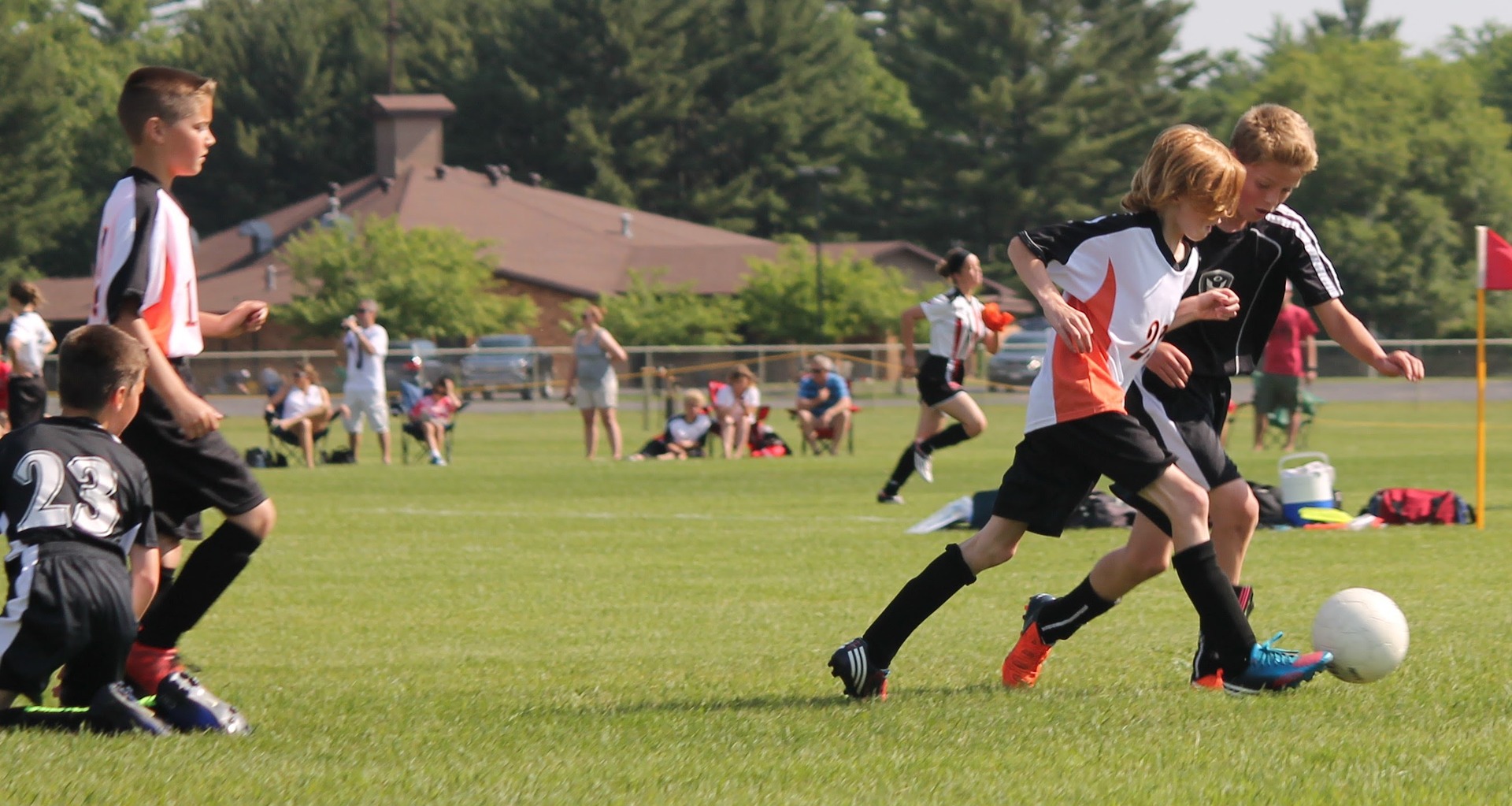
The pressure on young student-athletes to be the absolute best in their sport to increase their chances of getting into and paying for college is astounding, to the level that it has actually changed the way our society approaches youth athletics. Instead of having our kids play multiple sports in seasons and involving them in a variety of extracurricular activities, parents are encouraging their children to focus on only one sport year-round–all in hope they’ll become good enough to earn athletic scholarships.

However, this alarming trend of “early sport specialization” can actually have more drawbacks than benefits, and it’s happening at a younger and younger age as college competition continues to rise.

Cons of early sport specialization

Negative effects on grades, socialization–and your bank account

When a child “specializes” in one sport, their life (and their parents’ lives) revolves around it. Between club practice, high school practice, individual coaching and training sessions, etc., kids have little time for other things. This can have a detrimental effect on their academic performance, as well as limit their involvement in social or extracurricular activities. This often leads to burnout before they even reach high school.

Not to mention the cost of early sport specialization! All those private lessons, club teams, tournaments, travel costs, and specialized coaching adds up quick. Realistically, parents may spend more money on early sport specialization than what can even be awarded in scholarships.

The cold truth is that studies show that only 0.2% to 0.5% of U.S. high school athletes make it to the professional level. Ultimately, pressuring kids to specialize and overtrain at an early age will not make up for innate athletic talent.

Increased risk of injury

In addition to academic, social and financial issues, early sport specialization is also associated with increased risk of injury. Flexibility, mobility and coordination are all affected during and after growth spurts. Trying to specialize a child while they are still growing can lead to strength imbalances and movement pattern deficits, which can result in breaks, tears and sprains.

Year-round practices and games lead to overloading joints and the creation of repetitive, faulty movement patterns, which can result in overuse injuries. Studies indicate that risk of overuse injuries increases significantly when the number of hours spent training weekly exceeds the child’s age. Unfortunately, its the common and avoidable overuse injuries that plague youth sports–“little league elbow” in pitchers, shoulder instability in swimmers, and Osgood-Schlatter’s or Sever’s Disease in soccer players–that often stop collegiate or professional athletic dreams in their tracks.

Pros of sport and activity diversity

Early multisport participation has many benefits for youth athletes.

  • It creates a solid motor skill foundation–coordination, balance, proprioception, motor planning and strength–which translates to athletic success and overall good health later in life
  • It helps prevent burnout if the athlete plans to compete at a higher level
  • It will promote motor skill development and improve their overall athletic skill when they reach the appropriate age (typically late-adolescence, around 16 years old) to specialize in one sport

Sports diversification is even more important now in our tech-driven society. Kids are spending more time in front of screens and less time playing outside. Outdoor “free play” is critical for young motor skill development, which is the foundation for building athletic skill. So, if you want your kids to be great at sports, get them outside early and often! They’ll develop a variety of movement patterns that will help reduce the risk of overuse injuries and improve their overall athletic ability.

The importance of cross training for one-sport athletes

If your child is at the appropriate age and specializing in a specific sport, please consider adding cross training to their training regimen. Cross training helps:

  • Prevent overuse injuries by providing rest to heavily trained muscle groups, which is extremely important for muscle rejuvenation and tissue health, and encouraging different movement patterns
  • Complement strength training to reduce strength imbalances and improves overall core stability and power
  • Minimize fatigue, enhance flexibility, and build endurance


Final Thoughts

If your goal is to be a collegiate or even professional athlete, this article is not meant to discourage you! I want to give you insight into what it takes to achieve this level of athletic ability while avoiding injury.

Here are some final thoughts to take away:

  • The appropriate age for sports specialization is around 15 to 16 years old for most sports
  • Not all high school athletes will be college or professional athletes, so manage your expectations
  • Sports are supposed to be fun! If your child is getting tired of their sport, let them try something new
  • Youth athletes should be encouraged to participate in a variety of sports to develop a good foundation of motor skills
  • Cross-train to become a well-rounded athlete and to avoid overuse/overtraining injuries

And if this article still hasn’t convinced you, the NCAA website includes in its NCAA Sport Science Institute resources and materials section Consensus Statement by the American Orthopaedic Society for Sports Medicine which states:

Background: “Early sport specialization is not a requirement for success at the highest levels of competition and is believed to be unhealthy physically and mentally for young athletes. It also discourages unstructured free play, which has many benefits.”

Results: “The primary outcome of this think tank was that there is no evidence that young children will benefit from early sport specialization in the majority of sports. They are subject to overuse injury and burnout from concentrated activity. Early multisport participation will not deter young athletes from long-term competitive athletic success.”

Conclusion: “Youth advocates, parents, clinicians, and coaches need to work together with the sport governing bodies to ensure healthy environments for play and competition that do not create long-term health issues yet support athletic competition at the highest level desired.”

So, let’s shift our approach to youth sports and be smarter when it comes to our children’s health and well-being. By encouraging your child to play multiple sports, managing your and their expectations, and incorporating cross training, you can set them up for success to achieve their athletic and academic goals and thrive both on and off the playing field.

[framedbox]

References & Additional Reading:

[/framedbox]


StaffHeadshot-Ashley2Ashley Heller, PT, MPT is a licensed physical therapist at Rausch Physical Therapy & Sports Performance. She received her Masters of Physical Therapy degree at California State University, Long Beach and is passionate about working with patients with shoulder, knee and ankle injuries. With background in orthopedic-related injuries and post-operative rehabilitation, Ashley believes that the combination of manual therapy and personalized therapeutic exercise program is vital to recovery. Known as the Water Sports PT, Ashley says her goal is to help her patients better understand their injuries and the plan for their road to recovery.

Click to learn more about Ashley and our other physical therapists »

 

Client Spotlight: Samantha Gugliuzza


At just 12 years old, Samantha Gugliuzza is our youngest Client Spotlight to date. Sam is a serious soccer player with some big dreams, and Rausch PT will help get her there.

At Rausch Physical Therapy & Sports Performance, our goal is to not only help our patients get back to doing what they love, but to also help educate them on how to avoid future injuries so they can continue to do what they love for many years to come. Samantha Gugliuzza is the perfect example of this. Sam has been playing soccer since she was three, and she is currently in her seventh season playing with the acclaimed So Cal Blues Soccer Club. However, after developing Osgood-Schlatter disease, a childhood overuse injury that causes a painful lump below the kneecap, 12-year-old Sam was in dire need of physical therapy in order to continue playing the sport she loves.

Sam has been a patient at Rausch PT for more than a year now, and she says PT has not only helped her control the pain, but it has also taught her how to avoid future potentially-sidelining injuries.

“I believe that more young soccer players should come to physical therapy,” Sam said. “The physical therapists at Rausch PT can help you with any pain you may be having, but more importantly they help you to prevent future injuries by learning the proper way to warm up, cool down, stretch and work on your form to help you train and play smarter.”

Sam was paired up with DPT Lyndsay DeFilippo, “the Soccer PT” and a former soccer player herself. Together, Sam and Lyndsay have been working to gain strength and stability so Sam can continue to work toward her athletic goals while dealing with Osgood-Schlatter’s.

“As Lyndsay is a former soccer player, she understands the challenges and physical demands of the sport,” Sam said. “She has helped me physically and mentally by structuring a program to build strength in the areas of my body where I need it the most. My strength and stability have definitely increased (for example arch strength, hip strength.) Lyndsay’s words are always in my head reminding me to do a proper warm-up, to have proper form when striking a ball, and most importantly stretching after practice and games.”

It was actually Sam’s mom, Alex, who first discovered Rausch PT. Upon a friend’s recommendation, Alex came to PT while training for her first marathon. Alex says she went from not being able to run four miles without knee pain to running 26.2 pain-free.

“With the help of everyone at Rausch PT I was able to accomplish a goal I did not think was possible (running my first marathon in under four hours,) Alex said. “So I love that I can drop Sam off for physical therapy knowing she is in very capable hands. Over the years I have come to know almost all of the physical therapists and aides there, and it is such an energetic and inviting place to come. I trust them with not only myself, but my daughter as well.”

With the continued support of her family (and Rausch PT-family,) we know anything is possible for this soon-to-be teenage soccer star! Now that Sam is managing her knee pain and has incorporated a recovery program into her training, she is set up for soccer success in the future.

“My goal for soccer is to continue to play at a very high-level and intensity. My team will be playing in the Elite Clubs National League (ECNL) this year, which we are excited about. I also hope to play in high school (while achieving a high level of academics at the same time,) and I hope to eventually play at the college level.”

Good luck to Sam, and remember Rausch PT will always be here to help Get You There!

Three Easy Ways to Avoid Neck Pain While Cycling


Don’t let cycling be a pain in the neck. DPT Max Biessmann shares his three quick fixes for helping alleviate and prevent pain, aches and soreness in the upper back and neck while on your bike.

BY MAX BIESSMANN, DPT, RAUSCH PHYSICAL THERAPY
USAT LEVEL I COACH, ASCA LEVEL I COACH, USA SWIMMING COACH


Approximately 66 million Americans enjoy cycling for sport, and why wouldn’t they! It’s a great workout, social, and is perfect for cross training or for people with chronic injuries because of the reduced impact cycling has on the body. Unfortunately, many cyclists find themselves struggling with pain or discomfort, whether it’s the inability to get comfortable on the saddle or one of the most common complaints: neck/upper back pain and discomfort. Many people complain of pain ranging from soreness and aching, to numbness or tingling in their arms and hands, to sharp shooting pains in the neck and arms.

What Causes Neck Pain While Cycling

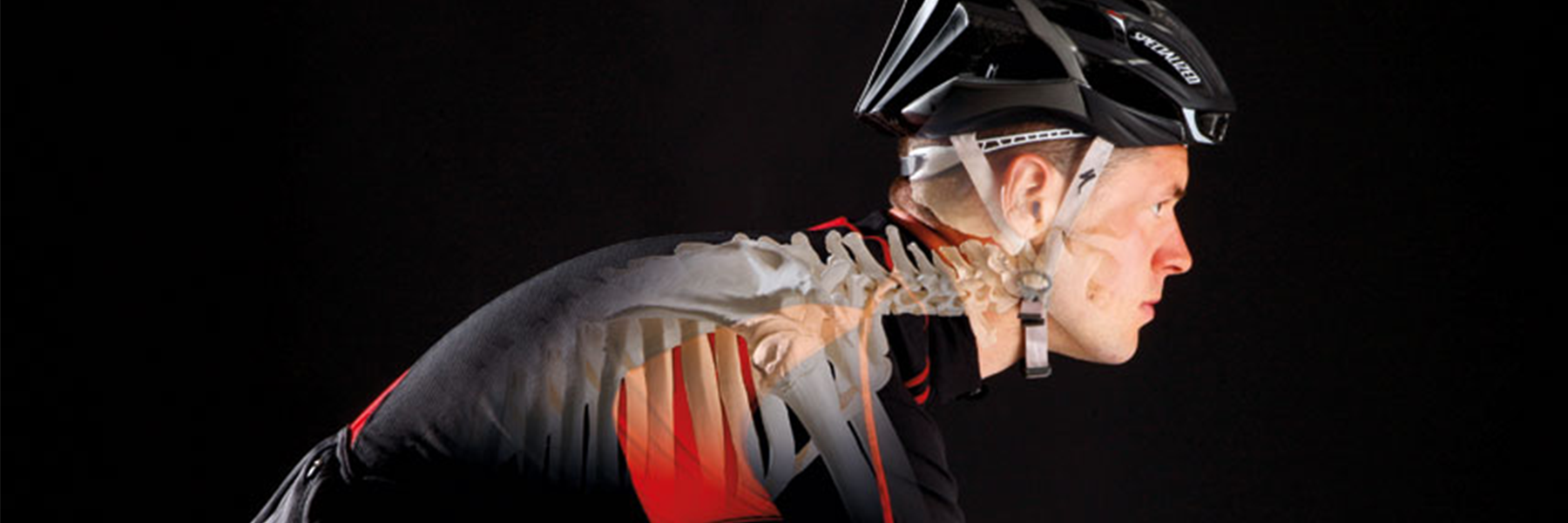
While cycling, your neck is in an extended position, doing its best to hold up your rather heavy head (the average head is 10 to 11 lbs.) Not only must your muscles do all the heavy lifting since the spine is unable to support the weight directly, but this also causes a closing down of the facet joints in your vertebrae. This constant closing can cause nerve irritation and excessive wear and tear on the joints.

As with anything you do, the longer you spend in a specific position, the more your body adapts to maintain that position. So, when you’re spending hours and hours per day hunched forward at your desk, in front of a laptop, looking at your phone, and on your bike, the more your body adapts to this position. This can cause the common posture dysfunction upper crossed syndrome, which is when your neck extenders (the muscles you use to look up) get short and tight, while the deep neck flexors (the muscles that tuck your chin down) get stretched out and relatively weakened.

Three Easy Ways to Avoid Neck Pain While Cycling

This combination of muscular imbalances and decreased nerve root space can lead to any combination of symptoms from chronic aching to shooting pains. Luckily, there are several very simple things you can do to decrease these symptoms if you already have them or prevent them from starting in the first place.

#1: Check how you’re riding your bike
Lawrence performing a Bike Right session at Rausch PT.The first thing to consider is how you’re riding your bike; a very small change here can have a big positive change. Are your arms always locked out at the elbows? Do you have a death grip on the bars? Are your shoulders hunched up and stuck in your ears? All of these can lead to cycling pain. Here are some quick fixes to make sure you’re riding your bike right:

  • Make sure your elbows are slightly bent in order to allow your arms to absorb vibrations and impacts from the road or trail.
  • Your hands should be snugly gripping the bars or hoods, but still staying relaxed in order to allow proper blood flow.
  • Shoulders should be relaxed and loose to help absorb shocks your elbows can’t absorb alone.
  • Make sure to look forward with your eyes as well as your neck in order to try and reduce some of the extension in your neck.
  • Check your helmet; it may be sitting too low on your forehead and obstructing your view causing you to look up more.

Remember, while cycling the only part of your body that should be working really hard is your legs; make sure you’re keeping your neck, shoulders and arms in a relaxed ready to go state. If you don’t feel you’re moving correctly on the bike, schedule a Bike Right session and have a physical therapist assess how you’re moving on your bike; having someone else watch you ride can help isolate the specific movement deviations and bad habits you may have developed over time.

#2: Work your body

To help prevent some of the adaptive muscle shortening and nerve compression from cycling, try these 10 simple exercises and stretches. These are also great exercises to do if you work at a desk a lot!

Stretches/Mobility:
  1. Pec Stretch: Stand in a doorway and put your arms out to either side and slowly lean forward until you feel a stretch through the front of your chest into your armpit. Play with the height of your arms above, at or below your shoulders to get the various fibers of the muscle. Do 2-3x for about 30 sec each.
  2. Upper Trap/Scalene: Sitting in a chair, grab the bottom of the chair and side-bend away from that side. Look up for a scalene stretch and look down for a upper trap stretch. Do 2-3x for about 30 sec each side.
  3. Neck Extensors: While sitting, gently pull the back of your head forward while gently pushing in on your chin till you feel a stretch just at the base of your skull. Don’t crank on this one, take it easy on your jaw, it should be a fairly gentle stretch. Do 2-3x for about 30 sec.
  4. Pec Release: Take a tennis or lacrosse ball and place it between your chest, near the front of your armpit, and the wall. Roll the ball around until you find any tender spots and spend about 10-20 sec massaging that area. Spend about 1 min on each side
  5. Upper Trap Release: Place a tennis or lacrosse ball in pillow case and lean against the ball and a wall anywhere between your shoulder blade and spine up through the base of your neck. Massage out any tender or sore spots for about 10-20 sec per area; spend approximately 1 min on each side
  6. Foam Roll Extensions: In order to take strain off of the joints of your neck make sure your upper back can move well. Lie across a foam roller on your back with your arms supporting your head and your hips on the ground and lean back to extend your upper back. Start about halfway up your back and continue up until just short of your neck. Do about 5 extensions at each spot moving the foam roller up about an inch each time.
  7. Towel Rotations: Wrap a small hand towel or pillowcase around the back of your neck, grab the ends with the opposite hands. Pull down to anchor the towel with one hand and pull the towel across your chin as you rotate your head, when you get to the end of your range add a little bit of overpressure from the towel to help stretch into the movement.
  8. Thread the needle: Begin in quadruped position (on hands and knees), place foam roll on the outside of one arm. Once there, reach with the arm furthest away from foam roll under the body to make contact on top of foam roll and roll through, rotating upper spine.


Strengthening:
  1. Chin Tucks: Begin by lying flat on your back with a soft pillow under your head. First gently press the back of your head into the pillow as you tuck your chin in, as if you’re making a double chin, hold for 10 seconds then relax, repeat 10-20 times. If this is easy practice against a wall while doing a wall sit.
  2. I’s, T’s and Y’s: Lying flat on your stomach, across a swiss ball or end of bed or couch, place your hands at your side (I) out to the side at shoulder height with thumbs up (T’s) or above your head and out to the side (Y’s). The focus of the movement is to move your shoulder blades not so much your arms, squeeze your shoulder blades together and squeeze for 10-15 seconds and relax, repeat 10-20x in each position. The Y’s will be the hardest so start with less reps here and advance as it becomes easier. While lying on your stomach focus on good posture through your entire spine all the way to the top of your head.


#3: Get a Bike Fit

If none of these “quick fixes” seem to help, it may be time to reassess your bike fit. First off, were you ever fit? If so, how long ago? Your body changes, so you should really get a bike fit every year or so.

There are many aspects of the bike fit that can affect how much strain and what kind of strain is being placed on your neck and upper back:

  • The most obvious is your handlebar height; the lower they are the more you have to look forward to see (looking at you, triathletes!)
  • The length of your bike, the distance between saddle to handlebar, can also affect how much you have to reach and how you carry your weight through your arms.
  • The width of your handlebars may be too wide or to narrow, which can make it difficult for your arms to rest or settle in a comfortable position.
  • Triathletes, look at both bullhorn and aerobar pad positions.
  • The angle of your hoods on a road bike might pitch the angle of your wrists and affect how you carry your weight through your arms.
  • The tilt of your saddle can cause you to be unbalanced between handlebars and saddle.


Nikki performing a Bike Fit at Rock N’ Road Cyclery Laguna NiguelBike fitting should be left to a professional fitter, as small changes in one area of the bike can have a huge effect on other parts of your body. A proper bike fit is a valuable service; these pros can make the necessary adjustments to your machine that will help with comfort, injuries and power output. You can google around for local bike shop that does Bike Fits, or if you’re in South Orange County check out Rausch PT’s tried and true favorites:


Conclusion

Don’t let neck pain stop you from enjoying the sport you love. By making a few quick adjustments and getting a professional bike fit, you can continue to ride hard and ride long for many years to come.


StaffHeadshot-MaxMax Biessmann, DPT is a licensed physical therapist at Rausch Physical Therapy & Sports Performance. He received his Doctorate of Physical Therapy degree at the University of St. Augustine, San Marcos in 2016 and started his career at Rausch PT. Max is passionate about helping people achieve their goals through physical therapy and innovative rehab technologies. As the Endurance Sports PT, Max says he’s lucky to be able to combine his professional coaching experience and PT knowledge to help his patients achieve their personal bests in sports and daily life.

Learn more about Max and our other physical therapists »

 

April 2017: Clinic Phone Updates


Last updated: April 21, 2017

On April 18, we discovered that our clinic phones, specifically the message recording system, have not been working properly. Upon receiving complaints of voicemails going unreturned, we had the phone system company look into the issue, and they informed us that periodically since January 1, voicemails have not been recording/saving due to an undetected system error. As frustrating as this is, now that we have identified the problem we are able to take the necessary steps to resolve it as quickly as possible! In the meantime:

If you are attempting to schedule, cancel or reschedule an appointment, or if you need to get in touch with us for any reason, please follow up with an email to info@rauschpt.net if you do not receive a call back within two hours.

(Please include your full name, phone number, and time you left a voicemail.)

We apologize for the inconvenience, and we sincerely appreciate your patience and understanding during this time. At Rausch Physical Therapy, patient care is our top priority. We value every person who trusts us with their care, and in our eyes, that starts from the moment you first call our office. You’re here to work hard, recover and get stronger; the last thing we want is to have you worry about something as simple as a phone call. We extend a sincere apology to anyone who has been effected by this phone messaging system error, and we appreciate everyone for their continued patience as we update our phone system over the next few weeks so we can provide you with the best patience experience possible here at Rausch PT.