
How to Spot Health and Exercise “Fake News”


When searching online for health-related articles, do you investigate or accept? PT Jonathan Meltzer explains how you can best weed through the flood of information on the internet and why it’s important for your health to do so.

JM-BLOG
BY JONATHAN MELTZER, DPT, RAUSCH PHYSICAL THERAPY

This past June marked my five year anniversary of being a licensed physical therapist, and just in this short time I’ve seen so much growth and change in my profession. I’ve noticed varying trends in treatment style and the changes in the business of physical therapy itself, but the one thing that’s changed our field the most in recent years? TMI: too much information!

There is a seemingly infinite amount of PT or exercise-related information and advice out there—from WebMD and web-archived research articles, to YouTube and educational blogs/social media accounts. While this has helped my profession evolve (peers can connect to share opinions and research, and people everywhere are now empowered to take control of their health) you should always ask yourself this question when searching for answers online: Do I choose to investigate it, or do I just accept it?

Personally, I’m always searching for articles to read to continue learning and push myself to be a better PT, but I also always make sure that the information I’m reading is legitimate, true and helpful. So, if you’re reading this, I’m challenging YOU to push yourself to learn one new thing every day! But wait, how do you know what’s good material and what’s useless?

Here are the simple steps and rules that I follow when I come across new information online:

    1. Consider your search phrase. When searching for advice or info, you can (inadvertently or not) bias your search to get the results you “want” to see, but they may not necessarily be accurate. For instance, instead of typing in, “Are push ups the best exercise to improve chest strength?” a more neutral search would be something like, “What are the best exercises for chest?”


    1. Challenge your source. Next, look to see if the source is credible. YouTube is an excellent resource for information on new treatment ideas, stretching or exercises, but make sure it’s coming from a medical professional or someone with experience in the field of physical therapy. While they can be great, easy resources, I’ve seen too many patients get injured from following inexperienced people on YouTube or Instagram.


    1. Watch out for paid advertising and product promotion. How many times have you been reading an informative blog post about a problem you have, only to get to a paragraph promoting a product/person as the solution to said problem? This is a HUGE red flag for me. Granted, the “why” information here can still be good, but just be aware that if the “how” is biased, the author may only be providing the information that plays into their narrative.


    1. Examine the research groups and studies. If an article cites a research study, but the amount of people studied was small, then the data will be skewed. Also, consider the test population, as product companies will often conduct “research” in a setting that will guarantee good results. For example, applying a TENS unit to a very acute back patient will almost always decrease their pain, but was it really the unit that “solved” their pain, or, was the test subject simply flared up and their body just naturally recovered quickly? Always challenge the population being tested.


* Bonus tip for professionals! Don’t waste time; make sure the information you’re reading is actually applicable to your job or clientele. This seems obvious but must be considered. Is the information you are looking up actually useful or realistic? Try focusing on information that can immediately have a positive impact on your business and that can add value to you as a physical therapist, coach or trainer.

Hopefully these guidelines can help you navigate the vast sea of information available on the internet. By being smart about your research, you can easily sort out information and articles for your and your client’s benefit, which will ultimately help grow your profession and the field of physical therapy. Again, strive to learn something new everyday and never settle for mediocrity!


StaffHeadshot-JonJonathan Meltzer graduated from the University of Redlands with a bachelor of arts in biology and a minor in physical education. Following graduation, Jonathan discovered his passion for physical therapy while working as a Physical Therapy Aide. After graduating top of his class from Loma Linda University in 2012 with a Doctorate in Physical Therapy, Jonathan began his career at Rausch Physical Therapy and Sports Performance. Jonathan’s goals are to identify limitations and treat his patients with the most recent and innovative techniques in order to maximize functional independence and obtain his patients’ individual goals.
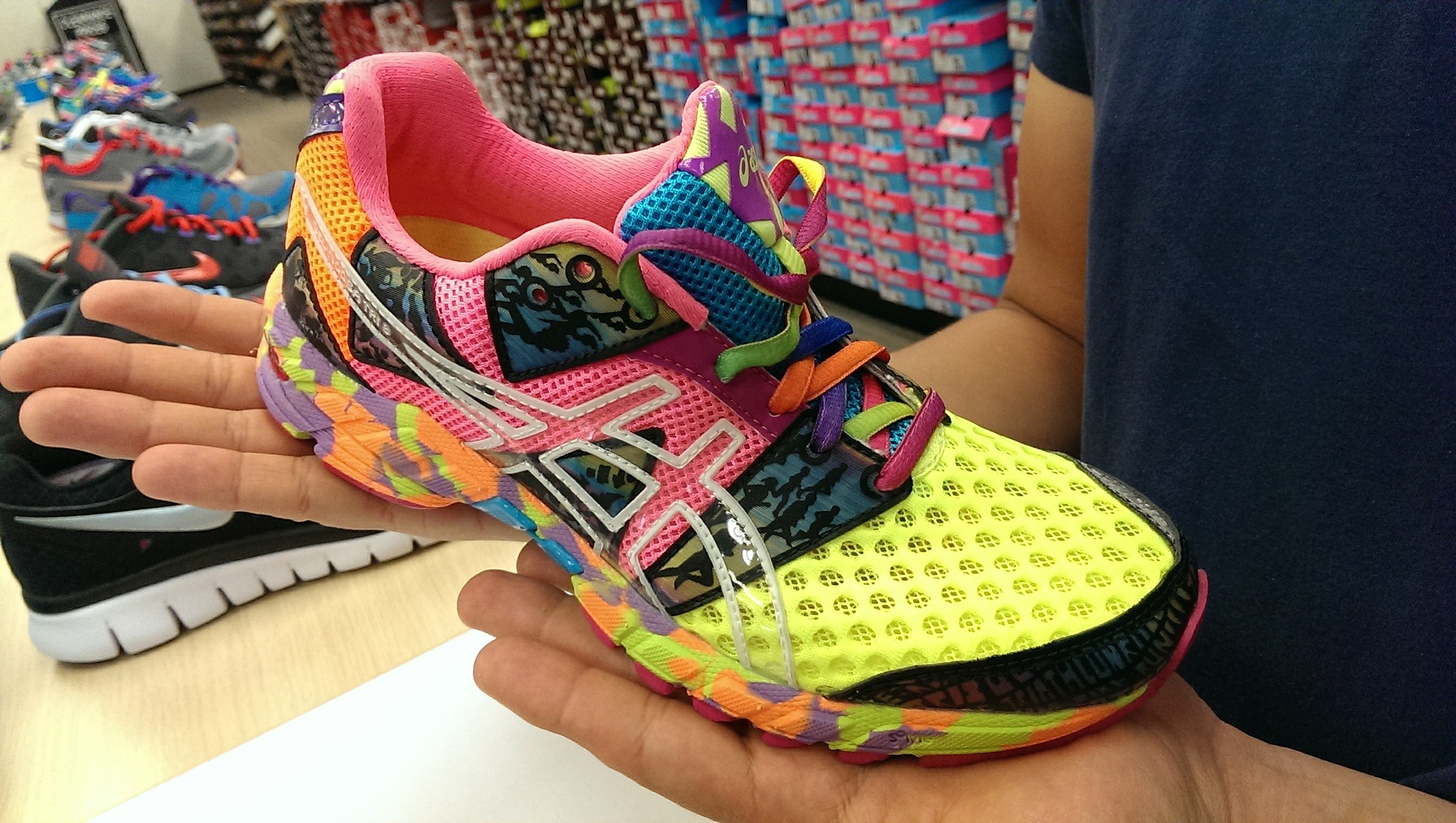

Five Myths You Should Disregard When Buying Running Shoes


Getting ready to shop for a new pair of running shoes? DPT Max Biessmann debunks five common myths you encounter when talking shoes and explains what you should pay attention to when shopping for running shoes.

BY MAX BIESSMANN, DPT, RAUSCH PHYSICAL THERAPY
USAT LEVEL I COACH, ASCA LEVEL I COACH, USA SWIMMING COACH


How often have you been to a 5k race or local weekly run and heard different runners comparing and talking about their shoes? There are many things avid runners can and will say about shoes, such as why they run in a certain pair and why that pair is better than any other, but with so many types of running shoes out there to choose from (and just as many opinions) how do you separate fact from fiction?

As a professional triathlete and doctor of physical therapy, I’m going to discuss some common myths I hear about running shoes to help you make a better decision when buying or trying out your next pair.

MYTH #1: Brand “X” is Better than Brand “Y”

I often hear people say they will only run in [insert name of major running shoe brand here] and that [insert name of competitor running shoe brand here] is not as good because of [insert sales pitch here.] Well, this is not entirely true.

Every major brand offers a wide variety of types of shoe to address the multitude of needs of all runners, from beginner to advanced marathoner. With this in mind, it’s not necessarily a specific brand of shoe that will work best for you, but a specific type of shoe. Do you need a lot of motion control? More cushioning? Do you want more road feel? There are types of shoes that can help each of these aspects.

That being said, there are three main features that can really change the shoe and therefore should take precedence in your decision making process: the amount of pronation control, the stack height or cushioning, and the heel toe drop/ramp. Pronation control refers to the amount of support along the inside aspect of your foot/arch and is designed to prevent your foot from collapsing inward into the dreaded over-pronation range. Stack height is the amount of material in between the sole of the shoe and your foot and is often thought of as padding or cushion. Heel toe drop or ramp is the difference in stack height from the heel of the shoe to the toe of the shoe.

If you’re lost as to what type of shoe is best for you, keep these three features in mind and ask an expert. Many running shoe stores will allow you to run in shoes at the store in order to recommend a type of shoe to help get you started in the right direction.

MYTH #2: There’s an Ideal Heel Ramp/Drop for Running Shoes

As mentioned above, the drop or ramp of a shoe is the difference between the stack height of the heel and the toe. The current standard is 10mm, or a heel that is 10mm higher than the toe of the shoe. However, some companies have started advertising a “zero drop shoe” (same height at heel and toe) because higher heel ramps have been blamed for an increase in heel striking and over-striding in runners, leading to an increased injury rate. However, there is currently no sound scientific research to prove that theory. In fact, it can also be argued that since the sole of a shoe compresses under a load, then a zero drop could become a negative drop (basically the heel becomes lower than the toe.)

The truth is that there is no specific standard drop that works best for everyone; the only way to determine the best drop for YOU is to have your gait analyzed by a trained professional. So check the drop of the shoe and find one that works for you; many companies offer ranges of drop from 0mm to 10mm. If you have good success in a specific drop of shoe, be careful not to make a large, sudden change when it’s time to replace that pair.

MYTH #3: There’s a Pair of Running Shoes That Will Make You Faster Although everyone is looking for that one pair of shoes that will magically make them faster, the reality is that the shoes on your feet won’t greatly slow you down or speed you up because they are not performance enhancing in and of themselves. Shoes are a tool that help you complete the necessary training without injury. For example a recent study discovered that adding 100 g (3.5 oz) to shoe weight affected well-trained runners by 1% over a 3k time trial. At 4 min/k (6:25 min/mile) this equates to approximately 7 seconds per 3k. So unless you are looking for those few seconds to win an Olympic gold medal, shoes are not going to make a huge difference overall, and you’re best off in the shoes that are the most comfortable and allow you to train the best without injury or discomfort.

MYTH #4: Shoes With More Padding Prevent Injury

The current trend in running shoes is shifting away from the minimalist movement of a few years ago toward increased padding or stack height. Many people are embracing the increased padding trend, claiming that it will help reduce the load on the joints and, thus, injury rates.

The concept behind this is sound, but good running form and mechanics revolve around being able to absorb and reuse the load to propel the runner forward. Good running form will put about 2.5x your bodyweight of force through your legs; as this force is applied, your legs and entire body must make very quick alterations in muscle activation patterns in order to maintain proper alignment and distribute the loads correctly across the various joints. However, when you run in maximal shoes, or shoes with a lot of padding/stack height, the padding will reduce some of the sensory input from your foot that is required for your brain to maintain the proper alignment. This doesn’t mean that shoes with increased padding are necessarily bad, but they do not prevent injury as some would claim.

MYTH #5: Shoes Change the Way You Run

Shoes can have minor effects on the mechanics within your foot and up through your leg, but the most important part of running form is the way YOU move and your own mobility, strength and motor control. Certain types of shoes or designs can be beneficial in helping you achieve the proper mechanics, but they will not fix anything.

Final Tips

In the end, the selection of a running shoe is a very personal decision and depends on many factors; I hate to be cliche, but there’s really no “one-size-fits-all” answer to running shoes. Here are my final tips and things to remember when purchasing your running shoes:

  • Just because your friend swears by a certain brand or model does not mean it will be the best for you.
  • When looking at running shoes, always take into account your running history, your body type, and your average running surface.
  • It’s important to test any shoe you buy—most running shoe stores will have a treadmill or will let you try the shoes out in front of the store.
  • If you ever see a demo night for a specific brand of shoes, try them out! One of the best things you can do for your running is to play the field with running shoes and try out different designs and models.
  • It is usually best to have several pairs of shoes in your stable to use for different types of runs. Changes in shoe dynamics will change the forces relayed into your foot and body during runs and can reduce overuse injuries.


StaffHeadshot-MaxMax Biessmann, DPT is a licensed physical therapist at Rausch Physical Therapy & Sports Performance. He received his Doctorate of Physical Therapy degree at the University of St. Augustine, San Marcos in 2016 and started his career at Rausch PT. Max is passionate about helping people achieve their goals through physical therapy and innovative rehab technologies. As the Endurance Sports PT, Max says he’s lucky to be able to combine his professional coaching experience and PT knowledge to help his patients achieve their personal bests in sports and daily life.

Learn more about Max and our other physical therapists »


Why Rest Isn’t Always Best After an Injury


While rest does help inflammation go down after injury, too much rest can actually slow down or inhibit the healing process. Ashley Heller, PT explains how resting after an injury is not the solution to healing.

Blog-Ash
BY ASHLEY, MPT, RAUSCH PHYSICAL THERAPY

Patients will often come in for physical therapy only after resting their injury for weeks; these are the same people who then ask me, “Why am I still injured and in pain? I took a whole month off!” It’s a common belief that staying off of and resting an injury will help it heal back to normal. In reality, when you rest an injury for a month, all you accomplish is four weeks of weakening the surrounding muscles.

While it does play an important role, rest is typically not the full solution for an injury.

What about R.I.C.E?

Rest does allow for inflammation to go down. In fact, R.I.C.E (rest, ice, compression and elevation) is key during the acute inflammation phase (first 24 to 48 hours after injury.) However, as the complete inflammatory process begins to calm down (between two to three weeks after initial injury) it’s important to return to modified activity to avoid tissue irritation and to prevent chronic swelling.

So yes, rest is good, but like most things in life, too much of a good thing can be bad! With rest comes de-conditioned muscles, which can then potentially lead to muscle imbalances or muscle atrophy. Returning to previous activities with these types of strength deficits after a month of rest can result in rapid re-injury and chronic pain. Remember, Resting → De-conditioning → Atrophy → Muscle imbalances → Increased risk of re-injury.

As illustrated in the following infographic, the person who begins to stretch and strengthen after the acute inflammation ends is able to make a quick, full recovery, while the person who instead chooses to rest their injury for a month as his rehab method has only put himself at risk for re-injury when attempting to return to normal activity.


Use it or Lose it

During the muscle strengthening process, strength gains made in the first two weeks can be attributed to “neuromuscular strengthening,” which refers to muscle memory and the brain’s ability to “turn on” a muscle. After those first couple weeks, true muscle strength gains begin to occur between four and six weeks.

In comparison, muscle atrophy happens much quicker than muscle strengthening. The early stages of muscle atrophy can occur as soon as one to two weeks. The extent of muscle atrophy directly relates to the injury severity and amount of time immobilized, meaning the longer you don’t “use it” the more you “lose it” and the longer it will take you to regain full, true strength back.

When to Start Stretching and Strengthening

Think of scar tissue like a scab that lays down in a randomized fashion over the injured tissue during the healing process. Although trying to stretch the scar tissue too soon will damage the adhesions that are trying to form, stretching scar tissue at the appropriate* time will allow the tissue to lay down in a more organized fashion and promote flexibility. Likewise, soft-tissue work during this time is essential to promote better flexibility.

*The appropriate time to start stretching scar tissue is when it can be done without localized pain at the site of the injury (this can vary from patient to patient and the severity of the injury.

Forget ‘No Pain, No Gain’

Just remember, there is a significant difference between “good” pain and “bad” pain. You should leave PT feeling less restricted and able to move more freely; subsequently that newfound mobility or strength may be accompanied by treatment or exercise soreness, which I refer to as “good pain.” Good pain is that feeling after a good deep-tissue massage, muscle soreness from a great workout, or a specific stretch that is making change. “Bad pain” refers to pain as a likely result of treatment or exercise that is too long, too hard, or too intense, which can cause tissue irritation and pain. Finding just the right amount of exercise and activity is crucial to finding balance between recovery and progression rather than taking steps back.

Conclusion

Ultimately, your physical therapist is there to help guide your recovery during the healing process. PTs are your best resource for advising you what you should be doing and what you should be avoiding at your current stage during the recovery process. People re-injure themselves when they do too much too soon after an injury. This can happen when the weakened tissue is put under too much stress too soon. PTs are experts when it comes to progressing you to the right exercises at the right time, with the right amount of intensity or resistance. Although physical therapy cannot necessarily “speed up” the body’s inflammatory response and healing process, it can enhance tissue recovery, joint restrictions, muscle function, and address potential movement pattern dysfunctions that could lead to the initial injury. Your PT can help advise you of the appropriate amount of activity during the recovery process so you can get back to doing what you love quickly, healthier and stronger than before.


StaffHeadshot-Ashley2Ashley Heller, MPT is a licensed physical therapist at Rausch Physical Therapy & Sports Performance. She received her Masters of Physical Therapy degree at California State University, Long Beach and is passionate about working with patients with shoulder, knee and ankle injuries. With background in orthopedic-related injuries and post-operative rehabilitation, Ashley believes that the combination of manual therapy and personalized therapeutic exercise program is vital to recovery. Known as the Water Sports PT, Ashley says her goal is to help her patients better understand their injuries and the plan for their road to recovery.

Click to learn more about Ashley and our other physical therapists »


Client Spotlight: Arland Van Horn

Arland Van Horn is a real-life Superwoman. When she’s not at her day job at Disney, or at her after-hours job as co-founder of STRIVE Omni Sport, Arland is busy training for her next race. She did triathlon back in college, took a break, but started racing again in her 40’s. Most recently, Arland completed a full IRONMAN in Canada back in July, but a back injury almost derailed her journey to completing her second IRONMAN before it could even start.

“I was having a lot of lower back pain on the bike,” Arland said. “I was already committed to IM Canada and I was worried I wouldn’t finish the bike if I didn’t address whatever was causing the back pain. 112 miles of really hilly biking was looking almost impossible.”

Yep, even superhero bodies break down sometimes. Arland has been a patient at Rausch Physical Therapy & Sports Performance for many years now for a myriad of injuries. As a passionate believer in STRIVE’s mission to “to reach limits we thought unachievable” and “STRIVE to be the best that we can be,” Arland says she appreciates Rausch PT’s focus on goals, not just fixing an injury.

“I hate being injured, but I actually really enjoy going to the clinic, even though that’s weird,” she said. “It’s a fun, supportive, goal-oriented environment. No one tells me “no” or “you can’t” (at least that I’ve listened to.) The focus is always on understanding my goals and helping me overcome whatever physical obstacle may be in my way.”

Arland says her PT Ashley not only helped her make it to the start line in Whistler, but her advice also really helped her push through to finish the bike.

“I finished!” Arland said. “That’s always the main goal in an IRONMAN. I had a PR swim, a rough bike and a decent run. I still had back pain (I probably started working on it a little too late to completely correct the issue,) but I was able to get through it through a lot of strategies Ashley helped me create. Did you know you can do “Cat/Cows” on the bike? It helps!”

Arland’s next triathlon is Oceanside 70.3 in April, and her goal is to be healthy and have a pain free race with the help of PT.

“I think triathletes in particular need to remember to take time to rehab and recover more. We are collectively terrible at it, especially me. I’m grateful to all the folks at Rausch for always being there for me when I need help.”