Seven Scapula-Focused Exercises to Help You Swim Faster


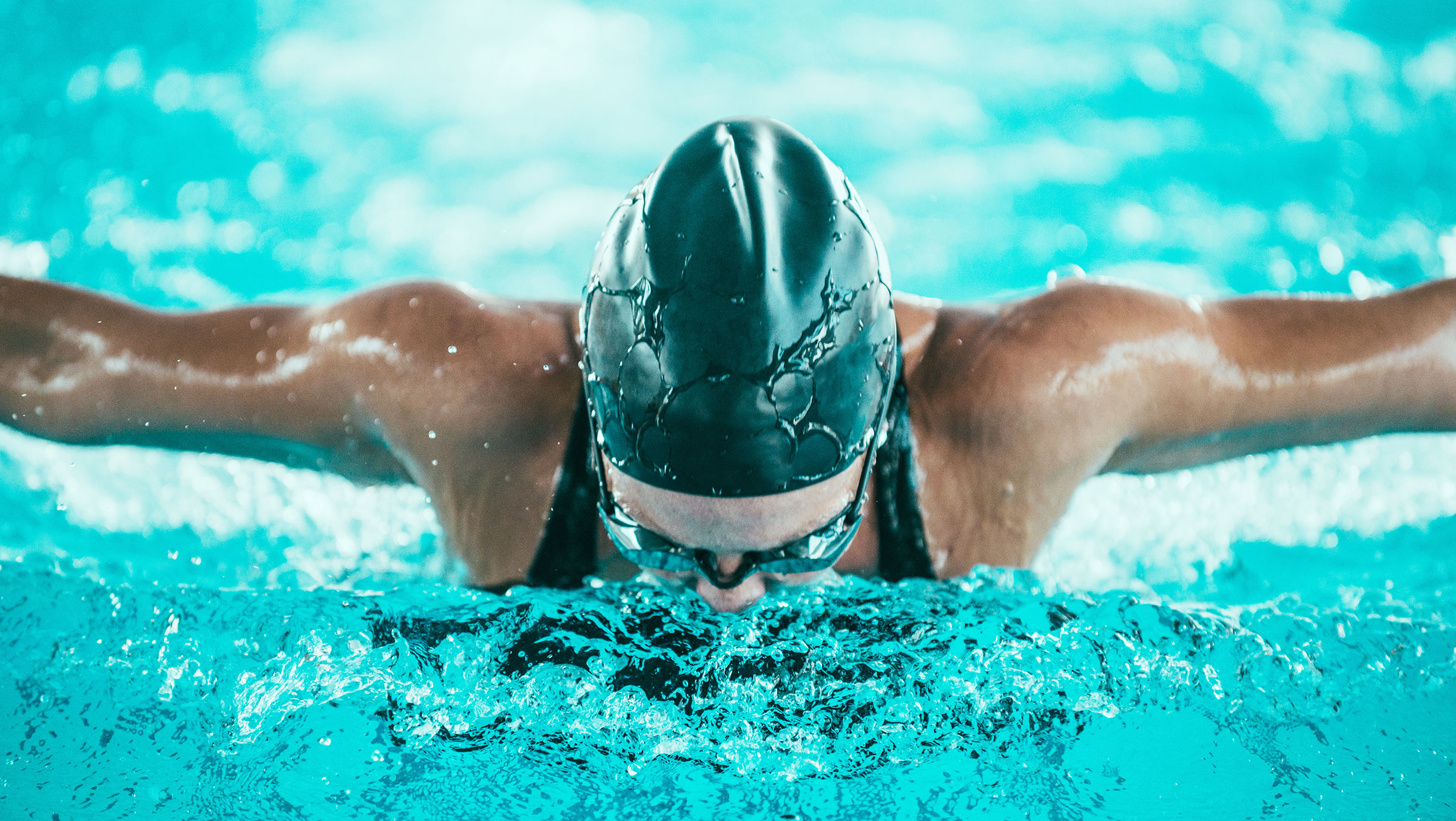
While many swimmers work hard to strengthen their shoulder joint, few do anything to optimize the shoulder blade itself. PT Max shares why this is important and what exercises you should start doing.

BY MAX BIESSMANN, PT, DPT, RAUSCH PHYSICAL THERAPY
USAT LEVEL I COACH, ASCA LEVEL I COACH, USA SWIMMING COACH


Most overhead athletes, especially swimmers, know that strengthening the rotator cuff is important for performance. While rotator cuff strengthening is a vital part of maintaining shoulder joint stability and proper joint mechanics, many swimmers unfortunately overlook the shoulder blade, the scapula. All that work on stabilization at the shoulder joint/rotator cuff is pointless if the shoulder blade itself is not stable.

Understanding the Scapula

The scapula contains the glenoid fossa, where the humeral head sits and is actively anchored in by multiple structures, mainly the rotator cuff musculature. Because it does not have a direct articulation with the spine or ribs like a typical joint would, the scapula must be controlled by multiple muscles that anchor it to the axial skeleton in order to provide a stable platform for the humerus (arm) to move on.

Your posture has a big effect on scapular stabilization. For example, the common “forward head/rounded shoulder posture” forces the scapula to alter its path as it moves over a more rounded rib cage into a more forward position (adducted.) This causes the scapular stabilizers to sit in a stretched position, causing the muscles to fire outside of their optimal position and weaken them through the prolonged stretch.

Before you can start working to improve your scapular mobility for a stronger stroke, you first have to learn how to properly recruit the muscles of the scapula. I suggest reading my colleague Sean Swopes, PT, DPT, CSCS article, How to Activate Your Scapular Muscles to Alleviate Pain, to learn how to do this correctly and achieve optimal posture.

Seven Scapula-Focused Exercises to Help You Swim Faster

Once you understand exactly how the scapula needs to move, you can begin an exercise program that helps improve your scapular mobility and posture, creating a stronger platform for you shoulder to help you swim faster. Here are seven exercises I like to give my patients and swimmers who need to improve their scapular stability. The first two I explain here, while the final five can be found (with video) on homeprograms.net*.

  1. Step overs. Hold a good plank position with hands directly under your shoulders step your hand sideways up onto a small step then step up with the other hand and down on the other side. 3×10
  2. Prone 90/90s. While lying on the SB in the same position as for I’s, T’s or Y’s raise your arms up to shoulder height with good scapular squeeze then rotate your shoulders 90 degress so that your arms are even with your shoulders and hands up next to your head, hold this position for 2-3 sec then lower your hands down toward the floor and relax your arms. 3×10
  3. R: T/S Extensions and Supine Angels
  4. Serratus punches/push-ups
  5. Rows (isometric scap)
  6. I’s, T’s, Y’s
  7. SB walkouts

* Click here to access your exercise program on homeprograms.net. Your Patient Login information:

Your Email: scap.stability@rauschpt.net

Your Clinic ID: 1006



PT-Headshots-MaxMax Biessmann, DPT is a licensed physical therapist at Rausch Physical Therapy & Sports Performance. He received his Doctorate of Physical Therapy degree at the University of St. Augustine, San Marcos in 2016 and started his career at Rausch PT. Max is passionate about helping people achieve their goals through physical therapy and innovative rehab technologies. As the Endurance Sports PT, Max says he’s lucky to be able to combine his professional coaching experience and PT knowledge to help his patients achieve their personal bests in sports and daily life.

Learn more about Max and our other physical therapists »

How to Get Your Body Bike-Ready


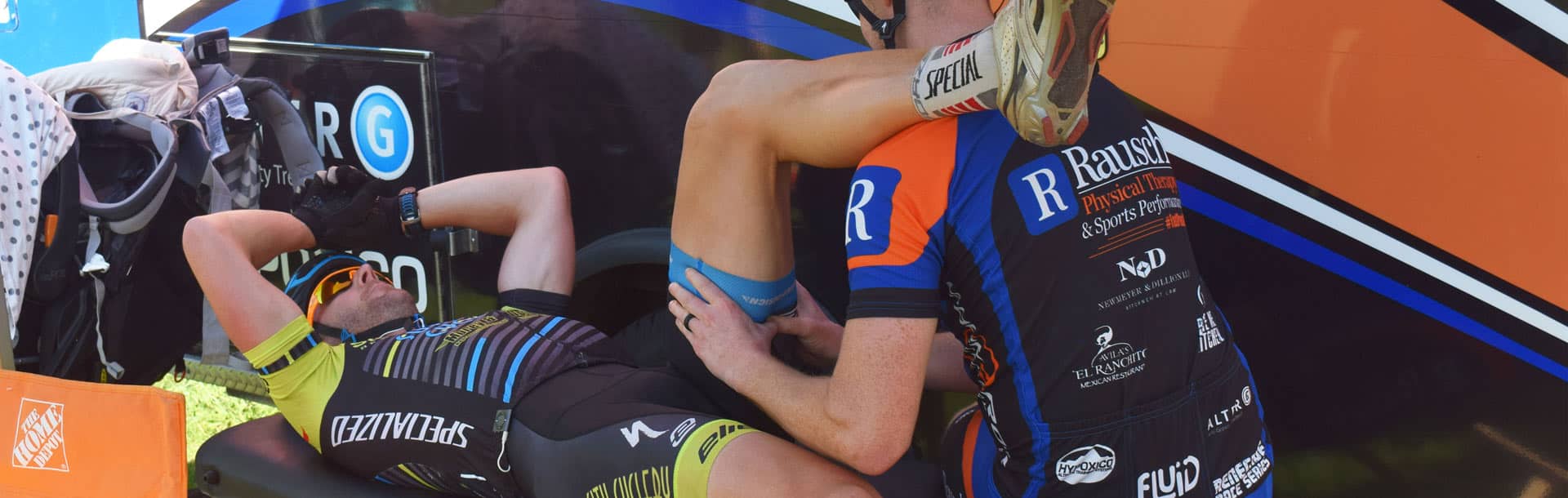
The only things cyclists should have to worry about wearing out are their tires—not their joints! Mountain Bike PT Sean shares how to stabilize three key areas of the body to prevent most cycling-related injuries.


BY SEAN SWOPES, PT, DPT, CSCS, RAUSCH PHYSICAL THERAPY

There are certain rules-of-thumb when it comes to the human body and how we are designed to move; our bodies are designed to walk, stand, sit, sleep and eat. Not on that list? Ride a bicycle.

However, that doesn’t stop us humans from having a lot of fun riding them! In fact, with research, experience and continued learning, we can make body and bike work well together. One way is to get a bike fit, which sets up the bike’s geometry to best fit the rider. You can also find a program like Ride Right, which focuses on the rider’s biomechanics. However, the most important (and oft forgotten) step if you’re planning to get into any type of cycling is first getting your body ready to tolerate all the stress it will endure while pedaling, climbing and descending.

As the Mountain Bike PT, I work with a lot of cyclists who deal with chronic pain or injury without realizing that they need to get their body in the correct balance. Like I said, the human body was not designed to be on a bike, but if you focus on and prepare a few key musculoskeletal areas, you can ride for miles without the unwanted stress.

The most commonly injured areas on a cyclist’s body are the knees, back and hips. If you can get your body in an optimal balance of strength and flexibility (also known as stability) in these areas, you can prevent most injuries on the bike.

Sean’s “Bike Bod” Exercise Program

Here are five exercises to help you gain the crucial knee, back and hip stability you need to avoid most cycling-related injuries before you even hop on the bike:

  1. Thoracic extension over a foam roll. The goal of this stretch is to improve the mobility of the thoracic spine to improve the postural alignment of the spine and decrease unnecessary stress to the lumbar spine.
  2. Prayer Stretch (Child’s Pose.) This a truly versatile stretch that can improve your overall mobility. The key is to prevent your lumbar spine from becoming overly-flexed to emphasize maximal mobility out of the hips.
  3. Hand Up Stretch (Couch Stretch.) The focus of this stretch is to improve your quadriceps and hip flexor mobility. The key is to maintain a posterior pelvic tilt (flatten the curvature of your lumbar spine) while sitting up tall.
  4. Squat with a stick overhead. This is not only a great exercise, it’s also an assessment. It will point out the flexibility and lumbopelvic (core) weakness you have.
  5. Dynamic LE warm up: Worlds Greatest Stretch (WGS) and Inchworms. WGS will take every aspect of the body to its end-range to prepare it for what’s to come, while inchworms focus on improving mobility of the entire posterior chain.


*Check back soon for my video explaining more about these five exercises!


Conclusion

As an avid cyclist, the only things you should have to worry about wearing out are your tires—not your joints. By taking the time and doing the work to optimize your body stability, you can defy human nature and adapt your body to your bike so you can continue to enjoy riding for many years, pain-free.


Sean Swopes, PT, DPT, CSCS graduated from CSU Fullerton with a bachelor of science in kinesiology. He went on to receive his doctorate in physical therapy in 2015 from University of St. Augustine, and began his career here at Rausch Physical Therapy and Sports Performance. Sean is also a certified Strength and Conditioning Specialist. As a physical therapist, Sean’s goal is to help his patients understand their musculoskeletal impairments and work together to improve them.

Learn more about Sean and our other physical therapists »

Why Your Daughter is More at Risk for an ACL Tear Than Your Son


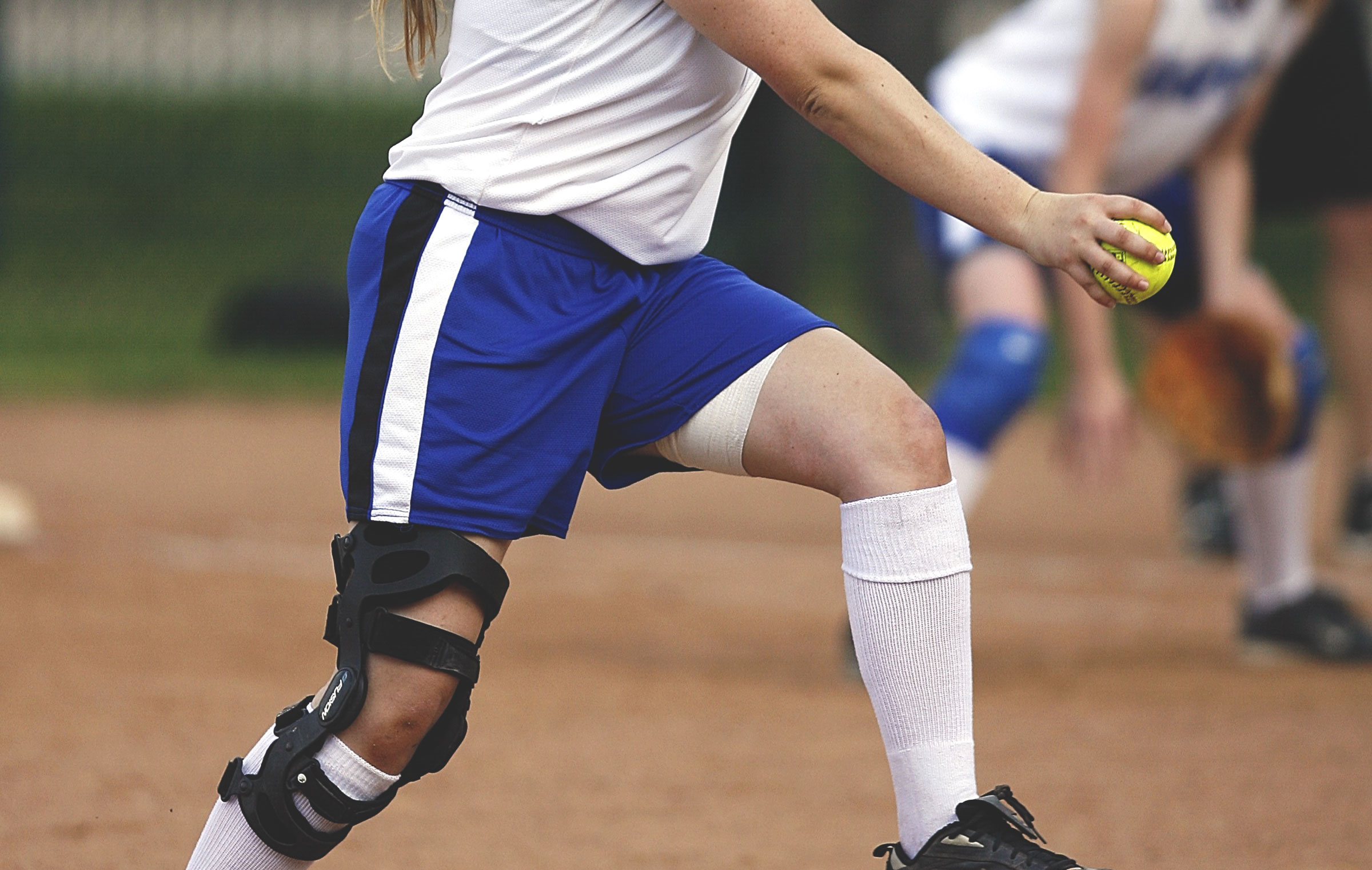
One of the more common—and arguably one of the most devastating—injuries a young athlete can sustain is an ACL tear. Diana Wang, PT, DPT, ATC explains what causes ACL injuries and why she believes it’s so crucial for young women to be proactive to prevent this scary setback.


BY DIANA WANG, PT, DPT, ATC, RAUSCH PHYSICAL THERAPY

One of the most common (and arguably one of the most devastating) injuries a young athlete could sustain is an ACL tear. Your ACL, or anterior cruciate ligament, is a part of a team of ligaments in the knee that helps maintain stability and withstand the force/stress from daily movement and physical activity. The main job of the ACL is to limit forward motion of the tibia (the lower leg) on the femur (the upper leg.) The ACL also limits tibial rotation when paired with an angular force at the knee.

What Causes the ACL to Tear?

The ACL limits certain motions, but just like any other soft-tissue structure in the body, there is a limit to its limitations.

While parents often fear their young athlete will get injured from being aggressively slammed in to, the fact is that 70-78% of ACL tears are non-contact, meaning there was no involvement of external forces. The most common mechanisms of ACL tears include:

  • The “plant-and-twist” motion
  • Sudden deceleration
  • Hyperextension of the knee

With that said, athletes in sports that involve repetitive jumping, landing or cutting—such as basketball, soccer and volleyball—are at a higher risk for ACL injuries. And what puts young athletes at even more risk? Being female.

Why Female Athletes are More Vulnerable to ACL Tears than Male Athletes

According to the National Institutes of Health, female athletes are two to eight times more likely to suffer an ACL injury than their male counterparts. Here are three reasons why:

#1: Anatomical differences


Females are born with wider hips than males; because of this, the alignment between the hips and the knee (known as the “Q-angle”) increases and makes females more susceptible to a “knocked knees” posture. This abnormal posture forces more torsion in the internal rotation and adduction angles in an attempt to create more knee stability. This then increases stress on the ACL, thus increasing risk of injury.

#2: Muscle imbalances

In general, most people have a poor quadriceps-to-hamstring ratio. However, females tend to be more quadriceps dominant during functional activity compared to males, especially during deceleration or sudden changes in direction. This quadriceps dominance produces repetitive anterior shear forces of the tibia on the femur, which then increases stress on the ACL to do its job and limit these forces. As I mentioned earlier, there is a limit to its limitations, so if the forces overpower the strength of the ACL, something’s gotta give.

#3: Hormonal changes

During menstrual cycles or hormonal changes (Hello, puberty!), soft-tissue structures tend to loosen up, which decreases overall joint stability and therefore increases risk of injury during that time. Unfortunately this factor is the most uncontrollable, but the prescription of a specific and well-developed exercise program will prepare any young athlete to withstand the stresses of physical activity, regardless of what their body is going through.


How to Decrease the Risk of ACL Injury

Preventative rehabilitation is key to reducing risk of ACL injuries! While you can’t change anatomy, you can train your body to combat instability and the stressors that comes with physical activity. The first step for prevention is to visit a physical therapy clinic and undergo a functional movement screen with a licensed physical therapist. From there, your physical therapist will create an individualized and specialized exercise program focused on mobility and stability tailored to your needs.

Disclaimer: No movement screen will guarantee prevention of injuries. However, they are extremely useful for physical therapists to identify movement faults that may increase risk of injury.


Diana Wang graduated from the University of the Pacific with a bachelor’s degree in Athletic Training. Following graduation, she knew she wanted to pursue her love for sports rehab further and received her Doctor of Physical Therapy degree in 2017 and began her career at Rausch Physical Therapy & Sports Performance. With her extensive sports background, Diana’s goal is to provide the best, most innovative care to get athletes back in the game faster and stronger than ever.

Learn more about Diana and our other physical therapists »