

Do You Care More About Your Car Than Your Health?


If we have no problem spending the time or money to take our cars in for a tune-up on a regular basis, why do so many people struggle doing the same for their body? PT Ruth Meltzer explains why putting your body on a maintenance program will benefit you in the long run.

Ruth-Blog
BY RUTH MELTZER, PT, DPT, OCS, RAUSCH PHYSICAL THERAPY

Do you own a car? Do you take it in for regular tune-ups? Even if there aren’t any glaring issues, I bet you do take your vehicle in to the shop every x-amount of miles to get the tires aligned, change the oil, and have an expert take a peek under the hood to ensure everything is running how it should be.

We all know that proper maintenance helps avoid costly breakdowns, long-term mechanical problems, or *gasp* having to go days without a car while it’s getting fixed. So if we have no problem spending the time or money to care for our cars on a regular basis, why do so many people struggle doing it for their body? Do you really value a car more than your health!?

We need to change the way we think about our health and wellness and finally take charge of our bodies. “Wellness” is defined as “the quality or state of being healthy in body and mind, especially as the result of deliberate effort.” We need to deliberately make the choice to get healthy and stay that way. By being your own advocate and putting your body on a maintenance program—just like you do with your car—you can keep your (musculoskeletal) parts oiled, aligned and moving correctly to avoid costly breakdowns (injuries).

Direct Access and #FastPassPT

Let’s say you’ve signed up for a triathlon, but during your second week of training you notice your shoulder bothers you after every swim. However, you’re determined to keep training, so you ignore it for weeks until the pain has become so bad that you finally decide to go see your doctor. You wait weeks to get in to see her, just to have her tell you to schedule a physical therapy appointment. By this time, months of neglect have turned a minor issue into a major injury that will now take more time, money and energy to address.

This is just like an easily avoidable car breakdown. Your check-engine light comes on (first twinge of pain), but you ignore it because of time or money or just plain negligence. You keep trucking along, until that fateful day when you break down on the side of the road (injury). Now you have to wait hours (weeks) for a tow truck (doctor’s appointment) and pay for that. Then you have to pay the mechanic to figure out the problem and fix it (PT)! Your car (body) is out of commission for weeks, and you’re stuck Ubering around (putting your training on hold) thinking how all this could have been easily avoided with better care and maintenance.

It doesn’t have to happen like this! If you live in California or any other state with Direct Access laws, now is the time to take charge of your health and come in to physical therapy for regular tune ups before you get injured or at the first inkling of pain, no doctor prescription necessary.

What Does a Wellness “Tune-Up” Look Like?

At Rausch Physical Therapy, we call tune-ups “Wellness Checkups,” and we recommend one every six months. At your checkup, a doctor of physical therapy will do a quick assessment of your body’s flexibility, strength, control, and movement to identify and address any dysfunctions. You leave with an individualized plan of care and strength and stability exercises to do at home to help prevent any potential issues down the road.

As musculoskeletal experts, physical therapists treat the body as a whole; when you come in with knee pain, we know to look at your hip, pelvis, spine and foot to see how they might be affecting your knee joint. Getting regular tune-ups with your physical therapist will help keep your alignment in check to guarantee all your parts are working like they should be. Of course, if injury does happen, you can come DIRECTLY in to see your PT as soon as you feel it. The longer you wait, the more time your muscles have to create imbalances and cause long term dysfunctions.

I hope this summer you decide to start keeping up the maintenance on your body like you keep up your car. With proper care and upkeep, you can ensure your body is always able to continue doing what you love to do and ready to handle anything life throws your way. Come see me at Rausch PT, and I’ll help you get started on a successful wellness program!


RuthRuth Meltzer, PT, DPT, OCS is a licensed physical therapist at Rausch Physical Therapy & Sports Performance. She received her Doctorate of Physical Therapy degree at Loma Linda University in 2012 and received her orthopedic specialization in 2015. Ruth enjoys looking at functional movements and tailoring exercises and programs to help her patients as an individual not just a body part.

Click to learn more about Ruth and our other physical therapists »
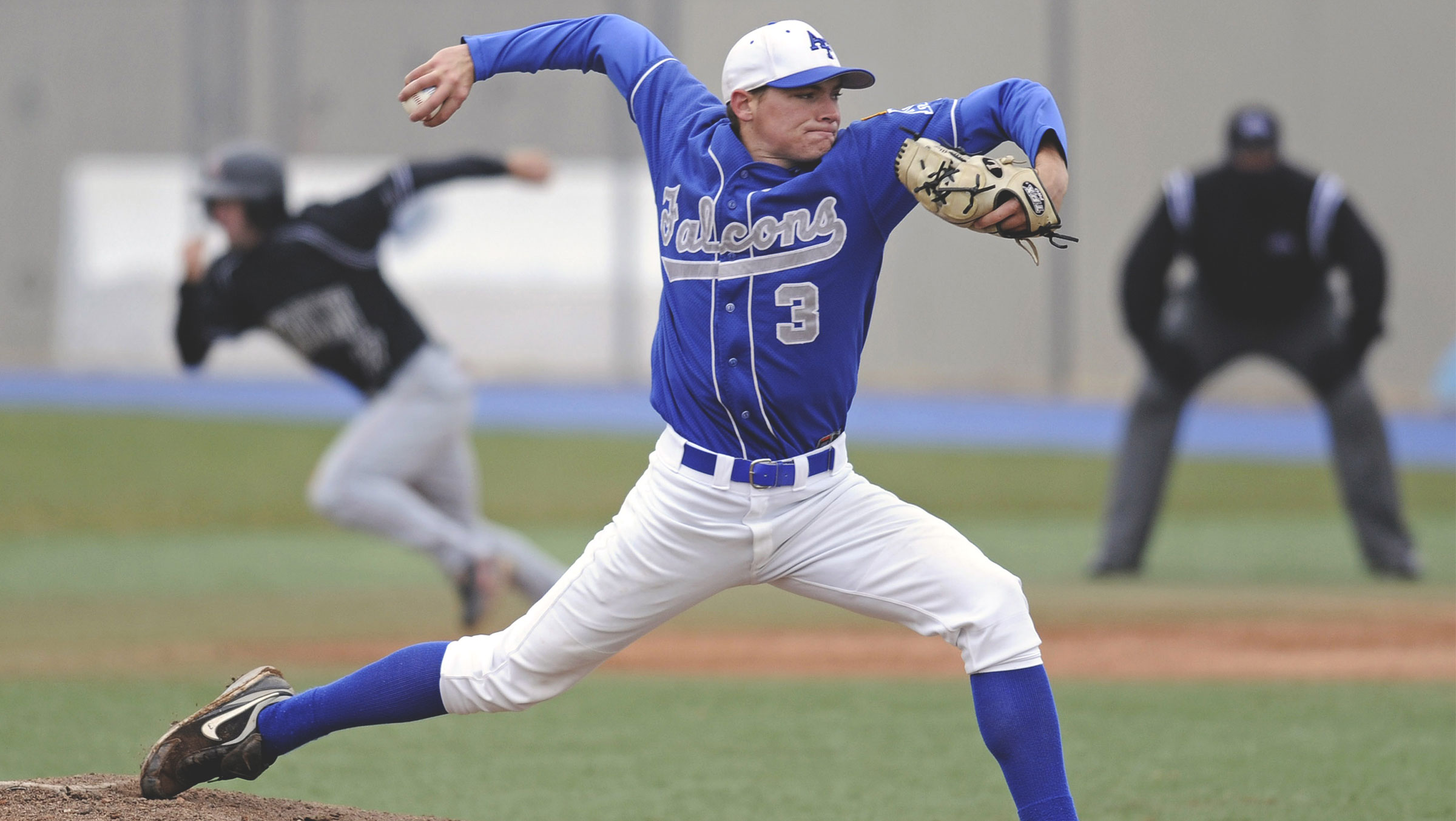
To Throw or Not to Throw this Offseason?


Baseball season is tough enough on a young athlete’s body, should you really be throwing in the offseason? PT Jonathan Meltzer explains what you should do in the offseason to set yourself up for a successful, healthy upcoming season.

Jonathan-Blog
BY JONATHAN MELTZER, PT, DPT, RAUSCH PHYSICAL THERAPY

Baseball demands a lot out of a young athlete’s body through the course of a season. It’s the only sport that plays on consecutive days in a week, multiple weeks throughout the year. The ability to make it through the season healthy takes time, effort and diligence. As The Baseball PT, the questions I always ask my patients at the end of the season are:

  • Did you stretch, foam roll and warm up properly before and after every practice and game?
  • Did you perform your rotator cuff and scapular strength exercises?
  • Did you let your coach, trainer or physical therapist (me) know if you were struggling with pain or an injury?

The answer should be a resounding, “Yes!” to all these questions. If your answer is, “I’ll just deal with it/recover in the offseason,” guess what? It’s the offseason and your arm is sore, your legs and back feel tight, but then club/college teams are asking you to jump on their team! Should you do it? Is it smart? Are you risking your arm health?

The fact is that playing summer ball or going to college recruitment is a top priority if you want to advance your baseball career, and I agree that you should take advantage of those opportunities. However, I have specific recommendations for my players, especially pitchers, to help them be smart about offseason play.

#1 – Take a four to six-week break

Immediately after the season ends, I recommend you take four to six weeks off from throwing completely. The shoulder and elbow need about a month for the tissue to calm down, regenerate and recover from the season-long wear and tear. Consider this time as an “active rest,” defined by:

  • Cross Training with a different sport or activity
  • Recovery with soft tissue work and stretching

Once you have completed the recommended four-to-six week break, begin a return-to-throwing program—slow and steady.

#2 – Get strong in the summer

Summer is the time to lift and get really strong so you can improve the dynamic stability and rotational strength you need to return to play. Implementing specific strength exercises, such as lunges, deadlifts, and rotational med ball toss, as well as agility training and plyometric exercises, are crucial during this time.

Conclusion

So, to throw or not to throw? Both! Take that initial four to six weeks off to let the tissue heal, then progress into an interval throwing program. If you’re confused on how to do this, make an appointment with me at Rausch Physical Therapy & Sports Performance; I’ve developed a return-to-throwing program that will get you where you need to go. If you use the offseason to develop good recovery habits, train hard and expand your strength, you can set yourself up for a successful upcoming season.


Jonathan Meltzer graduated from the University of Redlands with a bachelor of arts in biology and a minor in physical education. Following graduation, Jonathan discovered his passion for physical therapy while working as a Physical Therapy Aide. After graduating top of his class from Loma Linda University in 2012 with a Doctorate in Physical Therapy, Jonathan began his career at Rausch Physical Therapy and Sports Performance. Jonathan’s goals are to identify limitations and treat his patients with the most recent and innovative techniques in order to maximize functional independence and obtain his patients’ individual goals.

Click to learn more about Jonathan and our other physical therapists »

 

The Forgotten Disciplines of Triathlon


PT Kevin Capata shares why its not the lack of mileage that you put into your training schedule that has kept you from reaching your PRs, staying injury-free, or conquering plateauing, but the often forgotten aspect of cross training.

Capata-Blog
BY KEVIN CAPATA, PT, DPT, CSCS, RAUSCH PHYSICAL THERAPY

If you’re an amateur triathlete like me, you’re probably often stressed trying to juggle all the tasks of daily life with a set training plan, strict dietary guidelines, and recovery efforts. So maybe you’ve already heard about the benefits of adding cross training to your plan, but you’ve always thought, “I just don’t have time. When am I supposed to get to the gym to lift weights or attend weekly Yoga class?” “How the heck am I supposed to cram in even more training?”

All good questions, and trust me, I get it! But I challenge you with one of my own. Have a 25-mile ride planned for Monday morning? Why not make it 22 miles, and use that extra 15 to 20 minutes to do some single-leg pistol squats, burpees, plank bird dogs, and pull ups?

It’s not the lack of mileage that you put into your training schedule that has kept you from reaching your PRs, staying injury-free, or conquering plateauing. More likely than not, it’s that you haven’t unlocked your true athletic potential by adding strength and mobility to your priority list.

The Forgotten Fourth and Fifth Disciplines of Triathlon: Strength and Mobility

Many triathletes fail to realize that by developing strength, power and mobility through cross training, they can enhance their ability to maintain that high-elbow position throughout their swim stroke, keep that high-power output during the last climb before heading into T2, or prevent the dreaded “bonk” associated with form breakdown midway through the run.

Yes, specificity of training is of utmost importance and you have to get in that swim, bike and run mileage to work toward your goals. However, to perform your best—and STAY performing your best—you also have to dedicate time to keeping your body in optimal shape.

To help, here are my top strengthening and mobility exercises. Try incorporating this exercise routine into your training plan, and I think you’ll see a dramatic difference in your performance that will finally shift your mindset on the importance of cross training once and for all.

[one_half]

Top 10 Strengthening Exercises

  1. Squats (back and front)
  2. Deadlifts
  3. SL squats (swiss ball)
  4. Pistol squats
  5. Push ups
  6. Pull ups
  7. Planks
  8. Plank bird dogs
  9. Burpees
  10. Resisted monster walks with OH shoulder press

[/one_half]
[one_half_last]hdr_logo

Click here to access Kevin’s Tri Strength Exercise Program on homeprograms.net

Your Patient Login information:

Your Email: tri.strength@rauschpt.net

Your Clinic ID: 1006

[/one_half_last]

Top Four Mobility Exercises


KCapataKevin Capata, PT, DPT, CSCS is a licensed physical therapist at Rausch Physical Therapy & Sports Performance. After receiving his Doctor of Physical Therapy degree at Columbia University, Kevin started his career at Rausch PT, where he used to work as a physical therapy aide. Now, Kevin enjoys helping his patients recognize and fix movement faults to help them overcome their injury or pain, as well as empowering them with the knowledge and tools to prevent re-injury or potential new injuries.

Click to learn more about Kevin and our other physical therapists »