How to “Eat to Heal” During Recovery


When you are recovering from surgery or acute injury, focusing on how to fuel your body can make a huge difference in your rehab success and recovery time. PT Kevin Capata shares five simple tips to help you get started building the habits for “eating to heal.”
Capata-Blog
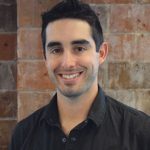
BY KEVIN CAPATA, PT, DPT, CSCS, RAUSCH PHYSICAL THERAPY

So, you’ve been coming to physical therapy twice per week for a month now, you’ve been doing all your exercises at home, you even had a therapeutic massage and tried Pilates! And yet, that pain in your back continues to linger. What gives?

There is more than just musculoskeletal injury that affects pain levels, in fact there are a myriad of other factors that can contribute to chronic pain, such as age, gender, weight, genetics, activity level, stress, and sleeping patterns, but the one most often overlooked is diet and nutrition. While physical therapists do not have the training and education to prescribe specific dietary plans like a dietician or nutritionist can, it is within our scope to understand how nutrition can aid or hinder our patient’s road to recovery.

When you are recovering from surgery or acute injury, focusing on how to fuel your body can make a huge difference in your rehab success and recovery time.

Don’t be scared of calories

Some patients, especially if they cannot walk or exercise like they normally do, try not to consume too many calories because they’re afraid of gaining weight while they’re recovering. While you obviously want to avoid over-eating, what is even more detrimental is under-eating and risking a caloric deficit, which will slow down recovery by stimulating muscle loss.

When you are recovering from injury, the dietary and nutritional requirements are similar to those during muscle growth. Our metabolism actually speeds up in order to help us heal–while it is a large range, we will burn somewhere between 5-50% more calories/day when recovering from injury. So if you want to recover quickly, limiting your caloric intake is not the answer!

Anti-Inflammatory foods are your friend

To prevent excessive inflammation that results from the stress our bodies go through while trying to heal from surgery or injury, the key is to fuel up with adequate nutrients and “anti-inflammatory” foods. Go for dietary fats high in omega-3, such as salmon, sardines, olive oil, walnuts, almonds, and avocado, as well as fruits and veggies high in anti-inflammatory properties, such as blueberries, strawberries, cherries, spinach, kale, and other dark leafy greens. You can search online for more anti-inflammatory food ideas, just remember that whole foods (not the grocery store, but real food that comes from the ground!) is always preferred to supplements or packaged or processed goods.

Protein is power

After the inflammatory phase of healing, you have to go through the proliferation and remodeling phases. Musculoskeletal injuries cause a decrease in your muscles’ ability to integrate protein, known as “anabolic resistance.” To ensure patients recovering from injury maintain the ability to build strength and decrease the chance of disuse atrophy, I recommend integrating at least 1.0 g/kg/BW of protein into their diet.

However, keep in mind that not all protein is created equal. When you can’t get it from natural food sources (e.g. beans, quinoa, eggs, fish, lean meats, nut butters, etc.) then look for supplements containing “whey” protein. Unless you have a dietary restriction and can’t consume dairy products, “whey” should be your first choice ; it is digested faster than other sources like soy or vegan and it has a greater anabolic response to aid in healing processes.

Five simple tips to eat to heal

“Actually it’s remarkable how much consensus there is about the fundamentals of healthy eating… diets that emphasize vegetables, fruits, whole grains, nuts and seeds, beans, lentils, water for thirst, and food that’s minimally processed. These findings have been reaffirmed again and again. The fundamentals are there.”
-Dr. David Katz MD, MPH, FACPM, FACP, FACLM (Founding Director of Yale University’s Yale-Griffin Prevention Research Center, and current President of the American College of Lifestyle Medicine)

Dr. Katz said it best, “If people stay confused about what a healthy diet is, you can keep selling the next diet book.” Doing something, anything at all, is always better than nothing at all! Take action and follow these simple tips to get started building the habits to eat to heal:

  1. Shop on the perimeter of the grocery store. This will force you to buy minimally processed foods, and eat as close to the earth as possible.
  2. Do not overthink it, and be realistic with yourself. You will sometimes have to resort to processed foods, such as energy bars, rice and beans, or nut butters. Just keep the “grandmother rule” in mind: If your grandma would recognize the ingredients listed on the package, then you should be good to go!
  3. Plan ahead and do some prep work. Again, KEEP IT SIMPLE. The more you complicate things, the less likely you are to follow through with it. When you are prepared and have meals or snacks planned out, you will automatically make better food choices when those “HANGRY” moments strike. Figure out what you want to eat for the week, write out a plan and list of ingredients you may need, and take action!
  4. Quit restricting yourself with fad diets or strict rules. This way of thinking and eating is not sustainable, and while it may lead to short term results, your long term health will suffer. Instead, eat with a purpose besides weight, looks or performance. Make eating a pleasurable experience, as it should be! Chew your food, take note of how it tastes, try new ingredients or recipes with your loved ones, and enjoy it without feeling guilty.
  5. Start with small, short term goals, then build upon those habits. Each week decide on one new habit that you are going to be consistent with. It could be making breakfast at home each morning, cooking dinner with mainly vegetables twice per week, or just making an effort to stop eating when satisfied rather than grossly full. Regardless of the new habit, the idea is to make a few small changes and let them build upon each other.

You can make this concept of “eating to heal” complicated by asking too many questions: “Exactly what do I eat?” “How often?” “How much, and at what time?” What it really boils down to is this: Eat mainly fruits and veggies, whole grains, small portions of meat, and minimally processed foods.

For some more pointers on tasty recipes and ways to make it simple but good, check out my Instagram @thelifestylephysio and message me your questions or concerns!

Disclaimer: This content is for informational purposes only and is not intended to be a substitute for professional medical advice, diagnosis, or treatment.
[framedbox]
References

[/framedbox]


KCapataKevin Capata, PT, DPT, CSCS is a licensed physical therapist at Rausch Physical Therapy & Sports Performance. After receiving his Doctor of Physical Therapy degree at Columbia University, Kevin started his career at Rausch PT, where he used to work as a physical therapy aide. Now, Kevin enjoys helping his patients recognize and fix movement faults to help them overcome their injury or pain, as well as empowering them with the knowledge and tools to prevent re-injury or potential new injuries.

Click to learn more about Kevin and our other physical therapists »


Let’s talk! We are here to help. Give us a call for an initial evaluation and assessment. We would love to meet you.

Did you know there’s no prescription needed from a doctor to see us – but we will communicate your progress and treatment to your doctor if you’d like us too!

(949) 276-5401

RauschPT

Disclaimer — All the information that you find on our blogs and social media pages are for informational purposes only and are not intended to be used as your personal professional diagnosis, or treatment. Come and see us for your excellent, personalized care! https://staging.rauschpt.net/

Newly discovered Alzheimer’s genes further hope for future treatments


(CNN)An analysis of the genetic makeup of more than 94,000 people in the United States and Europe with clinically diagnosed Alzheimer’s led to the discovery of four new genetic variants that increase risk for the neurodegenerative disease.

These genes, along with others previously identified, appear to work in tandem to control bodily functions that affect disease development, the study found.

“This is a powerful study, and a step forward for our understanding of Alzheimer’s,” said neurologist Dr. Richard Isaacson, who directs the Alzheimer’s Prevention Clinic at Weill Cornell Medicine.

“Finding these new genes allows clinicians to one day target these genes with therapeutic interventions,” said Isaacson, who was not involved in the study. “It also gives us a greater insight to potential causes of Alzheimer’s.”
The study’s findings will not change anyone’s “day-to-day life or medical practice any time soon,” said Heather Snyder, the Alzheimer’s Association’s senior director of medical and scientific operations, who was also not involved in the new research.
“That said, they do give us potentially useful insights into the bodily processes that may cause or interact with the changes of Alzheimer’s disease and other dementias,” Snyder added.

Unprecedented numbers

Led by a team from the University of Miami’s Hussman Institute for Human Genomics, an international consortium of researchers analyzed data collected by four centers, two in the United States and two in Europe, that make up the International Genomic Alzheimer’s Project.

he study, published Thursday in the journal Nature Genetics, was the second genome-wide association study to be performed by the group on individuals with known Alzheimer’s compared to a group of controls. The first study, published in 2013, looked at nearly 75,000 people and identified 11 gene “loci,” or locations, that had not been previously known to be associated with the development of Alzheimer’s.
By increasing the numbers to 94,000, the new study added 30% more data to the analysis, allowing the researchers to verify 20 previously found genes and add four.
How the new genes — IQCK, ACE, ADAMTS1 and WWOX — along with a previously discovered gene called ADAM10, affect the development of Alzheimer’s is under investigation. But once their specific functions are understood and examined, researchers say they will be able to begin to develop potential drug targets.
“Alzheimer’s is a complex disease. It’s not like Huntington’s or Parkinson’s, where one gene is altered and you get the disease,” said senior author Dr. Margaret Pericak-Vance, director of the Hussman Institute.
“With Alzheimer’s, it’s multiple genes acting together,” Pericak-Vance said. “We were trying to get at the very rare gene variants that could contribute to Alzheimer’s. And we couldn’t do that before. We just didn’t havethe sample size to do it.”
The study validated the previously discovered role of amyloid and immune system genes in the development of Alzheimer’s, said Harvard professor of neurology Rudy Tanzi, director of the Alzheimer’s Genome Project and a member of the international consortium.
“We had seen amyloid early on, but it had not been verified in a [genome-wide association study],” Tanzi said. “So I think one exciting thing is that it brings us back to amyloid as a major player.
“I should also say that we’re also seeing that the other major pathway besides the amyloid is innate immunity,” Tanzi said. “In this study we’re seeing even more innate immune genes affecting one susceptibility to neuroinflammation.”
A susceptibility to neuroinflammation is key, Tanzi says, “because at the end of the day, plaques and tangles may set the stage, but it’s neuroinflammation that kills enough neurons to get to dementia.”
Now having more than a dozen gene targets on how immunity ties into Alzheimer’s, Tanzi said, should “really facilitate a new drug discovery.”

Precision medicine

The increase in sample size allowed the researchers to discover “hubs of genes” that might impact the development of Alzheimer’s. “And some of those genes have the potential to have more than one function,” said lead author Brian Kunkle, an associate scientist at the Hussman Institute.

“They may be increasing risks through different disease pathways,” Kunkle said. “Prediction of risk and treatment for each individual will rely on what type of changes a person has in each of those 25 genes or other biomarkers.”

Isaacson said the ongoing work could lead to “precision medicine at its finest.”

“A person can take many different roads to Alzheimer’s,” Isaacson said. “If we can find out what road a person is on through identifying certain genes, we can target specific interventions that may work preferentially for that specific person.”
As to when that might occur, Kunkle is cautiously optimistic.
“It’s difficult to say if it will help someone that has Alzheimer’s now,” he said. “Hopefully, we will have treatments developed for their family members that may have these genes that are putting them at risk.”
Let’s talk! Give us a call for a complimentary assessment.

Did you know there’s no prescription needed from a doctor to see us?
(949) 443-0713

logo-top

[https://edition.cnn.com/2019/02/28/health/alzheimers-genes-discovery-treatment/index.html]

The Four Qualities of Quality Physical Therapy


Despite what you may believe, all physical therapy is not created equal. Too many people would rather live in pain than go to PT because they had a bad past experience. The truth is, physical therapy does work, if it’s done right. PT Jonathan shares his checklist for exemplary physical therapy.

Jonathan-Blog
BY JONATHAN MELTZER, PT, DPT, RAUSCH PHYSICAL THERAPY

Being a physical therapist is truly the best job; I get to talk sports, build meaningful relationships, and heal hurting people. Even after seven years, I still get excited every day to go to work and help people get back to doing what they love. Some of my favorite cases are people who wind up on my table because they weren’t getting better at another clinic. Not only do I like the challenge, I love changing their view of my profession by showing them what quality physical therapy looks and feels like.

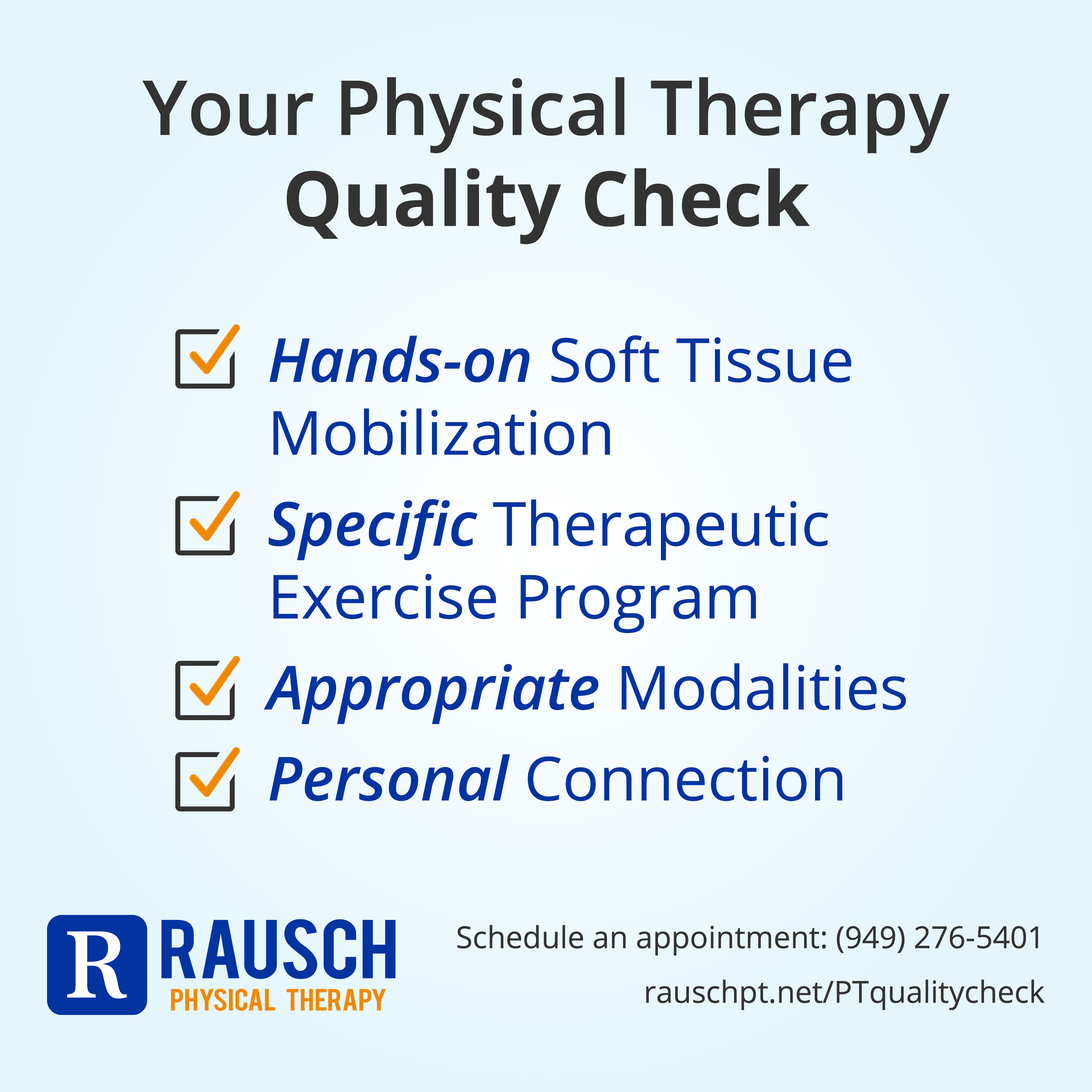
Too many people would rather live in pain than go to PT because they had a bad first experience. The truth is, physical therapy does work, if it’s done right. So how do you know if you’re getting the quality care you deserve? Here’s a short list of things that—when all boxes are checked—makeup exemplary physical therapy.

PTQualityCheck

▢ Hands-On soft tissue manipulation

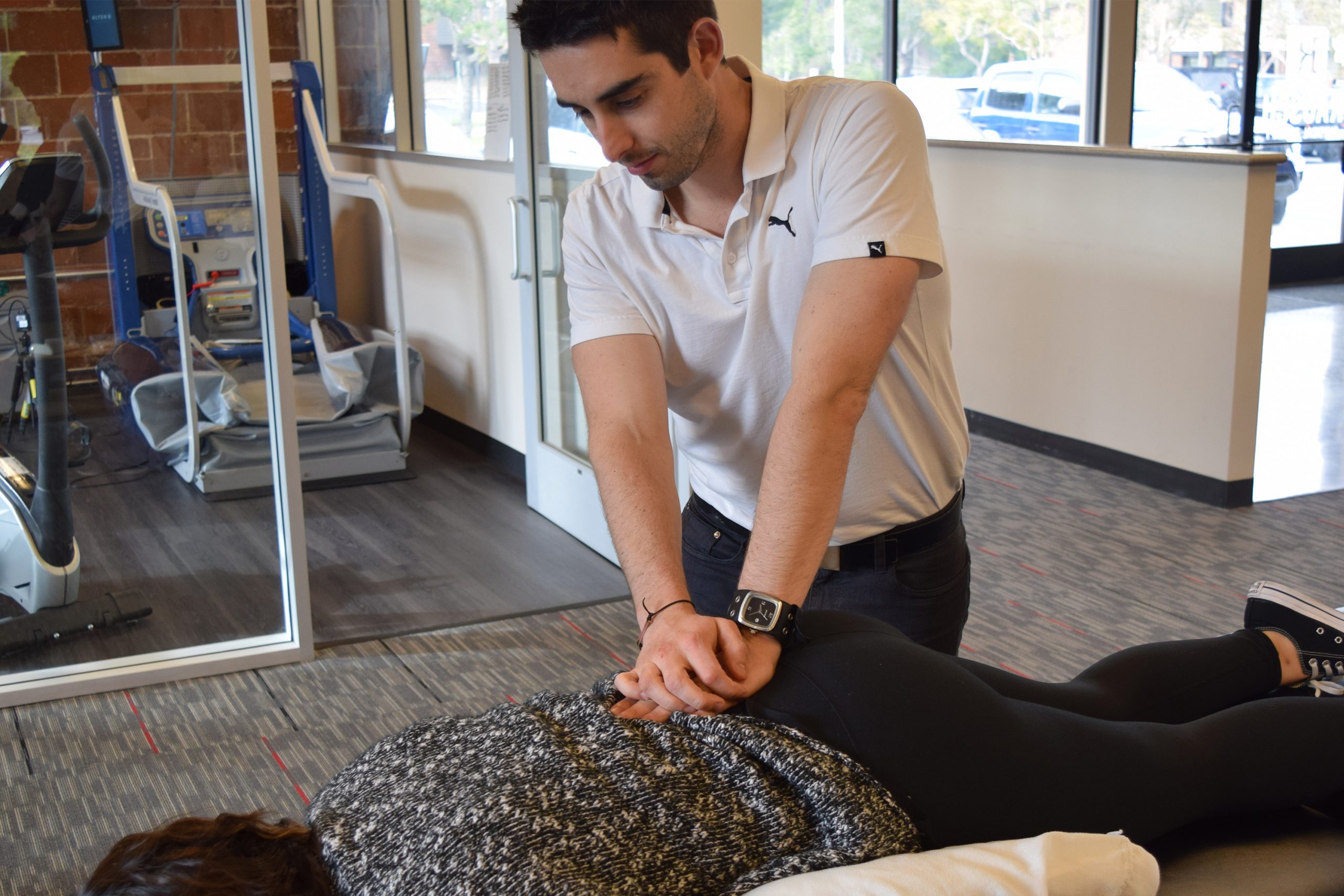
If you’ve been a patient at Rausch Physical Therapy, then you know every one of your appointments consists of at least 20 minutes of hands-on treatment with your physical therapist. What you might not know is that this is not common practice! It’s mind-boggling how many PT clinics give little-to-no attention to this critical component of care.

Manual therapy doesn’t just provide specific healing, it also allows the PT to assess the tissue and its current condition to check the patient’s progress in their recovery process. For example, if I’ve been treating someone’s shoulder and they come in one day and it feels swollen, hot and restricted, this immediately tells me they’re in pain and I shouldn’t progress their exercise program until addressing the flare up.

By performing 20 to 30 minutes of manual therapy at the site of injury/pain, your physical therapist is providing the relief and care you need to get better at every single appointment. If your PT never puts her hands on you, it’s probably time to find a new PT.

▢ Specific Therapeutic Exercise Program (TherEx)

A big pet peeve of mine is clinics who make patients suffer through “THE shoulder program” or “THE knee program.” When you end up doing the same type of exercises as everyone else with no specificity or individuality, then it’s no longer therapeutic exercise, it’s just… exercise.

To me, this is just pure laziness on the part of the PT. Our profession needs to be better and commit to providing individualized TherEx programs for every single patient who walks through our door. This requires organization, planning and monitoring of the patient during their exercises; I’m always watching, coaching and training my Physical Therapy Aides as they guide my patients through each exercise, guaranteeing everyone is going to be beneficial and healing. While this may take extra time and work, it pays off in patient success and demonstrates the value in what we do.

▢ Appropriate modalities

Using modalities in replace of manual therapy is not effective (Again, this happens way too often and is a lazy approach to patient care.) However, modalities that are up-to-date and applied appropriately are great complementary tools to advance patient healing.

Hot and cold packs help your muscles and mind relax before/after manual therapy and really bring an appointment full circle. Cupping is designed for lifting up restricted soft tissue to decompress and allow for blood flow into the area to improve healing and movement. Kinesiology tape is another way to create decompression of tissue, but it can also be used for stability. Laser is directed infrared light designed to penetrate the energy systems to increase the body’s natural inflammatory system. We utilize all these modalities here at Rausch PT, but which one we use and when depends on the patient and their specific injury; so again, individualized care here is key.

▢ Personal connection

Even if your physical therapist is doing great at all of the above, you will not get better if you don’t feel valued, respected and taken care of. The human element often gets overlooked in medical settings, despite it having a huge role in treatment success and being the biggest part of patient experience.

It’s the things like being greeted warmly by your name when you walk in the door, or being treated by the same physical therapist at each appointment who knows what you and the kids did this weekend. It’s having your favorite PT Aide walk you through your TherEx program, gently correcting you and taking the time to explain why you’re doing each exercise. It’s the human connection that propels your recovery, because you’re safe and confident knowing your rehab team truly cares about you and wants you to get better just as much as you do.

Conclusion

Research shows that manual therapy alone is not enough to achieve the full benefit of physical therapy. Neither is just doing therapeutic exercises or relying on modalities. That’s why quality physical therapists combine all of the above into their patients’ treatment plans.

I know of too many patients who had bad experiences at another PT clinic, who only got one or two of the four qualities of great care, who left less than 100% satisfied or healed. I know them because they wind up on my table, and while it’s hard work to get them to trust in me and the process, seeing them achieve goal after goal is what makes my job so rewarding.

So next time you need physical therapy, be sure you receive a combination of these elements at every single appointment. You deserve quality care, and I guarantee you’ll always get it here at Rausch Physical Therapy.


Jonathan Meltzer graduated from the University of Redlands with a bachelor of arts in biology and a minor in physical education. Following graduation, Jonathan discovered his passion for physical therapy while working as a Physical Therapy Aide. After graduating top of his class from Loma Linda University in 2012 with a Doctorate in Physical Therapy, Jonathan began his career at Rausch Physical Therapy and Sports Performance. Jonathan’s goals are to identify limitations and treat his patients with the most recent and innovative techniques in order to maximize functional independence and obtain his patients’ individual goals.

Click to learn more about Jonathan and our other physical therapists »

Let’s talk! We are here to help. Give us a call for an initial evaluation and assessment. We would love to meet you.

Did you know there’s no prescription needed from a doctor to see us – but we will communicate your progress and treatment to your doctor if you’d like us too!

(949) 276-5401

RauschPT

Disclaimer — All the information that you find on our blogs and social media pages are for informational purposes only and are not intended to be used as your personal professional diagnosis, or treatment. Come and see us for your excellent, personalized care! https://staging.rauschpt.net/