Blog

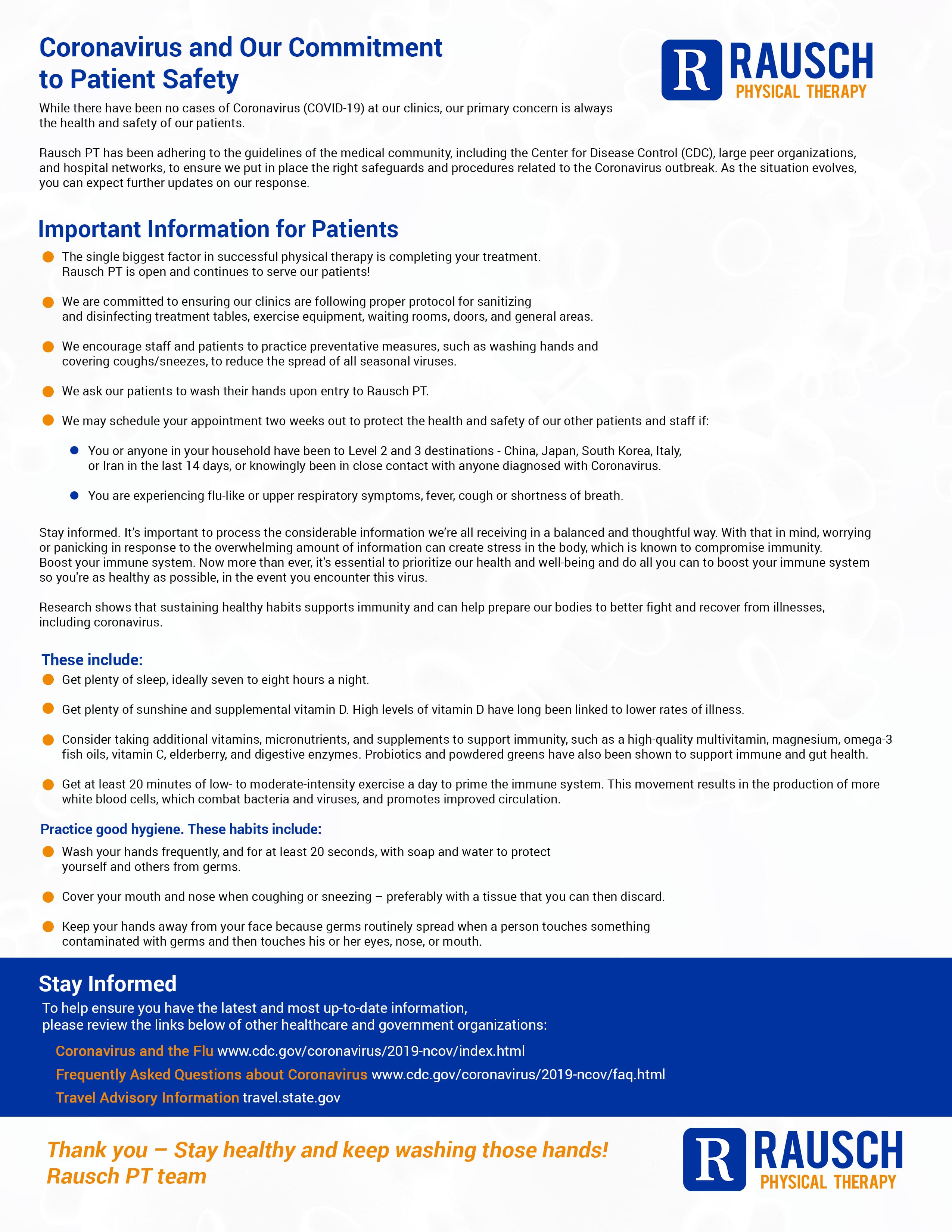
Rausch Physical Therapy is closed to due county-wide business closures to assist in preventing the spread of COVID-19 until March 31st

???? Please be advised that Rausch Physical Therapy & Sports Performance will be closed, effective immediately.

➡️We will be closed until March 31st and re-evaluate. If we can help with at-home care or exercises, or answer any questions, please call us at (949) 276-5401. If you need to see us, let us know and the moment we open we will get you on the schedule and ready to go!

???????????? We urge everyone to continue taking all recommended precautions in their personal lives to safeguard their health and that of others–this pandemic will call on each of us to do our part to contain its reach.

These are historic times, and we feel profound gratitude for this community and what it represents. Follow us here for news and updates. We look forward to welcoming you all back soon!

90458643_2940719469283816_3932696966475022336_o


RauschPT-logo

Let’s talk! We are here to help. Give us a call for a complimentary consultation. We would love to meet you.

Did you know there’s no prescription needed from a doctor to see us – but we will communicate your progress and treatment to your doctor if you’d like us too!
(949) 276-5401

Disclaimer — All the information that you find on our blogs and social media pages is for informational purposes only and is not intended to be used as your personal professional diagnosis, or treatment. Come and see us for your excellent, personalized care! https://staging.rauschpt.net/

Reasons Why You Have No Energy

Are you drained of all energy even though you’ve been sleeping well and appear to be in good health?

Being tired all the time is frustrating—especially when there’s no explanation for your energy drain. Luckily, one of the following 10 simple reasons might be the culprit of your fatigue…

Electronics Use before Bed

Let me put it this way; if you’re wired…well, you’ll stay wired for a while. It’s true, studies show that a growing body of evidence shows that using electronics before bedtime, like smartphones, laptops, computers, watching television or playing video games turns up the fight-or-flight response, keeping you in a state of stress. You may be unable to sleep due to increased blood pressure and pulse hours after using electronics. So unplug at least 3-hours prior to nighty-night time!

Feeling Blue Lately?

Depression is an emotional disorder that shows itself predominantly in unexplained fatigue, lack of appetite, and negative feelings—all which contribute to that lack of energy you might be feeling. Patients with depression should talk to a doctor and start a treatment plan to level mood and energy via exercise, counseling, and in some cases, prescription medication.

Poor Diet

Cutting calories may help you shed unwanted pounds, but inadequate nourishment will cause severe energy drain. The same goes for a diet full of refined sugars and carbohydrates—it will leave you beat! Instead, consume a well-balanced diet of fresh fruits and veggies, lean proteins, and complex carbohydrates to keep you fueled throughout the day. That means 3 meals, plus nutritious snacks too!

Lingering UTI or Yeast Infection

Usually, we ladies know when we have a yeast or urinary tract infection (UTI). However, if you’ve treated a UTI or yeast infection recently—it may be lingering even though you’re no longer experiencing symptoms. If the infection is still present, you may be feeling extreme fatigue. Talk to your doctor to ensure you eliminate the infection completely.

Sleep Apnea

Even though you think you’re sleeping soundly through the night, you might not be. You may be suffering from sleep apnea, a condition that briefly stops your breathing multiple times each night, disrupting your deep sleep even though you’re not aware of it. One way to know for sure is to ask your spouse—are you keeping him or her up at night with your sleep apnea snoring. If so, it may be time to lose weight, quit smoking, or consult a sleep clinic about using a CPAP device to keep your airways open during sleep.

Too Much Caffeine

Caffeine—in coffee, caffeinated teas, soda, energy drinks, certain medications, and chocolate—can provide the kick you need when you’ve suffered too little sleep. However, you can overdo it by drinking too much caffeine, resulting in accelerated heart rate, blood pressure, and ultimately, exhaustion. If you drink too much caffeine, you may need to cut back.

Thyroid Issues

Hypothyroidism results in an underactive thyroid, the gland responsible for controlling your metabolism (or the rate your body converts food to energy).  Those with hyperthyroidism have sluggish metabolisms, which leave them drained of energy and prone to weight gain. If you suspect a thyroid issue, ask your doctor to check your hormone levels.

You May Be Anemic

Anemia is a surefire way to feel fatigued—particularly for women who can become anemic due to blood loss from menstrual blood. Anemia causes a severe iron deficiency, which results in low blood cells count. And you require red blood cells to carry oxygen and energy to your tissues and organs. To combat anemia, incorporate some iron-rich foods, such as shellfish, beans, whole grain cereals, and beef liver into your weekly diet.

Diabetes

In the early stages of the condition, many people suffer from diabetes without even knowing it. Diabetes causes excess sugars to remain in the bloodstream because it can’t be transferred into insulin for cell absorption (and fuel).  This will result in total system fatigue. If you have a family history of diabetes or are overweight, talk to your doctor about getting tested.

Dehydration

A very simple and quick fix if you are feeling fatigued is to drink water. Dehydration is a common energy-zapper if you aren’t getting adequate liquids. One telltale sign of dehydration is your urine. If it’s dark yellow in color, you’re not well hydrated and you need to drink more water.

Reference: {https://www.activebeat.com/your-health/10-reasons-why-you-have-no-energy/}


RauschPT-logo

Let’s talk! We are here to help. Give us a call for a complimentary consultation. We would love to meet you.

Did you know there’s no prescription needed from a doctor to see us – but we will communicate your progress and treatment to your doctor if you’d like us too!
(949) 276-5401

Disclaimer — All the information that you find on our blogs and social media pages is for informational purposes only and is not intended to be used as your personal professional diagnosis, or treatment. Come and see us for your excellent, personalized care! https://staging.rauschpt.net/


CORONAVIRUS UPDATE

Coronavirus-Rausch Flyer-min


RauschPT-logo

Let’s talk! We are here to help. Give us a call for a complimentary consultation. We would love to meet you.

Did you know there’s no prescription needed from a doctor to see us – but we will communicate your progress and treatment to your doctor if you’d like us too!
(949) 276-5401

Disclaimer — All the information that you find on our blogs and social media pages is for informational purposes only and is not intended to be used as your personal professional diagnosis, or treatment. Come and see us for your excellent, personalized care! https://staging.rauschpt.net/

MASSAGE THERAPY & HEART HEALTH: MASSAGE MIGHT REDUCE RISKS & BENEFIT RECOVERY

Heart disease is the leading cause of death in the U.S. for both men and women. Given these grim statistics, what can be done — and can massage therapy help heart health in any way?

February is American Heart Month, a month-long awareness campaign created in 1963 and today promoted by organizations including the National Heart, Lung & Blood Institute, the American College of Cardiology and the American Heart Association.

This article written for MASSAGE Magazine on behalf of the Massage Therapy Foundation provides an overview of heart disease in the US and research conducted on the benefits of massage for disease prevention and recovery of cardiovascular patients.

Heart Disease in the U.S.

According to a report by the Centers for Disease Control & Prevention (CDC), heart disease is the leading cause of death in the U.S. for both men and women — and someone has a heart attack every 40 seconds.

Drawing information from a study titled Heart Disease and Stroke Statistics — 2017 Update: A Report From the American Heart Association, the fact sheet cites that “Heart disease is the leading cause of death for people of most racial/ethnic groups in the [U.S], including African Americans, Hispanics, and whites. For Asian Americans or Pacific Islanders and American Indians or Alaska Natives, heart disease is second only to cancer.”

Risk factors of heart disease include, but are not limited to, high blood pressure, obesity, diabetes, and limited exercise. Sleep disturbances may also increase cardiovascular risk factors per the American Heart Association.

While the above statistics are for the U.S., the research reviewed for this article reveals that heart disease is prevalent worldwide.

And Now, the Good News

The good news is that a number of studies indicate that massage may be beneficial, both for some of the risk factors of heart disease as well as a treatment for those who have undergone some cardiac procedures.

When we look at massage therapy and the heart, there are a variety of studies to review, including ones involving cardiac patients and those related to how massage helps with stress relief.

While this review of the literature is fairly short, the hope is that it will stimulate interest in others to further investigate the risks, symptoms, treatments, and benefits of massage for heart disease.

Given the prevalence of the disease, there is a very good chance that individuals with heart disease have been on the majority of massage tables.

Massage & High Blood Pressure

In looking at the risk factors of heart disease, we have to ask several questions: What does the research report about massage and high blood pressure (HBP)?; as one of the leading causes of heart disease, if massage is proven to help lower blood pressure, would it be beneficial to promote that to the public?; and what constitutes a diagnosis of HBP?

According to the CDC, normal blood pressure is less than 120/80, prehypertension is 120-139/80-89, and HBP is 140/90 or higher.

In a 2013 issue of the International Journal of Preventive Medicine, a study on the durability effect on massage on HBP was published. This was a single-blind study with the intervention group receiving Swedish massage three times a week and each session lasting 10-15 minutes for a total of 10 sessions over a three-and-a-half-week period of time. The areas massaged were the face, neck, shoulders and upper chest. The client’s blood pressure was taken before and after each massage session.


The individuals in the control group reclined in bed and also had their blood pressures measured in the same manner as the massage group. All participants also had their blood pressures taken 72 hours after the study period ended.

Results showed a significant lowering of blood pressure for the massage therapy group and little or no change in the control group. While this is a six-year-old study and some of the references listed in it are over 20 years old, all indicate that massage may have a positive impact on reducing blood pressure.

Massage & Heart Rate Variability

Another study measured heart rate variability (HRV) of those receiving massage with or without aromatic oil or sham massage. In this study, the authors cited a number of references that “have shown that massage can reduce stress, improve immunological and inflammatory parameters and has a positive influence on blood pressure and HRV”

This study found that massage without the aromatic oil caused the most relevant effect in the long term of the autonomic nervous system.

Massage & Sleep

More recent studies have looked at the effect of massage therapy on sleep disturbances. In June of 2013, a case report on narcolepsy was published that indicated an overall improvement in the client’s ability to get to sleep and the quality of sleep.

As this was a study with only one subject, further studies would be beneficial. Some studies cited in the references are over 10 years old and indicate a positive impact on sleep disturbances for those who received massage.

Massage & PTSD

For individuals with PTSD and sleep issues, a series of case reports published in 2019 found that massage did not significantly improve the quality of sleep for the three individuals in the study. This differed from results in other studies8.

Anecdotally, many massage therapists will report that they often have clients who fall asleep during the massage, so it’s not hard to imagine that it may benefit those with sleep disturbances, but perhaps not all. Is this an area of study that might be of interest to you?

Massage & Treatment Recovery

For people with heart disease who have undergone one or more treatment interventions, massage may be beneficial in their recovery.

One of the newest studies is currently taking place thanks to a grant from the Massage Therapy Foundation (MTF). James Hunter Groninger, director of the Section of Palliative Care at MedStar Washington Hospital Center and Associate Professor of Medicine at Georgetown University, is conducting a pilot study using massage to improve self-efficacy for those patients who have a left-ventricular device implanted.


Previous research has studied the effect of massage for post-op cardiac patients, mostly evaluating its impact on anxiety, stress, and pain. In 2016, the journal Clinical Trials and Regulatory Science in Cardiology published a meta-analysis review of studies evaluating the effect of massage therapy on post-cardiac surgery patients related to anxiety and pain.

The researchers discovered the following results: “[Ten] randomized clinical trials were included in the systematic review, providing data on 888 individuals. Massage therapy was associated with decreased pain (−1.52 [95% CI,−2.2,−0.84; I2 91%], p < 0.0001) and with lower anxiety in the postoperative period when compared to the control group (−1.48 [95% CI, −1.93, −1.04; I2 0%], p < 0.0001)”. They reached the conclusion that massage may be beneficial to reduce pain and anxiety for this population.

Earlier studies show varied results, including a 2015 systematic review of research studies that were published between 2000 and 2015. The researchers concluded, based on their review of seven studies, that “[T]here is a need for higher methodological qualities of research studies to create a strong evidence base for massage therapy. Additional research studies that validate massage therapy as effective in improving postoperative outcomes and recovery in cardiac surgery ….”

Massage in the Hospital

Further, a randomized clinical study published in 2012 measured pain levels, relaxation, muscular tension and satisfaction in a total of 152 patients who had elective cardiac surgery, either coronary artery bypass (CABG) or valve surgery. The researchers also evaluated the feasibility of providing massage in the hospital setting for these post-operative patients.

The intervention group received a 20-minute massage on post-op days three or four, and five or six. Patients determined the areas of the body to be massaged. The control group received an equivalent rest period devoid of visitors or any interventions of health care providers.

The researchers concluded that “[T]he results from the present randomized study have shown that massage therapy can be safely and effectively delivered on a busy cardiothoracic surgical ward, with no increase in adverse events, significant reductions in pain, anxiety, and muscular tension, and enhancement of patients’ sense of relaxation.”

Massage & Stress Relief

One can imagine that being diagnosed with heart disease can be stressful. Undergoing a heart procedure to treat heart disease can add to that stress. There are numerous research studies that have evaluated the benefit of massage for stress reduction.

A search of “massage and stress research” returns studies done throughout the past 30-plus years, many of them measuring cortisol levels, physiological indicators of stress, or perceived stress with positive results.


I was fortunate enough to be able to complete one of those for my master’s thesis thanks to a grant from the Massage Therapy Foundation and the studies done before mine. So many more have been completed since that time and have strengthened the link between massage and stress reduction.

Reference: {https://www.massagemag.com/massage-therapy-heart-health-massage-might-reduce-risks-benefit-recovery-121340/}


Let’s talk! We are here to help. Give us a call for a complimentary consultation. We would love to meet you.

Did you know massage can massively speed up your healing, from training, injury or surgery recovery? Massage has an overarching positive effect on so many aspects of your health. We have excellent memberships that make regular expert massages possible. Call us! (949) 276-5401

RxMassage


Disclaimer — All the information that you find on our blogs and social media pages is for informational purposes only and is not intended to be used as your personal professional diagnosis, or treatment. Come and see us for your excellent, personalized care! https://staging.rauschpt.net/


Why is Sodium important…?

Where do I start with a personal hydration strategy?

Sodium plays a vital role in helping your body maintain fluid balance and cognitive function. It is also involved in the absorption of nutrients in the gut, nerve impulse transmission and muscle contraction. What does that mean in terms of performance? A 2015 study found that athletes who adequately replaced the sodium in their sweat finished a middle distance triathlon 26 minutes (on average) faster than those who did not.  This is just one study, but it demonstrates the potential impact of getting your sodium intake in training and competition right.  Speaking anecdotally from my own personal experience as an Olympian and World Champion competing and training over 20 years in extreme heat, cold, wet, and dry, I would concur.  When I am able to stay on top of my hydration status, my performance, recovery, and sleeping is positively impacted, so much so that my personal priority after big training and racing is rehydration. (What is big? I recently did ~36 hours of training in 7 days averaging more than 100 miles/day. I also won the World Championship in extreme heat in Doha, Qatar.)

Why is sodium the most important electrolyte?

Sweat comes from extracellular fluid in our bodies and 90% of the electrolytes in that fluid is Sodium.  In an acute situation like exercise, sodium is the most important electrolyte to pay attention to.  It does not mean that the others like magnesium and potassium are not important, but a deficit in these is better addressed in your diet than in over supplementing in your performance hydration solution.

As an athlete, sodium is key to maintaining fluid balance and sustaining performance.  Our blood contains 15-20% of the extracellular fluid in our bodies. (Remember sodium is the main ingredient in our extracellular fluid and sweat comes from this fluid.) Therefore, blood volume is directly impacted by sodium loss.  As our blood volume drops there is a greater strain on our cardiovascular systems. Our hearts must pump faster and harder to deliver oxygen and to dissipate heat to help keep us cool. We see higher heart rate numbers even though our pace does not change. Yikes. We all know this is not fun.

Then there is general fatigue, loss of concentration, and cramping! There is new research on cramping and how important electrolyte threshold is…… but I will save that for the next blog.

For now, what’s important to know is that there is a cost to allowing your sodium losses to mount up and go uncorrected.  Be aware of this.

How do I figure out how much sodium to replace while training or competing?

There are two things to think about 1) your sweat rate and 2) your concentration of sodium loss per liter of sweat.  Your sweat rate or the volume of sweat you lose is dependent on the conditions and intensity of exercise.  However, the amount of sodium you lose per liter of sweat remains fairly constant throughout life, and it is very unique to each of us.  It can range from as little as 200mg/L up to 2000mg/L!  That is a dramatically different range and requires dramatically different products and hydration strategies.  Using your best buddy’s strategy could be a disaster if you two are on the opposite ranges.  (As a reference most products fit the middle of the bell curve of the range at ~700mg/L.)

Get tested! Find out your unique sodium concentration loss in a simple 15-minute test.

Note: We schedule your appointment for 50 minutes so we have time to talk about your personal situation and goals.

You do not have to exercise or work hard! All that’s required is that you sit in a chair and expose your forearm. Easy! Using patented technology, we will stimulate your sweat glands and collect enough sweat to measure the amount of sodium you are losing.
It’s simple and painless, yet a very powerful piece of information for performance. Along with an individual value, we will provide you with a customized hydration strategy to use in training and competition.


If you find yourself in discomfort or think you could benefit from a personalized exercise plan, talk to a Physical Therapist.

Let’s talk! We are here to help. Give us a call for a complimentary assessment.
Did you know there’s no prescription needed from a doctor to see us?
(949) 443-0713


logo-top

Physical Therapy and Pain Management

Sometimes pain relief can be accomplished through physical therapy. Physical therapy (PT) involves treatments that focus on the prevention and management of injuries or disabilities. PT helps to relieve pain, promote healing, and restore function and movement.

PT is practiced by a professionally trained physical therapist. A physical therapist is a specialist skilled and educated specifically in the evaluation and conservative management, including rehabilitation, of orthopedic, neurologic, and cardiovascular conditions…

How Is Physical Therapy Used to Treat Pain?

A therapist may focus on decreasing pain with either passive or active therapy. Examples of passive physical therapy include:

  • Manual therapies
  • Heat/ice packs
  • Electrical stimulation, including TENS units
  • Ultrasound
  • Dry needling
  • Cupping

Examples of active physical therapy include:

  • Movement-based activities, including stretching and range of motion exercises
  • Specific strengthening exercises
  • Pain relief exercises
  • Low-impact aerobic conditioning

Points to Consider About Physical Therapy and Pain

An important aspect to keep in mind about physical therapy and pain relief is that each individual may respond differently to therapy. People have different types of bodies, different patterns of movement, and different habits. Physical therapists and their trained staff can monitor each individual and attempt to correct improper habits and movement patterns.


Reference: {https://www.medicalnewstoday.com/articles/327169.php}


If you find yourself in discomfort or think you could benefit from a personalized exercise plan, talk to a Physical Therapist.

Let’s talk! We are here to help. Give us a call for a complimentary assessment.
Did you know there’s no prescription needed from a doctor to see us?
(949) 443-0713
logo-top

Do you know what shoulder and neck pain often have in common…?

The thoracic spine is often overlooked as a link in the origin of shoulder pain and/or neck pain. It shouldn’t be that hard to imagine once you think about the anatomy. The thoracic spine consists of 12 vertebrae stacked on top of each other from the base of the neck to the mid-back. A notable feature of the thoracic spine is that each vertebra is connected to a rib. The “ribcage” is comprised of 12 ribs that attach in the back (posterior) to a vertebra (T1 – T12).

The thoracic spine sits just below the seven cervical vertebrae which make up the neck. However, the cervical vertebrae in conjunction with the top 4 thoracic vertebrae contribute to complete cervical rotation. When you look over your shoulder to check your blind spot, it requires movement starting from the first cervical vertebrae to the fourth thoracic vertebra. This is where the inherent problem lies…


If someone has a stiff (hypermobile) thoracic spine, it leads to increased movement of the cervical spine (the neck) to make up the lack of thoracic spine motion. Excessive motion is one of the causes of wear & tear in the body and correlates with development of osteoarthritis.

The shoulder is linked together by the scapula (shoulder blade). The shoulder blade attaches to the humerus and the clavicle, which make up the shoulder girdle. The scapula lies on the back of the ribcage. Therefore the position of the thoracic spine determines the resting position of the scapula. A common problem affecting patients with shoulder pain is thoracic hyper-kyphosis: an abnormally increased amount of thoracic forward movement. This leads to stiffness of the spine, decreasing the spine’s ability to move in the backward (posterior) directions. If the spine has difficulty moving posteriorly, then so does the scapula. This is the inherent problem associated with the development of shoulder impingement and shoulder dysfunctions.


RauschPT-logo

Let’s talk! We are here to help. Give us a call for a complimentary consultation. We would love to meet you.

Did you know there’s no prescription needed from a doctor to see us – but we will communicate your progress and treatment to your doctor if you’d like us too!
(949) 276-5401

Disclaimer — All the information that you find on our blogs and social media pages is for informational purposes only and is not intended to be used as your personal professional diagnosis, or treatment. Come and see us for your excellent, personalized care! https://staging.rauschpt.net/

MASSAGE REDUCES POST-RUN PAIN

After running 10 kilometers, or about 6.2 miles, as fast as possible, runners who received 10 minutes of massage therapy focused on the quadriceps experienced a greater decrease in pain than runners who received 10 minutes of sham joint mobilization, according to recent research.

The study, “Massage therapy slightly decreased pain intensity after habitual running, but had no effect on fatigue, mood or physical performance: a randomized trial,” involved 78 runners with a mean age of 34, all of whom had been running at least twice a week for the past year.

These subjects were randomly assigned to either the experimental group or the control group. Those in the experimental group received 10 minutes of massage therapy focused on the quadriceps after running 10 kilometers as fast as possible. Subjects in the control group received 10 minutes of sham joint mobilization after running 10 kilometers as fast as possible.


According to the study’s authors, the message protocol consisted of one minute of superficial effleurage, three minutes of deep effleurage, three minutes of petrissage, one minute of tapotement and a final two minutes of superficial effleurage.

Outcome measures in this study included pain and perceived fatigue, both of which were measured on a numerical rating scale that ranged from zero to 10. In addition, pain behavior was assessed via the McGill Pain Questionnaire, and mood profile was measured using Brunel Mood Scale.

Several strengths and performance factors served as outcome measures as well. Quadriceps muscle flexibility was evaluated by measuring maximal knee flexion angle via inclinometer. Isometric muscle strength of the knee extensors was assessed using hand-held dynamometry, and vertical jump performance was evaluated by recording jump height on the My Jump 2 app.


The results of the research showed a greater decrease in pain on the numerical rating scale among the subjects who received massage compared to those who received the sham joint treatment. No other differences were observed between the two groups for any of the other outcome measures.

“Massage therapy was effective at reducing pain intensity after application to the quadriceps of runners compared to a sham technique, but the magnitude of the effect was small,” state the study’s authors. “There were no significant effects on perceived fatigue, flexibility, strength or jump performance.”

Reference: {https://www.massagemag.com/running-pain-119681/}


Let’s talk! We are here to help. Give us a call for a complimentary consultation. We would love to meet you.

Did you know massage can massively speed up your healing, from training, injury or surgery recovery? Massage has an overarching positive effect on so many aspects of your health. We have excellent memberships that make regular expert massages possible. Call us! (949) 276-5401

RxMassage


Disclaimer — All the information that you find on our blogs and social media pages is for informational purposes only and is not intended to be used as your personal professional diagnosis, or treatment. Come and see us for your excellent, personalized care! https://staging.rauschpt.net/

Tips for healing a sprained ankle fast

A sprained ankle is an injury to one or more ligaments in the ankle. Mild sprains may involve overstretching and irritating the ligaments, while severe sprains can cause the ligaments to tear completely.

Ankle sprains are common injuries, particularly among people who play sports.

They can be very painful, and severe sprains can require months of recovery. However, a person can do several things at home to help speed their healing and reduce the risk of reinjury.

Below, find out what to do after spraining an ankle. We describe first aid and longer-term methods of supporting recovery.

First aid

Anyone who thinks that they have sprained an ankle should receive first aid. Avoid putting any weight on the ankle, as this increases the risk of broken bones and other injuries. Sit in a comfortable position, with the ankle elevated to reduce swelling.

Nonsteroidal anti-inflammatory drugs, or NSAIDs, such as ibuprofen, can also help alleviate swelling and pain.

If possible, wear a temporary brace or bandage to support the joint and prevent it from moving.

If crutches are available, some people find that they can help with balance and mobility while allowing the ankle to rest.


It is difficult to diagnose an ankle sprain based on symptoms alone. For this reason, a person should see a doctor.

Most family physicians and doctors at urgent care clinics can quickly diagnose a sprained ankle. If the injury is very serious, they may refer the person to an orthopedist or foot and ankle surgeon.

Stay in the know. Get our free daily newsletter

Expect in-depth, science-backed toplines of our best stories every day. Tap in and keep your curiosity satisfied.

Tips to aid healing

The following methods of home care may support faster recovery while helping to protect against further injuries.

RICE

The acronym RICE stands for: rest, ice, compression, and elevation. Doctors often recommend these tactics to reduce swelling and inflammation in the days after an injury.


Rest

Resting the ankle is key for healing, and wearing a brace can help stabilize the injured area. Attempting to return to sports or other activities too quickly increases the risk of another injury.

Ice

Using an ice pack may reduce blood flow to the injury and help ease pain and swelling.

The American Academy of Family Physicians suggests applying an ice pack to the sprain for 10–20 minutes at a time. Wrap the pack in a towel before laying it against the skin.

However, the National Athletic Trainers’ Association reviewed the evidence for the use of ice on injuries in 2013. They found that, while doctors commonly recommend applying ice, there is limited evidence to support its effectiveness.

If ice does not help relieve symptoms, use other treatments instead.

Compression

Compression helps stabilize the injured joint and may reduce swelling.

Try wrapping a bandage around the injured ankle. The bandage should be snug, but not so tight that it digs into the skin, hurts, or causes numbness.

Elevation

Elevating a sprained ankle reduces the accumulation of fluid in the joint. This can ease swelling, which may also help reduce pain.

Try sleeping with the foot and ankle propped up on pillows at a level higher than the heart. When sitting or resting, use pillows or a footrest to keep the foot and ankle elevated.

Heat

Heat increases blood flow to an injury, which can speed healing. Some people also find that it helps relax tight muscles, easing pain and tension.

However, do not use heat while the ankle is still swollen, as this can increase inflammation and slow healing.

Once the swelling goes down, try applying a heat pack for 15–20 minutes at a time.

Some people find relief from alternating heat and ice packs. Only try this after the swelling is gone — not immediately after the injury.

Stretching

An injury to the ankle puts nearby muscles and other structures at risk of damage. This is especially likely if the tissues have become weak from disuse.

Stretching keeps the muscles strong and limber. It also helps more blood circulate to the area, which may help the ankle heal faster.

Gently stretch the ankle by moving it in all directions at least three times each day. Try flexing the foot forward, then backward, or rolling it clockwise, then counterclockwise.

However, it is important to avoid overextending the ankle or moving it in any direction that hurts.

Walking

The pain and swelling that immediately follow an ankle sprain may be severe. This can make it impossible for a person to put any weight on the joint.

As the swelling goes down, walking can promote healing. Start by walking short distances within the house. Then, gradually build up to longer distances as the ankle begins to heal.

However, walking may require a person to hold the injured ankle in an unusual position or twist the body to avoid putting excess weight on the joint. If this is the case, wait 1–2 days, then try again.

Exercise

Exercise can restore strength and balance while preventing the muscles in the area from weakening. This can reduce the risk of another sprain.

After the swelling goes down and walking is comfortable, it may be a good idea to start exercising the ankle.


A person can try performing the following exercises for 10–15 minutes every other day:

On a low step, stand with the heels hanging backward over the edge. Drop the heels slightly, and hold the position for a few seconds. Then, elevate the heels above the toes.
Balance on one foot for 30–60 seconds, then switch sides, to promote equal strength in both joints.
Loop an elastic exercise band under the foot for gentle resistance. Move the ankle clockwise, then counterclockwise.
Play catch while balancing on one leg, then the other.

Massage

Massage can help ease pain while promoting blood flow to the sprained area.

If the injury is particularly severe or painful, a person should seek advice from a qualified massage therapist.

For less severe injuries, a person can try a gentle massage at home. Some people find that massaging the bottom of the foot or heel provides relief. Others prefer to massage around or just above the ankle.

A person should stop massaging the area if it causes pain or worsens symptoms.

Physical Therapy

Physical therapy may especially benefit anyone who experiences long-term pain following a serious sprain and anyone with a history of similar injuries.

A physical therapist will perform an exam of the person’s ankle to identify weak muscles and other issues that can cause pain and increase the risk of injury.


They will also ask about the person’s lifestyle, including any sports.

The physical therapist will use this information to create a customized exercise plan that promotes healing and eases pain.

When to see a doctor

According to a popular myth, a doctor can do nothing to treat a sprain. It is true that sprains do not usually require casts and often heal on their own.

However, the American College of Foot and Ankle Surgeons recommends that anyone who suspects that they have a sprain see a doctor. They may be mistaken and have a different injury that requires treatment, or they may have additional injuries, such as broken bones, which is common.

Also, a doctor can assess the severity of the sprain. Particularly serious sprains can require surgery, physical therapy, and other long-term treatments. Delaying medical attention can delay rehabilitation.

If the pain is mild and a person prefers home treatment, they can wait a day or two. If the swelling does not go down or the pain gets worse, they should see a doctor.

Summary

Sprains are common and usually heal on their own. However, severe sprains that completely sever the ligament may require months of healing and possibly surgery.

Do not ignore the pain of an ankle sprain or assume that there is nothing a doctor can do. Prompt treatment can speed recovery and reduce the risk of chronic or secondary injury.

Reference: {https://www.medicalnewstoday.com/articles/327169.php}


If you find yourself in discomfort or think you could benefit from a personalized exercise plan, talk to a
Physical Therapist.

Let’s talk! We are here to help. Give us a call for a complimentary assessment.
Did you know there’s no prescription needed from a doctor to see us?
(949) 443-0713

logo-top

How Much Does Your Posture Weigh?

Hi, my name is Kathryn and I am a PTA at Rausch PT in Dana Point, CA. Many of my patients would attest that I am a drill sergeant when it comes to posture. Although part of my obsession comes from years of ballet training and teaching, my main reason for meticulous awareness of posture comes from the daily encounters I have with patients experiencing posture-related pain. There are many aspects to posture, too much to cover in one blog. So today I would like to focus on one of the most common postural deviations I come across in my clinic and while observing the public: forward head posture or “tech neck.”

Our technology-heavy lifestyle has to lead to an increase in forwarding head prevalence, with up to 75% of people reporting some sort of neck-related pain. There are many possible causes of neck-related symptoms, but poor posture is one of the leading factors. Poor neck posture can have many ramifications including; neck pain, headaches, muscle spasms, shoulder pain, disk herniations, as well as nerve pain through arms and back.

For every 10 degrees that you tilt your head forward, you increase roughly 10 lbs of pull onto your spine and musculature. To put it in perspective, your neck is designed to hold an average of 12 lbs in a neutral position, so an increase in forwarding head to 60 degrees increases the demand by 400%. Our bodies can handle this type of demand for a short period of time with daily movement, but it is when this position becomes the norm that problems arise.

Luckily, any habit can be unlearned with the proper tools. If caught in time, forward head posture can be reversed to relieve pain and prevent any lasting damage.

A few tips to reduce your risk of forwarding head:

  • If you spend any amount of time at a computer you are at risk! Ask your employer for an ergonomic evaluation to assess your workplace set up. If a proper evaluation cannot be provided, adjust your setup to have the monitor at eye level, seat so your hips and knees are at 90’, elbows by your side and 90’ to reach the keyboard.
  • Hold cell phone, tablet, and books at head level vs bringing head down. You can do this by placing a pillow on your lap and propping your elbows on top of it.
  • See a physical therapist! They will be able to assess your posture and tailor a treatment plan for your specific needs. Remember though, any at-home exercises they prescribed need to be completed! You only see your PT twice a week for an hour, so following up with those exercises help with your healing process.

Kathryn Toteroh Physical Therapist (1)-minKathryn Totheroh

Let’s talk! We are here to help. Give us a call for a complimentary consultation. We would love to meet you.

Did you know there’s no prescription needed from a doctor to see us – but we will communicate your progress and treatment to your doctor if you’d like us too! 

(949) 276-5401
RauschPT


Disclaimer — All the information that you find on our blogs and social media pages is for informational purposes only and is not intended to be used as your personal professional diagnosis, or treatment. Come and see us for your excellent, personalized care! https://staging.rauschpt.net/

Employee Spotlight – Dr. Rebecca Gasca

Meet our pelvic health and sports therapy PT Dr. Rebecca Gasca. Rebecca treats issues that are among either of these categories but also specializes in addressing these issues concurrently. Her background in pelvic floor therapy and sports therapy allows her to make connections that many providers frequently miss. While one provider may only be able to treat a hip problem, and one provider may only be able to treat pelvic pain, she is able to see the movement dysfunction that has contributed to the manifestation of both and treat accordingly. Also as a woman in her childbearing years with plans to have children, she is a big advocate for preventative care. Rebecca is an active and athletic individual herself and plans to continue this lifestyle when she is pregnant and postpartum. She knows how important it is for mothers to feel confident in their bodies not only for activities of daily living but also in participating in high level recreational and athletic activities too.


FUN-FACTS-1-768x512

First concert I attended:

N’sync

One thing no one would guess about me:

I have lived in South Africa

3 words to best describe me:

Friendly, Accountable, Active


Rebecca

Dr. Rebecca Gasca

Let’s talk! We are here to help. Give us a call for a complimentary consultation. We would love to meet you.

Did you know there’s no prescription needed from a doctor to see us – but we will communicate your progress and treatment to your doctor if you’d like us too!
(949) 276-5401

RauschPT


Disclaimer — All the information that you find on our blogs and social media pages are for informational purposes only and are not intended to be used as your personal professional diagnosis, or treatment. Come and see us for your excellent, personalized care! https://staging.rauschpt.net/