
Patient Spotlight- Dr. Renee & Brooke

Initially, Brooke came to Rausch PT in January of 2021 with left hamstring pain.

Brooke plays basketball on her High School Varsity team as well as on a club team. Up until she began her rehab at Rausch PT with Dr. Renee, Brooke was playing through this hamstring pain until it got to the point where playing basketball was unbearable. Brooke initially started her treatment for this hamstring strain but as the pain didn’t subside, it was recommended to see a doctor and he highly suggested an MRI. The results came back showing that she had a herniated disc in her back (L5S1) that was pressing down on the nerve running down her left leg, which was causing the hamstring pain. When she returned to physical therapy with Dr. Renee, they started with a new set of exercises to try to push the disc back in place and alleviate her nerve pain. Even with extensive physical therapy and a steroid shot as well, Brooke still continued to have pain in her leg. After talking with Dr. Renee and her parents, it was decided that surgery was the best option at that point.

At the end of April 2021, Brooke got a microdiscectomy, and the doctors were able to successfully remove part of the disc that was pressing on her nerve.  She returned back to Rausch PT after the surgery and continued to work with Dr. Renee throughout her recovery and she remains pain-free to this day. With a combination of her surgery and dedication to her PT, Brooke was able to fully recover and get back to the same level of basketball that she was at pre-surgery and is now happily back to playing basketball with her teams!

Brooke’s life has improved tremendously as a whole through physical therapy. Throughout her pre and post-surgery physical therapy treatments, she was able to learn more about her body and how she could manage injuries in the future. Brooke now has a better understanding of what she can do and when she needs to stop pushing herself as an athlete. She contributes a lot of the mobility exercises that helped her move better and ultimately lead to her successful recovery. It was important for her to address the tightness in her hips, so Dr. Renee had her work through different exercises to open them up. Along with some exercises such as “open books” and nerve glides, she also contributes the additional deep tissue massage and cupping at Rx Massage that she added to her rehab in order to reach her ultimate successful recovery.


RauschPT-logo

Let’s talk! We are here to help. Give us a call for a complimentary consultation. We would love to meet you.

Did you know there’s no prescription needed from a doctor to see us – but we will communicate your progress and treatment to your doctor if you’d like us to! (949) 276-5401
    

Disclaimer — All the information that you find on our blogs and social media pages is for informational purposes only and is not intended to be used as your personal professional diagnosis, or treatment. Come and see us for your excellent, personalized care! https://staging.rauschpt.net/
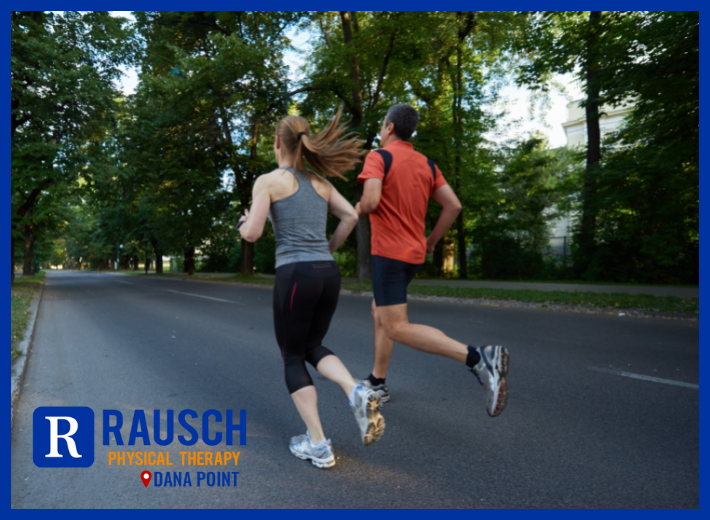
Learn How to Improve Your Running Speed With These Simple Tips

Running is a great and motivating exercise. Many new runners, however, struggle to keep challenging their bodies and increase their speed and performance. If that is your goal, this article brings interesting insights on how to improve running, highlighting the role of muscle memories and muscle groups to improve speed.  

For the art of running, endurance is the basic building block. But to push yourself to excel, it’s important to have a decent amount of speed in your stride.
It’s important to understand, however, that increasing speed is not just about pushing yourself in every run. There is a systematic approach that involves strengthening specific muscles, adjusting your form and even training your muscles to retain data, or muscle memory.
Here are tips from Adidas Runners’ coaches from Bengaluru, Anil Mahoba and Rashmi Gupta, on how to improve running speed.


How does muscle memory come into play?

While working on speed interval training, the muscles start to get used to working at a specific pace for a specific amount of time. Accordingly you can understand how much your body can be pushed for greater speed.
For example, if you constantly cover five kilometres in 30 minutes, your body gets used burning a certain amount of energy to maintain a steady pace to complete the course in that time.
“When you do your normal run, your legs have muscle memory. Once you do speed workouts, and later go for your normal run, with the muscle memory you realise you did a run at a faster pace than normal,” says Gupta.
“Once you start enjoying your speed interval training, the muscles build up memory and just move along.”

Which muscle groups have to be worked on to increase speed?

The main muscle groups responsible for speed are the quadriceps, hamstrings and glutes.
“Glutes are the biggest muscles in your body, they hold your body erect,” Gupta adds.

Which workouts can help increase speed?

Planks are a good way to increase strength in the core. For seasoned runners, either increasing the duration of a plank or adding weights on your back is a good way to increase core strength.
“Squats, weighted squats, lunges and weighted lunges are very handy,” says Bengaluru-based Adidas runners coach Anil Mahoba.
“Then you can use the bouncing ball to help balance, because running is all about balancing on one leg as you stride. You can also work with resistance bands.”
Weight exercises do have merit, for both the upper and lower body. But it’s advised not to use heavy weights.
“Go for lighter weights, but more reps and functional exercises. Around 5kg or 7.5kg weights are adequate. Anything heavier means you’re starting to bulk up (which reduces flexibility),” Mahoba says.
“If you do use heavier weights, then reduce repetitions.”

Does form make a difference?

Yes, and it is very important for speed.
The arms play a big role, but they only activate if they’re swinging straight front and back, and not sideways. The movement helps the forward drive, and just tweaking a possible side-to-side movement to front-back movement tends to bring about significant improvement.
Then there’s the head positioning.

“Looking down is not good,” explains Gupta. “When you look down and run, the oxygen intake capacity decreases. You should always look forward, keep your chin parallel to the ground and run.”


In terms of the lower body, the push should be forward rather than the legs pushing into the ground.
The posture needs to be nice and straight without a slouch, which can be improved with strength training.
“The core of our body, neck to pelvis, that region has to be very stable when we run. Even though it’s an activity that focuses mainly on your lower body, if the upper body is not straight, the lower body will not be able to manage it,” she adds.
It’s also important to understand that ‘form’ does not just pertain to running, but also in the gym during training.
“[For running,] form is very important when you do any kind of workout – not the number of reps – which people tend to forget. When the adrenaline kicks in and you are pumped up, you forget what your body is doing,” Gupta says.

Is there an element of natural running form that does not need to be tinkered with?

Yes. Gupta encourages the natural landing stride – which is what area of the foot lands first – should not be changed.
“We have something called heel-striker, mid-foot striker, fore-foot striker. About 95% of runners all over the world are heel-strikers. I was a heel-striker. When I tried to change it to mid or fore-foot strike, I started developing pain in my arches. That’s the point I realized that when your body is used to a certain running form for a long amount of time and it’s not giving you problems, don’t change it,” she concludes.


Physical therapy prepares your body for whatever it is you want to try next. Let us help you boost your performance while preventing injury.  Come meet our team! (949) 276-5401. Check out our Facebook page here.

Don’t forget to mark your calendars for Tuesday’s TNR! You don’t want to miss it — fun and unexpected things always happen. Literally 𝙚𝙫𝙚𝙧𝙮𝙤𝙣𝙚 is welcome to join — from runners to walkers, strollers, and dogs, all ages and fitness levels.

➡️ EVERY Tuesday at 6 pm — we meet at Rausch Physical Therapy & Sports Performance — 30100 Town Center Dr # Y/Z, Laguna Niguel, CA 92677).📱 Call us at 949.276.5401 today to learn more.

Reference: [https://www.redbull.com/in-en/how-to-improve-running-speed]

MUSCLE SPASMS: HOW TO PREVENT LEG CRAMPS

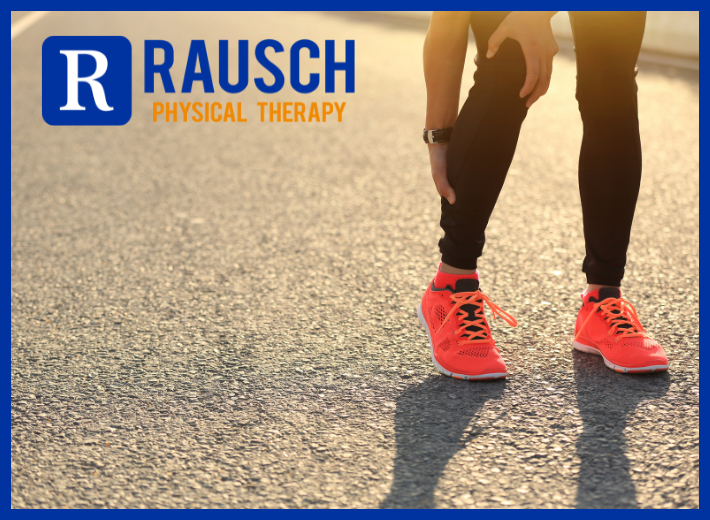
Muscle spasms – What are they anyway? Muscle spasms occur when your muscle involuntarily and forcibly contracts uncontrollably and can’t relax. And they can be mad painful! They can happen during or after exercise (and often at night) and with no warning whatsoever! Read on to find out the factors which cause muscle spasms and ways to prevent them from happening.

Muscle spasms like calf cramps can be a painful companion on the path to your fitness goal. Muscle fibers contract unexpectedly and sometimes without warning, causing pain. This can happen during or after exercise (and often at night).

The most commonly affected areas are the calves, feet, and thighs. A muscle cramp can sneak up on anyone – from beginners to professionals.

WHAT CAUSES LEG CRAMPS

For a long time it was believed that fluid or mineral imbalances were the main cause of muscle cramps. However, to date there is no evidence on what really causes muscle cramps. What we know is that the cramps are connected to how the motor neurons function.

Still, different factors might be contributing to cramps:

  • heavy training loads
  • high temperatures
  • ageing
  • diabetes
  • lack of sleep
  • as well as the fluid and mineral imbalances (magnesium, potassium etc.)

Most likely a combination of these will lead to chaotic electrical impulses in the muscles, which then cause a painful cramp.

A lot of people suffer from muscle spasms and are woken up in the middle of the night by the sharp pain of calf cramps. One reason for this may be that the level of magnesium in the body drops while we’re sleeping. If it gets too low, it can result in painful leg cramps. We can take action to prevent this and stretch during the day when we notice the first signs. Unfortunately, it’s usually too late when we notice muscle contractions at night, and the pain wakes us up.

Good to know:

Cramps can be experienced in different forms. Generally, if a cramp is caused by fatigue, most likely during exercise, it is usually localized in one muscle (like calf cramps) and happens suddenly. However, cramps might also develop over time, be felt on both sides, and be accompanied by lots of sweating and other signs of dehydration.

WHAT TO DO IF YOU GET A MUSCLE CRAMP

If you experience a muscle spasm while you are working out, take a short break from your activity. There is still no evidence-based treatment, but the following approaches seem to be helpful for many cases of muscle cramps:

  • Hydrate: Replacing water and electrolytes lost during exercise is advised. Even if this won’t be a remedy for everyone, avid exercisers who are more prone to cramps are likely to benefit from this approach.
  • Stretch: If the cramp is caused by fatigue due to excessive training load, you will probably find relief through light stretching and massage. Stretch the affected muscle gently while you have the cramp to help release some tension.
  • HeatHeat relaxes your muscles. Try a warm compress on your calves or a relaxing bath to prevent muscle contractions.
  • Massage: Massage stimulates your circulation, which helps loosen your muscles.

But the best thing is not to let it get this far.

HOW TO PREVENT MUSCLE CRAMPS

Here are a few tips for preventing muscle cramps:

  • Keep your muscles loose. Incorporate stretching and relaxation exercises into your training plan and massage your legs (or better – get a massage).
  • Eat a balanced diet and include minerals. Magnesium comes in different forms, one of which is effervescent tablets. It is also found in whole-grain products, green vegetables, and bananas. Good sources of calcium, which is essential for muscle contraction, are dairy products, spinach, and egg yolks.
  • Give yourself time and increase the workout intensity graduallyYour body first needs to get used to the new training sessions.
  • Even if dehydration is not the main cause of cramps, drinking enough fluids during sports is importantespecially on hot days (or if you sweat a lot during your workout).

Do you have problems with any kind of pain or injury? Do you have questions on how to improve your PR’s  – or just recover from a nagging injury? Let us help you get back into action and boost your performance — all while preventing further injury. Get in touch with our team today at (949) 276-5401 or on our Facebook page.


Reference: [https://www.runtastic.com/blog/en/muscle-cramps/]