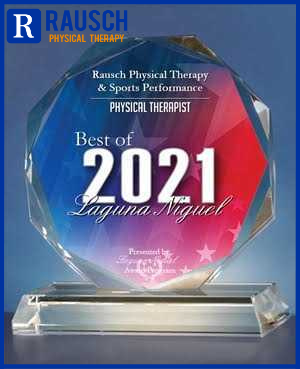
Receives 2021 Best of Laguna Niguel Award

Hard work pays off. Since 2006, Rausch Physical Therapy has offered superior care that has always included current treatment models and accelerated protocols. Rausch PT has always emphasized the value of community service and engagement, continued education, inspiration, and health and safety for all. And they have done it with unparalleled passion and care. They have led by example with their hard work, and — as with the people they treat — their hard work has paid off. Rausch PT is thrilled and honored to receive the 2021 Best of Laguna Niguel Award. Read on to learn more about this prestigious recognition. 

Laguna Niguel Award Program Honors the Achievement

LAGUNA NIGUEL December 1, 2021 — Rausch Physical Therapy & Sports Performance has been selected for the 2021 Best of Laguna Niguel Award in the Physical Therapist category by the Laguna Niguel Award Program.

Each year, the Laguna Niguel Award Program identifies companies that we believe have achieved exceptional marketing success in their local community and business category. These are local companies that enhance the positive image of small business through service to their customers and our community. These exceptional companies help make the Laguna Niguel area a great place to live, work and play.

Various sources of information were gathered and analyzed to choose the winners in each category. The 2021 Laguna Niguel Award Program focuses on quality, not quantity. Winners are determined based on the information gathered both internally by the Laguna Niguel Award Program and data provided by third parties.

About Laguna Niguel Award Program

The Laguna Niguel Award Program is an annual awards program honoring the achievements and accomplishments of local businesses throughout the Laguna Niguel area. Recognition is given to those companies that have shown the ability to use their best practices and implemented programs to generate competitive advantages and long-term value.

The Laguna Niguel Award Program was established to recognize the best of local businesses in our community. Our organization works exclusively with local business owners, trade groups, professional associations and other business advertising and marketing groups. Our mission is to recognize the small business community’s contributions to the U.S. economy.

CONTACT: Laguna Niguel Award Program
SOURCE: Laguna Niguel Award Program
Email: PublicRelations@bizawardnotifier.com
URL: http://www.bizawardnotifier.com

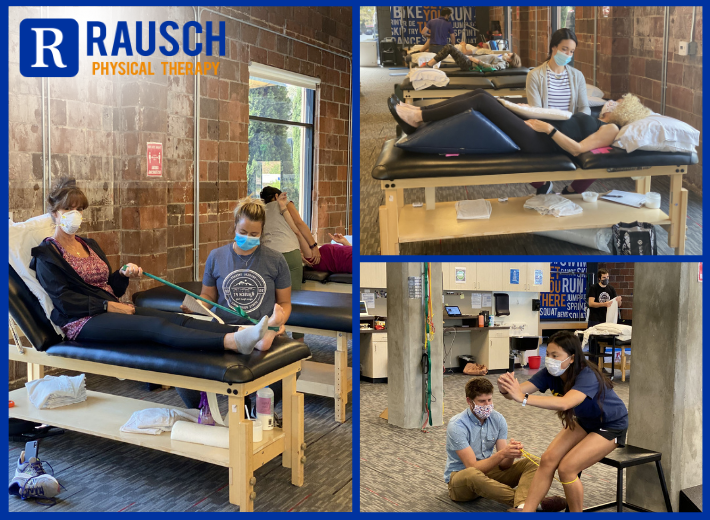
Physical Therapy is the best way to work through or mitigate injuries, stay active, get rid of pain, and improve performance. Rausch Physical Therapy has experts who care about your goals and customize programs specific to your needs. Call today (949) 276-5401 or get in touch with the team on their Facebook page.

The Top 14 Foods and Supplements for Sports Injuries

When it comes to recovering from a sports injury, many elements come into play: from PT sessions to straight rest. Your eating habits can also play a significant role during this period. The healing process demands fuel — and the right kind! Reach for these healthy options to bounce back ASAP.

When it comes to sports and athletics, injuries are an unfortunate part of the game.

However, no one likes to be sidelined for longer than necessary.

Fortunately, certain foods and supplements may help reduce the amount of time your body needs to recover from a sports injury.

This article lists 14 foods and supplements you should consider adding to your diet to help recover from an injury more quickly.

1. Protein-Rich Foods

Protein is an important building block for many tissues in your body, including muscle.

After a sports injury, the injured body part is often immobilized. This generally leads to a decline in strength and muscle mass.

However, getting enough protein can help minimize this loss. Furthermore, a protein-rich diet may help prevent inflammation from getting too bad and slowing down your recovery.

Moreover, slightly increasing your protein intake once you start training the injured body part again helps you rebuild any lost muscle.

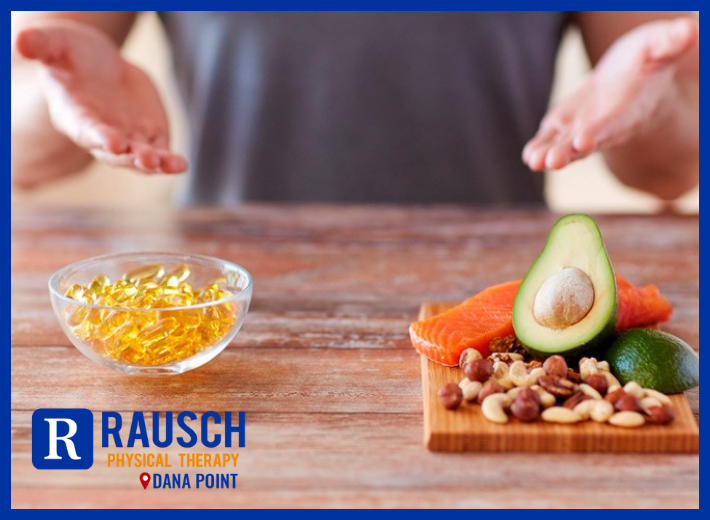
For all these reasons, make sure to include protein-rich foods like meat, fish, poultry, tofu, beans, peas, nuts or seeds in your daily menu.

How you distribute these foods throughout the day also seems to matter.

Research shows that spreading your protein intake equally over four meals may stimulate muscle growth more than an uneven distribution.

Experts also suggest that eating a protein-rich snack before bed may help enhance your body’s muscle-building process while you sleep.

2. Fiber-Rich Foods

Recovery from injury often involves immobilization or limited use of the injured body part.

To prevent this from resulting in unwanted body fat, it’s important to compensate by eating slightly less.

One way to reduce your calorie intake is to consume a diet rich in fiber. This, along with consuming the protein-rich foods mentioned above, will help you eat less without feeling hungry.

That’s because fiber-rich foods such as fruits, vegetables, legumes and whole grains help promote feelings of fullness after meals.

As an added bonus, fiber-rich foods tend to be high in several other nutrients essential for your recovery, including vitamin C, magnesium and zinc.

However, note that restricting calories too severely can reduce wound healing and promote muscle loss, both of which negatively affect recovery.

Therefore, individuals who were attempting to lose body fat before the injury should consider postponing their weight loss efforts. Instead, focus on maintaining your body weight until recovery is complete.

3. Fruits and Vegetables Rich in Vitamin C

Vitamin C helps your body make collagen, which helps maintain the integrity of your bones, muscles, skin and tendons.

Therefore, getting enough vitamin C from your diet is a great way to help your body rebuild tissue after an injury.

Moreover, vitamin C has antioxidant and anti-inflammatory properties, which may help speed up your recovery by preventing excessive levels of inflammation.

Luckily, vitamin C is one of the easiest vitamins to get enough of through your diet.

Foods with the highest amounts of it include citrus fruits, red and yellow bell peppers, dark leafy greens, kiwi, broccoli, berries, tomatoes, mango and papaya.

However, it’s currently unclear whether supplements provide any benefits for those already getting enough vitamin C from their diet.

Nevertheless, the small number of people who can’t consume enough vitamin C-rich foods may want to consider taking supplements.

4. Omega-3 Fatty Acids

After an injury, the first phase of wound healing always involves some inflammation. This inflammatory response is beneficial and needed for proper healing.

However, if this inflammation remains too high for too long, it may slow down your recovery.

One way to prevent excess inflammation from delaying your recovery is to eat enough omega-3 fats.

These fats, which are found in foods such as fish, algae, walnuts, flaxseeds and chia seeds, are known to have anti-inflammatory properties.

You can also prevent excess or prolonged inflammation by limiting omega-6 fats, which are commonly found in corn, canola, cottonseed, soy and sunflower oils.

Consuming too many omega-6 fats is known to promote inflammation, especially if your intake of omega-3 fats is also low.

In addition, some studies report that omega-3 supplements may help increase the creation of muscle protein, reduce the loss of muscle during immobilization and promote recovery from concussions.

That said, high intakes of omega-3 fats from supplements may reduce your body’s ability to regain muscle mass once you return to training. Therefore, it may be best to increase your omega-3 intake from foods rather than supplements.

5. Zinc-Rich Foods

Zinc is a component of many enzymes and proteins, including those needed for wound healing, tissue repair and growth.

In fact, studies show that not getting enough zinc from your diet can delay wound healing.

Therefore, consuming zinc-rich foods such as meat, fish, shellfish, pulses, seeds, nuts and whole grains may help you recover more effectively from an injury.

Some people may be tempted to simply take zinc supplements to ensure they meet their recommendations.

But zinc competes with copper for absorption, so receiving high doses of zinc from supplements may increase the likelihood of copper deficiency.

Overall, if your zinc status is good, additional zinc from supplements probably won’t speed up wound healing. However, getting enough from your diet is important.

6. Vitamin D and Calcium-Rich Foods

Calcium is an important component of bones and teeth. It’s also involved in muscle contractions and nerve signaling.

That’s why it’s important to ensure you always get enough calcium — not just when you’re recovering from an injury.

Calcium-rich foods include dairy products, leafy greens, sardines, broccoli, okra, almonds, seaweed and calcium-fortified tofu and plant milks.

Vitamin D also serves an equally important function because it helps your body absorb the calcium found in the foods you eat. Together with calcium, it plays an instrumental role in recovering from a bone injury.

Also, getting enough vitamin D may increase the chances of a good recovery after surgery. For instance, studies have found a good vitamin D status can enhance strength recovery following an anterior cruciate ligament (ACL) surgery.

Few foods naturally contain vitamin D, but your body has the ability to make vitamin D from exposure to the sun.

Those living in northern climates or spending a limited amount of time outdoors may require supplements to get enough vitamin D.

7. Creatine

Creatine is a substance naturally found in meat, poultry and fish.

It helps your body produce energy during heavy lifting or high-intensity exercise. The human body can also produce about 1 gram of it per day.

Creatine has become a popular supplement commonly used to increase muscle mass and improve performance in various sports.

Interestingly, it may also help you recover from an injury.

One study reported that creatine supplements enhanced the gain of muscle mass and strength lost during a two-week immobilization period more than a placebo.

Another study found that individuals supplementing with creatine lost less muscle in their upper body during a week-long period of immobilization than those given a placebo. However, not all studies found these results.

Both of the studies showing positive results provided the creatine supplement in four doses of five grams each day.

It’s important to note that there is currently no consensus about creatine and sports injury recovery. That said, no studies to date have found any negative effects.

Creatine remains one of the most-studied, safest supplements around, so it may be worth giving it a try.

8. Glucosamine

Glucosamine is a natural substance found in the fluid that surrounds your joints. It is involved in the creation of tendons, ligaments and cartilage.

Your body naturally produces glucosamine, but you can also increase your levels through supplements. Supplements are generally made either from shellfish shells or fermented corn.

Research in individuals with arthritis shows that glucosamine may be useful in decreasing joint pain.

Also, studies in healthy individuals show that supplementing with 1–3 grams of glucosamine per day may help reduce joint deterioration.

One recent animal study also showed that taking glucosamine daily after a fracture may speed up bone reformation.

Based on these findings, some people take glucosamine supplements to help reduce pain after joint and bone injuries or speed up recovery from fractures. However, more research is needed before strong conclusions can be made.

It’s worth noting that glucosamine supplements may pose a risk to those who are allergic or sensitive to shellfish or iodine, pregnant women and those with diabetes, high cholesterol, asthma or high blood pressure.

9–14. Other Foods Beneficial for Bone Fractures

In addition to getting enough calcium and vitamin D, good intakes of the following nutrients can contribute to a speedier recovery from bone fractures:

  1. Magnesium: Promotes bone strength and firmness. Found in almonds, cashews, peanuts, potato skins, brown rice, kidney beans, black-eyed peas, lentils and milk.
  2. Silicon: Plays an important role in the early stages of bone formation. Best sources include whole grains and cereals, carrots and green beans.
  3. Vitamins K1 and K2: Directs calcium toward bones and helps improve bone strength. Best sources include leafy greens, Brussels sprouts, prunes, sauerkraut, natto, miso, organ meats, egg yolks and dairy products from grass-fed cows.
  4. Boron: Promotes bone health by increasing calcium and magnesium retention and enhancing vitamin D’s effect. Prunes are the best dietary source.
  5. Inositol: Helps improve calcium absorption in bones. Found in cantaloupe, grapefruit, oranges and prunes.
  6. Arginine: This amino acid is needed to produce nitric oxide, a compound necessary for fracture healing. The best sources include meat, dairy, poultry, seafood, nuts and oatmeal.

Those recovering from bone fractures should consume foods rich in these nutrients daily.

Take Home Message

When it comes to recovering from a sports injury, many elements come into play.

While not all of them are under your influence, one factor you can control is the nutrients you provide your body.

Therefore, regularly consuming the foods and supplements mentioned in this article is one way you can speed up your recovery.

Physical therapy is a natural and healthier solution to many pain problems – and to get rid of them at their root cause, for good. Our team can teach you proper techniques to reduce your chances of recurrence. If you’re facing an injury, try a PT session. Find our team at (949) 276-5401 or meet us on our Facebook page.


Reference: [https://www.healthline.com/nutrition/foods-supplements-for-sports-injury#TOC_TITLE_HDR_4]

6 Things That Can Cause Pain Between Your Shoulder Blades

It is very common for a person to experience discomfort between their shoulder blades. You know it — we’ve all been there. Overuse, strains, sleeping awkwardly, and rotator cuff issues all fall into this category. These problems are often related to pain in the muscle groups surrounding the shoulders, including some of the arm muscles. Here’s why you may feel pain between your shoulder blades—and how to find relief from the discomfort. If you want assistance to get to the root cause of your issues  — we are here! 

Pain between shoulder blades

Whether it’s a dull ache or sharp spasm, pain between the shoulder blades can be a caused by a variety of things. It can be due to bad posture while staring at a computer screen all day, an exercise mishap, or an overuse injury.

Sometimes referred to as scapular pain—scapula is another name for your shoulder blade—it’s a common problem. According to a paper published in the Journal of the American Academy of Orthopaedic Surgeons, chronic shoulder pain affects about 8 percent of adults in the United States, and about 4.5 million Americans visit doctors about the condition every year.

Anatomy of the shoulder blade

Your shoulder blade, or scapula, connects to the clavicle (collar bone) and to the humerus (or upper arm bone).

This triangular-shaped bone also attaches to several muscles, including those of the rotator cuff. The rotator cuff muscles include four muscles—the teres minor, subscapularis, supraspinatus, and infraspinatus.

These are the muscles that help your shoulder abduct, like when you lift your arm, and internally and externally rotate the shoulder.

Also, around the shoulder blade, you’ll find muscles that support shoulder stability, including the levator scapulae, trapezius, rhomboids, and serratus anterior (which lies on the front of the body).

When to see a doctor

If you have tried improving your posture and you regularly strengthen and stretch the muscles of the upper body, yet you still have pain, it’s probably time to seek medical attention.

“Pain is meant to protect—it’s an output from the brain, based on the perception of threat,” explains physical therapist Colleen Louw, spokesperson for the American Physical Therapy Association and co-owner and lead physical therapist at Ortho Spine and Pain Clinic in Story City, Iowa.

If the brain senses something is off, it will alert you via pain to make a change. When that change doesn’t work, it’s time to get medical help.

A few other factors signal it’s time to talk to someone like pain at night that wakes you up or unexplained weight loss, says Louw.

Naimish Baxi, MD, assistant attending physiatrist at the Hospital for Special Surgery in New York City, says you want to see someone sooner rather than later if pain persists between the shoulder blades. A medical professional can help you avoid long-term problems. If the issue is musculoskeletal, they can give you a program for strengthening and stretching, too.

Common causes of pain between the shoulder blades

Your posture

“Posture is probably the biggest contributing factor to scapular pain,” Dr. Baxi says. How you sit and stand all day can definitely lead to discomfort between the shoulder blades and around the scapula, particularly if you’re in a forward-leaning position for hours.

Here are the particular issues that can arise from poor posture and how to both prevent and treat those issues.

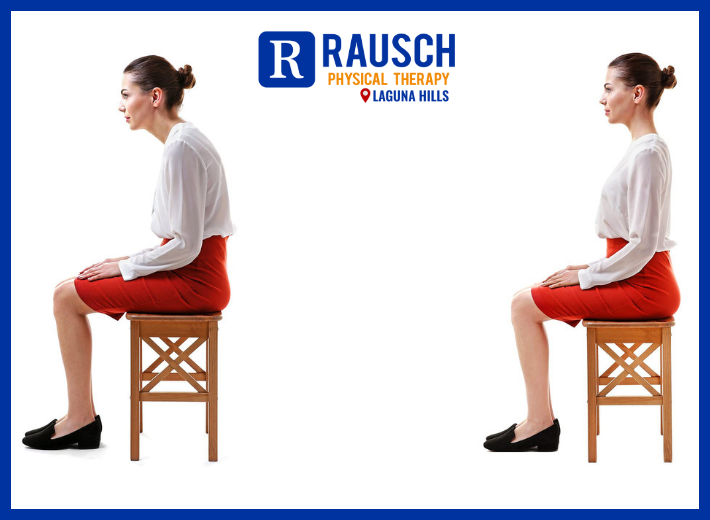
What bad posture looks like

This condition stems from rounded shoulders and a C-curve in the upper spine. It includes a protracted, rather than retracted scapula, which means your shoulders round forward, instead of down your back and away from your ears. The neck also flexes forward and the shoulders internally rotate, Dr. Baxi explains.

“Sitting in this posture for hours a day and weeks on end can cause muscle imbalances,” Dr. Baxi says.

For example, the muscles on the front of the body (like the pecs or chest) get tight or overworked, and the muscles on the back of the body (like the rhomboids, mid traps, or the muscles of the rotator cuff) become weak or overstretched. This leads to discomfort and potentially more serious injury.

A typical seated position, especially when you’re looking at your phone or laptop, also causes the head to come forward, stressing the neck and upper traps. Because of this, the upper traps (which sit at the base of the neck and top of the shoulder) must stabilize the head—not their main job. Their primary role is to elevate or shrug the shoulders, Louw explains. This can lead to aches.

How to adjust your posture

For starters, sit actively, not passively, says Louw. By sitting forward on your seat and staying upright, you’ll avoid relaxing into a poor posture. Make sure you’re sitting on your two butt bones and are actively using your core to sit up straight, chest tall, with shoulders rolled down and back, away from your ears. Also, keep your head over your shoulders, not in front of them, Louw says.

Improving your work setup to make it more ergonomic will also help adjust your posture. According to Dr. Baxi, your computer screen should be at eye level and your keyboard close enough that you don’t have to reach for it. Your elbows should flex about 120 degrees.

Strengthening and stretching to avoid posture-related pain

You want to balance stretching the front of the body with strengthening the back of the body, says Dr. Baxi. “It’s even more important to strengthen than stretch,” he says. “You can stretch all day, but you won’t improve posture if you can’t get your muscles to activate on their own.”

For strengthening moves, focus on pulling exercises. A rowing machine can help you do this. Or try a reverse fly exercise, which stabilizes the muscles of the shoulders and strengthens the back. You want to perform moves that pull your shoulder blades together, as if you’re trying to hold a ball between them, Dr. Baxi says.

Other good-posture moves: chest openers and neck stretches to help offset muscle imbalances. To lengthen the neck muscles, take one hand on the opposite side of your head and gently pull toward the shoulder, Dr. Baxi suggests.

Nerve compression or damage
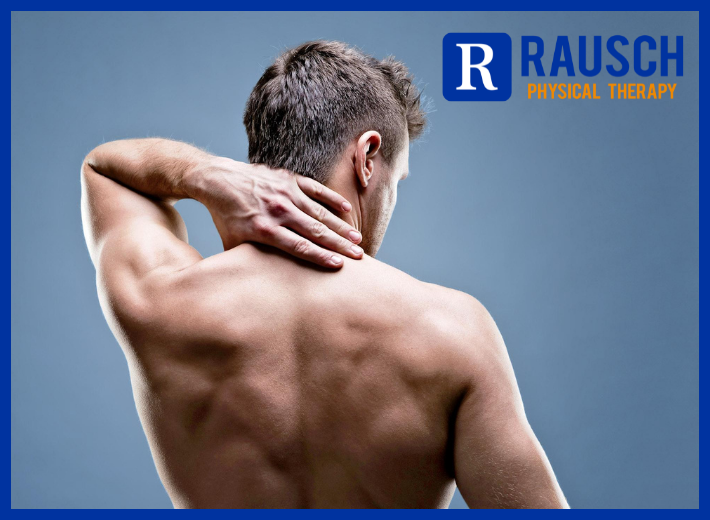
A seated, rounded posture can also lead to compression of the cervical spine (the neck region), leading to pain between the shoulder blades, Louw says.

Louw mentions that  another possible cause of shoulder blade pain is thoracic outlet syndrome. This group of conditions results from compression on the blood vessels and nerves in the lower neck and upper chest. It can cause pain and weakness in the shoulder and tingling or pain in the fingers. There’s debate about what exactly causes this syndrome, which can be misdiagnosed because the symptoms look similar to rotator cuff injuries or other conditions.

Physical therapy can help treat the issue by guiding you in strengthening your chest and improving your posture.

Another nerve-related issue that can lead to pain is scapular winging, a condition in which one or more of the shoulder blades sticks out rather than laying flat against the body. But Dr. Baxi notes that it’s not very common.

Rotator cuff injuries

As previously mentioned, the rotator cuff is a group of muscles and tendons that surround the shoulder joint. The older you get, the more prone you become to rotator cuff tears, according to the Journal of the American Academy of Orthopaedic Surgeons paper, with people over 40 at greater risk.

These tears can come from overuse—think lifting or doing an activity that requires an overhead motion, such as painting. Tennis players and baseball pitchers, who constantly repeat the hitting and throwing motion, are also at higher risk of rotator cuff injuries.

If you suspect a rotator cuff injury, a doctor or physical therapist will give you a full assessment and treatment plan. Some of these injuries require surgery.

Herniated disc

Another condition that might cause pain between the shoulder blades is a herniated disc, Louw says. That’s particularly true of herniated discs that happen at the cervical spine (neck), which can lead to pain at the scapula.

Discs are soft, rubbery pads found between your vertebrae. They help make up the spine and work as shock absorbers. Age increases your chance of getting a herniated disc—a condition where the softer material inside the disc slips through it’s tough outer layer, sometimes compressing nerves and causing pain. Repetitive and intense exercise, or poor form while lifting weights, can also increase the risk of a herniated disc.

With a herniated disc, you might also experience weakness in the arm, tingling, or burning pain. And while occasionally it requires surgery, nonsurgical treatments like rest, over-the-counter pain relievers and anti-inflammatories, muscle relaxers, and ice may also help.

Scapulothoracic bursitis

Bursitis is a general term for conditions that cause swelling and pain around muscles and bones. A bursa is a small sac filled with fluid that cushions bones, muscles, tendons, and skin.

Repetitive movements (like overhead lifts or throws) can lead to bursitis, and the older you get, the more you’re at risk. Scapulothoracic bursitis refers to bursitis that affects the shoulder area.

Your doctor will do a full exam to look for bursitis. According to a 2010 research article, published in the journal Sports Health, addressing shoulder bursitis comes down to strengthening the scapula, fixing posture, and building core strength and endurance. Anti-inflammatory drugs may also help.

Gallbladder issues

The gallbladder is a tiny sac located under the liver that stores fat-digesting bile. Problems with your gallbladder can actually lead to shoulder or back pain. A study published in 2018 in the European Journal of Translational Myology found that about 37 percent of patients with gallstone disease complained of shoulder or back pain, though the most common complaint was abdominal pain.

Gallstones—or hard pieces of material often made up of cholesterol or bilirubin (a pigment made from the breakdown of red blood cells)—can develop in the gallbladder and block the bile ducts. This leads to sudden pain and requires immediate medical attention. The treatment for gallstones is most often surgery.

Push your limits and elevate your performance  — and eliminate pain while increasing mobility — with a customized physical therapy program.  Let us help you perfect your form and increase performance. Contact our experts today at (949) 276-5401 and join our Facebook community here. Remember, we also offer Rx Massage to enhance your PT treatments — and also to help when you get sore and to increase recovery from hearty exercise or race events.


Reference: [https://www.thehealthy.com/pain/pain-between-shoulder-blades/]

Why Ideal Posture May Help Relieve Your Back Pain

We usually underestimate how the physical demands from our daily life can affect our posture. Lifting, carrying, and sitting poorly can cause repetitive stress injuries and affect our back health. By becoming aware of how you’re moving and adopting some good habits, you can start to promote better posture and overall health. Learn more about how your ideal posture might help relieve your back pain. Need help? We are here to help you solve your back issues once and for all — not a mere band-aid! 

If it seems like the perfect, ideal posture, where the upper back is straight and not rounded, and the lower back has a gentle sweeping curve that neither slouches nor over arches, is more the exception than the rule, you may not be too far off from the truth. Most people don’t know that getting good posture takes work. Without making daily efforts towards an ideal posture, you may over time find that moving around without pain requires even more work than would a preventative program.

What Ideal Posture and Good Body Alignment Have in Common

Ideal posture is really about body alignment; in other words, the way your structural parts such as head, trunk, hips, knees, etc., relate to your form as a whole.

Whether you’re standing, sitting, lying down or moving, the body parts need to be balanced in order for ideal posture to take place.

Types of Posture

When you’re sitting or standing still, posture is considered to be static, and when you’re moving, it’s considered dynamic. Both static and dynamic postures are categorized as active postures.

If you’re lying down and doing nothing, this is known as inactive posture.

Proper Alignment Underlies Ideal Posture

You’re probably pretty close to ideal posture when you can get your head, shoulders, spine, hips, knees, and ankles to all line up well with one another. Also called proper alignment, this state of body balance underlies everything from a good workstation and industrial ergonomics to successful back surgery. In general, though, establishing and maintaining good body alignment may be one way you can reduce, or even eliminate, undue stress on your spine.

Any of the above types of posture may be ideal or non-ideal. This where body alignment comes in.

Ideal alignment is a standard and (mostly theoretical) position in which all joints of the body are centered and balanced. Ideal alignment is the most mechanically efficient position for any given activity, whether static or dynamic.

Why is this important? Because mechanical efficiency enables the muscles that surround your joints to work in balance, which in turn, may help reduce strain, tension, and injury. Balanced muscles conserve energy, too.

Instead, most of us are “creatures of habit”—meaning over time, we’ve developed certain habits in our joint positioning that may lead to imbalanced muscles. When this is the case, some muscles become chronically stretched while others become chronically tight—all in an effort to hold you up or move you around. Imbalanced muscles often lead to pain or movement limitation.

Have You Had a Posture Assessment?

According to physical therapists Kendall and Kendall, in their landmark reference book, Muscles: Testing and Function (with Posture and Pain) the best way to determine if one’s posture is ideal or less than ideal is by looking at joint positions and gathering visual information about the planes into which parts of each joint move, as well as the axes around which those movements occur. This is called a posture assessment.

In a posture assessment, your body alignment is compared with the ideal standard, which is in the form of a plumb line. The plumb line is usually a string with a small weight attached to the bottom to help keep it straight. The other end of the string is affixed to the ceiling so that it can be used as an accurate reference for ideal alignment.

During a posture assessment, you stand next to the plumb line while your evaluator compares the relative positions of the following parts to it:

  • ears
  • shoulder joint
  • spine
  • hip joint
  • knee joint
  • ankle joint
  • feet

If any of the parts don’t line up with the reference, this may signify misalignments in one or more areas.

The good news is that body misalignments such as these can quite often be addressed by stretching, strengthening, and developing core strength, along with developing good sitting, standing and resting posture habits. That said, it’s important to work with a qualified, licensed physical therapist in order to use exercise to achieve ideal posture.

Rausch PT Laguna Hills professionals have the skill and expertise you need to correct your posture. We provide treatments that help improve and restore function and reduce pain – with no prescription from a doctor required. Call our experts today at (949) 597-0007 and make an appointment. We would also love to have you join our Facebook community where you can get health and wellness updates and learn about what we have to offer ongoing!


Reference: [https://www.verywellhealth.com/ideal-alignment-296929]