How To Avoid Exercise Injuries

If you’re one of the many who have made a goal to live life with less pain (aka — all of us!), we’re here to encourage you to choose physical therapy! PT can get you on the path to functioning better and to a higher quality of life while helping you reach some important goals. Here, we bring you some tips on how to avoid exercise injuries. With a little planning, you can stay safe during your activities and start the new year pain-free. Come and see us to learn first-hand how to avoid repetition injuries and maintain excellent form. No prescription is needed — AND we are a super fun group to get healthy with!

Regular exercise is good for your body and safe for most everyone. However, with any type of activity, there is a chance you can get hurt. Exercise injuries can range from strains and sprains to back pain.

With a little planning, you can prevent injury and stay safe during exercise.

What Causes Exercise Injuries?

Some of the most common causes of exercise injuries include:

  • Exercising before your body has warmed up
  • Repeating the same motion over and over again
  • Not having proper form for your exercise
  • Not resting in between workouts
  • Pushing your body too hard or too quickly
  • Doing an exercise that is too strenuous for your level of fitness
  • Not using proper equipment

Warm up and Cool Down

Warming up before exercise gets your blood flowing, warms up your muscles, and helps you avoid injury. The easiest way to warm up is to exercise slowly for the first few minutes, then pick up the pace. For example, before running, walk briskly for 5 to 10 minutes.

You should also cool down after exercise to bring your heart rate and body temperature back to normal. Cool down by ending your routine at a slower pace for the last 5 to 10 minutes.

To Stretch or not to Stretch

To stay flexible, you should stretch at least 2 times a week. But it is unclear whether stretching really helps reduce injury.

You can stretch either after you have warmed up or after you exercise.

  • Do not stretch cold muscles.
  • Hold stretches for no longer than 15 to 30 seconds.
  • Do not bounce.

Choose Your Exercise Wisely

If you have not been active, or have a health condition, talk with your health care provider to make sure you are healthy enough for exercise. Ask what types of exercise might be best for you.

If you are new to exercise, you may want to start with low-intensity options such as:

  • Walking
  • Swimming
  • Riding a stationary bike
  • Golf

These types of exercise are less likely to cause injury than higher-impact activities like running or aerobics. Contact sports like soccer or basketball are also more likely to cause injury.

Use the Right Equipment

Using safety equipment can greatly reduce your risk of injury.

Safety equipment for your sport may include:

  • Footwear
  • Helmets
  • Mouth guards
  • Goggles
  • Shin guards or other protective guards
  • Kneepads

Be sure you use the right type of equipment for your sport. For example, do not play tennis in running shoes. Wear a ski helmet, not a bike helmet, when downhill skiing.

Make sure your exercise equipment:

  • Fits you properly
  • Is the right design for your sport or activity
  • Is in good working condition
  • Is used correctly and consistently

Learn Good Form

If you are new to an exercise or sport, consider taking lessons to learn the basics. Learning the right way to do an exercise or sport can help prevent injury. Look for lessons in your community or through sports or outdoors organizations. You can also consider hiring a personal trainer.

Cross Train

To help prevent overuse injuries, vary your workouts. For example, instead of running 3 days a week, cycle 1 day and run 2. You will use a different set of muscles, and still get a good workout.

Listen to Your Body

Forget the old saying “no pain, no gain.” Of course, to build strength and stamina, you will need to push your body. The key is to push slowly and gradually. You can expect sore muscles after your workout. But you should never feel pain when exercising. If you feel pain, stop right away.

Being tired all the time can also be a sign that you may be overdoing it. In general, avoid increasing these 3 things all at the same time:

  • Number of days you exercise
  • Length of time you exercise
  • How hard you work out

If you do have an injury, you can try to treat strains and sprains at home.

When to Call the Doctor

Call your provider for any muscle or joint pain that does not go away after self-care.

Go to the hospital right away or call 911 or the local emergency number if:

  • You have chest pain during or after exercise.
  • You think you have a broken bone.
  • The joint appears out of position.
  • You have a serious injury or severe pain or bleeding.
  • You hear a popping sound and have immediate problems using the joint.

2022 is the year to push your limits and elevate your performance with a customized physical therapy program. Let us help you perfect your form and increase performance. Contact our experts today at (949) 597-0007 and join our Facebook community here.


Reference:[https://medlineplus.gov/ency/patientinstructions/000859.htm]
New Year’s Resolutions for Runners

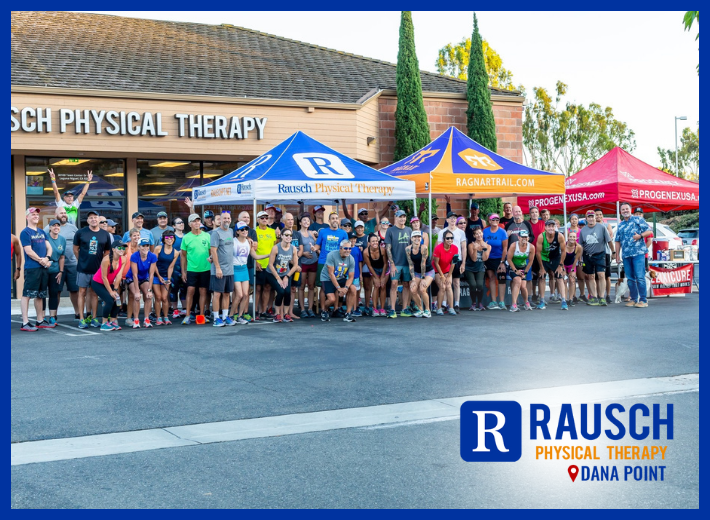
Want to become a better runner in the new year? Of course you do—and we could all use a refresh after a tough 2021. Tens of millions of people made resolutions this year, many of them centered around health and well-being. Let’s use some of the tactics below to help you stick to your resolutions to run more. And when you’re ready, if you’re in OC we offer the BEST running group in OC! 🏃🏃‍♀️ We sure hope you can come out and join us any Tuesday. On every last Tuesday of the month, we offer free pizza and beer! All paces, all abilities are welcome. Let’s gooooo!!! 

We meet every Tuesday, at 6 pm, at 30100 Town Center Dr, Y/Z,  Laguna Niguel, CA 92677.

Now — back to those tips…..

1. Enter a Race

This is an obvious one but there’s nothing like a date in your diary and a bit of money forked out on entry fee/travel arrangements to keep you committed to your training. It could be your first race or an attempt to get faster over a distance you’ve raced many times before.

2. Set a Target

Maybe you ran a marathon in 4:10 last year, now you can start planning for the sub-4. Maybe you just want to make the club’s A-team for a relay. Giving yourself a target to aim for can give a little extra motivation in training, and produce an even bigger smile at the finish line knowing all of your hard training paid off!

3. Try Something New


It’s good to have something challenging but also fun. If a road 10k or marathon doesn’t appeal to you, look for something different: a triathlon, a hill race or an ultra-marathon. These are all gaining in popularity and cater for all levels of abilities. If you don’t enjoy running races, then try some new running routes and terrains for variety.

4. Think Laterally

Your goal could simply be to add new elements into your training. All runners can benefit from core stability or other strengthening work. If you’re curious about barefoot or minimalist running, maybe now is a good time to start incorporating a barefoot session into your training program. For more tips on this, see our section on barefoot running.

5. Work On Your Weaknesses

Do you always struggle on hills, get overtaken in a sprint finish, or struggle to maintain your pace over the second half of a race? Identify your weak point and work on it in training.

6. It’s Not All About You!

Make it your project to encourage someone else to run this year. Running is such an accessible way of keeping fit that excuses soon run out! Some people just need a little gentle encouragement, and it can be just as fulfilling to see a friend run their first 5k as it was to run your own first race.

7. Be Realistic

When setting running goals, consider what else is going on in your life in terms of work, family and other commitments. Assess how much time you have available for training and set your goals accordingly. Equally, be prepared to re-adjust your goals if things aren’t going to plan.

8. Dare to Dream

This might slightly contradict the previous point, but sometimes you just have to think BIG. We all need challenges and there’s nothing wrong with setting yourself an ambitious target. It will give you an extra incentive to push harder in training and get the most out of yourself.

Ready to get to your best performance in 2022? Physical therapy prepares your body for whatever it is you want to try next. Let us help you boost your performance while preventing injury.  Come meet our team! (949) 276-5401. Check out our Facebook page here. But also come join our Tuesday Night Run group here!


Reference: [https://www.runandbecome.com/running-training-advice/new-years-resolutions-for-runners]

What To Know About Exercise And How To Start

January is a great month to start exercising and sticking to it. This is the year, darn it! Figuring out how to start a workout regime, however, can be a challenge. A significant part of staying healthy and strong is keeping physically active. An exercise program should be a regular activity when it comes to maintaining your general health. Learn more about exercising and how to get started. Remember; we are here to help and support — especially as it relates to making sure your exercise journey is pain-free! 

Exercise involves engaging in physical activity and increasing the heart rate beyond resting levels. It is an important part of preserving physical and mental health.

Whether people engage in light exercise, such as going for a walk, or high intensity activities, for example, uphill cycling or weight training, regular exercise provides a huge range of benefits for the body and mind.

Taking part in exercise of any intensity every day is essential for preventing a range of diseases and other health issues.

In this article, we explain the different types of exercise and their benefits, as well as the considerations for designing a fitness regime.

Types and benefits

People divide exercise into three broad categories:

  • aerobic
  • anaerobic
  • agility training

We describe each of these categories below.

Aerobic exercise


Aerobic exercise aims to improve how the body uses oxygen. Most aerobic exercise takes place at average levels of intensity over longer periods.

An aerobic exercise session involves warming up, exercising for at least 20 minutes, and then cooling down. Aerobic exercise mostly uses large muscle groups.

Aerobic exercise provides the following benefits:

  • improves muscle strength in the lungs, heart, and whole body
  • lowers blood pressure
  • improves circulation and blood flow in the muscles
  • increases the red blood cell count to enhance oxygen transportation
  • reduces the risk of diabetes, stroke, and cardiovascular disease (CVD)
  • improves life expectancy and symptoms for people with coronary artery diseases
  • stimulates bone growth and reduces the risk of osteoporosis when at high intensity
  • improves sleep hygiene
  • enhances stamina by increasing the body’s ability to store energy molecules, such as fats and carbohydrates, within muscle

Anaerobic exercise

Anaerobic exercise does not use oxygen for energy. People use this type of exercise to build power, strength, and muscle mass.

These exercises are high-intensity activities that should last no longer than around 2 minutes. Anaerobic exercises include:

  • weightlifting
  • sprinting
  • intensive and fast skipping with a rope
  • interval training
  • isometrics
  • any rapid burst of intense activity

While all exercise benefits the heart and lungs, anaerobic exercise provides fewer benefits for cardiovascular health than aerobic exercise and uses fewer calories. However, it is more effective than aerobic exercise for building muscle and improving strength.

Increasing muscle mass causes the body to burn more fat, even when resting. Muscle is the most efficient tissue for burning fat in the body.

Agility training

Agility training aims to improve a person’s ability to maintain control while speeding up, slowing down, and changing direction.

In tennis, for example, agility training helps a player maintain control over their court positioning through good recovery after each shot.

People who take part in sports that heavily rely on positioning, coordination, speed, and balance need to engage in agility training regularly.

The following sports are examples of ones that require agility:

  • tennis
  • American football
  • hockey
  • badminton
  • volleyball
  • basketball
  • soccer
  • martial arts
  • boxing
  • wrestling

Stretching and flexibility


Some exercises combine stretching, muscle conditioning, and balance training. A popular and effective example is yoga.

Yoga movements improve balance, flexibility, posture, and circulation.

The practice originated in India thousands of years ago and aims to unify the mind, body, and spirit. Modern yoga uses a combination of meditation, posture, and breathing exercises to achieve the same goals.

A yoga practitioner can tailor a course for individual needs.

A person looking to manage arthritis might need gentle stretches to improve mobility and function. Someone with depression, on the other hand, may need more emphasis on the relaxation and deep breathing elements of yoga.

Pilates is another stretching option that promotes flexibility and core strength. Tai chi is also an effective option for exercise that promotes calm stretching rather than intensity.

Rausch PT professionals have the skill and expertise you need to correct your posture, decrease pain, and increase mobility. We provide treatments that help improve and restore function and get you pain-free — with no prescription from a doctor required. Call our experts today at (949) 276-5401 and make an appointment. We would also love to have you join our Facebook community where you can get health and wellness updates and learn about what we have to offer ongoing!


Reference: [https://www.medicalnewstoday.com/articles/153390]