Understanding Turnout and Importance of Avoiding Forcing More


Kathryn Totheroh – Dana Point

Every joint in the human body has a “normal” range of motion. For the hip in external rotation or turnout, that range is about 45 degrees. For dancers, especially ballet, we always aim for 90 degrees in each hip to reach that elusive 180 first position. Some lucky individuals will be born with the potential for extra range of motion in the hips, and the very rare few (less than 2% of professional ballet dancers) may naturally reach that 180. However, for the rest of us, it is critical to understand where our natural limitations are so that we can safely and effectively use the turnout each of us have. 

First, you must understand that this is a boney limitation; therefore, stretching will not work. Many teachers learned that stretching the hips while children are young (pre-puberty) can increase this natural range. While it may be possible to slightly increase mobility through the front of the hip joint leading to a marginal increase in turnout, several studies show that whatever a person’s turnout is going to be was predetermined before they were born.

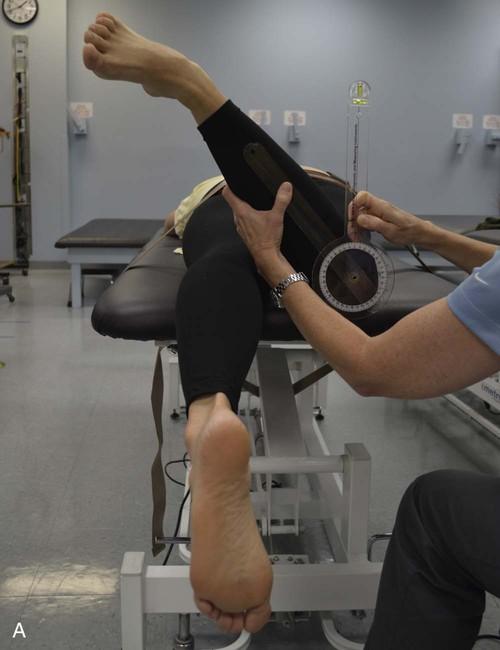
It is simple for a physical therapist or athletic trainer to assess someone’s natural range of motion; this can give you/your students a clear understanding of what they should be aiming for in their standing leg. If someone is measured at 50 degrees at each hip, they are looking at a 100-degree first position. Anything more than their anatomical range is coming as compensation of the knee, ankle, and/or pelvis.
qZjZJP7qB9hKQeOkJs7JetuK2Kz1lDIjvoeDs0icKaOnOJ62QJ1pTb_mXnlDepxnGrz_-j7t-LWDVRllx3lObmqRydAs-tSBcvjntotpH2Jc_rucHxEV9WLiVzaab5gfgLIRulNb

These compensations will show up as ankle-foot pronation or collapsing arch, knees not tracking over the midline of the foot in plie, anterior pelvic tilt/ tail out, or any combination of the three. Over time these compensations can lead to serious injuries such as torn ligaments, torn muscles or tendons, joint instability, or impingement. These injuries can easily lead to the end of someone’s dance career, along with chronic pain. Therefore, it is critical to work within a natural range of motion, avoid compensation techniques, and the forcing of excessive turnout.

If you have any questions or have been dancing with pain, get to your favorite physical therapist. We can assess your specific range of motion and how you are moving, and get you back to dancing pain-free.

Rausch Physical Therapy remains your caring team and can accommodate you with a specific, personalized plan that suits your needs and goals. Visit our Facebook page or call us at (949) 276-5401. 

8fFDsBLJCHCRyAjGWU0hJqIY2aWetWOvEXJynW0paNkM9UbM2R6rSdIYyYzlMQy-zZ-UResDFVn6SaGihNZUsFYdg1Ivq_YWz3KJukpxXZg102tvh1XR7hVv1XO2_EouVFlbn-e1

Physical Therapy ISN’T…

Jennifer Carman – Laguna Hills

In my 20+ years as a Physical Therapist, I have come across individuals who were displeased with their previous physical therapy experiences. They reported that physical therapy did not work for them, and they did not see any functional improvement. When I inquired about the details of their experience, I realized that although the service they received was called “physical therapy,” it was, in fact, not skilled rehabilitative physical therapy. I responded with, “That was NOT Physical Therapy!”

Physical Therapy ISN’T…

The following is what Physical Therapy IS NOT:

  • A quick patient assessment based solely on the treating diagnosis — followed by a cookie-cutter treatment plan for that diagnosis.
  • Seeing the treating physical therapist only on the initial evaluation day and never seeing them again during any follow-up visits.
  • The only hands-on treatment is placing a pre-treatment hot pack followed by a general massage.
  • Unsupervised exercises in the corner table.
  • Leaving the PT clinic with more pain and having made no progress.

Physical Therapy produces results when skilled, knowledgeable, individualized evaluation and hands-on treatment occur. We are proud to provide integrative, personalized, excellent, caring physical therapy.

Physical Therapy IS…

The following is what Physical Therapy IS:

  • 60-minute evaluation and patient assessment including thorough patient history; evaluating patient posture, strength, range of motion, flexibility, nerve function, gait mechanics, mobility, stability; observation of performance, movement. and specific recreational/vocational activities. The Physical Therapist creates a plan of care, and treatment plan, for each individual to address their specific impairments, dysfunction, and goals — based on what they find.
  • Every treatment visit following the initial evaluation consists of one-on-one time with the Physical Therapist, whereby the PT reassesses progress and goals. Treatment includes hands-on manual techniques, passive range of motion, joint mobilization, myofascial release, pain modalities, muscle reeducation and stabilization, balance/ posture/ gait training, movement analysis as needed, and relevant to patient diagnosis and presentation.
  • Treatment continues with therapeutic exercises chosen by the PT specifically for the individual patient, based on their goals and presentation. A physical therapy aide trained to instruct and observe proper exercise techniques supervises each exercise session.
  • PT treatment frequency and duration vary based on progress; usually, the patient will attend PT 1-3 treatments per week, times 4-8 weeks; as needed and medically necessary.
  • Each patient receives an individualized home exercise program to promote healing and functional progress.

Your Physical Therapy experience is our utmost priority. We are committed to your success. If you think you have had a previous unsuccessful Physical Therapy experience and are currently in pain or limited by pain or dysfunction, consider Physical Therapy with us. We accept Direct Access, which means a doctor referral or prescription is not required. 

We hope to see you soon so you can get back to your best life!

Start your journey to recovery today — (949) 597-0007. Don’t forget to join us on our Facebook page.

Scrumptious Smoothie Recipes

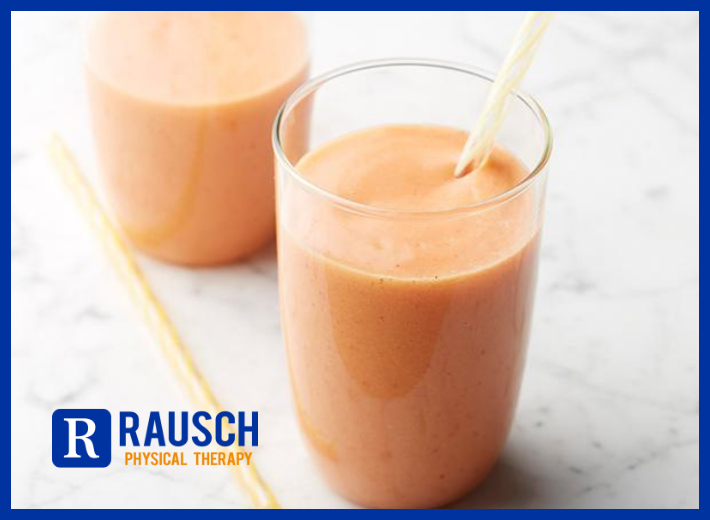
What comes to your mind when you think of a healthy snack? You probably thought of fruits, yogurt, and cereal bars, right? So it’s time for you to try something new. Smoothies are refreshing, easy to prepare, versatile, and nutritious. Check out Dr. Danielle’s secret smoothie recipes to inspire your next break.

By: Dr. Danielle Fleming

In my opinion, any time is a perfect time to whip up some smoothies (or bowls) for a cooling delicious meal, snack, or dessert.

Smoothies are great in many ways. Yes, they can be cool and refreshing (although I’ve been known to eat them in winter months, too), and they are extremely versatile. You can throw whatever you want in a blender, really! Smoothies can also be helpful for sneaking in plenty of fruits and vegetables and protein, and for gaining or losing weight depending on how you prepare them! They are also easy to meal prep, they’re portable, and they may be easier on your digestive system vs. solid foods. Frozen fruits and veggies are great, and affordable options for your smoothies!

As I mentioned, feel free to experiment with your smoothie recipes! The ones I have here are just some frameworks for ones I like! I also like to add protein powder to my smoothies (some of my favorites are Nuzest. Truvani, and Orgain).

Keep in mind, to keep the sugars (carbs) from fruits in check, balance with veggies! You can of course do all veggie smoothies, too!

  • Acerola Cherry & Peach

    1. 1 frozen acerola cherry puree packet (can be found at grocery stores like Trader Joe’s)
    2. 1 cup frozen peaches
    3. ½ frozen banana (frozen into coins is easier to blend, or fresh + ice cubes)
    4. 1 cup frozen riced cauliflower
    5. 1 scoop protein powder (I like vanilla)
    6. 1 tablespoon flaxseed
    7. Liquid (plant milk, water, etc.) as needed for consistency
  • Berry Berry Green

    1. 1 cup frozen blueberries
    2. 1 frozen acai puree packet (or sub with 1 cup frozen raspberries)
    3. ½ cup frozen blackberries
    4. Big handful(s) of dark greens like kale or spinach
    5. 1 scoop of protein powder
    6. 1 tablespoon chia seeds
    7. Liquid as needed for consistency
  • Sunny Orange

    1. 1 frozen orange (peel, dice, freeze)
    2. 1 cup frozen papaya (peel, dice, freeze)
    3. ½ cup frozen pineapple
    4. 1-2 cups frozen riced cauliflower
    5. ½ cup frozen sweet potato (steamed, diced, frozen)
    6. 1 tablespoon hemp seeds
    7. Liquid as needed for consistency
  • Veg’d Out

    1. Handful spinach (can be chopped, frozen, or fresh)
    2. Handful kale (can be chopped, frozen, or fresh)
    3. 1 teaspoon green spirulina
    4. 1 cup frozen cucumber
    5. 1 cup frozen cauliflower
    6. A scoop of protein powder
    7. 1 tablespoon nut butter (choose raw versions — I like almond butter or Sunbutter)
    8. Liquid as needed for consistency
    9. *If you want some fruit, green apple, banana, or pineapple would go well!

For all of these, just throw in a blender and blast until smooth! 

Comment on some of your favorite smoothie experiments!

Disclaimer — All the information that you find on our blogs and social media pages is for informational purposes only and is not intended to be used as your personal professional diagnosis, or treatment. Come and see us for your excellent, personalized care! https://staging.rauschpt.net/


Dr. Danielle Fleming, PT, DPT, CSCS, Pn1

daniellef@rauschpt.net 

Dr. Danielle, our “Wellness PT” is a certified nutrition and wellness coach, and promotes a holistic approach to health. Let’s talk! We are here to help. Give us a call at (949) 276-5401 for a complimentary consultation. We would love to meet you.

There’s no prescription needed from a doctor to see us, but we will communicate your progress and treatment to your doctor — if you’d like us too!