What Is Pelvic Organ Prolapse (POP) and How It Happens

Dr. Marena Boctor Nakhla – Laguna Hills

Pelvic organ prolapse (POP) is the descent of one or more organs such as the uterus, bladder, or rectum into the vaginal wall. It is most commonly referred to as herniation. 

Pelvic organ prolapse happens when the pelvic floor muscles are no longer able to support pelvic organs, resulting in a drop of the organs.

Types of prolapse: 

  1. Cystocele is when the bladder bulges into the vaginal space. It can also be called anterior wall prolapse.
  2. Recotcele happens when the rectum prolapse or herniates into the vaginal space. It can also be known as posterior vaginal prolapse.
  3. Uterine prolapse is when the uterus bulges into the vaginal space and can be called anterior wall prolapse.

Now let’s talk about causes for prolapse.

Pelvic Organ Prolapse is mainly caused by pregnancy and vaginal childbirth. Pelvic organ prolapse happens when pelvic floor muscles (PFM) are weak and unable to support the organ. Pelvic floor muscles need to be strong to be able to support the weight of the fetus. After childbirth, pelvic floor muscle starts to fatigue and dysfunction starts to occur.

Prolapse risk factors include:

Laceration, tearing, or stretching can affect the integrity and function of the pelvic floor. Forcep or vacuum-assisted delivery increases the risk of pelvic floor injury.

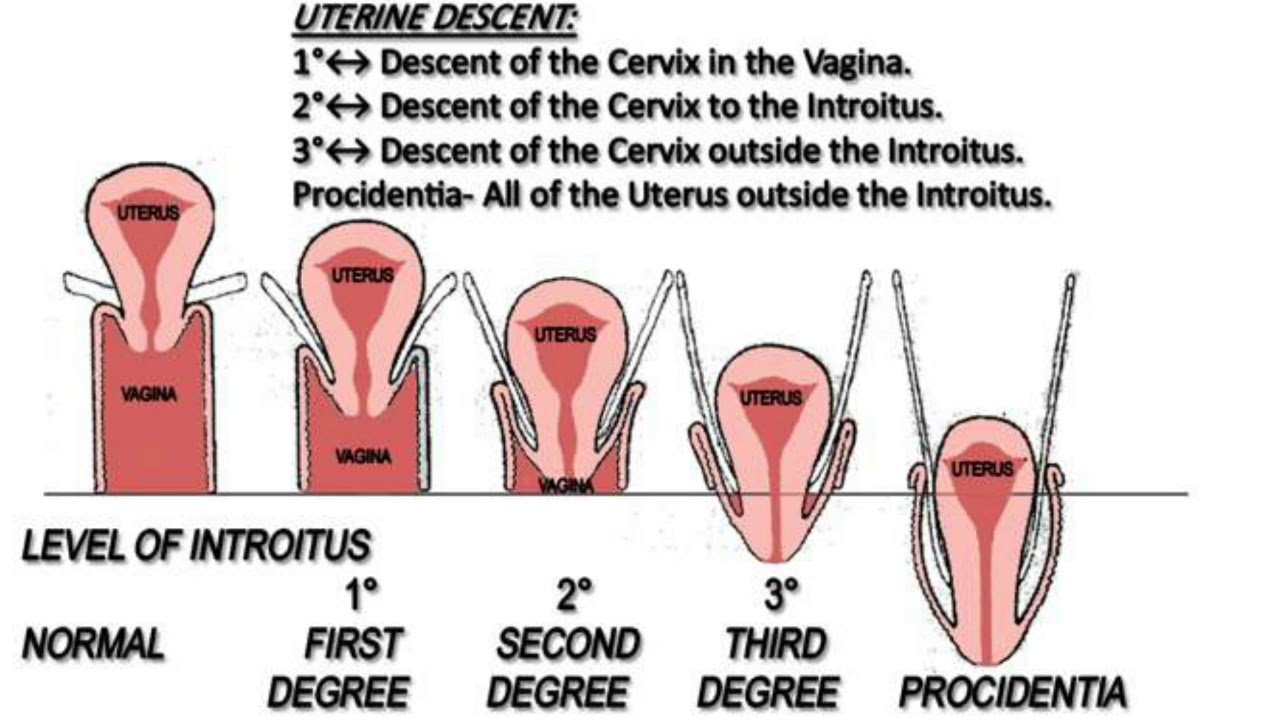
Grades of pelvic organ prolapse:

Pelvic organ prolapse is rated on a scale of 0-4. Each grade specifies the intensity of the prolapse.

  1. Stage 0 is absent or non
  2. Stage 1: > 1 cm above hymen
  3. Stage 2: 1 cm above or beyond the hymen
  4. Stage 3: > 1 cm beyond hymen
  5. Stage 4: complete eversion

Symptoms of pelvic organ prolapse 
DwfsicoyzIpoSmjLaaVdEFbgDHCMPCH1HM4m1CjCE8IOxyM-6WdQdyJH__2ZwjVTjq1Ve77f8I8x47jDOXuSe-PR8mJOy2u8nwIt16csHo4MOTVejZpLTuueHs700kX8x4ReRpGw

The most common symptom of all types of vaginal prolapse is the sensation that tissues or structures in the vagina are out of place or feeling that something is coming down. You might also feel pressure or pain in the perineum. Some patients may also feel pelvic or abdominal pain.

Symptoms may be exacerbated with standing or bearing down with bowel movements.

Management of pelvic organ prolapse: 

  1. Pelvic floor physical therapy to assess and treat pelvic floor muscle, core strengthening, stabilization exercises, and hip strengthening.
  2. Avoid intra-abdominal pressure by managing constipation. Avoid bearing down.
  3. Proper lifting mechanics. Always exhale while lifting heavy items.
  4. Weight loss. Increased intra-abdominal pressure can increase prolapse.
  5. Use of pessary. A pessary is a removable device placed into the vagina to aid in supporting pelvic organs.
  6. Loose clothing and supportive garments. Avoid tight and fitted pants as they can increase intra-abdominal pressure.


Keep Calm and Breathe On: The importance of not holding your breath

Dr. Ruth Meltzer – Dana Point

5K788i6SCZ9TmbNgBm14mkTPIAKjO45ZIz-SgwcuhiDVwcpKtDl7IU4d3PwqgGNZrpoto1I_V8bnsfFj4xoHkd5pJ-mXVThxOi-DCZ1xe9-iUljhQoC6HRjNUVkddB-1PtOej1QZ

What

As you breathe out, your pelvic floor muscles activate and help support your internal organs.  It is vital to keep your breathing relaxed and rhythmic while working out in the gym, weight lifting, or engaging in gymnastics or sport. Holding your breath can be very detrimental to your internal abdominal pressure, thus putting more pressure on your pelvic floor muscles.

Who

People who experience pelvic pain, incontinence, or accidentally urinate when they laugh or jump on the trampoline are all examples of people who would need pelvic physical therapy. The first step in treatment is improving your breathing. Pelvic physical therapy can evaluate tightness in muscles, weak muscles, and retrain muscles just like any other muscle group in the body.

So if you or someone you know experiences these symptoms, bring them by, and we can take a look at their breathing and muscle control and set them on the right path to recovery. Who knew something as simple as breathing could be a culprit in their pelvic floor muscles?

The Importance of Breathing

Dr. Kristen Nelson — Laguna Niguel

Breathing is something we do every day without even thinking about it. It allows our bodies to replenish with oxygen, which is very important for every system. Breathing is also beneficial for mental clarity, better sleep, and reduces stress levels. However, we need to know if we are breathing properly and efficiently. Without proper breathing, we could potentially cause harm to our bodies. 

Proper Breathing Technique 

Fy-5m28fVEbOmrkQYZ1Q-FgoyVOE1PqG66A4vhBWHCaCkcLT06XrQnmi6adyZSS5bdkVNvRLbfvnZX6-wmlytImrkWnxk6BC0C_oufuIILb0ZWddrdmzxJrQDCv3a1V5i9awCZzd

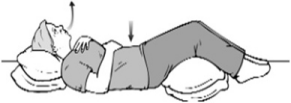
Even though it seems breathing should be a “no-brainer,” there is a proper way to breathe — called diaphragmatic breathing. Imagine that our bodies are like a balloon. As we inhale, our bellies should be expanding like a balloon, which causes our diaphragm to contract. As we exhale, our bodies should deflate like a balloon when our diaphragm relaxes. If we breathe from our chests, we are not breathing as efficiently and need to recruit our intercostal muscles (the muscles between our ribs) to assist us in breathing. One way to find out if we breathe from our chest or diaphragm is to lie on our back with one hand on our chest and the other on our stomach. Perform your regular breathing pattern and see which hand moves more; this can also be an exercise to teach ourselves how to breathe from our diaphragm.

Breathing and Exercise

When exercising, we sometimes forget to breathe and instead hold our breath. It is important to remember to breathe properly during exercise, especially when performing stressful movements, such as heavy weight lifting. When performing exercises with heavy resistance, individuals might tend to hold their breath which is called the Valsalva maneuver. If you have ever seen YouTube videos of individuals fainting after lifting heavy weights, it is most likely they were holding their breath to be able to perform the lift. Weightlifters faint because of a drop in blood pressure and a lack of oxygen to the brain. Breathing properly will allow for more oxygen and blood flow to our muscles and brain and avoid a drop in blood pressure when performing high resistance activities, which can help mitigate injury (i.e. fainting due to dizziness from holding your breath).

Another Type of Breathing Exercise

noceL-3V3-Romv3GBzj8oxwn6nNOxiI8J0kaIU6J_FYO--Mo_GWI7OyHZJomSR4Uviml-thWD3NpSijCTr7WoIOrkzPeiqhgxpokFdgvdwaF8hDnFG_kVHf1PKB98Fc0oYDkrCHS

Not only is there diaphragmatic breathing, but there are other types of breathing techniques that are beneficial for individuals. One that I find to be helpful is “pursed-lip breathing.” This type of breathing can assist with activities such as lifting and bending. It is a technique to control and slow down our breathing patterns. Start in a relaxed position, such as sitting down in a comfortable chair. Next, start breathing slowly through your nose for a count of two. Then you want to purse your lips like you are blowing out through straw or trying to blow out a candle slowly. This slow exhalation should occur for a count of four. Perform this for a cycle of 5 breaths.

Take Away 

As we go about our daily lives, it is good to stop and check ourselves to see how we are doing with our breathing. Even though many of us have difficulty finding the time to check on our breathing, it only takes a minute to sit in a comfortable spot and focus on our breathing. Our physical and mental health will thank us for taking the time to check in with ourselves.