Concussion Rehab

Girls’ Soccer Holds Highest Concussion Rate Among High School Girls’ Sports

Even with increasing protocols in place, concussion rates continue to be at the forefront of sports injuries — with soccer presenting the highest occurrence among girls high school sports and #2 overall just behind boys’ football. Concussions are very often not taken as seriously as, say, a broken bone or a torn ACL. But, a concussion is a form of traumatic brain injury (TBI) and requires proper treatment/rehabilitation to avoid lasting impairments, including memory issues, headaches, difficulty concentrating, vision impairments, increased visual strain with screens, and sleeping impairments.

Signs and Symptoms of a Concussion:

  • Lasting headache
  • Nausea or vomiting
  • Emotional inconsistencies: irritability, laughing while crying, etc
  • Sleepiness
  • Disoriented or confused
  • Excessive Fatigue
  • Poor balance
  • Blackout
  • Sensitivity to light
  • Ringing in ears
  • Nystagmus upon examination – “jumping” of eyes while tracking side to side without head movement

One may present with only a couple of these symptoms in mild cases and up to all of them in very severe cases. Upon the suspicion of a concussion, an exam by a medical professional should be performed, and treatment supervised by a medical doctor specializing in concussions.

Contrary to common thought, complete rest is typically NOT the ideal prescription for recovering from a concussion in mild-moderate cases. Mild to moderate cases should have a specific plan prescribed and supervised by a concussion-trained physical therapist to improve symptoms appropriately and safely. And for the athletes, a supervised return to sports programs can ensure that the athletes can return safely without creating too much strain on their brain while they are playing. Complete rest/return to activities too early can prolong symptoms and create long-lasting impairments, some of which were listed above. This is especially true for those that have suffered multiple concussions in their life.

Would you try to brush off symptoms or rush back to your activities after a broken bone, sprained ankle, or surgery? I hope the answer is no, and I hope you do the same for a concussion or a suspected concussion. Your brain requires healing and proper recovery after a trauma too!

Did you know there’s no prescription needed from a doctor to see us – but we will communicate your progress and treatment to your doctor if you’d like us too! Find us on our Facebook page and share your experiences and join our community! 

What the Cup?

What is Myofascial Decompression (MFD) and why is it beneficial for you? 

Dr. Camery Cano-RPT-Laguna Niguel

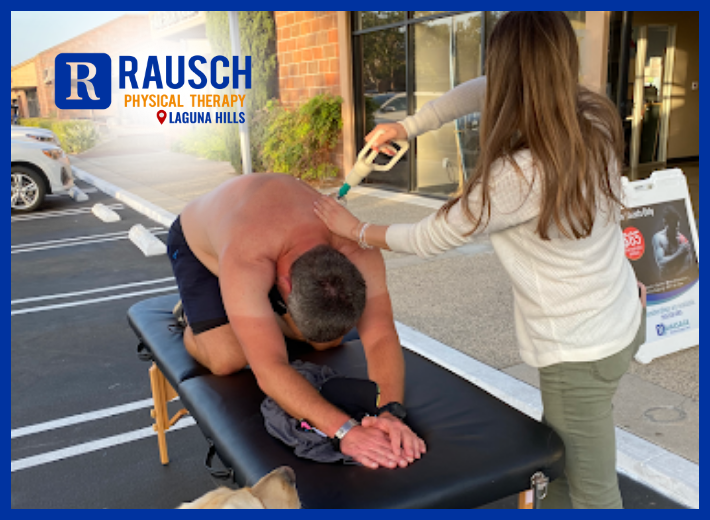
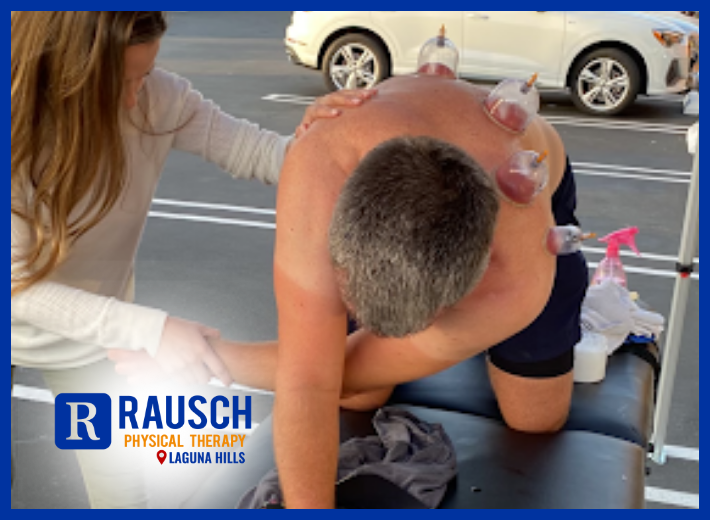
You may have seen cup therapy performed within PT clinics or on Olympic athletes and asked yourself, what is that torture device? That “torture device” known as cup therapy can quickly improve acute or chronic pain and mobility — but what is the actual mechanism, and is it appropriate for all patient demographics?

Around 1400 AD, ancient Egyptians created traditional cupping using heated glasses to remove blood from purge bites, skin lesions, and infections. For many years, cupping has been an alternative practice within eastern medicine to help heal the human body. Although removing blood from the tissues is not practiced within physical therapy, the same healing principles have been applied and modified to heal fascia tissues and improve movement.  

We have a thin layer of connective tissue called fascia throughout our entire bodies and between our muscles. Fascia gives support and attachment to our tissues and muscles; when stress or injuries occur, it can create additional collagen scarring, making the fascia more dense and thick. This densification adheres to muscles and causes restrictions that impact how your body moves and how you activate your muscles. If muscles become too restricted, they cannot fire and contract properly, potentially inhibiting surrounding tissues and increasing compensatory movements and dysfunction. 

MFD, or cup therapy, decompresses and lifts that dense fascial layer and offloads the muscles. Having the cups suctioned on your body creates a negative pressure force — providing more space within your musculoskeletal system and allowing increased mobility within your tissues. Research shows that cup therapy, in conjunction with active movements, can improve tissue mobility and quality of movement. Decreasing fascial restrictions can let each tissue layer glide with each other with less viscosity and increase efficiency in movement.

Once tissues have gained more mobility and range of motion, it is vital to provide stability exercises and re-educate the neurons within the new range of motion to maintain the effects of cup therapy. 

How long are the cups on your body?

3-5 minutes while applying active-assisted or active movements

Who is not a candidate for cup therapy?

Cup therapy is not for patients with comorbidities of acute or severe cardiac diseases, uncontrolled hypertension, severe bruising, unhealed tissues or fractures, loss of sensation, cancer, high-risk pregnancy, and severe diabetes. 

Precautions for postoperative use:

Post-surgical patients can have cup therapy performed on their operative body part; however, within modifications. Cup therapy can be applied post-op: 

1-2 weeks around the surgical site but not directly over the incision.

3-4 weeks directly over the incision site and ports

5-6 weeks directly over open procedure sites

What should you expect after cup therapy?

Decreased severity of pain, increased muscle soreness and increased range of motion. Don’t forget to drink plenty of water for 24 hours following cup therapy!!

Dr. Camery Cano-RPT-Laguna Niguel


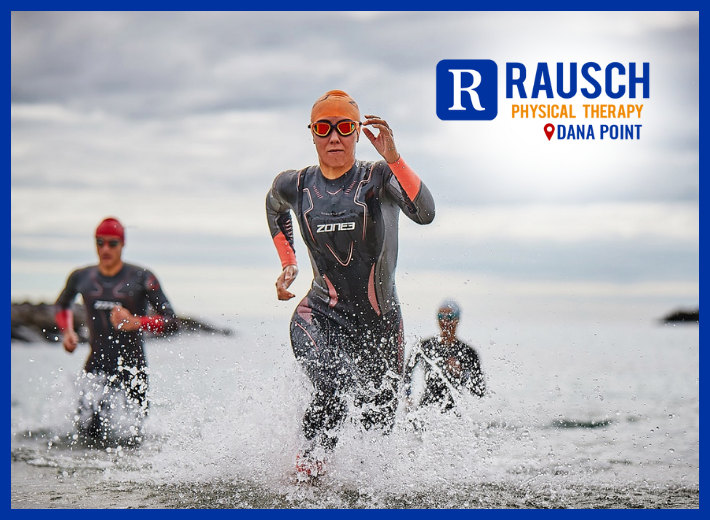
5 Ways to Keep Your Shoulders Healthy While Swimming

Dr. Clay Simons – Dana Point

For those of us who enjoy circling the black line for several hours a day, the chances of getting pain or discomfort in your shoulder increase. People do many things once they have the pain, such as ice, PT, and/or rest — but here are a couple of things you can do to help prevent the pain in the first place.

1. Posture

We spend a lot of time slouched forward with rounded mid/upper back and forward head postures, sitting at our desks, staring at our phones, Netflix binging, etc. If you spend a lot of time in these postures most of the day, it does not magically go away once you hop in the pool, where you have to be tall, straight, and long to perform your best. Make sure when you are sitting that you are not slouching all the time — even breaking it up a few minutes per hour will help. Try to keep your spine straight and your ears aligned with the tops of your shoulders. Be aware and fix it when you think of it. Slouching for short periods is not bad, but be aware of it and don’t “live” in that position.

2. T/S mobility

For the shoulder joint to work properly you need to be able to move your spine, specifically your mid-back, with rotation and extension. Going back to posture: When you slouch much of that forward bend comes from the thoracic spine. To help counter the forward bend: spend some time doing T/S extensions on a foam roller; place the roller across your back, cradle your head with your hands, and arch backward. Keep your stomach tight to minimize the arch in your low back, and keep the focus on your mid-back. You can work several spots throughout your mid-back, starting a little below your shoulder blades and working up to just above your shoulder blades. You can also work the rotation component by doing rotations. Start on all fours, and with your R arm, reach down and under your chest as far as you can to the L, hold for a few seconds, then bring your R arm back and reach up to the sky on your R, repeat several times, and then switch sides.

3. Rotator Cuff strength

Everyone has seen the classic internal/external rotation with bands — these are great and have their place but are not always the answer. Expand this by adding wall ball stabilizations by holding a ball against the wall and making small movements in multiple directions from the shoulder. I like doing star shapes or the alphabet to train your rotator cuff to work as one functioning unit to stabilize your shoulder joint in all plains. You can also do your internal-external rotations in different positions. The classic one is what we call a 90/90 where your arm is out to your side, elbow even to shoulder, and elbow bent to 90 degrees — now stabilize and rotate forward and backward here. I recommend starting this one lying down with the band around your opposite foot, staying within the range that your shoulder stays back on the table without rolling forward.

4. Scapular stability

“You can’t fire a cannon out of a canoe” is my favorite quote when it comes to rotator cuff strength. You can strengthen your rotator cuff all day long, but all 4 of the rotator cuff muscles attach to the scapula, so if that scapula is not stable, all your rotator cuff strengthening is useless. Do variations of rows, weight-bearing through your arms, and I’s/T’s to help stabilize your scapula in multiple planes.

Weight Bearing: this is where the classic push-up comes in but don’t be afraid to branch out, do different hand positions, wide, narrow, staggered, or try walking on your arms like a classic wheelbarrow from elementary school. Planks can also be great for this.

I’s/T’s: Lie on your stomach and put your hands down at your side, palms facing down and now squeeze your shoulder blades together and use your shoulder blades to lift your arms, holding for 2-3 secs. For T’s, do the same thing except bring your arms straight out to either side with your thumbs up and lift your arms from the shoulder blades.

5. Swim with good form

This one should be the most obvious, but many people tend to track the number of yards they swim when in reality, you should be looking at how well those yards swam. Make sure you are swimming with the best form possible to minimize stress/strain on structures not designed to take that load. Swimming with good form will also allow you to swim faster, which is everyone’s goal anyway.

Also, remember that physical therapy can also be a preventative approach! A licensed physical therapist can help evaluate and assess you for any mobility restrictions or muscular imbalances and recommend a proper program!
fjK_4mIJDBco-kg28nLDzXh1BH-GL6_m0llL3mUAFRVgs_jqMftR-r4SKjCTpya1I76Bxo0q6IUo0oP7xxM3BbuIcJlYbTtwQwrEUxxFcv6QBU2bFiXj8svnjEElo7vBqP1uiHeEymg8zHZKZQ

Clay Simons

clays@rauschpt.net

Did you know there’s no prescription needed from a doctor to see us – but we will communicate your progress and treatment to your doctor if you’d like us too! 

(949) 276-5401

RauschPT

Disclaimer — All the information that you find on our blogs and social media pages is for informational purposes only and is not intended to be used as your personal professional diagnosis, or treatment. Come and see us for your excellent, personalized care! https://staging.rauschpt.net/