How to Keep Your Muscles Strong as You Get Older

Age-related muscle loss is a common part of aging, but there are ways to limit it.  It’s important to start developing healthy habits as early as possible. Here are four things to learn about your muscles that will help them rejuvenate.

Need help with your exercise routine? We can help you move through pain or lack of mobility that might be getting in the way — or structure a routine that doesn’t aggravate what is irritating you! 

They get you out of bed each morning, power playtime with your kids and carry you across race-day finish lines. But as much as you use your muscles, there’s a lot about them that you probably don’t know — yet.

Here’s a look at four surprising, obscure and cool things to know and love about your muscles, as well as guidance around harnessing your newfound knowledge to rejuvenate muscle health from head to toe.

1. Your Muscles May be Connected to Your Heart Health

Did you know the health and strength of your muscles provide a clue to other health risks? It’s true.

A study published in The Lancet found that muscle strength – measured by grip strength – may more accurately determined the risk of fatal cardiovascular disease than systolic blood pressure. Additionally, another study suggested body composition (the ratio of muscle mass versus fat mass) is a better indicator of overall health than body mass index (BMI).

This is because your muscles do more than move you. Together, they act like an enormous organ, influencing mobility, strength, balance and even metabolism.

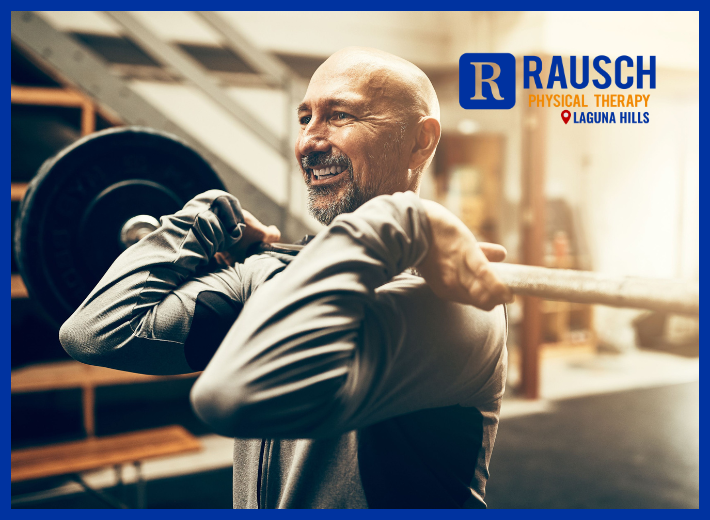
To start improving your muscle health, focus on strength training and muscle-building nutrition. The Centers for Disease Control and Prevention recommends performing total-body strengthening activities at least twice per week. It’s also a good idea to eat 25 to 30 grams of protein at every meal.

2. Exercise Causes Short-Term Damage to Your Muscles

Yes, exercise builds your muscles. But, before that, it breaks them down. When you challenge your muscles, you create tiny, microscopic tears to your muscle fibers. That damage signals your body to send amino acids (from protein) to your muscles to repair them and eventually make them stronger. Although it sounds like you’re damaging your muscles by challenging them during workouts or strenuous activity, it’s a healthy process — and helps you build strength.

To maximize the effectiveness of your workouts, consume 25 to 30 grams of protein after exercising, as this will help with the recovery and muscle-building process. In between tough sweat sessions focus on low-intensity activities like walking, yoga, gentle cycling and stretching. They can all help boost muscle recovery, according to the American Journal of Physical Medicine & Rehabilitation.

3. Your Body Needs More Protein As You Age


Research has found that starting at age 40, adults may lose up to 8% of their muscle mass per decade. And once they hit 70, that rate can potentially double. While inactivity plays a part (and requires a stronger focus on resistance exercises), your body also becomes less efficient at using the protein you eat to fortify your muscles.

A recent National Health and Nutrition Examination Survey from Abbott and the Ohio State University found that more than 1 in 3 adults over 50 years old don’t meet their recommended protein intake. Thankfully, there are a number of creative ways to add protein to your diet.

For ideal health and muscle nutrition, try combining your daily protein with HMB. It’s a natural compound that has been shown to help preserve muscle mass in healthy older adults. You can get it in trace amounts from foods such as avocados, grapefruit and catfish, but you can also find it listed alongside protein in some specialized muscle nutrition beverages.

4. Muscles Improve Your Immune Health

That’s right. If you want to build a strong immune system and reduce your risk of bacterial and viral infections, don’t underestimate your muscles.

Research has shown that muscle tissue plays a role in activating immune cells, and people with lower muscle and strength levels have reduced immune function. Staying active is a key to health in more ways than one.

To enhance your immune health, take a look at your overall diet and center your meals around lean proteins, fruits, vegetables, whole grains, nuts and beans, and low-fat dairy. Together, these foods provide the micronutrients like calcium, vitamin D, iron and antioxidants that can help keep your immune system strong and rejuvenate muscle health.

Be strong. Be flexible. Be healthier with physical therapy! We have specialized and personalized treatments that will keep your muscles healthy. Find our team at 949-276-5401 or meet us on our Facebook page.


Reference: [https://www.nutritionnews.abbott/healthy-living/aging-well/rejuvenate-muscle-health-4-things-you-didn-t-know-about-muscles/]

How to Use a Foam Roller

For general muscle soreness or tight muscles, you can use a foam roller. Using it can be uncomfortable so it’s better to be too gentle, rather than too intense when you’re starting out learning how to use a roller. You can adjust your intensity as your body responds. To get started, follow the steps below. Questions? You can always check in with us!

Whenever my muscles ache tightly, like stale-hardened licorice, I dream about this massage magician from Hong Kong. In a one-hour session, she would slowly knead my tight muscles, packing on the pressure until the knots unwound.

On the days she massaged my back, the aftermath was like I’d grown wings. On leg days, I would wobble out of the apartment — not because of pain, but because I felt weightless, every gram of tension released.

She’s a 12-hour flight away now, but I recently discovered a second-best option to her healing witchcraft.

Foam rolling

Benefits of foam rolling:

  • alleviates soreness
  • reduces inflammation that occurs during the muscle repair process
  • aids in muscle repair recovery
  • helps injury prevention by maintaining muscle length and remedying tension and tightness
  • increases blood flow and elasticity of muscle tissue, joints, and fascia — the body’s connective tissue — which helps with mobility, overall well-being, and a smoother appearance of fat underneath your skin
  • promotes relaxation — roll away your worries!

Not just for avid exercisers, foam rolling is a type of self-massage that allows you to alleviate tightness or trigger points — a super focused spot of tight muscle, aka muscle knots — by using a piece of equipment known as a foam roller.

According to Nicole Davis, ACE-certified personal trainer, it’s great for people who sit at a desk all day, have poor posture, joint issues, or bad form while exercising.

If you’re a foam rolling newbie, don’t worry — here’s how to do it

Davis has got you covered. She put together eight moves to target common tight areas.

“All you’ll need is a low- to medium-density foam roller and some open floor space. Aim to complete this routine three times per week,” Davis says.

You can really do this anytime, but Davis recommends before workouts as a warmup, or after to prevent soreness. I like to do it while watching The Office, before I go to bed.

1. Quads

If a desk job’s got you sedentary most of the day, roll out your quads to get your blood flowing and keep muscles engaged.

Directions:

  1. Start in a forearm plank position with the roller under your quads.
  2. Bracing yourself with your upper body and core, begin to slowly roll down the roller until it reaches just above your knees. Then, roll in the opposite direction until you reach your hip flexors.
  3. Do this for 30 seconds.
  4. When you hit a tender spot, hold yourself there for a few breaths.

If you want to give yourself more TLC, you can also focus on one quad first, and then the other.

2. Hip flexors

Sitting for extended periods of time can really mess with your hip flexors.

While stretching them is good, foam rolling them is even better because it works on loosening the muscle tissue plus the connective tissue (fascia) around it.

Directions:

  1. Start by lying down, facing the floor on the foam roller, once again in a forearm plank position. Make sure the foam roller is underneath your left hip flexor and your right leg is bent comfortably to the side.
  2. Resting on your forearms, begin to roll slowly up and down and side to side on the foam roller to target the hip flexor, paying close attention to trigger points.
  3. Do this for 30 seconds.
  4. Switch and repeat on the right hip flexor.

3. Calves

In addition to calf stretches, try foam rolling these muscles for an extra spring in your step.

Directions:

  1. Start by sitting on the floor with your legs extended, the foam roller positioned underneath your calves.
  2. Lift your body up so your weight is resting on the foam roller. Cross your left leg over your right for extra pressure.
  3. Begin to slowly roll your right calf back and forth on the foam roller, navigating your body forward and back with your arms.
  4. Complete for 30 seconds.
  5. Switch legs and focus on your left calf.

4. Hamstrings

Another muscle that’s negatively affected by sitting all day, your hamstrings may be in need of some TLC.

Directions:

  1. Again, start by sitting on the floor with your legs extended. This time, position the foam roller underneath your hamstrings.
  2. Lift your body up so your weight is resting on the foam roller and begin to slowly roll up and down between the back of your knees and your glutes.
  3. Linger on tender spots, and roll for at least 30 seconds overall.

An alternative way to complete this is to again cross your legs and focus on one hamstring at a time.

5. IT band


Made of connective tissue, the IT band runs along your outer thigh from the hip to the knee.

Soreness and tightness in this area is common in runners, but anyone can benefit from foam rolling this area.

Directions:

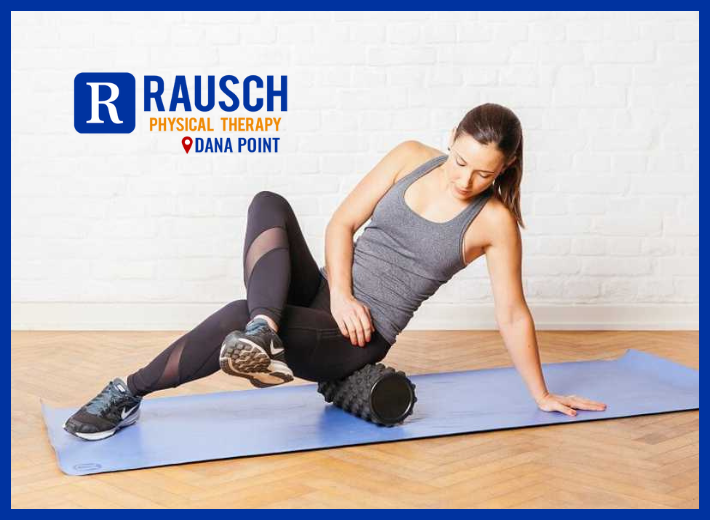
  1. Begin by lying on your right side with the foam roller positioned underneath your right IT band, or the side of your thigh. Rest your bodyweight on your right forearm. Your right leg should be straight, and your left should be bent at the knee with your foot placed comfortably in front of your right leg.
  2. Bracing yourself with your upper body and left leg, begin to slowly roll along the foam roller on your right IT band between your knee and glute, stopping at tender spots.
  3. Repeat for 30 seconds, then switch to roll your left IT band.

6. Upper back

Poor posture got ya down? If you’re holding tension in your upper back, hop on the foam roller to help loosen things up.

Directions:

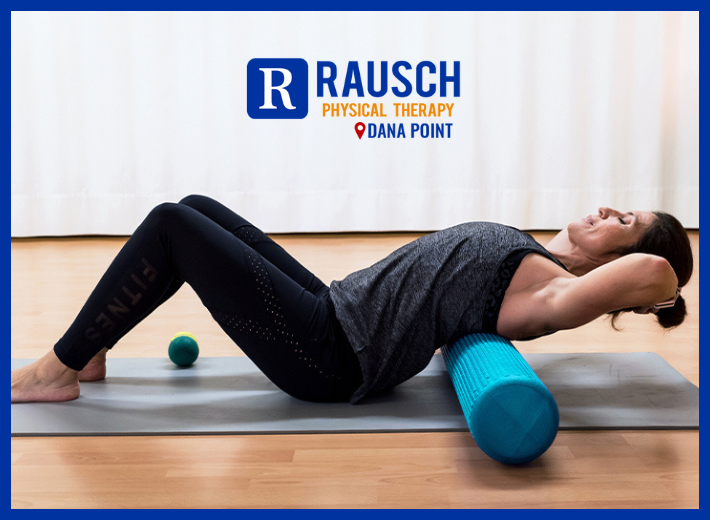
  1. Begin by lying on your back with the foam roller positioned underneath your upper back. Your knees should be bent with your feet flat on the floor and your arms can either be down by your sides or crossed in front of your chest.
  2. Brace your core and lift yourself up into a shallow bridge position.
  3. Slowly start to roll up and down between your lower neck and mid-back, stopping at tight areas along the way.
  4. Repeat for 30 seconds.

7. Lats

Affectionately known as your “wings,” tight lat muscles — located on your back, right below your armpits — can throw your posture out of whack. Make sure they’re nice and loose by hitting them with the foam roller.

Directions:

  1. Begin by lying on your back at a 45-degree angle with the foam roller positioned underneath your right lat. Keep your right leg straight and bend your left leg into a comfortable position.
  2. Slowly start to roll from your right armpit down to your mid-back area, focusing on tender areas.
  3. Repeat for 30 seconds.
  4. Switch to roll out your left lat.

8. Shoulders

Do your shoulders need some action? Roll out your deltoids to get mobility back.

Directions:

  1. Lie on your side with the foam roller underneath your right shoulder. Your lower body can be resting on the ground comfortably with your left arm out in front to guide movement.
  2. Roll slowly up and down over your deltoid muscle. Rotate your trunk slightly so you can hit part of your upper back as well if needed.
  3. Repeat for 30 seconds.
  4. Switch sides and repeat on your left shoulder.
Bonus stretch: Neck

When I have intense headaches, especially due to tension in the neck, I like to use my foam roller. This acts like a self-massage that’s stronger than any hand.

Directions:

  1. Rest your neck on the foam roller, at the top where it connects to your head.
  2. Slowly turn your head to the right, holding where you feel a tightness.
  3. Exhale and turn your head to the left.
  4. Repeat for 30 seconds.

Be careful on the first try

A disclaimer from Davis here: “Foam rolling can be painful, especially if you’re new to it. Pain in a specific area while foam rolling is typically a sign that your muscle or tissue is tight and needs some TLC.”

“Ease into painful spots by starting in the areas right around it and sensitivity should decrease fairly quickly,” she adds. “But, if it’s too much to bear, don’t continue.”

Choosing a foam roller

  • Start with a basic low- or medium-density model ($7.99-49.95).
  • A small ball ($12.99) can also be beneficial to target smaller areas.
  • Need some tough love? Try a rumble roller ($44.95) or the Master of Muscle ($17.97) which provides a deep-tissue release.

As a glued-to-the-desk editor, I can testify that foam rolling has been so good for my well-being.

What used to be chronic tension and needling pain in my arm and shoulder is now gone thanks to my once-a-week classes. Yep, I also pay to do it for an hour a week, just to make sure I’m really getting every knot.

The act itself is as fulfilling as pushing out the last bit of toothpaste from the tube. It’s the pimple-popping of muscle tension, an oddly satisfying mix of pain and pleasure — and after an hour of being my own healer, I leave the gym walking a little lighter.

If you’ve been experiencing muscle soreness, PT can help you reach back to your maximum potential. We are movement experts that treat people of all ages and abilities. Contact our team today at 949-276-5401 and join our Facebook community here.


Reference: [https://www.healthline.com/health/fitness-exercise/foam-rolling-how-to]

Should I Work Out When I Am Sick?

When you have a cold, you’re more likely to be tired. If you’re sticking to a training routine, it might feel hard to step back and stay home because you’re feeling sick. But is it a good idea or even safe to exercise when you have a cold? Before you hit the gym or unroll your yoga mat, let’s see what the experts say.

Engaging in regular exercise is an excellent way to keep your body healthy. In fact, working out has been shown to decrease your risk of chronic diseases like diabetes and heart disease, help keep your weight in check, and boost your immune system. While there’s no doubt that exercise plays an important role in health, many people wonder whether working out while sick will help or hinder their recovery.

However, the answer isn’t black and white. This article explains why sometimes it’s OK to work out when you’re sick, while other times it’s best to stay home and rest.

Is it OK to work out when you’re sick?

A speedy recovery is always the goal when you are sick, but it can be hard to know when it’s OK to power through with your normal gym routine and when it’s best to take a few days off. Exercise is a healthy habit, and it’s normal to want to continue working out, even when you’re feeling under the weather. This can be perfectly fine in certain situations but also detrimental if you’re experiencing certain symptoms. Many experts use the “above the neck” rule when advising people on whether to continue working out while sick.

According to this theory, if you’re only experiencing symptoms that are above your neck, such as a stuffy nose, sneezing, or an earache, you’re probably OK to engage in exercise at mild intensity for a shorter period, but only if you feel up to it. On the other hand, if you’re experiencing symptoms below your neck, such as nausea, body aches, fever, diarrhea, a productive cough, or chest congestion, you may want to skip your workout until you feel better. A productive cough is one in which you’re coughing up phlegm.

When it’s safe to exercise

Working out with the following symptoms is most likely safe, but always check with your doctor if you’re unsure.

Mild cold

A mild cold is a viral infection of the nose and throat. Though symptoms vary from person to person, most people who have a cold experience sneezing, a stuffy nose, a headache, and a mild cough. Given current events, if you have a mild cold and the energy to work out, the best solution is to take a light walk outside or at home rather than engage in vigorous exercise. With the added possibility of developing COVID-19, it’s even more important to maintain social distancing.

If you feel that you lack the energy to get through your normal routine, consider reducing the intensity of your workout or shortening its duration. While it’s generally OK to exercise with a mild cold, keep in mind that you might spread germs to others and cause them to become ill. Practicing proper hygiene is a great way to prevent spreading your cold to others. Wash your hands frequently and cover your mouth when you sneeze or cough.

Earache

An earache is a sharp, dull, or burning pain that can be located in one or both ears. Though ear pain in children is commonly caused by infection, earache in adults is more commonly caused by pain occurring in another area, such as the throat. This is an example of referred pain.

Ear pain can be caused by a sinus infection, a sore throat, a tooth infection, or changes in pressure. Certain types of ear infections can throw you off balance and cause a fever and other symptoms that make working out unsafe. Make sure you don’t have one of these ear infections before beginning exercise.

However, most earaches can just be uncomfortable and cause a feeling of fullness or pressure in the head. Though exercise is likely safe when you have an earache, try to avoid exercises that put pressure on the sinus region. Stick to light walking. Something as simple as bending over can be very uncomfortable with a sinus infection.

Stuffy nose

Having a stuffy nose can be frustrating and uncomfortable. If it’s associated with a fever or other symptoms like a productive cough or chest congestion, you should consider taking some time off from working out.

However, it’s OK to work out if you’re only experiencing some nasal congestion. In fact, getting some exercise may help open up your nasal passages, helping you breathe better. Ultimately, listening to your body to determine whether you feel well enough to exercise with a stuffy nose is the best bet. Modifying your workout to accommodate your energy level is another option.

Going for brisk walks or bike rides are great ways to stay active even when you aren’t feeling up to your usual routine. Because of the COVID pandemic, you shouldn’t be going to a gym if you’re sick. If your nose is really stuffy, don’t try anything more strenuous than very light exercise or walking. Pay attention to your breathing and what you feel you can handle.

Mild sore throat

A sore throat is usually caused by a viral infection like the common cold or flu. In certain situations, such as when your sore throat is associated with a fever, productive cough, or difficulty swallowing, you should put exercise on hold until a doctor tells you it’s OK to resume your workouts.

However, if you’re experiencing a mild sore throat caused by something like a common cold or allergies, working out is likely safe. If you’re experiencing other symptoms that are often associated with a common cold, such as fatigue and congestion, consider reducing the intensity of your normal exercise routine. Reducing the duration of your workout is another way to modify activity when you feel well enough to work out but don’t have your usual stamina. Staying hydrated with cool water is a great way to soothe a sore throat during exercise so you can add activity into your day.

When exercise is not recommended

While exercising is generally harmless when you have a mild cold or earache, working out when you are experiencing any of the following symptoms is not recommended.

Fever

When you have a fever, your body temperature rises above its normal range, which hovers around 98.6°F (37°C). A fever can be caused by many things, but it’s most commonly triggered by a bacterial or viral infection.

Fevers can cause unpleasant symptoms like weakness, dehydration, muscle aches, and a loss of appetite. Working out while you’re feverish increases the risk of dehydration and can make a fever worse. Additionally, having a fever decreases muscle strength and endurance and impairs precision and coordination, increasing the risk of injury. For these reasons, it’s best to skip the gym when you have a fever.

Productive or frequent cough

An occasional cough is a normal response to irritants or fluids in the body’s airways, and it helps keep the body healthy. However, more frequent episodes of coughing can be a symptom of a respiratory infection like a cold, the flu, or even pneumonia. While a cough associated with a tickle in the throat isn’t a reason to skip the gym, a more persistent cough can be a sign you need to rest. Although a dry, sporadic cough may not impair your ability to perform certain exercises, a frequent, productive cough is reason to skip a workout.

A persistent cough can make it difficult to take a deep breath, particularly when your heart rate rises during exercise. This makes you more likely to become short of breath and fatigued. A productive cough that brings up phlegm or sputum may be a sign of infection or another medical condition that requires rest and should be treated by a doctor. Furthermore, coughing is one of the main ways viruses like the flu and SARS-CoV-2, which causes COVID-19, are spread. Avoid going to the gym when you have a cough, as you’re putting fellow gym-goers at risk of being exposed to the germs that caused your illness. Also, if your cough is occurring during exercise, it may be a sign of asthma. See a doctor if this persists.

Stomach bug

Illnesses that affect the digestive system, such as the stomach flu, can cause serious symptoms that make working out off-limits. Nausea, vomiting, diarrhea, fever, stomach cramping, and decreased appetite are all common symptoms associated with stomach bugs. Diarrhea and vomiting put you at risk of dehydration, which physical activity worsens. Feeling weak is common when you have a stomach ailment, increasing the chance of injury during a workout.

What’s more, many stomach illnesses like the stomach flu are highly contagious and can be easily spread to others. If you’re feeling restless during a stomach illness, light stretching or yoga at home are the safest options.

Flu symptoms

Influenza is a contagious illness that affects the respiratory system. The flu causes symptoms like fever, chills, sore throat, body aches, fatigue, headache, cough, and congestion. The flu can be mild or severe, depending on the level of infection, and it may even cause death in serious cases. Although not every person who gets the flu will experience a fever, those who do are at an increased risk of dehydration, making working out a bad idea. Though the majority of people recover from the flu in less than 2 weeks, choosing to engage in intense workouts while sick may prolong the flu and delay your recovery.

Though it’s a debated topic, some researchers believe engaging in higher intensity activity like running or a spin class temporarily suppresses the body’s immune response. Plus, the flu is a highly contagious virus that’s spread primarily through tiny droplets that people with the flu release into the air when they talk, cough, or sneeze. If you’re diagnosed with the flu, it’s best to take it easy and avoid exercise while you’re experiencing symptoms.

When is it OK to return to your routine?

Many people are anxious to get back to the gym after recovering from an illness — and for good reason. Regular exercise can reduce your risk of becoming sick in the first place by boosting your immune system. However, it’s important to let your body completely recover from an illness before returning to your exercise routine, and you shouldn’t stress even if you’re unable to work out for an extended period of time.

While some people worry that a few days off from the gym will set them back and cause a loss of muscle and strength, that’s not the case. Many studies show that for most people, muscle loss and strength start to decline around the 5-day mark. As symptoms subside, gradually begin introducing more physical activity into your day, being careful not to overdo it. On your first day back to the gym, begin with a low intensity, shorter workout, and be sure to hydrate with water while exercising.

Remember, your body may be feeling weak, especially if you’re recovering from a stomach illness or the flu, and it’s important to pay attention to how you’re feeling. If you’re questioning whether you can safely work out while recovering from being sick, ask your doctor for advice. Additionally, while you may be feeling better, keep in mind that you might still be able to spread your illness to others. Adults can infect others with the flu up to 7 days after first experiencing flu symptoms. Although getting back to the gym after an illness is beneficial for your overall health, it’s important to listen to your body and doctor when deciding whether you’re well enough for more intense activity. When experiencing symptoms like diarrhea, vomiting, weakness, a fever, or a productive cough, it’s best to rest your body and take some time off from the gym to recover.

However, if you caught a mild cold or are experiencing some nasal congestion, there’s no need to throw in the towel on your workout, though it’s good sense to stay away from indoor public spaces like gyms. Yet, it’s important to confine your workouts to home during this time due to the risk of spreading your illness to others. It’s not always possible to know for sure whether you’re experiencing a cold or something more serious. It’s better to err on the side of caution when you’re not feeling up to par. If you’re feeling well enough to work out but lack your usual energy, reducing the intensity or length of your workout is a great way to stay active. That said, to stay healthy and safe when you’re sick, it’s always best to listen to your body and follow your doctor’s advice.

Regain strength. Reclaim your mobility. Keep doing what you love. Our physical therapy experts will evaluate your injury and customize a treatment plan that fits your needs. Schedule your appointment today at 949-276-5401. To get health and wellness updates and learn about what we have to offer ongoing, join our Facebook community.


Reference: [https://www.healthline.com/nutrition/working-out-while-sick#when-its-safe]