

High School Football: What Are the Chances of Injury?

Youth football can be played safely if the athletes are coached and taught properly. To avoid further problems, keeping track of injuries and getting advice on treatment and prevention is essential. With the advice of your Rausch PT physical therapist, you and your teen can get to their best performance.

If a teen plays four years of high school football, chances are pretty good they’ll sustain an injury of some sort.

In fact, a high school athlete is about three times more likely to get hurt than competitors in other major sports.

In addition, that injury is more likely to be to their head or face. It’s also far more likely the injury will happen during a game instead of practice.

However, it is highly unlikely the injury will require surgery. And if it does, chances are it won’t have any serious lingering effects down the road.

Those are some of the conclusions that can be reached by sifting through statistics and talking with sports experts about high school football players.

Those experts add that advances in treatments, as well as injury prevention, are helping keep the number and severity of injuries down.

They also note the upside to participating in sports can make the risk of injury somewhat negligible.

“The benefits of participating in team sports far outweigh the risks,” Dr. Margot Putukian, F.A.C.S.M., director of athletic medicine at Princeton University, told Healthline.

Keeping track of injuries

Nearly 8 million teenagers now participate in high school sports.

That’s double the 4 million who participated in the 1971-72 school year.

For the past decade, the injuries sustained by those athletes have been monitored by the Colorado School of Public Health’s Program for Injury Prevention, Education & Research (PIPER).

The team, led by Professor Dawn Comstock, puts out an annual report on the injuries sustained in nine major high school sports.

The report has detailed statistics from 100 high schools across the country as well as estimated numbers for all high schools.

That data is gleaned from high school athletic officials who report their injuries to PIPER officials every Monday during their season.

The stats are broken down into number of injuries, the number of “athlete exposures,” and the rate of injuries for every 1,000 of those exposures.

Injuries are defined as any event that requires medical attention and keeps the athlete from participating in games or practices for at least one day. In addition, all fractures, concussions, dental injuries, and “heat events” are considered injuries.

Exposures are defined as one athlete participating in a single game or practice. For example, if 20 players get into a game, then that’s 20 exposures for that squad.

Football first in injuries
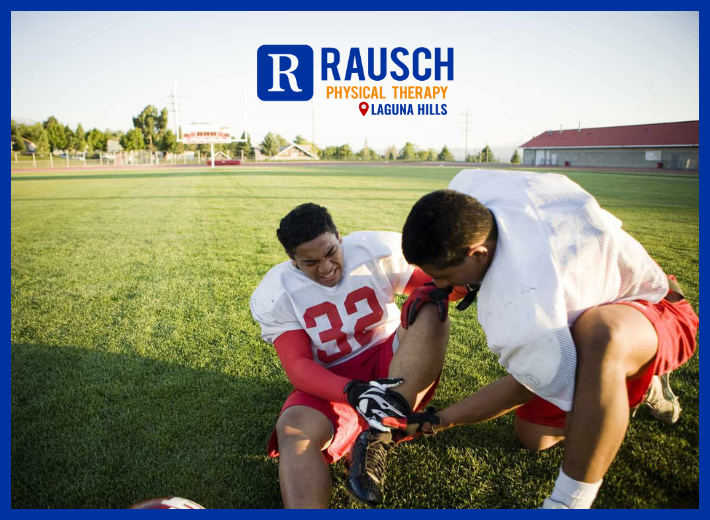
During the past decade, there has been an average of about 4 injuries per 1,000 athlete exposures in competition for all nine sports combined.

For high school football players, the rate during competition has ranged from 11.26 to 13.52 injuries per 1,000 athlete exposures.

The sport with the second highest rate is girls’ soccer, which hovers just above 5 injuries per 1,000 exposures every year.

For football, the injury rate during practice is right around 2 incidents per 1,000 exposures. That compares with an average rate of under 1.5 per 1,000 exposures for all nine sports combined.

Overall, the Colorado researchers estimate there are more than 500,000 injuries of some sort to high school football players nationwide every year.

In most years, less than 10 percent of those injuries require surgery.

In 2015, 28 percent of the football injuries were to a players’ head or face. Those included concussions.

Another 14 percent were knees, 11 percent were ankles, and 10 percent were shoulders.

About 68 percent of the injuries happened while players were tackling. Another 22 percent occurred while players were blocking.

Treatment and prevention

Safety concerns were raised last year when it was reported at least 11 high school football players died in the United States during the 2015 season.

Two years earlier, a study was published that concluded high school players had nearly twice the concussion rate as college players.

Still, experts said more sophisticated medical treatments and better prevention programs are holding the line on football injuries and reducing the severity of them.

Scott Sailor, president of the National Athletic Trainers’ Association (NATA), says athletes are also better physically prepared for contact sports than in decades past, helping cut down on the seriousness of injuries.

When surgery or other medical attention is required, he says, there are now safer and better techniques available.

Sailor also told Healthline it’s important for schools to have athletic trainers available, especially during competition. He said only 37 percent of U.S. high schools currently have a full-time athletic trainer.

Some of these precautions are also extending to football practice.

Putukian notes the National Collegiate Athletic Association (NCAA) now restricts contact practices to twice a week for football teams.

In addition, Ivy League teams don’t allow tackling in practices.

Putukian said some of the measures may be trickling down to high school teams.

She and Sailor also point out there are new coaching techniques to help reduce football injuries.

One of them is the Heads Up Football program overseen by USA Football. The program promotes tackling and blocking techniques designed to make the game safer.

Parental involvement

Sailor and Putukian agree parents need to take the lead when it comes to their child’s sports safety.

Putukian urges parents to scope out both a school’s program as well as the football coach before their child signs up.

For example, does the coach teach good techniques and put their athletes’ safety first?

“You need to do your homework,” she said.

NATA has launched the program At Your Own Risk, which provides information for parents, athletes, and school officials on sports safety.

Sailor says he feels all the measures being taken make football a relatively safe contact sport for high school students.

Rausch PT professionals have the skills and expertise you need to improve and restore your muscle to enjoy your sport to the fullest. Book your appointment today at 949-276-5401 and meet our experts. Join our Facebook community.


Reference: [https://www.healthline.com/health-news/likelihood-high-school-football-player-gets-injured#Parental-involvement]

Your Cardio Exercise Options

February is American Heart Month, a time when all people can focus on their cardiovascular health. But why do you need cardio in the first place? Cardiovascular exercise is a key part of a long and healthy life. Here we bring you a list of 14 types of cardio exercises to get you moving and their benefits. If some kind of pain is keeping you from cardio, see Rausch PT to get you back up and moving again, doing what you love!

If you need a low-impact exercise regimen, look no further. We’ve taken the guesswork out of things by creating a 20-minute low-impact cardio circuit that’s great for everyone — bad knees, bad hips, tired body, and all.

Below are six exercises you should do for 1 minute each, jumping right into the next when the minute is up.

After you complete all six exercises back-to-back, rest for 1 minute, and then start the circuit again. Repeat three times through for a butt-kicking low-impact cardio workout.

1. Low-impact jumping jack

A good warm-up exercise, low-impact jumping jacks will get your heart pumping and muscles moving. You can exaggerate the arm movements to burn maximum calories.

To get moving:

  1. Start by standing with arms down at your sides.
  2. Step your right foot out, and at the same time bring your arms up above your head. Keep your weight in your right foot throughout this movement.
  3. Return to your starting position.
  4. Immediately step your left foot out. Once again, with your weight on your left foot, bring your arms above your head.

2. Skaters

Channel a speed skater when you complete this move. The low-impact version omits the jump but will still make you work.

To get moving:

  1. Start in a curtsy lunge position with both legs bent, your right leg behind and across your body. Your left arm should be straight down and right arm bent comfortably up at your side for balance.
  2. Pushing off the left leg, begin to stand, bringing the right leg forward and swinging your left leg back and across, switching arms as you go. Work quickly, but to maintain the low-impact approach, don’t jump.

Push your limits and elevate your performance  — and eliminate pain while increasing mobility — with a customized physical therapy program. Let us help you perfect your form and increase your performance. Contact our experts today at (949) 276-5401 and join our Facebook community here.


Reference: [https://www.healthline.com/health/fitness-exercise/cardio-exercises-list#11.-Hula-Hooping]

Why is Nutrition Important?

The link between good health and good nutrition is well established. Whether you are a competing athlete, a weekend sports player, or a dedicated daily exerciser, the foundation for improved performance is a nutritionally adequate diet. Learn more about calories and macronutrients to maintain strength and energy to compete and stay injury-free.

Athletes will have different nutritional needs compared with the general public. They may require more calories and macronutrients to maintain strength and energy to compete at their optimum level.

In addition to consuming sufficient amounts of calories and macronutrients, athletes may also require more vitamins, minerals, and other nutrients for peak recovery and performance.

Moreover, they may need to consider meal timing and ensure adequate hydration.

In this article, we discuss macronutrient and micronutrient needs of athletes and look at calories, meal timing, and how to tailor requirements to specific sports. We also give meal examples for breakfast, lunch, and dinner.

Why is nutrition important?

Nutrition is essential for supporting an athlete’s general health and their training needs.

Having a suitable diet provides a person with enough energy and nutrients to meet the demands of training and exercise. In addition to helping a person perform optimally, it facilitates recovery.

Athletes may need to consider:

  • their caloric needs
  • macronutrient amounts and ratios
  • meal and snack timings
  • vitamins and minerals for recovery and performance
  • hydration

Tailoring these considerations to an athlete’s body weight and composition, the amount of time spent training, and the type of sport they do can improve their performance.

Macronutrients

The Dietary Guidelines for Americans, 2020–2025 suggest that the optimal macronutrient ratios for adults are as follows:

  • Carbohydrates: 45–65% of calories
  • Protein: 10–35% of calories
  • Fat: 20–35% of calories

The International Sports Sciences Association (ISSA) notes that people can adjust these ratios based on the goal of physical activity.

For example, an endurance athlete would increase the amount of carbohydrates they eat, while a strength athlete would increase their protein intake.

According to a 2018 review by the International Society of Sports Nutrition (ISSN), typical macronutrient ratios for athletes are as follows:

Carbohydrates

Carbohydrates receive a great deal of attention in sports nutrition due to the vital role they play in athletic performance.

Carbohydrates are typically the preferable fuel source for many athletes, particularly for high intensity and long duration exercise. This is because they supply ample glycogen storage and blood glucose to fuel the demands of exercise.

To maintain liver and muscle glycogen stores, athletes will need different amounts of carbohydrates depending on their exercise volume.

For moderate amounts of intense training, defined as 2–3 hours per day of intense exercise performed 5–6 times per week, the ISSN suggests consuming 5–8 grams per kilogram (g/kg) of body weight, or 250–1,200 g, of carbohydrates per day for athletes who weigh 50–150 kg.

For high volume intense training, defined as 3–6 hours per day of intense training in 1–2 daily workouts 5–6 days per week, the ISSN recommends 8–10 g/kg of body weight, or 400–1,500 g, of carbohydrates per day for athletes weighing 50–150 kg.

For example, an athlete weighing 150 kg who performs high volume intense training would look to consume roughly 1,200–1,500 g of carbohydrates.

Healthy carbohydrates for an athlete’s diet may include whole grains, such as brown rice, quinoa, oats, and pasta, and starchy vegetables, such as potatoes.

Protein

Protein also plays an essential role in sports nutrition, as it provides the body with the necessary amount of amino acids to help build and repair muscles and tissues.

Athletes doing intense training may benefit from ingesting more than two times the recommended daily amount (RDA)Trusted Source of protein in their diet.

For example, the dietary reference intake for adult females is 46 g, and for adult males — 56 g. That is why it may be beneficial for athletes to consume nearer to 92 g and 112 g of protein, respectively.

The ISSA suggests that many athletes can safely consume 2 g of protein per 1 kg of body weight daily, compared with the RDA of 0.8 g/kg.

The ISSN also notes that optimal protein intake may vary from 1.2 to 2.0 g/kg of body weight per day.

Higher amounts of protein can help athletes avoid protein catabolism and slow recovery, which the ISSN notes can contribute to injuries and muscle wasting over time.

For moderate amounts of intense training, an athlete should consume 1.2–2 g of protein per 1 kg of body weight, which translates into 60–300 g of protein per day for an athlete weighing 50–150 kg.

For high volume intense training, the ISSN suggests 1.7–2.2 g of protein per 1 kg of body weight per day, or 85–330 g of protein for an athlete weighing 50–150 kg.

Healthy protein sources include:

  • lean meat and poultry
  • fish and seafood
  • eggs and dairy products
  • beans and lentils
  • nuts and seeds
  • soy, including tofu and tempeh

Fats are essential in the diet to maintain bodily processes, such as hormone metabolism and neurotransmitter function.

Including healthy fats in the diet also helps satiety and can serve as a concentrated fuel source for athletes with high energy demands.

The ISSN recommends athletes consume moderate fat intake, representing around 30% of daily calories. However, they can safely consume up to 50% of their daily calories as fat to meet higher volume training needs.

Athletes seeking to decrease their body fat may reduce fat intake to 20% of their daily calories.

Some athletes may choose to eat a ketogenic diet and consume higher amounts of fats. However, the ISSN review indicates there is not sufficient evidence to support the diet’s effectiveness.

Healthy fat sources include oily fish, olive oil, avocados, nuts, and seeds.

Micronutrients, supplements, and hydration

Athletes should ensure they consume the essential vitamins and minerals they need to support their general health and sports performance.

People can usually achieve adequate intakes of essential vitamins and minerals by eating a varied, balanced diet.

Some athletes may choose to take vitamin or mineral supplements or ergogenic aids, such as creatine. The ISSN recommends that consumers evaluate the validity and scientific merit of claims that manufacturers make about dietary supplements.

There is little evidence to support the efficacy or safety of many dietary supplements, including:

  • adenosine 5′-triphosphate
  • branched-chain amino acids
  • phosphatidic acid
  • glutamine
  • arginine

However, scientists have shown that other ergogenic aids, such as caffeine and creatine monohydrate, are safe and effective for athletes.

It is important to be aware that some athletic associations ban the use of certain nutritional supplements.

Moreover, athletes should ensure they maintain adequate hydration. According to the ISSN and other sports nutrition experts, when a person loses 2% or more of their body weight through sweat, it can significantly impair their performance.

Given that sweat losses are a combination of fluids and electrolytes, such as sodium and potassium, athletes may choose to and benefit from using sports drinks, milk, or both to meet some of their hydration needs.

Sufficient calories

Athletes require sufficient calorie intake to match their energy expenditure through activity.

The ISSN suggests that athletes training intensely for 2–6 hours per day 5–6 days of the week may burn over 600–1200 calories per hour while exercising.

As a result, athletes engaging in this level of activity may require 40–70 calories per 1 kg of body weight per day, compared with the average less active individual, who typically requires 25–35 calories per 1 kg of body weight daily.

According to the ISSN, athletes weighing 50–100 kg may require 2,000–7,000 calories per day. It also notes that athletes weighing 100–150 kg may need to consume 6,000–12,000 calories daily to meet training demands.

Meal timing

The timing of meals and snacks can be vital to an athlete’s performance. The timing and content of meals can help support training goals, reduce fatigue, and help optimize body composition.

Guidelines for the timing and amount of nutrition will vary depending on the type of athlete.

For example, the ISSN advises strength athletes consume carbohydrates and protein or protein on its own up to 4 hours before and up to 2 hours after exercise.

The American College of Sports Medicine (ACSM) also notes the importance of consuming protein both before and after exercise for strength athletes.

By contrast, endurance athletes would need to consume mostly carbohydrates and a small amount of protein roughly 1–4 hours before exercise.

Both the ISSN and ACSM emphasize the role of meal timing in optimizing recovery and performance and recommend athletes space nutrient intake evenly throughout the day, every 3–4 hours.

Some people may find that consuming meals too close to the beginning of exercise can cause digestive discomfort. It is therefore important to eat an appropriate amount and not exercise too quickly after eating.

Are you ready to live your best life? When you choose PT, you choose more movement and better health. Time for a pain-free — and a pill-free — life! Don’t waste any more of your time in pain. Contact our team today at 949-276-5401. To get health and wellness updates and learn about what we have to offer ongoing, Join our Facebook community.


Reference: [https://www.medicalnewstoday.com/articles/nutrition-for-athletes]