
How to Keep Running Safely with Arthritis

Are you hesitant to take up running or other high-impact exercises because of fears that they will cause arthritis or worsen existing joint pain? You’re not alone. There’s a common misconception that running is bad for your joints, particularly in the knees. However, recent studies have found that this is not the case. In fact, running may even help improve joint health in the long term. Below, you can read some tips on how to maintain joint health while continuing to enjoy your favorite activity.

When I took up running in college, a friend of mine scoffed at the idea. He hated running and was convinced runners were “wearing out” their joints. He liked to say he was saving his knees for his old age.

So, was he onto something? Does running really ruin your joints, as many people believe?

Runners can get arthritis, but is running the cause?

You may think the answer is obvious. Surely, years of running (pounding pavements, or even softer surfaces) could wear out your joints, much like tires wear out after you put enough miles on them. And osteoarthritis, the most common type of arthritis, usually affects older adults. In fact, it’s often described as age-related and degenerative. That sounds like a wear-and-tear sort of situation, right?

Maybe not. Sure, it’s easy to blame running when a person who runs regularly develops arthritis. But that blame may be misguided. The questions to ask are:

  • Does running damage the joints and lead to arthritis?
  • Does arthritis develop first and become more noticeable while running?
  • Is the connection more complicated? Perhaps there’s no connection between running and arthritis for most people. But maybe those destined to develop arthritis (due to their genes, for example) get it sooner if they take up running.

Extensive research over the last several decades has investigated these questions. While the answers are still not entirely clear, we’re moving closer.

What is the relationship between running and arthritis?

Mounting evidence suggests that running does not cause osteoarthritis, or any other joint disease.

  • A study published in 2017 found that recreational runners had lower rates of hip and knee osteoarthritis (3.5%) compared with competitive runners (13.3%) and nonrunners (10.2%).
  • According to a 2018 study, the rate of hip or knee arthritis among 675 marathon runners was half the rate expected within the US population.
  • A 2022 analysis of 24 studies found no evidence of significant harm to the cartilage lining the knee joints on MRIs taken just after running.

These are just a few of the published medical studies on the subject. Overall, research suggests that running is an unlikely cause of arthritis — and might even be protective.

Why is it hard to study running and arthritis?

  • Osteoarthritis takes many years to develop. Convincing research would require a long time, perhaps a decade or more.
  • It’s impossible to perform an ideal study. The most powerful type of research study is a double-blind, randomized, controlled trial. Participants in these studies are assigned to a treatment group (perhaps taking a new drug) or a control group (often taking a placebo). Double-blind means neither researchers nor participants know which people are in the treatment group and which people are getting a placebo. When the treatment being studied is running, there’s no way to conduct this kind of trial.
  • Beware the confounders. A confounder is a factor or variable you can’t account for in a study. There may be important differences between people who run and those who don’t that have nothing to do with running. For example, runners may follow a healthier diet, maintain a healthier weight, or smoke less than nonrunners. They may differ with respect to how their joints are aligned, the strength of their ligaments, or genes that direct development of the musculoskeletal system. These factors could affect the risk of arthritis and make study results hard to interpret clearly. In fact, they may explain why some studies find that running is protective.
  • The effect of running may vary between people. For example, it’s possible, though not proven, that people with obesity who run regularly are at increased risk of arthritis due to the stress of excess weight on the joints.

The bottom line

Trends in recent research suggest that running does not wear out your joints. That should be reassuring for those of us who enjoy running. And if you don’t like to run, that’s fine: try to find forms of exercise that you enjoy more. Just don’t base your decision — or excuse — for not running on the idea that it will ruin your joints.

We understand the importance of staying active and healthy. Our team of experienced PTs can help you achieve your fitness goals safely and effectively. Whether you’re looking to start running for the first time or need help managing arthritis symptoms, we’re here to support you every step of the way. Contact us today at 949-597-0007 to schedule a consultation and join our Instagram community @rauschpt. Follow us on TikTok for exclusive content.


Reference: [https://www.health.harvard.edu/blog/does-running-cause-arthritis-202304262930]
How PT Can Help You Heal Your Broken Foot

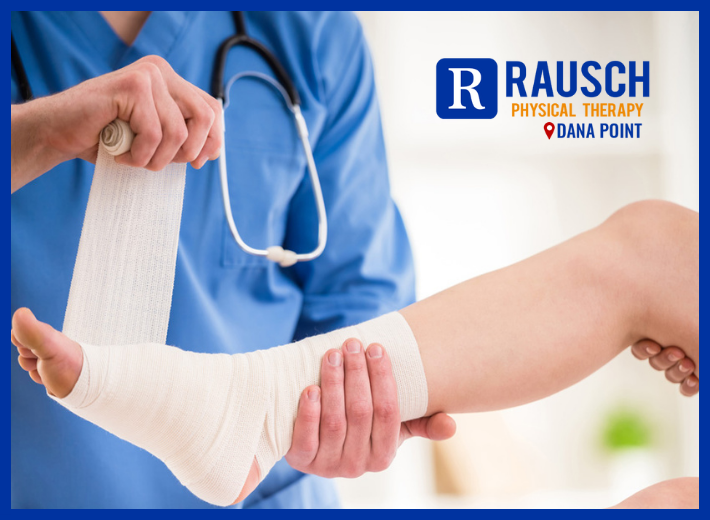
A broken foot can be a painful and frustrating experience, but with the right care and support, you can recover fully. At Rausch PT, we understand the challenges that come with foot injuries, and we’re here to help you get back on your feet. Learn the causes and symptoms of a broken foot, and how PT can aid in the recovery process.

A broken foot is an injury to the bone. You may experience a broken foot during a car crash or from a simple misstep or fall.

The seriousness of a broken foot varies. Fractures can range from tiny cracks in your bones to breaks that pierce your skin.

Treatment for a broken foot depends on the exact site and severity of the fracture. A severely broken foot may require surgery to implant plates, rods or screws into the broken bone to maintain proper position during healing.

Symptoms

If you have a broken foot, you may experience some of the following signs and symptoms:

  • Immediate, throbbing pain
  • Pain that increases with activity and decreases with rest
  • Swelling
  • Bruising
  • Tenderness
  • Deformity
  • Difficulty in walking or bearing weight

When to see a doctor

See a doctor if there is obvious deformity, if the pain and swelling don’t get better with self-care, or if the pain and swelling gets worse over time. Also, see a doctor if the injury interferes with walking.

Causes

The most common causes of a broken foot include:

  • Car accidents. The crushing injuries common in car accidents may cause breaks that require surgical repair.
  • Falls. Tripping and falling can break bones in your feet, as can landing on your feet after jumping down from just a slight height.
  • Impact from a heavy weight. Dropping something heavy on your foot is a common cause of fractures.
  • Missteps. Sometimes just putting your foot down wrong can result in a broken bone. A toe can get broken from stubbing your toes on furniture.
  • Overuse. Stress fractures are common in the weight-bearing bones of your feet. These tiny cracks are usually caused over time by repetitive force or overuse, such as running long distances. But they can also occur with normal use of a bone that’s been weakened by a condition such as osteoporosis.

Risk factors

You may be at higher risk of a broken foot or ankle if you:

  • Participate in high-impact sports. The stresses, direct blows and twisting injuries that occur in sports such as basketball, football, gymnastics, tennis and soccer can causes foot fractures.
  • Use improper technique or sports equipment. Faulty equipment, such as shoes that are too worn or not properly fitted, can contribute to stress fractures and falls. Improper training techniques, such as not warming up and stretching, also can cause foot injuries.
  • Suddenly increase your activity level. Whether you’re a trained athlete or someone who’s just started exercising, suddenly boosting the frequency or duration of your exercise sessions can increase your risk of a stress fracture.
  • Work in certain occupations. Certain work environments, such as a construction site, put you at risk of falling from a height or dropping something heavy on your foot.
  • Keep your home cluttered or poorly lit. Walking around in a house with too much clutter or too little light may lead to falls and foot injuries.
  • Have certain conditions. Having decreased bone density (osteoporosis) can put you at risk of injuries to your foot bones.

Complications

Complications of a broken foot are uncommon but may include:

  • Arthritis. Fractures that extend into a joint can cause arthritis years later. If your foot starts to hurt long after a break, see your doctor for an evaluation.
  • Bone infection (osteomyelitis). If you have an open fracture, meaning one end of the bone protrudes through the skin, your bone may be exposed to bacteria that cause infection.
  • Nerve or blood vessel damage. Trauma to the foot can injure adjacent nerves and blood vessels, sometimes actually tearing them. Seek immediate attention if you notice any numbness or circulation problems. Lack of blood flow can cause a bone to die and collapse.

Prevention

These basic sports and safety tips may help prevent a broken foot:

  • Wear proper shoes. Use hiking shoes on rough terrain. Wear steel-toed boots in your work environment if necessary. Choose appropriate athletic shoes for your sport.
  • Replace athletic shoes regularly. Discard sneakers as soon as the tread or heel wears out or if the shoes are wearing unevenly. If you’re a runner, replace your sneakers every 300 to 400 miles.
  • Start slowly. That applies to a new fitness program and each individual workout.
  • Cross-train. Alternating activities can prevent stress fractures. Rotate running with swimming or biking.
  • Build bone strength. Calcium-rich foods, such as milk, yogurt and cheese, really can do your body good. Taking vitamin D supplements also can help.
  • Use night lights. Many broken toes are the result of walking in the dark.
  • Declutter your house. Keeping clutter off the floor can help you to avoid trips and falls.

Are you suffering from a broken foot? Our expert physical therapists at Rausch PT can help you recover safely and quickly. Contact us today at 949-597-0007 to schedule a consultation with one of our specialists. And don’t forget to follow us on Instagram for more helpful tips and information on how to stay healthy and injury-free.


Reference: [https://www.mayoclinic.org/diseases-conditions/broken-foot/symptoms-causes/syc-20355492]