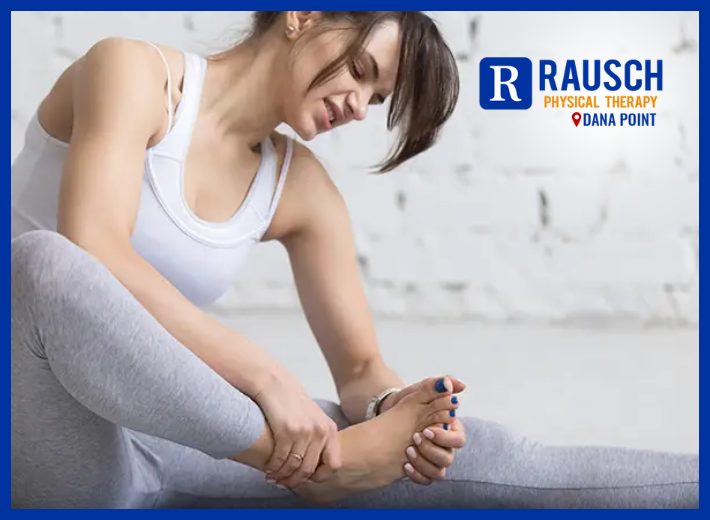
Are you tired of dealing with persistent muscle tightness that’s been holding you back from enjoying life to the fullest? Tight muscles can be a real nuisance, affecting everything from your daily comfort to your overall well-being. Fortunately, there are simple yet effective ways to address this issue and regain your mobility.
Feeling stiff? Achy? Can’t move quite like you used to?
You’ve likely got one – or more – tight muscles to blame. But what does it mean when muscles are tight?
Dr. Neal H. Patel, a family medicine specialist with Providence St. Joseph Hospital in Orange County, California, compares muscles to “rubber bands that have a certain level of natural stretch and elasticity. When someone says their muscles are tight, it means the muscles are similar to a stiff rubber band and not able to move as freely or be as elastic as they should be.”
Why Tight Muscles Happen
There are a variety of reasons why your muscles can feel tight, says Claire Such, a physical therapist in sports medicine at the Ohio State University Wexner Medical Center in Columbus. “In some cases, the muscle is at a shortened length compared to its ideal length,” she explains. This can result from being too sedentary or habitually being in the same position too often.
In other cases, “feelings of chronic muscle tightness can also be due to muscle weakness and fatigue,” Such says. This could be a sign that the muscle group needs to be strengthened.
“The body works on a simple principle of ‘if you don’t use it, you lose it,’” Patel adds. Therefore, if you don’t exercise or stretch much, that can reduce the natural movement and integrity of the muscle fibers and tendons, he says.
One of the biggest and most common culprits of tight muscles is sitting, typically while focusing on a computer or other gadget.
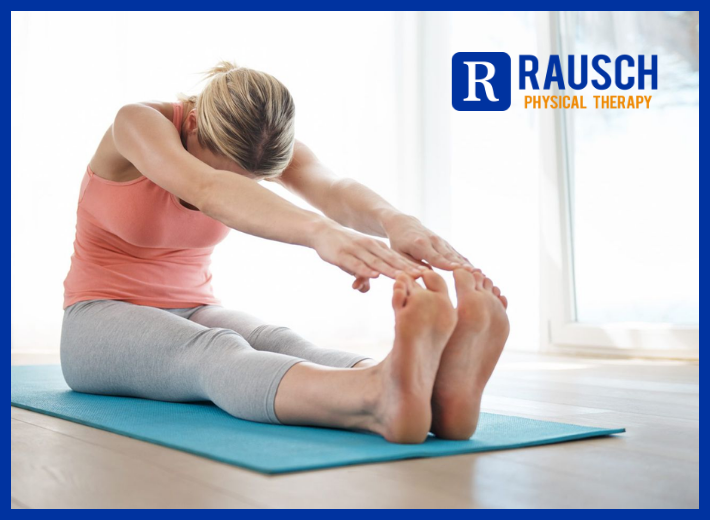
“When you sit, you keep your hip flexors in a constantly shortened, yet underload(ed) position,” explains kinesiologist and medical exercise specialist Dean Somerset, based in Alberta, Canada. After all, your hip flexors not only draw your knees up to your chest, they stabilize your spine and help keep it in place. As if tight hip flexors weren’t bad enough, all of their constant tension also draws the top of the pelvis forward, pulling your hamstrings tight and keeping you from being able to touch your toes.
Meanwhile, chances are that when you’re sitting, you’re also hunched over a keyboard, tablet or phone. “Ideal alignment is with the head directly over the spine,” Somerset explains. “When your head moves forward, your upper (trapezius) muscles have to work extremely hard to keep your head from basically falling off your shoulders.” The result: Those muscles become short and fatigued.
How to Release Chronically Tight Muscles
“If your muscles have tightened up, they’re not operating at 100% capacity,” says Costa Mesa, California-based certified personal trainer Kelly Collins, co-founder of SISSFiT, designed to help women lead healthier, fitter lives. “Therefore, loosening your muscles will not only relieve stress and reduce your risk of injury, but improve your overall functional performance and the results you get from those workouts.”
Such says that if you’re engaging in static stretching – that conventional kind of stretching that involves moving the muscle into its longest position without pain and holding it for 15 to 20 seconds – “it’s important to perform this after you are warm and are done with any exercise or activity you’re doing.” Being warmed up offers better results for both the stretching and your workout.
When your muscles are tight, sometimes your body’s neuromuscular control system gets a bit overprotective. This system includes an array of neurons and protective tissues that have to fire (or not fire) in a certain way for any given muscle to stretch to its full physiological capacity, Somerset explains.
So, to fully stretch a muscle, your neuromuscular system has to release its resistance to stretching that far. It does so by signaling your muscles not to worry and that it’s OK to stretch this far.
Exercise physiologists commonly use a stretching technique called “proprioceptive neuromuscular facilitation,” or PNF, to do this. While there are various ways to conduct PNF stretching, many experts believe the most effective version for combating excessive tightness, increasing muscle length and improving range of motion is the hold-relax with agonist contraction method. It’s a mouthful, but it’s easy enough to perform at home with some help from a friend or family member.
Here’s how to perform the stretch with the commonly tight hamstrings, but you can apply this same sort of stretch to any tight muscle. Perform two to four bouts of this stretch per day, either immediately following exercise or at the end of the day. It’s important to note that stretching should never provoke pain, so be mindful of not moving a joint so far that it causes pain.
Step 1:
Lie on your back on the floor, with one leg extended straight toward the ceiling. Have a partner hold your lifted leg firmly, with one hand on your heel and the other the thigh just above your knee.
Step 2:
Keeping your leg straight, have your partner press on your leg to move it toward your chest until you feel a mild stretch in your hamstrings. Have your partner hold this stretch for 10 seconds. Make sure to relax into the stretch.
Step 3:
With your partner still holding your leg firmly in the same stretched position, contract your hamstrings to push against their hands and “fight” the stretch for six seconds. With both of you working in opposite directions, your leg should not move.
Step 4:
Relax again into the stretch, this time using your quads to help “pull” your leg even closer to your chest and deepen the stretch. Hold for 30 seconds. You should be able to stretch the hamstrings farther than you could during Step 2.

Five Tips to Improve Your Stretching
Adding these strategies to your routine can help you get more out of every stretch:
Improve your core strength
Oftentimes, short, tight muscles are due to nothing more than a weak core, explains Los Angeles-based certified strength and conditioning specialist Holly Perkins, author of “Lift to Get Lean.” That’s because the core is in charge of stabilizing your spine and pelvis. So, when your core is weak – and thus your spine and pelvis get out of proper alignment – you’re bound to tighten some muscles.
Perkins recommends improving core strength through core stability exercises such as planks and “dead bugs.” Dead bugs are performed by lying on the floor on your back, engaging the core muscles and raising and lowering your arms above your head and legs with knees bent in an alternating pattern that looks something like a dead bug lying on its back.
Strengthen the muscle group
For other muscle groups beyond the core, strengthening can also help alleviate muscle tightness, Such says. When strengthening, it’s best to slowly ramp up your strength training rather than trying to do too much all at once.
“Strengthening that muscle group progressively over time will allow for more permanent elimination of those sensations and will lend more dynamic stability (making sure your body moves efficiently the way it was mechanically built) to the joint or joints it supports over time,” Such says.
Pair your stretching with foam rolling
Before diving into your favorite stretches, spend some time with a foam roller. While study results of foam rolling’s effectiveness and best application have been mixed, there is some evidence that it can be a helpful warmup activity to improve flexibility before exercise and it can also reduce muscle fatigue and soreness when used after exercise.
Collins recommends that, no matter your activity level, spend at least 10 minutes three times per week stretching and foam rolling.
Stay hydrated
“Because muscles retain water, especially after exercising, dehydration can also be a cause of muscle tightness,” Patel notes.
Make sure you’re taking in adequate levels of water; the U.S. National Academies of Sciences, Engineering and Medicine recommend consuming 15.5 cups (3.7 liters or 125 ounces) of fluid each day for men and 11.5 cups (2.7 liters or 91 ounces) of fluid per day for women. Roughly 20% of your fluid needs each day are typically met through foods you eat; the rest you should be drinking, and plain water is usually the more effective drink you can reach for.
Add pressure
In addition to stretching, Patel recommends getting a massage from a licensed professional, “ideally one that places deeper tissue pressure.” Massage guns like the Theragun or HyperIce can also help relax and break down tension in muscles, he says. These devices are widely used in professional sports to help athletes keep tightness at bay when not actively participating in the game.
Battling a Consequence of Aging
Patel notes that while tight muscles might seem concerning, they are not a serious medical issue.
Dr. Akash Bajaj, a longevity specialist and founder of concierge wellness practice Remedy Wellness & Anti Aging in Marina del Ray, California, says that experiencing tightness in the muscles is common. “As we grow older, we can expect to experience episodes of muscle tightening because of lack of use, injuries and depletion of certain vital minerals like magnesium.”
Magnesium is vital for keeping muscles loose and supple. “This is why we must pay as much attention to keeping ourselves youthful and treat our bodies well as early as possible,” Bajaj advises.
Moving as much as you can and incorporating stretching into your daily routine, just like you would brush and floss your teeth, can help keep your muscles supple and ready to move well into your golden years, Patel adds.
Get rid of those stubborn muscle tightness issues with Rausch PT. Our experienced physical therapy team is here to help you regain your mobility and enjoy the activities you love. Plus — we offer Rx Massage to support your health journey. Contact us today at 949-597-0007 and start your journey to better health and well-being. For more helpful tips and information, follow us on Instagram.
Reference: [https://health.usnews.com/wellness/fitness/articles/simple-ways-to-ease-tight-muscles]