Blog

How to Get Your Body Bike-Ready


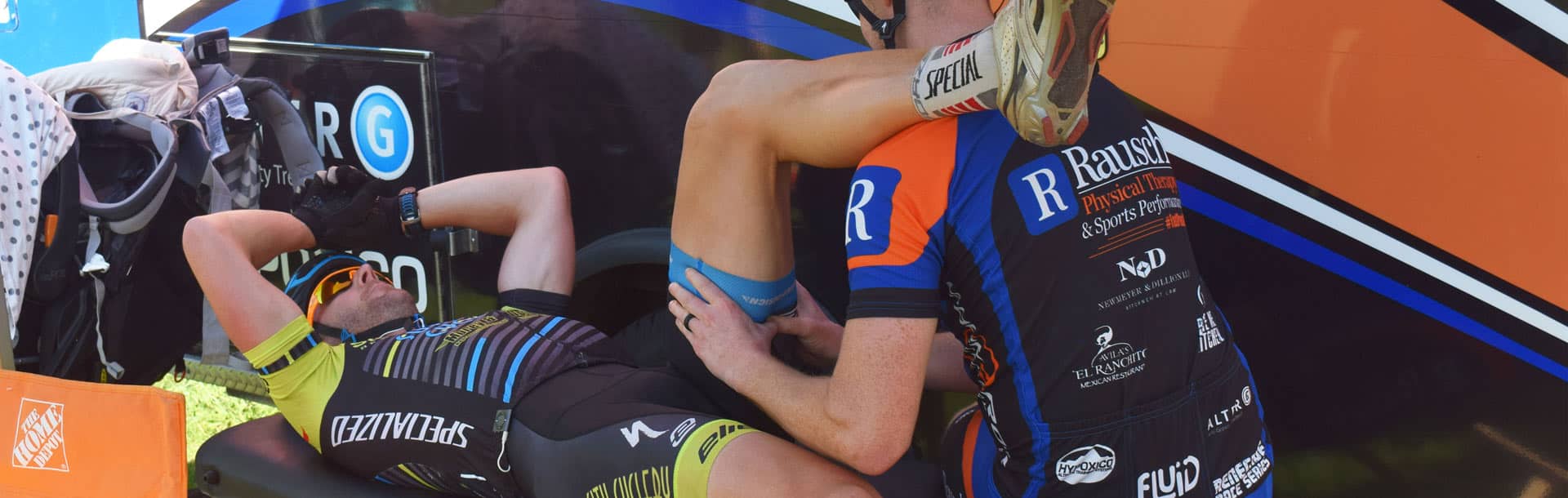
The only things cyclists should have to worry about wearing out are their tires—not their joints! Mountain Bike PT Sean shares how to stabilize three key areas of the body to prevent most cycling-related injuries.


BY SEAN SWOPES, PT, DPT, CSCS, RAUSCH PHYSICAL THERAPY

There are certain rules-of-thumb when it comes to the human body and how we are designed to move; our bodies are designed to walk, stand, sit, sleep and eat. Not on that list? Ride a bicycle.

However, that doesn’t stop us humans from having a lot of fun riding them! In fact, with research, experience and continued learning, we can make body and bike work well together. One way is to get a bike fit, which sets up the bike’s geometry to best fit the rider. You can also find a program like Ride Right, which focuses on the rider’s biomechanics. However, the most important (and oft forgotten) step if you’re planning to get into any type of cycling is first getting your body ready to tolerate all the stress it will endure while pedaling, climbing and descending.

As the Mountain Bike PT, I work with a lot of cyclists who deal with chronic pain or injury without realizing that they need to get their body in the correct balance. Like I said, the human body was not designed to be on a bike, but if you focus on and prepare a few key musculoskeletal areas, you can ride for miles without the unwanted stress.

The most commonly injured areas on a cyclist’s body are the knees, back and hips. If you can get your body in an optimal balance of strength and flexibility (also known as stability) in these areas, you can prevent most injuries on the bike.

Sean’s “Bike Bod” Exercise Program

Here are five exercises to help you gain the crucial knee, back and hip stability you need to avoid most cycling-related injuries before you even hop on the bike:

  1. Thoracic extension over a foam roll. The goal of this stretch is to improve the mobility of the thoracic spine to improve the postural alignment of the spine and decrease unnecessary stress to the lumbar spine.
  2. Prayer Stretch (Child’s Pose.) This a truly versatile stretch that can improve your overall mobility. The key is to prevent your lumbar spine from becoming overly-flexed to emphasize maximal mobility out of the hips.
  3. Hand Up Stretch (Couch Stretch.) The focus of this stretch is to improve your quadriceps and hip flexor mobility. The key is to maintain a posterior pelvic tilt (flatten the curvature of your lumbar spine) while sitting up tall.
  4. Squat with a stick overhead. This is not only a great exercise, it’s also an assessment. It will point out the flexibility and lumbopelvic (core) weakness you have.
  5. Dynamic LE warm up: Worlds Greatest Stretch (WGS) and Inchworms. WGS will take every aspect of the body to its end-range to prepare it for what’s to come, while inchworms focus on improving mobility of the entire posterior chain.


*Check back soon for my video explaining more about these five exercises!


Conclusion

As an avid cyclist, the only things you should have to worry about wearing out are your tires—not your joints. By taking the time and doing the work to optimize your body stability, you can defy human nature and adapt your body to your bike so you can continue to enjoy riding for many years, pain-free.


Sean Swopes, PT, DPT, CSCS graduated from CSU Fullerton with a bachelor of science in kinesiology. He went on to receive his doctorate in physical therapy in 2015 from University of St. Augustine, and began his career here at Rausch Physical Therapy and Sports Performance. Sean is also a certified Strength and Conditioning Specialist. As a physical therapist, Sean’s goal is to help his patients understand their musculoskeletal impairments and work together to improve them.

Learn more about Sean and our other physical therapists »

Why Your Daughter is More at Risk for an ACL Tear Than Your Son


One of the more common—and arguably one of the most devastating—injuries a young athlete can sustain is an ACL tear. Diana Wang, PT, DPT, ATC explains what causes ACL injuries and why she believes it’s so crucial for young women to be proactive to prevent this scary setback.


BY DIANA WANG, PT, DPT, ATC, RAUSCH PHYSICAL THERAPY

One of the most common (and arguably one of the most devastating) injuries a young athlete could sustain is an ACL tear. Your ACL, or anterior cruciate ligament, is a part of a team of ligaments in the knee that helps maintain stability and withstand the force/stress from daily movement and physical activity. The main job of the ACL is to limit forward motion of the tibia (the lower leg) on the femur (the upper leg.) The ACL also limits tibial rotation when paired with an angular force at the knee.

What Causes the ACL to Tear?

The ACL limits certain motions, but just like any other soft-tissue structure in the body, there is a limit to its limitations.

While parents often fear their young athlete will get injured from being aggressively slammed in to, the fact is that 70-78% of ACL tears are non-contact, meaning there was no involvement of external forces. The most common mechanisms of ACL tears include:

  • The “plant-and-twist” motion
  • Sudden deceleration
  • Hyperextension of the knee

With that said, athletes in sports that involve repetitive jumping, landing or cutting—such as basketball, soccer and volleyball—are at a higher risk for ACL injuries. And what puts young athletes at even more risk? Being female.

Why Female Athletes are More Vulnerable to ACL Tears than Male Athletes

According to the National Institutes of Health, female athletes are two to eight times more likely to suffer an ACL injury than their male counterparts. Here are three reasons why:

#1: Anatomical differences


Females are born with wider hips than males; because of this, the alignment between the hips and the knee (known as the “Q-angle”) increases and makes females more susceptible to a “knocked knees” posture. This abnormal posture forces more torsion in the internal rotation and adduction angles in an attempt to create more knee stability. This then increases stress on the ACL, thus increasing risk of injury.

#2: Muscle imbalances

In general, most people have a poor quadriceps-to-hamstring ratio. However, females tend to be more quadriceps dominant during functional activity compared to males, especially during deceleration or sudden changes in direction. This quadriceps dominance produces repetitive anterior shear forces of the tibia on the femur, which then increases stress on the ACL to do its job and limit these forces. As I mentioned earlier, there is a limit to its limitations, so if the forces overpower the strength of the ACL, something’s gotta give.

#3: Hormonal changes

During menstrual cycles or hormonal changes (Hello, puberty!), soft-tissue structures tend to loosen up, which decreases overall joint stability and therefore increases risk of injury during that time. Unfortunately this factor is the most uncontrollable, but the prescription of a specific and well-developed exercise program will prepare any young athlete to withstand the stresses of physical activity, regardless of what their body is going through.


How to Decrease the Risk of ACL Injury

Preventative rehabilitation is key to reducing risk of ACL injuries! While you can’t change anatomy, you can train your body to combat instability and the stressors that comes with physical activity. The first step for prevention is to visit a physical therapy clinic and undergo a functional movement screen with a licensed physical therapist. From there, your physical therapist will create an individualized and specialized exercise program focused on mobility and stability tailored to your needs.

Disclaimer: No movement screen will guarantee prevention of injuries. However, they are extremely useful for physical therapists to identify movement faults that may increase risk of injury.


Diana Wang graduated from the University of the Pacific with a bachelor’s degree in Athletic Training. Following graduation, she knew she wanted to pursue her love for sports rehab further and received her Doctor of Physical Therapy degree in 2017 and began her career at Rausch Physical Therapy & Sports Performance. With her extensive sports background, Diana’s goal is to provide the best, most innovative care to get athletes back in the game faster and stronger than ever.

Learn more about Diana and our other physical therapists »

How to Avoid Common Injuries From Doing HIIT Workouts


HIIT, or High Intensity Interval Training, is a popular workout philosophy that promises big results in a short amount of time. However, it also puts its participants at a higher risk for injury. PT Jonathan Meltzer explains how taking a few precautionary steps will allow you to enjoy HIIT workouts safely and effectively.

JM-BLOG
BY JONATHAN MELTZER, DPT, RAUSCH PHYSICAL THERAPY

In recent years, bootcamps, training groups, and other fast-paced workout classes have become increasingly popular, especially in areas like Orange County where we’re all busy, active people (willing to spend on beauty, health and wellness.) Rather than hitting the gym solo, people have started HIIT—High Intensity Interval Training.

Instead of spending hours at the gym, people are flocking to small, local fitness studios or clubs that offer 30 to 60 minutes HIIT workouts, which is various exercises at short intervals. When you add in the bonus of having a coach or instructor leading you through every session, it’s easy to understand why these independent facilities are so popular amongst people looking to transition off the couch.

In fact, the theory of HIIT is brilliant; it gets the heart rate up, combines cardio and strength into one session, and provides variation to avoid workout boredom. For a society that craves immediate gratification, HIIT is great. I myself was a member of a club for more than two years, and it got me in the best shape of my life.

However, as a doctor of physical therapy, I know how to prepare and protect my body for HIIT workouts, and unfortunately I’ve seen too many patients on my table who don’t.

Understanding the Risks of HIIT Workouts

With the increase in popularity of CrossFit, boot camps, etc. came an increase in the number of HIIT-related injuries I saw pop up on my schedule. HIIT has an increased risk of injury compared to lower-intensity workouts, especially for people who have been living a underactive lifestyle prior to jumping into it.

As a shoulder injury specialist, I see patients with rotator cuff sprains, pinching impingement pain and full blown labral tears because their coach put them through 20 minutes of various shoulder exercises, or had them pressing dumbbells into the air over and over just jamming the joint. Others are suffering pain in their knees, lower back stiffness and pain or stiffness in their hips from doing squat/lunge/burpee-type exercises without having first developed proper hip stability to support their body through these intense workouts.

HIIT workouts focus on global stabilization, which means that bigger muscles (those “show me” muscles) get worked a tremendous amount, but too often it’s without proper local stabilization. Just think, it doesn’t make sense to have a nice big house on the beach if the foundation is made of sand—it’ll be washed away in the first storm. However, if you put in the effort and take the time to build up a strong, stable foundation, your beautiful beach house is going to be able to withstand a whole lot more—and look good doing it!

Prepare Your Body to Take the HIIT

While the risks associated with HIIT workout regimens are higher than low-intensity ones, for some people the results are worth it. Like I said earlier, I was in the best shape of my life when I was doing HIIT, but I remember I had the awareness and knowledge to ensure I was doing it safely. Now I make it a point to educate my HIIT-loving patients to keep them healthy and off my table.

Here are the four things I tell anyone who’s thinking about starting or currently doing HIIT workouts:

  1. Get a screen by your physical therapist. Before starting any new exercise routine, you should first get checked by a musculoskeletal professional to ensure your body isn’t vulnerable in areas that are commonly injured during these types of workouts. Not only can your physical therapist identify any impairments of flexibility or strength, s/he can help you address it before diving into a new workout regimen and educate you on how to protect your body once you get going (which will keep you off their table in the long run!)
  2. Listen to your body. Are areas in your body starting to become more sore, tender or not firing the way they should? Usually the body starts to feels slightly different as a warning sign that an injury is about to occur. Being in tune with what you feel in your body will go along way to prevention.
  3. Avoid repetitive movements for the same body part. Performing similar types of exercises repeatedly will continue to wear out the body because you are creating the same movement patterns over and over. Make sure your workout is never hyper-focused on just one muscle group—opt for a total body workout!
  4. Workout with an experienced, certified trainer who knows their stuff. I cannot stress this enough! If you are not evaluated or looked at before you start at a new fitness place, you are setting yourself up for failure. Your trainer or coach needs to be detailed, specific and have a keen eye to watch for over-recruitment and poor form at ALL times.


Conclusion

As a results-driven guy, I’m a big fan of high-intensity interval training, but as a physical therapist I also want people to understand the importance of protecting yourself with the necessary awareness and tools to avoid the alarmingly common traumatic and chronic injuries associated with this type of exercise. Luckily, by being aware of your body and taking a few precautionary steps, you can enjoy HIIT workouts safely and effectively and ultimately get in the best shape of your life.


StaffHeadshot-JonJonathan Meltzer graduated from the University of Redlands with a bachelor of arts in biology and a minor in physical education. Following graduation, Jonathan discovered his passion for physical therapy while working as a Physical Therapy Aide. After graduating top of his class from Loma Linda University in 2012 with a Doctorate in Physical Therapy, Jonathan began his career at Rausch Physical Therapy and Sports Performance. Jonathan’s goals are to identify limitations and treat his patients with the most recent and innovative techniques in order to maximize functional independence and obtain his patients’ individual goals.

The Three Keys to Maintaining an Active Lifestyle as You Age


Just because you’re going to age doesn’t mean you have to be okay with aches, pains and giving up the activities you love! PT Kevin Capata shares how you can stay active and keep doing what you love as you grow older.


BY KEVIN CAPATA, DPT, RAUSCH PHYSICAL THERAPY

Every time I hear, “Don’t ever get old! It’s terrible!” I can’t help but think, “That’s a mindset problem.” Granted, I’m only 28 years old, but I compete in IRONMAN events and I can guarantee that the 75-year-old finisher would agree with me.

The truth is we are all human beings, which means we are ALL going to age, get weaker, have more aches and pains, and just generally slow down. It is hard to accept, but once you do you set yourself up for success to keep doing what you love as you age.

I can’t count the number of times I have heard a patient say their doctor has told them to stop running or doing stair repeats at their favorite beach, but that it is exactly those things that keep them motivated through their day with a smile on their face. In these cases, I say, “Forget what the Doc said! Let’s figure out a way to manage whatever your limiting factor may be so you can keep at it!”

Whatever your age, here are three ways you can manage your aches, pains, dysfunctions or diagnoses better so you can maintain or improve your quality of life for years to come.

#1 – Develop a Movement Practice

To be able to continue enjoying your favorite activities, such as running, surfing, hiking, Yoga, etc., STOP DOING NOTHING when you are not participating in those activities!

It has become all too common to sit on our butts all day long, often behind some sort of screen. Most people sit in front of their computer at work for eight hours, then they go home and sit on their butt to eat dinner, only to then go sit on their butt to watch TV while scrolling mindlessly away on their phone (that’s TWO screens at the same time!) I have now addressed this problem in nearly every article I have written, and the solution comes down to the same two answers every time: effort and good habits.

Start to become aware of how often you maintain one position throughout the day, and change it as often as possible. There are so many easy ways you can do this, such as:

  • Setting an alarm every 10 minutes at work to get up or just change your position
  • Taking the cushions off your couch and putting them on the ground to remind you to lay on the floor and stretch or use your foam roller
  • Requesting a high-top table at your favorite restaurant so you’re not sitting in the exact same type of chair as you did at work all day

They seem so simple, but these small changes can have drastic long-term effects in the way you move and feel. Stay dedicated to your movement practice, and one day YOU can be that badass 80 year old you see every weekend charging up the local trails while smiling ear to ear.

#2 – Go to Sleep!

We all know how important it is for our health and well-being to get enough sleep on a regular basis—so why don’t people do it? It even seems to be a common theme amongst my patients (who are already in pain to begin with) to sacrifice sleep for almost anything and everything else.

It blows my mind that people can view the fact that they only get four to five hours of sleep per night as a sign that they are extra productive or working harder than everyone else. If this sounds like you, read 10 Reasons Why Good Sleep is Important, then try to still justify your lack of sleep as anything positive.

To start making some positive changes towards the quality of sleep you are getting, try these suggestions:

  1. Stop using/looking at electronic devices at least 30 minutes before bed. Yes, it is possible! Instead, read a book, listen to relaxing music while you stretch or foam roll, or even try out that lost art form of talking to your loved ones.
  2. No bright lights at least 30 minutes before bed.
  3. Take the TV out of the bedroom! It does NOT belong in there (for more than one reason…)
  4. Go to bed/wake up around the same time every night/morning. Our bodies adapt to a specific circadian rhythm—use this to your advantage!
  5. Get at least seven hours each night… MINIMUM!

Just as developing a movement practice requires a change in mindset, so does making sure you get adequate sleep. It might be hard when you start off (especially that whole no-phone-before-bed thing) but future-you will thank you.

#3 – Reduce Your Daily Stressors

Let’s say you have had nagging neck pain ever since you strained it while playing a game of pickup basketball with your coworkers, but it has been two weeks, and it seems like it is finally starting to feel better. Then, all in one week, your boss drops three huge deadlines on you, you get a speeding ticket rushing to pick up the kids from school, and, oh yeah, your mother-in-law is in town staying at your house. All of a sudden, your neck pain has come roaring back with a vengeance! You have not done anything from a musculoskeletal perspective to cause an increase in dysfunction or strain, but nevertheless the pain is as worse than ever. Why?

It has been proven that excessive stress can have serious short and long-term effects on both your mental and physical health. Health magazine lists 25 Surprising Ways Stress Affects Your Health and states about 70% of doctor visits and 80% of serious illnesses may be exacerbated or linked to stress.

Just like all human beings age, all human beings stress. Stress can be beneficial, such as when it activates your “fight or flight” response say if for some reason you are getting chased down by a mountain lion on a trail run. However, daily psychological stress can hurt your health. Once again, it is your mindset that can really make a big difference in how you manage and reduce the impact of daily stressors on your life. One of my favorite quotes is by Marcus Aurelius, “You have power over your mind, not outside events. Realize this and you will find strength.”

Here are two quick ways you can rest your mindset to reduce stress on a daily basis:

  1. Start some sort of mindfulness or meditation practice. This can be as easy as setting aside five minutes of your day to find a quiet environment, close your eyes, and take in some full and deep belly breaths.
  2. STOP and check your stress. When feeling overwhelmed, anxious or worried about a task, STOP and ask yourself, “Will stressing about this help me get things done better, quicker, more efficiently or effectively?” If the answer is no, reset your mindset and make a plan to just get it done.

Following my advice above (develop a movement practice and get adequate sleep) will also help reduce stress, all of which will help you remain active and lively til the end!

Conclusion

By following these three simple guidelines, you can get on track towards developing the habits, tools, and mindset necessary to enjoy an active, fun, and healthy lifestyle at every age. Honestly, with the way our nation’s healthcare has been going these days, it is now more important than ever that you take full control of your own health and well-being to ensure you’re not just living, but living well.

If you need help getting started, come in to Rausch Physical Therapy and meet with me or one of our other physical therapists. We are one of the few people whose entire job is to be your wellness coordinator and keep you on track to not only help you get healthy, but stay healthy—for life!


K2Kevin Capata, PT, DPT, CSCS is a licensed physical therapist at Rausch Physical Therapy & Sports Performance. After receiving his Doctor of Physical Therapy degree at Columbia University, Kevin started his career at Rausch PT, where he used to work as a physical therapy aide. Now, Kevin enjoys helping his patients recognize and fix movement faults to help them overcome their injury or pain, as well as empowering them with the knowledge and tools to prevent re-injury or potential new injuries.

Click to learn more about Kevin and our other physical therapists »


Is Your Weight Impeding Your Recovery Efforts?


Carrying excessive weight can also affect your ability to recover post-op or injury. DPT Rodney Alford shares his tips to take-charge of your weight and set yourself up for success in physical therapy.

BY RODNEY ALFORD, DPT, RAUSCH PHYSICAL THERAPY

Starting off the new year, many people have set resolutions that they would like to accomplish, whether it be speaking to loved ones more, being kinder to others, or living a healthier lifestyle. I am here to talk about the latter, specifically about its effect on your success in physical therapy.

Obesity is now considered a pandemic disease, and it is only trending upward and affecting our children younger and younger. Not only can being overweight cause you to be lethargic or hinder your ability to complete tasks, it can also lead to a number of physical ailments, such as joint pain, arthritis, decreased mobility, decreased cardiovascular function, and cause muscle imbalances. Carrying excessive weight can also affect your ability to recover post-op or injury.

How Excessive Body Weight Affects a Recovering Body

After an injury or surgery, it is very easy to get complacent and neglect your health, especially if you cannot exercise normally or cook for yourself. Still, the fact remains that recent studies have shown being overweight has negative ramifications on recovering bodies.

For instance, having excessive weight around the abdomen can change your center of gravity and alter your natural biokinematics, which is your body’s natural way of moving and getting around. Carrying excessive weight around the area of the body that is injured creates added stress on your recovering tissues and joints. Having excessive body weight in general means you are overworking globally strong muscles (e.g. large back extensors, quadriceps, hamstrings, pectorals, deltoids, upper trapezius) and overshadowing the supportive and stabilizing muscles (e.g. glutes, small back extensors, rotator cuff) needed for proper posture and alignment. This type of muscle imbalance can lead to overuse of large muscles and degradation of smaller muscles, which in turn can lead to arthritic conditions and long-term disability post rehab.

Ways to Manage Your Weight Before and After Injury

If you are currently in physical therapy or have an upcoming surgery scheduled and you know you are carrying excessive weight, now is the time to start being proactive with your health. The first step to making a change is understanding and accepting that it is truly time for one—and how it could affect your rehab if you do not.

Here are some easy ways to take-charge of your weight and set yourself up for success:

  • Start good habits before surgery. If you have a surgery scheduled, start an exercise and nutrition program beforehand to help reduce your weight so that you can start the rehab process at a healthier size.
  • Talk to a health and nutrition specialist along with your physical therapist to find fun ways to maintain your weight or reduce body fat after surgery.
  • Find safe ways to shed some calories. During recovery, find low-impact activities like walking the dog, taking a restorative Pilates class, or even attending a free nutrition class in your community.

These are great, simple ways to start making healthier choices before and during your rehab process to set yourself up for a successful recovery. The recovery process is hard enough; the last thing you need is your weight getting in the way and causing unwanted setbacks. Trust me, your joints will thank you.


Rodney Alford Rausch PTRodney Alford, DPT is a physical therapist at Rausch Physical Therapy & Sports Performance in Laguna Niguel, Calif. He received his Doctorate of Physical Therapy degree at Northern Illinois University in 2017 and started his career at Rausch PT.

Learn more about Rodney and our other physical therapists »


How to Spot Health and Exercise “Fake News”


When searching online for health-related articles, do you investigate or accept? PT Jonathan Meltzer explains how you can best weed through the flood of information on the internet and why it’s important for your health to do so.

JM-BLOG
BY JONATHAN MELTZER, DPT, RAUSCH PHYSICAL THERAPY

This past June marked my five year anniversary of being a licensed physical therapist, and just in this short time I’ve seen so much growth and change in my profession. I’ve noticed varying trends in treatment style and the changes in the business of physical therapy itself, but the one thing that’s changed our field the most in recent years? TMI: too much information!

There is a seemingly infinite amount of PT or exercise-related information and advice out there—from WebMD and web-archived research articles, to YouTube and educational blogs/social media accounts. While this has helped my profession evolve (peers can connect to share opinions and research, and people everywhere are now empowered to take control of their health) you should always ask yourself this question when searching for answers online: Do I choose to investigate it, or do I just accept it?

Personally, I’m always searching for articles to read to continue learning and push myself to be a better PT, but I also always make sure that the information I’m reading is legitimate, true and helpful. So, if you’re reading this, I’m challenging YOU to push yourself to learn one new thing every day! But wait, how do you know what’s good material and what’s useless?

Here are the simple steps and rules that I follow when I come across new information online:

    1. Consider your search phrase. When searching for advice or info, you can (inadvertently or not) bias your search to get the results you “want” to see, but they may not necessarily be accurate. For instance, instead of typing in, “Are push ups the best exercise to improve chest strength?” a more neutral search would be something like, “What are the best exercises for chest?”


    1. Challenge your source. Next, look to see if the source is credible. YouTube is an excellent resource for information on new treatment ideas, stretching or exercises, but make sure it’s coming from a medical professional or someone with experience in the field of physical therapy. While they can be great, easy resources, I’ve seen too many patients get injured from following inexperienced people on YouTube or Instagram.


    1. Watch out for paid advertising and product promotion. How many times have you been reading an informative blog post about a problem you have, only to get to a paragraph promoting a product/person as the solution to said problem? This is a HUGE red flag for me. Granted, the “why” information here can still be good, but just be aware that if the “how” is biased, the author may only be providing the information that plays into their narrative.


    1. Examine the research groups and studies. If an article cites a research study, but the amount of people studied was small, then the data will be skewed. Also, consider the test population, as product companies will often conduct “research” in a setting that will guarantee good results. For example, applying a TENS unit to a very acute back patient will almost always decrease their pain, but was it really the unit that “solved” their pain, or, was the test subject simply flared up and their body just naturally recovered quickly? Always challenge the population being tested.


* Bonus tip for professionals! Don’t waste time; make sure the information you’re reading is actually applicable to your job or clientele. This seems obvious but must be considered. Is the information you are looking up actually useful or realistic? Try focusing on information that can immediately have a positive impact on your business and that can add value to you as a physical therapist, coach or trainer.

Hopefully these guidelines can help you navigate the vast sea of information available on the internet. By being smart about your research, you can easily sort out information and articles for your and your client’s benefit, which will ultimately help grow your profession and the field of physical therapy. Again, strive to learn something new everyday and never settle for mediocrity!


StaffHeadshot-JonJonathan Meltzer graduated from the University of Redlands with a bachelor of arts in biology and a minor in physical education. Following graduation, Jonathan discovered his passion for physical therapy while working as a Physical Therapy Aide. After graduating top of his class from Loma Linda University in 2012 with a Doctorate in Physical Therapy, Jonathan began his career at Rausch Physical Therapy and Sports Performance. Jonathan’s goals are to identify limitations and treat his patients with the most recent and innovative techniques in order to maximize functional independence and obtain his patients’ individual goals.

Why Rest Isn’t Always Best After an Injury


While rest does help inflammation go down after injury, too much rest can actually slow down or inhibit the healing process. Ashley Heller, PT explains how resting after an injury is not the solution to healing.

Blog-Ash
BY ASHLEY, MPT, RAUSCH PHYSICAL THERAPY

Patients will often come in for physical therapy only after resting their injury for weeks; these are the same people who then ask me, “Why am I still injured and in pain? I took a whole month off!” It’s a common belief that staying off of and resting an injury will help it heal back to normal. In reality, when you rest an injury for a month, all you accomplish is four weeks of weakening the surrounding muscles.

While it does play an important role, rest is typically not the full solution for an injury.

What about R.I.C.E?

Rest does allow for inflammation to go down. In fact, R.I.C.E (rest, ice, compression and elevation) is key during the acute inflammation phase (first 24 to 48 hours after injury.) However, as the complete inflammatory process begins to calm down (between two to three weeks after initial injury) it’s important to return to modified activity to avoid tissue irritation and to prevent chronic swelling.

So yes, rest is good, but like most things in life, too much of a good thing can be bad! With rest comes de-conditioned muscles, which can then potentially lead to muscle imbalances or muscle atrophy. Returning to previous activities with these types of strength deficits after a month of rest can result in rapid re-injury and chronic pain. Remember, Resting → De-conditioning → Atrophy → Muscle imbalances → Increased risk of re-injury.

As illustrated in the following infographic, the person who begins to stretch and strengthen after the acute inflammation ends is able to make a quick, full recovery, while the person who instead chooses to rest their injury for a month as his rehab method has only put himself at risk for re-injury when attempting to return to normal activity.


Use it or Lose it

During the muscle strengthening process, strength gains made in the first two weeks can be attributed to “neuromuscular strengthening,” which refers to muscle memory and the brain’s ability to “turn on” a muscle. After those first couple weeks, true muscle strength gains begin to occur between four and six weeks.

In comparison, muscle atrophy happens much quicker than muscle strengthening. The early stages of muscle atrophy can occur as soon as one to two weeks. The extent of muscle atrophy directly relates to the injury severity and amount of time immobilized, meaning the longer you don’t “use it” the more you “lose it” and the longer it will take you to regain full, true strength back.

When to Start Stretching and Strengthening

Think of scar tissue like a scab that lays down in a randomized fashion over the injured tissue during the healing process. Although trying to stretch the scar tissue too soon will damage the adhesions that are trying to form, stretching scar tissue at the appropriate* time will allow the tissue to lay down in a more organized fashion and promote flexibility. Likewise, soft-tissue work during this time is essential to promote better flexibility.

*The appropriate time to start stretching scar tissue is when it can be done without localized pain at the site of the injury (this can vary from patient to patient and the severity of the injury.

Forget ‘No Pain, No Gain’

Just remember, there is a significant difference between “good” pain and “bad” pain. You should leave PT feeling less restricted and able to move more freely; subsequently that newfound mobility or strength may be accompanied by treatment or exercise soreness, which I refer to as “good pain.” Good pain is that feeling after a good deep-tissue massage, muscle soreness from a great workout, or a specific stretch that is making change. “Bad pain” refers to pain as a likely result of treatment or exercise that is too long, too hard, or too intense, which can cause tissue irritation and pain. Finding just the right amount of exercise and activity is crucial to finding balance between recovery and progression rather than taking steps back.

Conclusion

Ultimately, your physical therapist is there to help guide your recovery during the healing process. PTs are your best resource for advising you what you should be doing and what you should be avoiding at your current stage during the recovery process. People re-injure themselves when they do too much too soon after an injury. This can happen when the weakened tissue is put under too much stress too soon. PTs are experts when it comes to progressing you to the right exercises at the right time, with the right amount of intensity or resistance. Although physical therapy cannot necessarily “speed up” the body’s inflammatory response and healing process, it can enhance tissue recovery, joint restrictions, muscle function, and address potential movement pattern dysfunctions that could lead to the initial injury. Your PT can help advise you of the appropriate amount of activity during the recovery process so you can get back to doing what you love quickly, healthier and stronger than before.


StaffHeadshot-Ashley2Ashley Heller, MPT is a licensed physical therapist at Rausch Physical Therapy & Sports Performance. She received her Masters of Physical Therapy degree at California State University, Long Beach and is passionate about working with patients with shoulder, knee and ankle injuries. With background in orthopedic-related injuries and post-operative rehabilitation, Ashley believes that the combination of manual therapy and personalized therapeutic exercise program is vital to recovery. Known as the Water Sports PT, Ashley says her goal is to help her patients better understand their injuries and the plan for their road to recovery.

Click to learn more about Ashley and our other physical therapists »


Are You Falling for These Four Common Running Form Myths?


Don’t let common running myths hold you back from reaching your full potential, or worse, put you at risk for injury. PT Kevin Capata puts these misconceptions to rest in hopes of changing the way we all think about “perfect” run form.


BY KEVIN CAPATA, DPT, RAUSCH PHYSICAL THERAPY
If you are a runner, treat runners, or even just know someone that runs, you have most likely been involved in the never-ending debate on what is the “correct” way to run. Well, I hate to burst everyone’s bubble, but the truth is this: There is no “one size fits all” answer!

These days, runners come in all shapes and sizes, and they run at various fitness and experience levels; this is why people often come up short on their search for THE best way to run—it really does depend on each individual person. However, that doesn’t mean you can’t figure out a better, more economical, and more efficient way to run depending on your individual body structure and function.

So, to finally abandon this one-size-fits-all approach to “perfect” running form and shift the way the world thinks about running, let’s examine a few common myths and misconceptions that may be holding you back from reaching your full potential, or even causing injuries.

NOTE: All these recommendations are assuming you are healthy with no current injuries. If you are unsure, first make an appointment with your physical therapist to identify and resolve any chronic injury or pain.


Myth #1: Running is a Hobby

First things first, it’s important to understand that running is a sport—not a hobby—which means running requires specific athleticism in terms of strength, balance, range of motion, stability, mobility, etc. As with any sport, developing fundamentals is the key to success. Once you have the fundamentals down pat, variability/adaptability become king!

Take a look at the top 10 jump shooters in the NBA. Each athlete exhibits similar and consistent fundamental motor patterns, form, and mechanics that are essential to being a good basketball player, however each individual also displays slight differences that they’ve found have made them successful. It’s these small variations built on top of the sports’ fundamentals that has set these athletes apart and elevated them to the elite level.

While it may seem totally unrelated, by treating running as a sport and applying this similar concept of developing fundamentally “good” running form, then building on it, you can get faster and prevent running-related injuries. Here are some of the fundamentals you should carry with you on every run:

  1. Maintain an upright posture with slight forward lean from your ankles, NOT from your hips or trunk. Avoid the dreaded “toilet bowl of doom” or “backseat” running postures, especially when fatigue sets in. (Fun tip: if you’re having trouble with this, go for a run where you’re sure to be seen—researchers have found that the majority of runners will straighten up when a runner of the opposite sex is coming towards them ☺)
  2. Land with your foot just in front of your Center of Mass (COM). If you land with your foot directly underneath you, you’re going to fall over, and if you overstride you’ll lose energy, endurance, go slower, and risk multiple lower extremity injuries.
  3. Focus on pushing off from your posterior chain. Yes, those infamous glutes, core and hips. Get your foot off the ground as quick as possible, working on elastic recoil and spring. Think plyometrics and quick, powerful movements. Just like you compress a slinky down and then let it go, this is how we want to think about our legs as we run.
  4. Use your arms. Reciprocal arm swing will help generate power and momentum, as well as maintain your balance and rhythm. Keep a rhythmical arm swing with your shoulders relaxed and elbows brushing up against your hips, not crossing in front of your midline.


Myth #2: Anyone Can/Should Run

Like I mentioned above, running is a sport—not a hobby—meaning not everyone can/should just “hit the ground running.” Now don’t get me wrong, I love running as a way to get in shape, but IF and ONLY IF it’s something that’s gradually (very gradually!) built up to. We live in a time of instant gratification, however the truth is that developing the skill of running, improving strength, and changing motor patterns are habits that take time and hard work. Read any book about building habits or becoming proficient at a skill and I bet it mentions something about “10,000 hours” or “6,000 repetitions” of focused practice to master a specific skill; running is no different.

So listen up! If you a) have never ran competitively before (e.g. high school or college cross-country, track, or other running team), b) have a BMI in the “overweight” category, or c) haven’t been doing cardiovascular fitness training at least three to four times per week for the past two to three months, then you should NOT start running on a consistent basis without first getting individual instruction, coaching, and/or gait analysis. You need to learn how to build your endurance, volume, and intensity overtime, and you should have an expert analyze your current gait and running patterns.

Why is this so important? It’s no coincidence that “running-related” injuries have become so prevalent over the past three decades. Runners used to be predominantly male athletes who ran for competition—skinny guys who were dedicated to the sport and coming in first place. Nowadays, there are more recreational runners who run a marathon just to finish; some are overweight and most are involved in cross-training activities; not to mention that females now make up the slight majority (54%) of runners.

So please, do your body a favor and be patient, take the time to make sure you “get fit to run” before signing up for that first half or full marathon. It will be more fun and rewarding and much less painful if you do.

Myth #3: You Should Run the Same Way Every Time

Efficiency and variability—develop these two attributes as a runner and the rest will take care of itself. The human body is an amazing specimen that adapts to the loads that you place on it, so use that to your advantage! Stand on one leg all day long, and I guarantee you that leg will get stronger and your balance will improve. Change the way in which your foot strikes the ground, and you will be prepared for any surface, incline, decline, or obstacle thrown your way. Again, this takes time! For instance, run some days slow, some days fast, other days both; throw in some hill repeats, some short speed sessions, increase your cadence when you’re feeling good, and slow it down when you’re fatigued.

Myth #4: Cadence is Key

According to numerous studies, the fastest runners take about 90 steps per leg each minute. However, this should not be taken as a stand alone statistic because cadence (or turnover, stride rate, etc.) is a function of an individual’s speed and stride length, as well as physical and cardiovascular capacity. Basically, each person will feel most comfortable and perform optimally at different step rates.

However, it is true that by increasing your cadence you can dampen ground reaction forces, decrease joint loading and impact forces, as well as improve your economy and speed. Therefore, the best thing to do is to either count (or download one of several apps that counts) your average cadence during your run. Play around with going fast, slow, up/down hill, fatigued and energetic, and get an average number. You should be between 160 to 190 steps per minute. If you’re within this range, you can then experiment with increasing and decreasing throughout a run and keep track of what feels most comfortable, what’s less physically taxing over longer distances, and what yields the quickest results. That is the range that your body prefers—assuming all fundamentals listed above are also abided to!

Conclusion

While running mechanics and form can become a complex and heated subject, we have to first and foremost acknowledge the fact that running is a sport and skill that requires time, dedication, and focused practice to achieve results. My main hope is that by taking this approach, we can start to limit the amount of injuries, pain, and suffering that a majority of recreational runners are experiencing on a daily basis.

If you’re still lost and want to take the first steps to becoming a better, faster, and more efficient runner, come in and schedule a Run Right with us at Rausch Physical Therapy & Sports Performance and not just PR your next race, but have fun and be injury free after.



K2Kevin Capata, PT, DPT, CSCS is a licensed physical therapist at Rausch Physical Therapy & Sports Performance. After receiving his Doctor of Physical Therapy degree at Columbia University, Kevin started his career at Rausch PT, where he used to work as a physical therapy aide. Now, Kevin enjoys helping his patients recognize and fix movement faults to help them overcome their injury or pain, as well as empowering them with the knowledge and tools to prevent re-injury or potential new injuries.

Click to learn more about Kevin and our other physical therapists »



Why Early Sport Specialization is Unhealthy and Ineffective


Is early sport specialization actually hurting your child’s chances at a college scholarship?

Early sport specialization continues to be a troubling trend in youth sports, despite research and studies showing it is actually more detrimental to a young athlete’s elite athletic goals than it is helpful. Ashley Heller, PT, MPT unpacks the numerous problems associated with early sport specialization and provides solutions for how to set your child up for success in high school and college athletics.

Blog-Ash
BY ASHLEY, PT, MPT, RAUSCH PHYSICAL THERAPY

Originally published: 4/25/17

We all know top universities want students who have the best grades, best athletic ability, and who are well-rounded with extracurricular activities. Even if you do get an acceptance letter, tuition hikes have students and parents concerned about how to pay for higher education. To ease the burden of student loans, a popular strategy is to get an athletic scholarship.

The pressure on young student-athletes to be the absolute best in their sport to increase their chances of getting into and paying for college is astounding, to the level that it has actually changed the way our society approaches youth athletics. Instead of having our kids play multiple sports in seasons and involving them in a variety of extracurricular activities, parents are encouraging their children to focus on only one sport year-round–all in hope they’ll become good enough to earn athletic scholarships.

However, this alarming trend of “early sport specialization” can actually have more drawbacks than benefits, and it’s happening at a younger and younger age as college competition continues to rise.

Cons of early sport specialization

Negative effects on grades, socialization–and your bank account

When a child “specializes” in one sport, their life (and their parents’ lives) revolves around it. Between club practice, high school practice, individual coaching and training sessions, etc., kids have little time for other things. This can have a detrimental effect on their academic performance, as well as limit their involvement in social or extracurricular activities. This often leads to burnout before they even reach high school.

Not to mention the cost of early sport specialization! All those private lessons, club teams, tournaments, travel costs, and specialized coaching adds up quick. Realistically, parents may spend more money on early sport specialization than what can even be awarded in scholarships.

The cold truth is that studies show that only 0.2% to 0.5% of U.S. high school athletes make it to the professional level. Ultimately, pressuring kids to specialize and overtrain at an early age will not make up for innate athletic talent.

Increased risk of injury

In addition to academic, social and financial issues, early sport specialization is also associated with increased risk of injury. Flexibility, mobility and coordination are all affected during and after growth spurts. Trying to specialize a child while they are still growing can lead to strength imbalances and movement pattern deficits, which can result in breaks, tears and sprains.

Year-round practices and games lead to overloading joints and the creation of repetitive, faulty movement patterns, which can result in overuse injuries. Studies indicate that risk of overuse injuries increases significantly when the number of hours spent training weekly exceeds the child’s age. Unfortunately, its the common and avoidable overuse injuries that plague youth sports–“little league elbow” in pitchers, shoulder instability in swimmers, and Osgood-Schlatter’s or Sever’s Disease in soccer players–that often stop collegiate or professional athletic dreams in their tracks.

Pros of sport and activity diversity

Early multisport participation has many benefits for youth athletes.

  • It creates a solid motor skill foundation–coordination, balance, proprioception, motor planning and strength–which translates to athletic success and overall good health later in life
  • It helps prevent burnout if the athlete plans to compete at a higher level
  • It will promote motor skill development and improve their overall athletic skill when they reach the appropriate age (typically late-adolescence, around 16 years old) to specialize in one sport

Sports diversification is even more important now in our tech-driven society. Kids are spending more time in front of screens and less time playing outside. Outdoor “free play” is critical for young motor skill development, which is the foundation for building athletic skill. So, if you want your kids to be great at sports, get them outside early and often! They’ll develop a variety of movement patterns that will help reduce the risk of overuse injuries and improve their overall athletic ability.

The importance of cross training for one-sport athletes

If your child is at the appropriate age and specializing in a specific sport, please consider adding cross training to their training regimen. Cross training helps:

  • Prevent overuse injuries by providing rest to heavily trained muscle groups, which is extremely important for muscle rejuvenation and tissue health, and encouraging different movement patterns
  • Complement strength training to reduce strength imbalances and improves overall core stability and power
  • Minimize fatigue, enhance flexibility, and build endurance


Final Thoughts

If your goal is to be a collegiate or even professional athlete, this article is not meant to discourage you! I want to give you insight into what it takes to achieve this level of athletic ability while avoiding injury.

Here are some final thoughts to take away:

  • The appropriate age for sports specialization is around 15 to 16 years old for most sports
  • Not all high school athletes will be college or professional athletes, so manage your expectations
  • Sports are supposed to be fun! If your child is getting tired of their sport, let them try something new
  • Youth athletes should be encouraged to participate in a variety of sports to develop a good foundation of motor skills
  • Cross-train to become a well-rounded athlete and to avoid overuse/overtraining injuries

And if this article still hasn’t convinced you, the NCAA website includes in its NCAA Sport Science Institute resources and materials section Consensus Statement by the American Orthopaedic Society for Sports Medicine which states:

Background: “Early sport specialization is not a requirement for success at the highest levels of competition and is believed to be unhealthy physically and mentally for young athletes. It also discourages unstructured free play, which has many benefits.”

Results: “The primary outcome of this think tank was that there is no evidence that young children will benefit from early sport specialization in the majority of sports. They are subject to overuse injury and burnout from concentrated activity. Early multisport participation will not deter young athletes from long-term competitive athletic success.”

Conclusion: “Youth advocates, parents, clinicians, and coaches need to work together with the sport governing bodies to ensure healthy environments for play and competition that do not create long-term health issues yet support athletic competition at the highest level desired.”

So, let’s shift our approach to youth sports and be smarter when it comes to our children’s health and well-being. By encouraging your child to play multiple sports, managing your and their expectations, and incorporating cross training, you can set them up for success to achieve their athletic and academic goals and thrive both on and off the playing field.

[framedbox]

References & Additional Reading:

[/framedbox]


StaffHeadshot-Ashley2Ashley Heller, PT, MPT is a licensed physical therapist at Rausch Physical Therapy & Sports Performance. She received her Masters of Physical Therapy degree at California State University, Long Beach and is passionate about working with patients with shoulder, knee and ankle injuries. With background in orthopedic-related injuries and post-operative rehabilitation, Ashley believes that the combination of manual therapy and personalized therapeutic exercise program is vital to recovery. Known as the Water Sports PT, Ashley says her goal is to help her patients better understand their injuries and the plan for their road to recovery.

Click to learn more about Ashley and our other physical therapists »

 

Why Do Physical Therapists Hate CrossFit?

BY LYNDSAY DEFILIPPO, DPT, RAUSCH PHYSICAL THERAPY

Okay, let me begin by stating that all PTs do NOT hate CrossFit! In fact, there are many physical therapists who participate in and praise the workout. While CrossFit has been around for awhile, founded in 2000, it’s become increasingly popular in the last few years; there are televised CrossFit Games, uber-popular social media accounts for CrossFit Athletes/overnight celebrities, and—at the heart of it all—the local boxes popping up on every corner, delivering daily workouts that tend to be as addictive as they are intense.

My first experience with CrossFit was as an observer while I was still living back on the East Coast. I was invited by one of my patients, a CrossFit coach, whom I was also treating for a shoulder injury.  A coworker and I woke up way earlier than normal one morning to check out this phenomenon first hand. Walking into the box that morning, I was greeted with blaring music, a vast open space with very minimal equipment, and a bunch of pumped-up people who were clearly more awake at 6 a.m. than me.

Why CrossFit Athletes are Getting Injured

As a Doctor of Physical Therapy, I cringed every time I saw someone performing an improper squat, and grimaced as I quickly assessed the amount of weight being lifted with those poor mechanics. My immediate thought? “I’m going to see a lot of these folks in my practice sooner rather than later!” However, during the workout, I was also surprised to see components of stretching and cardio interspersed between the heavy lifting, and slowly I began to see how people could become so addicted to CrossFit.

Nevertheless, I was still concerned about the lack of form and focus on mechanics that I’d seen in some of the participants. So, in the following days I did more research; I quickly realized that CrossFit actually goes deeper than the stereotypical  “bros who lift” or “those who drink the CrossFit Kool-Aid.”

I learned that while each CrossFit box (what most of us refer to as gym) is a privately owned-and-operated entity, each being connected through a uniform Workout of the Day (WOD.) Coaches and trainers are there to direct, motivate and push members through each WOD, offering guidance to maintain form and offer ways to scale or modify certain lifts. I was also pleasantly surprised to discover that CrossFit offers a multitude of training and certification programs, which address movement patterns, lifting techniques, defense training, methodology, etc.

So with all of these proper form-and-function bases seemingly covered, and with so much emphasis on the overall health of the athletes themselves, why are we seeing increased injuries in CrossFit enthusiasts?

Quality Control

My theory? Since each CrossFit box is its own franchise, I think it’s safe to say that not all CrossFit boxes are created equal. Like any gym, the experience and safety within a session is only as good as the coaches or trainers who are leading the workouts. So while I think the CrossFit model itself is exceptional, I fear that not all leaders are following the guidelines, and this is why we are seeing a majority of CrossFitters making their way into PT offices.

The CrossFit Workout Itself

The nature of CrossFit—repeated lifting with increased weight, intensity-based within a short time frame—lends itself to a plethora of injuries.

When it comes to Olympic-style lifting, maintaining form through each movement is crucial, as is having proper mobility and movement patterns established prior to adding the speed factor. In CrossFit, people fatigue during timed workouts, which inevitably causes a break in form and puts them at risk for injury.

Overuse injuries are another concern with CrossFit. Overuse of the body in one plane can lead to an increase in soft-tissue injuries, such as tendonitis and muscle tears. To combat this issue, try adding other HIIT/circuit programs that have an emphasis on rotational planes, lateral planes, and muscle confusion to your weekly workout routine; they’re not only kick-ass workouts, but they’ll also help you avoid overstress in one muscle group. This is similar to the theory of why three-season athletes see fewer injuries than those who specialize in one sport year round.

Most Common CrossFit Injuries

As a physical therapist with quite a few CrossFit patients, I’d say that 25% of the injuries I see are knee, hip or back-related, while the rest are shoulder injuries (which makes total sense considering CrossFit requires a lot of upper-extremity movement.)  Most lower extremity injuries come from improper hip hinge, decreased ankle mobility, poor gluteal firing, and poor lower extremity mechanics. For my shoulder patients, I find a majority of them are hurt because they don’t have full range of motion in their shoulder or sufficient thoracic spine mobility, which can cause serious compensations and, inevitably, injuries.

A good friend of mine and fellow physical therapist C. Shante Cofield, PT, DPT, OCS, CSCS has broken into the CrossFit field, offering amazing tips on her Instagram page, breaking down the movement patterns most CrossFitters struggle with and teaching them how to correct to avoid injuries. Shante and I often chat to geek out about movement patterns, so I asked for her thoughts on the relationship between the shoulders and hips when performing Olympic-style lifts:

Shoulder injuries are often a result of doing too much too soon, as well as poor stabilization. CrossFit incorporates Olympic lifts and certain gymnastics movements, both of which utilize the hips for momentum and force production. Since the hips are much bigger than the shoulders, it’s imperative that you train your shoulder to be strong enough to accept that force. Additionally, traditional CrossFit-training tends to focus on strengthening the larger, prime movers of the shoulder, which ultimately overpower the (less-often trained*) stabilizing muscles. All of this leads to injury.]

* Your PT can help you to understand these “less-trained” muscle groups, and avoid future injuries.


Five Ways to Avoid CrossFit Injuries


  1. Have your form, mobility, and strength assessed by a professional before starting CrossFit. If there are deficits in any of those, fix them before starting.
  2. Don’t let adrenaline overpower your body’s pain-response. Our bodies feel pain as a result of injury—don’t brush it off.
  3. Use a PVC pipe to focus on form. Once you begin CrossFit, spend more time with a PVC pipe to really address form prior to adding weight, repetitions, speed or intensity.
  4. Don’t forget to work the understated muscles, like the rotator cuff, scapular stabilizers, transverse abdominus, etc. They may not be the “pretty muscles,” but they will ensure overall body stability.
  5. Learn and improve your body awareness. This is actually something people struggle with in almost every situation on a daily basis. Learn how to utilize dissociative movement patterns to your advantage.


Conclusion

Again, all physical therapists do NOT hate CrossFit; most of us just want to make sure that there’s a greater emphasis on form and movement, instead of reaching a PR or adding weight before you’re ready.

Seeing a physical therapist is not only a great way to assess form and function weaknesses once you’re injured, it’s also a good way to spot poor mechanics before starting a program with such high physical demands, such as CrossFit. So whether you’re a seasoned pro or you’re thinking about stepping into the box for the first time, do your research, take the time to learn the proper fundamentals, and go see a licensed physical therapist; I guarantee you’ll see better workouts, better results, and fewer injuries.


Lyndsay DeFilippo PT, DPT, CKTP received her Doctorate of Physical Therapy from New York University in 2010. She’s a Graston Practitioner and a Certified Kinesiotaping Practitioner. Lyndsay looks at each injury as a constantly changing puzzle, which is only solved when her patient returns to what s/he loves doing. She enjoys helping with the full recovery process, which includes providing the education, tools and fundamentals to prevent re-injury and the potential for new injuries.



Click to learn more about Lyndsay and our other physical therapists »

How to Stay Mentally Healthy While Recovering From Physical Injury

Blog-Ash
BY ASHLEY, MPT, RAUSCH PHYSICAL THERAPY

We all have our own ways of coping with grief, especially when it comes to injury. Attitude can have a huge effect on your perception, your outlook and your overall motivation to get better. Most of us are familiar with Kübler-Ross’s Five Stages of Grief, however many people don’t realize how applicable it is to the injury, rehabilitation and recovery process.

While not everyone experiences all of these stages, each patient certainly goes through denial, anger, bargaining, depression and/or acceptance at some point when recovering from a big injury. As a physical therapist, I’ve seen firsthand how injury rehab can be just as tough mentally as it is physically, and sometimes even more so. By recognizing and understanding how the stages of grief manifest during your recovery after an injury or surgery, you can take control of your mental well-being and make physical therapy less stressful and more successful.

Stage 1: DenialDenial


What it looks like:
  • You deny the severity of your injury by telling yourself, “It’s not that bad.”
  • You try to seek out the “quick fix” to get back to what you love doing as soon as possible.
  • You avoid going to the doctor because you don’t want to hear bad news, or you seek second and third opinions because the doctors are telling you something you don’t want to hear.
  • You assure yourself you can fix the pain on your own, saying, “I got this, I don’t need any help, just have to rest for a few days…”


What you can do:

Stop wasting time and get a diagnosis. If an injury does not get better in one month, stop putting off your recovery and go get it checked out by your physician or physical therapist. Getting a diagnosis is the first crucial step in moving forward with your recovery and feeling better, so why wait?

Stage 2: Angeranger


What it looks like:
  • You’re angry that you can’t play your sport or do your normal activities because of pain.
  • You may need help doing everyday tasks, and you’re upset that you’ve lost your independence.
  • You’re a frustrated athlete and you think, “This is taking too long, I have a big game next week!”


What you can do:

Stay positive. Lean on your support system—between your family and friends, your doctor, your physical therapist and your physical therapy aides, you are not alone. I constantly remind my patients, “I know this is difficult, but I’m in this with you. We are here to help, we are here to listen, and we are here to get you there.” When you’re angry and frustrated, avoid being impulsive, giving up on the rehab process, or comparing yourself to other patients who may be progressing quicker than you. Trust the process, and trust your physical therapist.

Stage 3: Bargainingbargaining

Typically, athletes are not the most patient patients, as they often experience pressure from coaches, parents, teammates, and themselves to return to playing as quickly as possible.

What it looks like:
  • Obsessively asking, “When can I go back to playing?”
  • Looking for the quick fix, cutting corners, or simply pushing through pain
  • Asking “What else can I do to recover faster?” instead of taking the time to focus on a full, complete recovery

Getting stuck in the bargaining stage can be detrimental to a successful recovery because you will either prolong or cut the process short, ultimately resulting in re-injury, chronic pain, or even bigger issues in the future.

What you can do:

Be patient! Establish a cohesive plan with your physical therapist that consists of smaller, achievable goals as steps towards your ultimate goal. It’s also important to be consistent with your physical therapy program and at-home exercises to continue progressing forward.

Stage 4: Depressiondepression

While recovering from an injury or surgery, patients may fall into some level of depression as they face new challenges, such as losing your independence after surgery or losing your sense of self if you’re an athlete.

What it looks like:
  • Feeling helpless.
  • Feeling hopeless or doubtful; thoughts of, “Will this ever get better?”
  • Fear of letting your parents, coaches, or team down.
  • Experiencing post-traumatic stress disorder (PTSD), or being afraid of re-injury.


What you can do:
  • Ask questions. Be an active participant in your recovery by educating yourself to better understand your injury and the specific recovery process for that injury. This will empower you, as well as help you be patient and trust in the process. Understanding the “What, Why, and How”s is key to compliance and success.
  • Ask for help. It’s imperative to recognize these thoughts or feelings of depressoin, and to address them with your physical therapist and/or someone you trust.


Stage 5: Acceptanceacceptance


What it looks like:

No two injuries or recoveries are identical, as every person is different and there are many factors that influence recovery process. Taking responsibility of your recovery is empowering and motivating.

  • Coming to terms with where your body is currently during your recovery.
  • No longer comparing yourself to others.
  • Accepting of where you are at in your own process and focused on moving forward.


What you can do:

Take charge of your recovery. Consistency is the key to success; progress in injury rehabilitation requires consistency with regular physical therapy sessions in addition to doing your exercises independently at home. Take advantage of the tools available to you to manage your recovery daily, and you’ll be back to your regular activity before you know it.

Staying Healthy Mentally While Recovering Physically

Suffering from an injury can have a negative impact on your attitude and mental health, which left unchecked can effect your performance and success when trying to heal. Being honest with yourself and maintaining a positive attitude after any injury or surgery will greatly increase your chance of a full, successful recovery and ultimately help you grow as an individual.

Images designed by Freepik


StaffHeadshot-Ashley2Ashley Heller, MPT is a licensed physical therapist at Rausch Physical Therapy & Sports Performance. She received her Masters of Physical Therapy degree at California State University, Long Beach and is passionate about working with patients with shoulder, knee and ankle injuries. With background in orthopedic-related injuries and post-operative rehabilitation, Ashley believes that the combination of manual therapy and personalized therapeutic exercise program is vital to recovery. Known as the Water Sports PT, Ashley says her goal is to help her patients better understand their injuries and the plan for their road to recovery.

Click to learn more about Ashley and our other physical therapists »


How to Avoid and Manage Arthritis in Your Knee

SEAN
BY SEAN SWOPES, DPT, RAUSCH PHYSICAL THERAPY

The term arthritis, or more specifically Osteoarthritis (OA), refers to degeneration of the articular cartilage of the knee. While OA is most commonly associated with knee pain in 40-60 year olds, it is not something specific to old age. In fact, most people—regardless of their age—have some form of OA, but it’s the severity that usually determines the onset of pain.

What causes arthritis in the knee?

Photo Credit: AAOS OrthoInfoMost of the body is comprised of cartilaginous tissue, and having arthritis means that that cartilage is breaking down. When you have OA, the “hyaline cartilage” at the end of the long bones in your leg (Tibia and Femur) is breaking down. Healthy hyaline cartilage provides cushion to long bones and provides a smooth surface for movement to occur; in appearance, this tissue is very white and smooth. In contrast, degenerative hyaline cartilage appears red and irritated.The breakdown of this articular cartilage leads to excessive wear and tear on the joint, causing inflammation, which ultimately results in pain.

OA can also form through injury to the intra-articular (joint) surface of the knee. Injury to the (tibiofemoral) joint can lead to bleeding within the joint, which leads to further degeneration of the knee.

How can I avoid arthritis in the knee?

While many people may think arthritis is just a part of growing old, there are steps you can take to help minimize the risk of arthritis effecting your knee or your quality of life.

Improve strength in your core, not just your legs

Since humans walk upright, our pelvic and core stability can determine the effectiveness of those knee stabilizing muscles. Hip strengthening exercises can improve the stability of the legs and decrease abnormal stress to the knee joint.

Activity modification

If you knee is painful and inflamed, switch to lower impact activities. For example, if running is irritating your knee, go for a swim or bike ride instead; these two activities still allow for good cardiovascular training but decreases stress to the knee.

Strengthen your legs

The body adapts to the daily stress we place upon it. While we can often tolerate our day-to-day routine without over-stressing our knee, we are all one-weekend-trip-at-Disneyland away from causing damage to the knee joint. As simple as it sounds, strengthening the muscle surrounding the knee can help to reduce the risk for arthritis. The goal of strengthening is to place the load into the muscle, which takes the stress away from the knee joint.

Four ways to improve arthritis-related pain and function

While unfortunately this condition is degenerative and non-reversible, those who are diagnosed with OA can still address limitations to improve knee function and manage pain. Four ways to improve function with OA-related related pain include:

1. Adequate range of motion (ROM)