Listen to Jonathan on Angels Baseball Radio


If you’re a parent of a young ball player, you need to hear this.

Baseball PT Jonathan Meltzer joined Dr. Alan Beyer on Doctor in the Dugout Angels Radio AM830 to talk about injury prevention for players of all levels, as well as his views on the controversial issue of youth baseball injuries on the rise in Orange County.


JMAbout Jonathan Meltzer, PT, DPT

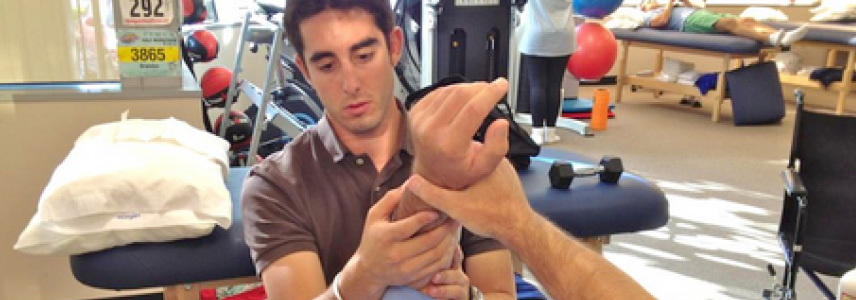
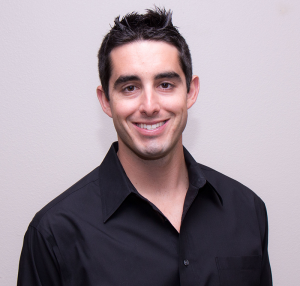
Doctor of Physical Therapy Jonathan Meltzer is a licensed orthopedic physical therapist at Rausch Physical Therapy & Sports Performance in Laguna Niguel, Calif. Known as “The Baseball PT,” Jonathan not only specializes in baseball-specific rehab and helping players get back onto the field faster and healthier, but he also advocates for injury prevention and is passionate about combating avoidable overuse injuries plaguing youth baseball athletes. Jonathan’s goals are to identify limitations and treat his patients with the most recent and innovative techniques in order to maximize functional independence and obtain his patients’ individual goals.


Proper Pitcher’s Hip Rotation and How to Get It


Remember that game Twister? Every time that spinner landed on a new color, you were forced to reach your hand behind your back, underneath a leg, and across the board, all while trying not to fall. While incredibly entertaining, this silly game can also be a valuable lesson about positional torques, balance, rotation and flexibility—especially when it comes to baseball.

Looking at the specific qualities to win this game can be related to the critical components of the throwing motion in baseball. Often times when assessing a pitcher’s mechanics, there’s a miss in relating the lower half to the upper half of the body.  It is crucial for a pitcher—no matter the age—to begin to learn the importance of max hip rotation in order to achieve full torque of the trunk and obtain maximal velocity through the pitch.

The Sling Shot Effect

The rubber band of a sling shot is wound up with so much tension so that when it’s released, a massive amount of kinetic energy hurls the rock (or projectile of your choice) forward. The pitching motion in baseball is similar in that the lower half of the body, starting with proper foot placement and maximal hip rotation, will create a buildup of kinetic energy through the trunk, shoulder blades, shoulder and finally release through the fingers.

Proper Hip Rotation and How to Get It

Without proper hip rotation, a pitcher’s hips will fly open, which creates torque at the elbow. To avoid this, we want proper hip rotation, which occurs when:

  • The hips are fully rotated just before the lead foot strikes the ground
  • The shoulders are closed with arm extended out into the cocked phase of throwing.

Proper rotation allows for maximal hip-to-shoulder separation, which in turns creates the most amount of torque and velocity possible. There are two specific keys to obtaining this position and preventing further stress on the arm, the lead leg and posture.

The lead leg

The lead leg must be relaxed from the knee down and have proper landing position. Proper landing position includes:

  • Toes pointing slightly towards the right-handers box (if a right-handed pitcher.)
  • The hips will remain closed until just before lead foot strikes the ground.
  • At this time they will lead their front hip towards the plate and really turn open the front hip at the latest possible time.
  • If done properly, the pitcher shoulder feel tightness along their oblique muscles, NOT their back.

Posture

When a pitcher transitions from early-stance phase to the cocked position, their posture can completely affect their ability to rotate through their hips and finish off a throw. For example, if a pitcher is bent too far forward when their foot lands, they will not have the ability to achieve full pelvic rotation, thus not allowing this maximal hip/shoulder separation.

The key for good throwing posture is to focus on balancing and creating extension or back-bending through the middle part of the athlete’s back. It has been statistically proven and correlated that the optimal position of posture is the thoracic spine slightly extended, slight lean towards the back leg, and non-throwing hip flexed up. Therefore, it is important to not allow early rotation of the trunk or shift the center of gravity towards the throwing arm, as both will cause the trunk and shoulders to “open early.” before the hips, and create abnormal stresses on the shoulder and arm.

Maintaining proper foot landing position and rotation of the hips will create the maximal amount of separation leading to good pitching mechanics and increased velocity. Posture is also considerably important and must be taken into account when looking at the ability to create this hip to shoulder separation.

Suggested Training and Exercises



StaffHeadshot-JonJonathan Meltzer graduated from the University of Redlands with a bachelor of arts in biology and a minor in physical education. Following graduation, Jonathan discovered his passion for physical therapy while working as a Physical Therapy Aide. After graduating top of his class from Loma Linda University in 2012 with a Doctorate in Physical Therapy, Jonathan began his career at Rausch Physical Therapy and Sports Performance. Jonathan’s goals are to identify limitations and treat his patients with the most recent and innovative techniques in order to maximize functional independence and obtain his patients’ individual goals.


 

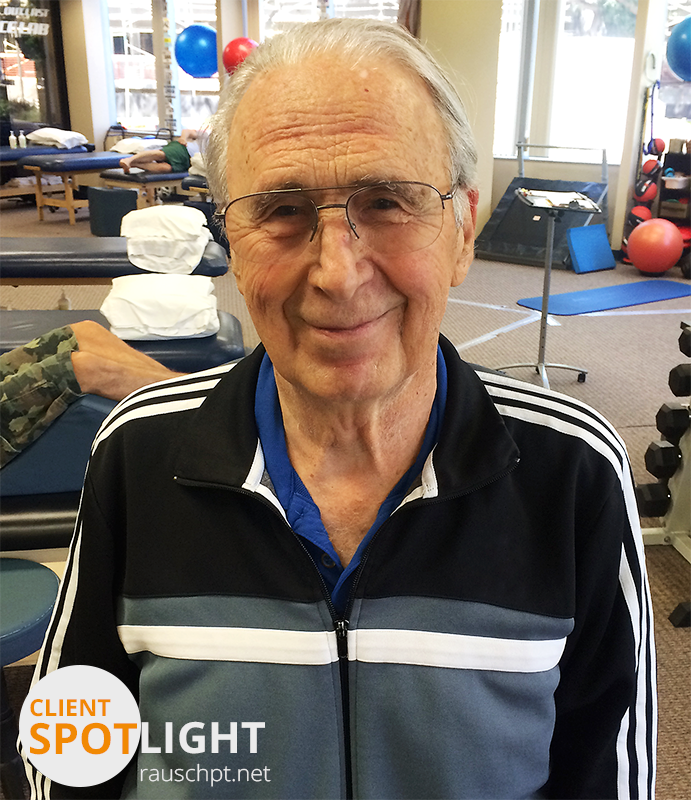
Client Spotlight: Ken Dewhirst

Rausch PT Client Spotlight - Ken Dewhirst
83-year-old Ken Dewhirst is at Rausch PT to strengthen his knee so he can dethrone the current U.S. Table Tennis Champion.
Rausch Physical Therapy & Sports Performance client Ken Dewhirst is gearing up for the comeback of his life. But to be the best, he needs to feel his best first.

“I need to be faster, stronger to be number one.” – Ken Dewhirst

Ken Dewhirst wants you to know that he can get around just fine, thank you very much. At 83 years old, Ken’s here at physical therapy for one reason only: so he can be number one.

Laguna Niguel-resident Ken is currently ranked in the Top 20 in the USA Table Tennis (USATT) Ratings for Men 80+. Ken was rated number four in the country but was sidelined by injury last year. However, Ken has recently made moves to start his climb back to the top, and his first stop? Rausch PT.

“I’m here because I want to up my level and get better so I can be the best in my age group,” Ken said. “I need to be faster, stronger to be number one.”

Ken grew up playing tennis, excelling in high school but eventually gave it up to focus on his college education. He and Rosemarie, his wife of 57 years, spent their days working, raising their children, and traveling the world. But when Ken retired at the age of 60, he knew he had to find something new to keep his mind and body active.

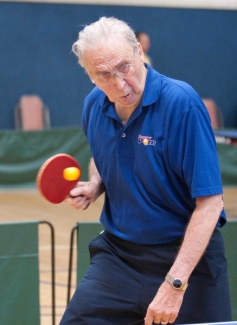
After doing a little research, Ken came across table tennis. He decided to give it a shot… and ranked in his very first tournament. Ever since then, Ken has been working with famous coaches and beating opponents half his age, all the while moving up the ranks.

WAYNE MAH, FOR THE REGISTER
Ken Dewhirst in 2009 moving at the speed of players half his age. (WAYNE MAH, FOR THE OC REGISTER.)

“His goal was to reach the middle of the rankings of all age groups,” biggest fan/critic Rosemarie said. “Well, he did that. So now we need a new goal.”

So what’s next on the list for this octogenarian? Dethrone the new kid on the block. At a spry 80 years old, George Braithwaite recently moved into the 80+ group, which has Ken chomping at the bit for a chance to prove himself. Ken says that while George plays at a higher level than him, he has to try.

“[George] is good. I’ll need to play a faster game against him.”

To get there, Ken knows he has to strengthen his knee to have any chance of beating the champ. He’s only visited Rausch Physical Therapy & Sports Performance a couple times so far, but he says he’s confident that his physical therapist Dustin is going to get him off the table so he can get back to the tables.

How to Prevent Postural Pain in Cyclists

Remember the days when you could turn your neck to look behind you as you backed out of a parking space? Or when you could look down and actually see your feet without bending forward? Your inability to make simple movements now-a-days may be a symptom of “Pedal Pushers Postural Pain Syndrome.” It’s what happens when you ride a bike for eight hours per week while also working 55 hours in an office chair. You know the feeling—that lovely stiffness, neck pain, and burning between your shoulder blades that’s oh-so magical.[one_half]Let’s do some quick math to determine how much time the average cyclist spends sitting every day. As an example, let’s use Ted; Ted sells insurance by day and loves to ride his mountain bike in the evenings… and binge watch Real Housewives of Orange County. (No judgement, here.) So, Ted’s daily sitting time looks something like this:

  • Drive to work = 1 hour
  • Work = 8 hours
  • Drive home = 1 hour
  • Bike ride = 2 hours
  • TV time = 2 hours
  • Daily total = 14 hours! In just one day!

[/one_half][one_half_last][/one_half_last]If this sounds eerily familiar, (except maybe you prefer Keeping up with the Kardashians over Real Housewives) consider this: the human body was never designed to sit in a chair for extended periods of time. In fact, our bodies were designed to stand or squat, but not sit.

Sitting for a long time can lead to tight hip flexors, weak butt muscles, and a stiff spine. Ouch. However, I have great news! This stuff is easily fixable; you just have to be diligent and willing to make a few small changes that will significantly improve your quality of life.

Kevin’s Seven Tips for Phasing Out Pedal Pushers Postural Pain:

  1. Get UP! Walk, move, and stretch every 30 minutes throughout your work day.
  2. Take conference calls standing up. Get a wireless headset and pace your office while listening to your boss ramble. Just make sure to put it on mute and watch where you’re going!
  3. Do Yoga or Pilates during your lunch break. Many studios offer abbreviated lunch-time classes for just this reason. I cannot tell you how nice it is to walk on over to ABC Pilates at noon and stretch out my stress.
  4. Learn to love your foam roll. Stretch and foam roll every night. You can buy one for cheap and work out that tension while you’re on your fourth episode of the night.
  5. Get massages frequently. Tissue work helps to clean up the bogginess in your fascia (the connective tissue fibers that surround your muscles) and will have immediate pain relieving effects.
  6. Stretch your hip flexors and strengthen your butt.
  7. Get a great Bike Fit! A proper Bike Fit is a valuable service. These pros can make the necessary adjustments to your machine that will help with comfort, injuries and power output. You can google around for local bike shop that does Bike Fits, or if you’re in South Orange County check out Rausch PT’s tried and true favorites:

Yes, new bikes are pretty, but spend some time on the motor that pushes your bike along: YOU! The more dedicated you are to making these simple changes, the better you’ll feel and the faster, better and longer you’ll ride. To get you started, I’ve made a free cycling-specific exercise program to help with postural pain. Go to www.homeprograms.net, and the login information is:

Your Email Address: bikerider@bike.com

Your Clinic ID: 1006

So get on it and start taking care of your motor today. It totally deserves it.

All the best to your health,

Inbox-35061-messages-1987-unread


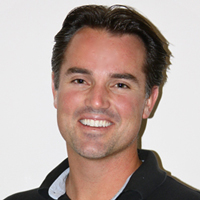
Kevin RauschAs the president and founder of Rausch Physical Therapy & Sports Performance, Kevin Rausch, PT, MPT takes great pride in the care of every single patient he treats. Kevin specializes in sacroiliac joint dysfunctions, running and cycling injuries, and return-to-sport planning for athletes. Since the first day he opened his clinic in 2006, Kevin has strived to provide the best in care, service and technology so as to strengthen his patients’ total body health and get them back to doing what they love.

Find Kevin on Google+

The Doctor Will See You Now

Professional triathlete “Doc” Amanda Stevens visits Rausch PT

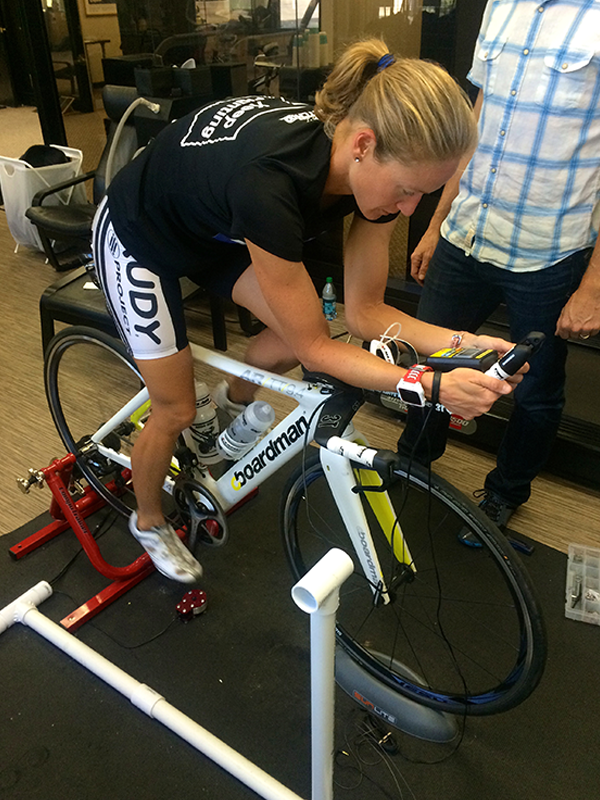
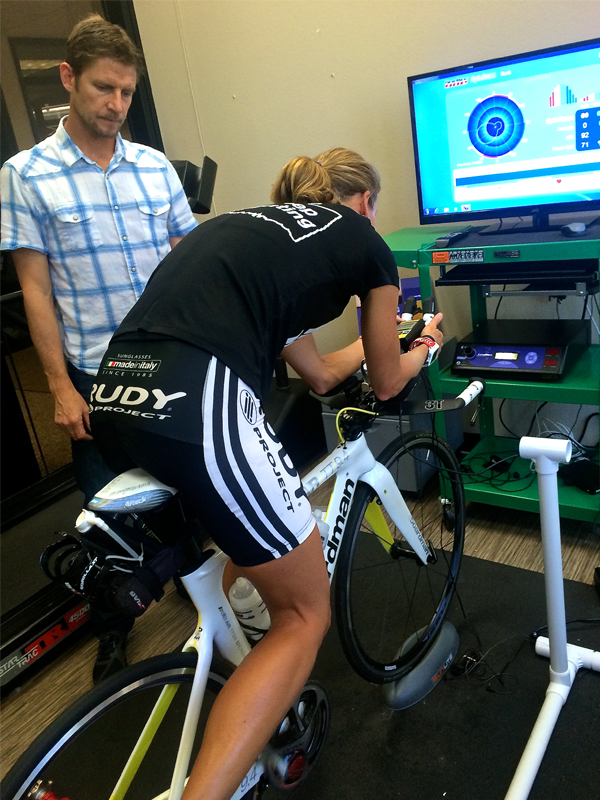
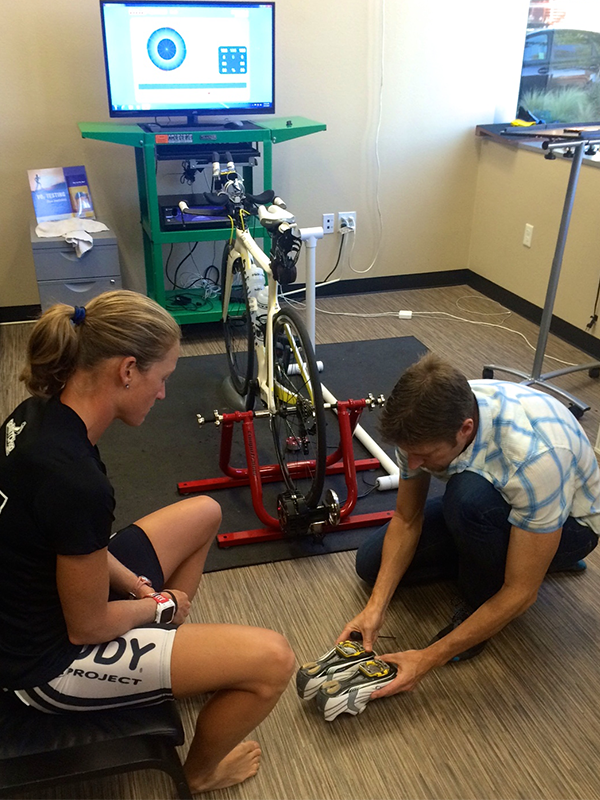
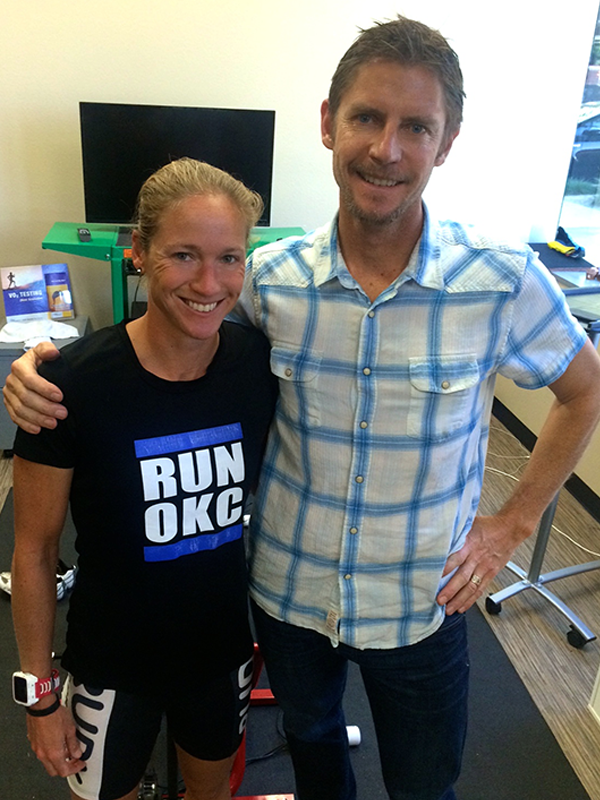
Amanda Stevens—professional triathlete/medical doctor/multiple-time IRONMAN champion/all-the-time rockstar—traveled from Arizona to Laguna Niguel, Calif. for recovery treatment and performance services at Rausch PT on Friday. After spending some time on the table for a little TLC from our A.R.T. expert Lawrence Van Lingen, Amanda hopped on two wheels for a “Bike Right” Advanced Bike Analysis session. Thanks for visiting us, Doc! Good luck this upcoming season, and we’ll see you at your next checkup!

Amanda Stevens on the Bike Right system
Lawrence analyzing Amanda Stevens on the Bike Right system to check her form to avoid injuries and maximize performance.
Bike Right uses video and audio analysis to find cycling form flaws that lead to power leaks and injuries.
Amanda Stevens
Lawrence analyzing Amanda Stevens’ shoes to determine if they’re a perfect fit to avoid injuries.


Amanda Stevens and Lawrence Van Lingen
Amanda Stevens with Lawrence, Rausch PT’s sports chiropractor and manual soft tissue therapist.

How to Prevent Throwing Injuries in Youth Baseball

Jonathan Little League
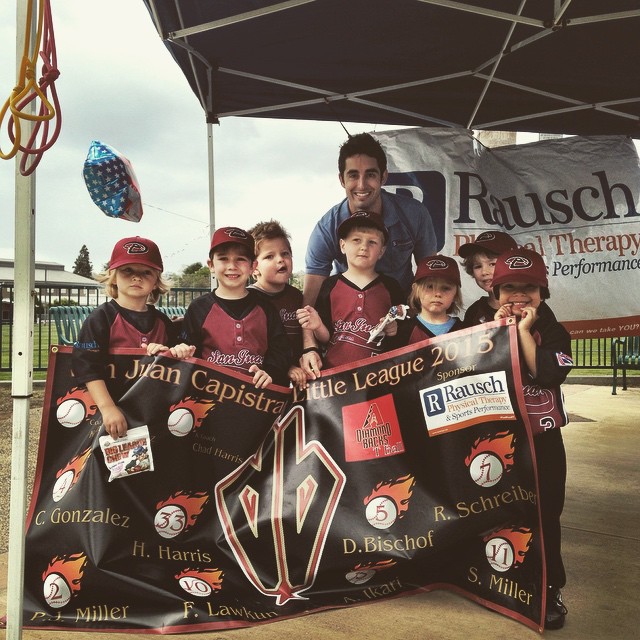
Start ’em young! Jonathan in the community educating little leaguers and their parents about youth baseball injury prevention.

Around the office, they call me “The Baseball Guy.” My years of clinical treatment of ballplayers at Rausch Physical Therapy and Sports Performance, coupled with my interest in biomechanical research, has motivated me to find new ways to reverse the alarming increase in youth baseball arm injuries. In fact, for the past two years I have been developing injury prevention programs for southern Orange County baseball leagues to help protect our youth’s elbows and shoulders.

And it looks like I am not the only one getting on base with this initiative. Major League Baseball and USA Baseball recently teamed up to launch their Pitch Smart program, which is designed to educate parents, coaches and young athletes about how to avoid overuse injuries. It includes information on pitching guidelines, injury risk factors, Tommy John surgery and more.

I have found that out of all the risk factors that can cause injury, the number one is pitching too much, both in a game and in any given year. New research is coming out every month about the correlation of throwing too much and arm injuries in little league athletes. Did you know:

  • If you pitch more than 100 innings in a year, whether little league, club or showcase, it will increase your risk of injury by 3.5x
  • If you pitch greater than 8 months in a year, it will increase risk of surgery by 5x
  • Kids should take off about 2-3 months of competitive pitching in a year and engage in other sports or active rest where they are still using their arms, just not in a pitching motion


Throw Right
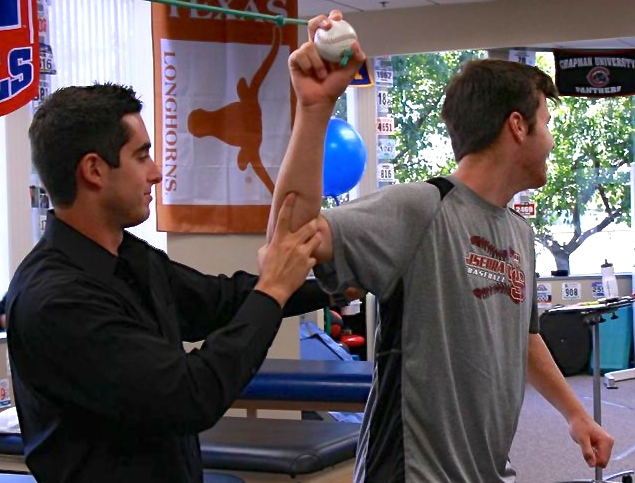
Jonathan taking a patient through Rausch Physical Therapy Throw Right program.

We as medical professionals need to transfer this information to the public so that change can occur in the traditions and schedules of little league baseball. The Pitch Smart initiative proves to me—and hopefully to parents and coaches—how crucial injury awareness and prevention is. I want to take this information and use my skill to prevent, rehabilitate and treat the youth of little league baseball. At Rausch PT, we offer our Throw Right program, which is designed to improve throwing mechanics and decrease risk of injury by evaluating strength, balance and range of motion. It’s a great way for throwing athletes of any age and experience to stay healthy and in the game for many, many years.

If you have any questions about throwing injury prevention or rehabilitation, please send me an email and I will be happy to answer them. For now, take care of those elbows and shoulders!

Sincerely, The Baseball Guy

Jonathan Meltzer, D.P.T.

jonathan@rauschpt.net


Jonathan-Meltzer

Jonathan Meltzer graduated from the University of Redlands with a bachelor of arts in biology and a minor in physical education. Following graduation, Jonathan discovered his passion for physical therapy while working as a Physical Therapy Aide. After graduating top of his class from Loma Linda University in 2012 with a Doctorate in Physical Therapy, Jonathan began his career at Rausch Physical Therapy and Sports Performance. Jonathan’s goals are to identify limitations and treat his patients with the most recent and innovative techniques in order to maximize functional independence and obtain his patients’ individual goals.