
Client Spotlight: Ken Dewhirst

Rausch PT Client Spotlight - Ken Dewhirst
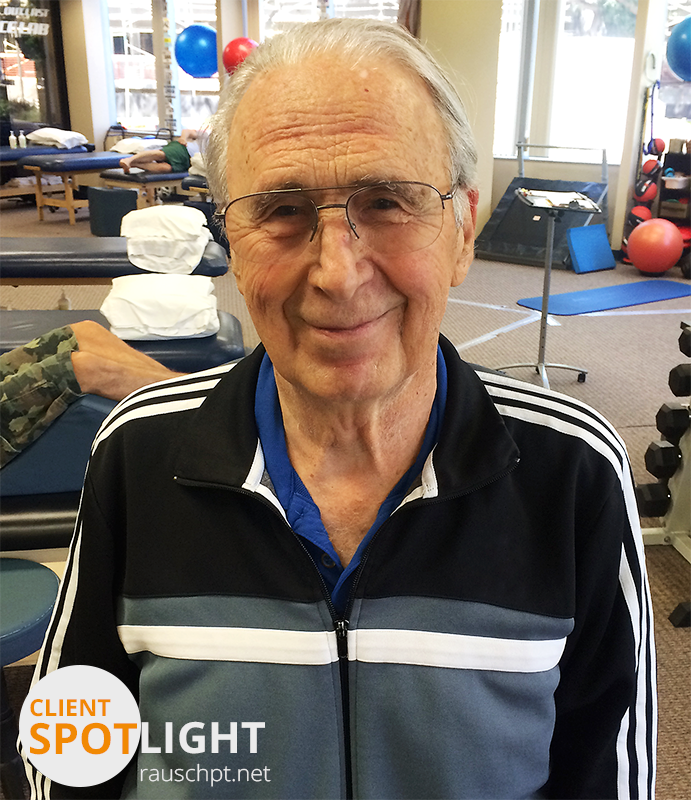
83-year-old Ken Dewhirst is at Rausch PT to strengthen his knee so he can dethrone the current U.S. Table Tennis Champion.
Rausch Physical Therapy & Sports Performance client Ken Dewhirst is gearing up for the comeback of his life. But to be the best, he needs to feel his best first.

“I need to be faster, stronger to be number one.” – Ken Dewhirst

Ken Dewhirst wants you to know that he can get around just fine, thank you very much. At 83 years old, Ken’s here at physical therapy for one reason only: so he can be number one.

Laguna Niguel-resident Ken is currently ranked in the Top 20 in the USA Table Tennis (USATT) Ratings for Men 80+. Ken was rated number four in the country but was sidelined by injury last year. However, Ken has recently made moves to start his climb back to the top, and his first stop? Rausch PT.

“I’m here because I want to up my level and get better so I can be the best in my age group,” Ken said. “I need to be faster, stronger to be number one.”

Ken grew up playing tennis, excelling in high school but eventually gave it up to focus on his college education. He and Rosemarie, his wife of 57 years, spent their days working, raising their children, and traveling the world. But when Ken retired at the age of 60, he knew he had to find something new to keep his mind and body active.

After doing a little research, Ken came across table tennis. He decided to give it a shot… and ranked in his very first tournament. Ever since then, Ken has been working with famous coaches and beating opponents half his age, all the while moving up the ranks.
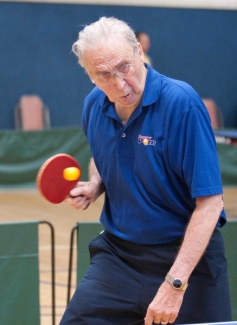
WAYNE MAH, FOR THE REGISTER
Ken Dewhirst in 2009 moving at the speed of players half his age. (WAYNE MAH, FOR THE OC REGISTER.)

“His goal was to reach the middle of the rankings of all age groups,” biggest fan/critic Rosemarie said. “Well, he did that. So now we need a new goal.”

So what’s next on the list for this octogenarian? Dethrone the new kid on the block. At a spry 80 years old, George Braithwaite recently moved into the 80+ group, which has Ken chomping at the bit for a chance to prove himself. Ken says that while George plays at a higher level than him, he has to try.

“[George] is good. I’ll need to play a faster game against him.”

To get there, Ken knows he has to strengthen his knee to have any chance of beating the champ. He’s only visited Rausch Physical Therapy & Sports Performance a couple times so far, but he says he’s confident that his physical therapist Dustin is going to get him off the table so he can get back to the tables.

Visualizing Your Way to a Quicker Recovery

If you are an athlete, odds are you have at one time or another been sidelined by an injury. The frustration that comes with being unable to train and compete can lead to a loss in motivation and a longer recovery process. To combat this, athletes should learn to use visual relaxation and performance techniques and practice them diligently.

There are many forms of relaxation training that athletes can use to help accelerate rehabilitation after injury, including kinesthetic (progressive muscle relaxation), mindfulness (breathing techniques), auditory (listening to calming voices), hypno-relaxation (using hypnosis to induce relaxation, and visual methods (including imagery).

Visual relaxation methods to speed up recovery

  • Remembered imagery. Remember a pleasant and relaxing time in your life. Re-experience it. Become fully absorbed, focusing on what you see, smell, hear and feel against your skin as you visualize that calming scene.
  • Constructed imagery. Imagine a pleasant or relaxing scene in your mind. Step into the picture and experience the scene fully.
  • Hypnotherapy using imagery. Make up a recording or listen to one by a professional hypnotherapist, that includes visualizing healing red blood cells surrounding the injured muscle, tendon, bone, etc. with nutrients, directed at rapid reduction of inflammation and total healing.

Injured athletes should experiment with all available relaxation methods to find the ones that are most comfortable and beneficial. A combination of methods can be used; it’s up to athletes to decide which ones are best suited for them. Once the athlete has become comfortable with a specific technique, it then must be practiced for maximum results.

Three steps to visualize sport performance while injured

If you’re injured, you can still visualize championship-level performance and begin to lay hypnotic tracks in your subconscious mind that will carry over once you’re physically able to perform. Here are some easy steps for visual performance training while you’re still injured:

  1. Watch videos of yourself performing, especially ones highlighting best previous performances. If a personal highlight reel isn’t available, watch training videos of other great athletes in action.
  2. Close your eyes and imagine your ideal performance. Really get a good sense of what you look like and feel like when you perform.
  3. Practice this imagery using the actual time sequence of your average performance. For example, if you’re a track athlete, “run a race” on a stationary bike. If the race is for 400 meters, “race” on a bike for 50 seconds and at the same time visualize your performance.

You may feel a little silly at first, but trust me, this works.

Staying motivated during rehabilitation

After being injured, athletes can lose a sense of identity and become depressed from not being able to compete. That’s why constant feedback and support from coaches and teammates is so crucial to helping an injured athlete stay motivated. Coaches should encourage injured players to make appearances at practices, and athletes need to be proactive about remaining involved in the team and its progress. Coaches can assign certain duties at practice, involve them in strategy sessions, or let them assist in keeping stats. If an athlete has an upper body injury, they can jump on an exercise bike at practice sites to both maintain endurance and still be a part of the team.

If you stay motivated, practice your visual relaxation and performance techniques, and keep up with your physical therapy treatment, you will be ready to physically compete again before you know it.


dr-singer11Jack N. Singer, Ph.D. is a licensed and certified Clinical/Sport Psychologist and Performance Success Coach, based in Mission Viejo, CA.  For more information and a FREE 15 minute consultation for all Rausch PT clients and family, contact Jack at 949-481-5660. www.drjacksinger.com