Breaking the Cycle of Injury
How You Can Prevent Running Injuries for Good
[framedbox][one_third]
When
Wednesday, July 27
7 – 8:30 PM
[/one_third][one_third]
Where
28202 Cabot Rd. Suite 150
Laguna Niguel, CA 92677
[/one_third][one_third_last]
Cost
$15 per person
[button link=”https://clients.mindbodyonline.com/classic/ws?studioid=18756&stype=-106&sView=day&date=07/27/16″ size=”small” color=”blue” align=”center” target=”_blank” ]SIGN UP NOW[/button]
[/one_third_last][/framedbox]
We get it; when you’re a runner, there’s nothing worse than suffering an injury that keeps you from doing what you love. Did you know 85% of runners get injured at least once during a year? Did you know you DON’T have to be one of them??
Topics include:
- The three “non-negotiables” every runner needs to combat injury
- Identifying any muscular imbalances that may be impacting your running
- Specific exercise programs and run form tips to reduce injury risk and improve performance
So lace up your running shoes and join us at the clinic on July 27 and learn how you can continue to run—pain free—for a long, long time.
[button link=”https://clients.mindbodyonline.com/classic/ws?studioid=18756&stype=-106&sView=day&date=07/27/16″ size=”small” color=”blue” align=”center” target=”_blank” ]SIGN UP NOW[/button]
Proper Pitcher’s Hip Rotation and How to Get It
Remember that game Twister? Every time that spinner landed on a new color, you were forced to reach your hand behind your back, underneath a leg, and across the board, all while trying not to fall. While incredibly entertaining, this silly game can also be a valuable lesson about positional torques, balance, rotation and flexibility—especially when it comes to baseball.
Looking at the specific qualities to win this game can be related to the critical components of the throwing motion in baseball. Often times when assessing a pitcher’s mechanics, there’s a miss in relating the lower half to the upper half of the body. It is crucial for a pitcher—no matter the age—to begin to learn the importance of max hip rotation in order to achieve full torque of the trunk and obtain maximal velocity through the pitch.
The Sling Shot Effect
The rubber band of a sling shot is wound up with so much tension so that when it’s released, a massive amount of kinetic energy hurls the rock (or projectile of your choice) forward. The pitching motion in baseball is similar in that the lower half of the body, starting with proper foot placement and maximal hip rotation, will create a buildup of kinetic energy through the trunk, shoulder blades, shoulder and finally release through the fingers.
Proper Hip Rotation and How to Get It
Without proper hip rotation, a pitcher’s hips will fly open, which creates torque at the elbow. To avoid this, we want proper hip rotation, which occurs when:
- The hips are fully rotated just before the lead foot strikes the ground
- The shoulders are closed with arm extended out into the cocked phase of throwing.
Proper rotation allows for maximal hip-to-shoulder separation, which in turns creates the most amount of torque and velocity possible. There are two specific keys to obtaining this position and preventing further stress on the arm, the lead leg and posture.
The lead leg
The lead leg must be relaxed from the knee down and have proper landing position. Proper landing position includes:
- Toes pointing slightly towards the right-handers box (if a right-handed pitcher.)
- The hips will remain closed until just before lead foot strikes the ground.
- At this time they will lead their front hip towards the plate and really turn open the front hip at the latest possible time.
- If done properly, the pitcher shoulder feel tightness along their oblique muscles, NOT their back.
Posture
When a pitcher transitions from early-stance phase to the cocked position, their posture can completely affect their ability to rotate through their hips and finish off a throw. For example, if a pitcher is bent too far forward when their foot lands, they will not have the ability to achieve full pelvic rotation, thus not allowing this maximal hip/shoulder separation.
The key for good throwing posture is to focus on balancing and creating extension or back-bending through the middle part of the athlete’s back. It has been statistically proven and correlated that the optimal position of posture is the thoracic spine slightly extended, slight lean towards the back leg, and non-throwing hip flexed up. Therefore, it is important to not allow early rotation of the trunk or shift the center of gravity towards the throwing arm, as both will cause the trunk and shoulders to “open early.” before the hips, and create abnormal stresses on the shoulder and arm.
Maintaining proper foot landing position and rotation of the hips will create the maximal amount of separation leading to good pitching mechanics and increased velocity. Posture is also considerably important and must be taken into account when looking at the ability to create this hip to shoulder separation.
Suggested Training and Exercises
- Baseball Rebellion has a good Drill for Hip Rotation video to practice this max hip rotation with proper foot positioning.
- For a more in-depth analysis of your form, come see me for a Throw Right session at the Performance Lab.
- Somax Performance Institute‘s hip strength exercise video can also help improve speed.
 Jonathan Meltzer graduated from the University of Redlands with a bachelor of arts in biology and a minor in physical education. Following graduation, Jonathan discovered his passion for physical therapy while working as a Physical Therapy Aide. After graduating top of his class from Loma Linda University in 2012 with a Doctorate in Physical Therapy, Jonathan began his career at Rausch Physical Therapy and Sports Performance. Jonathan’s goals are to identify limitations and treat his patients with the most recent and innovative techniques in order to maximize functional independence and obtain his patients’ individual goals.
The Doctor Will See You Now
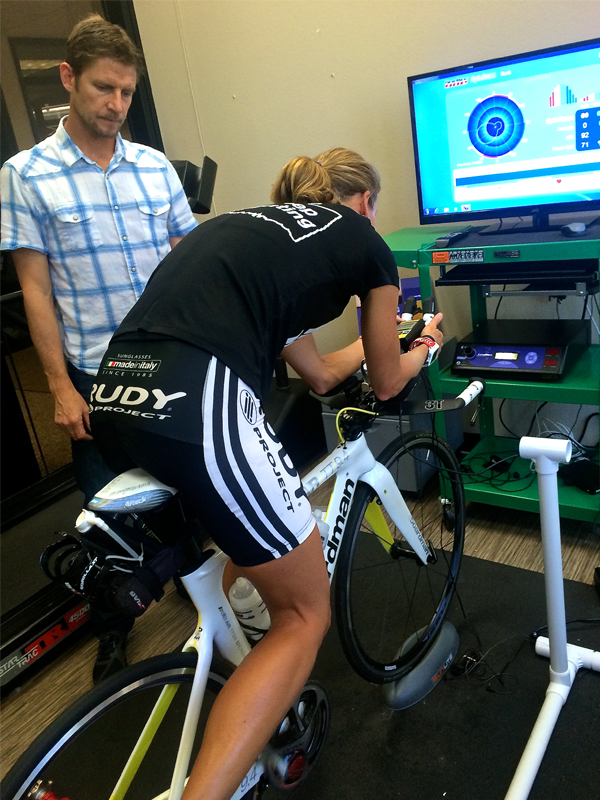
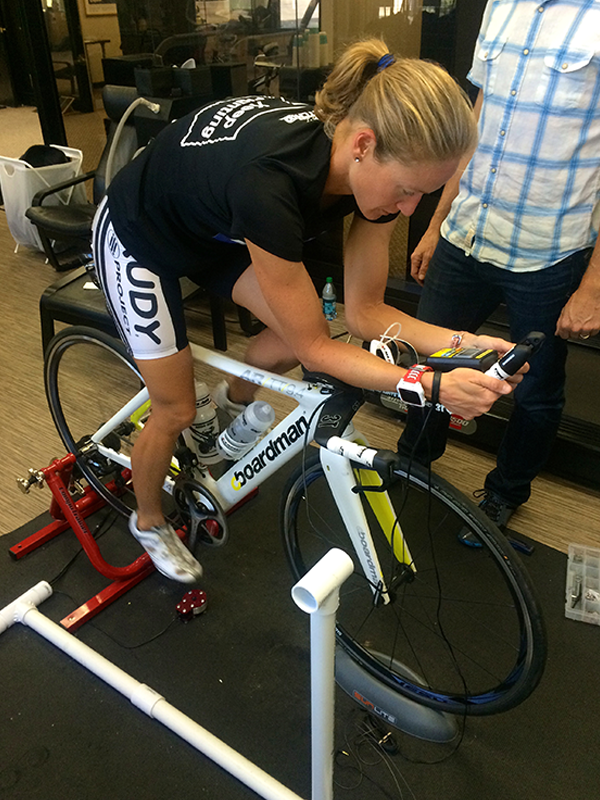
Professional triathlete “Doc” Amanda Stevens visits Rausch PT
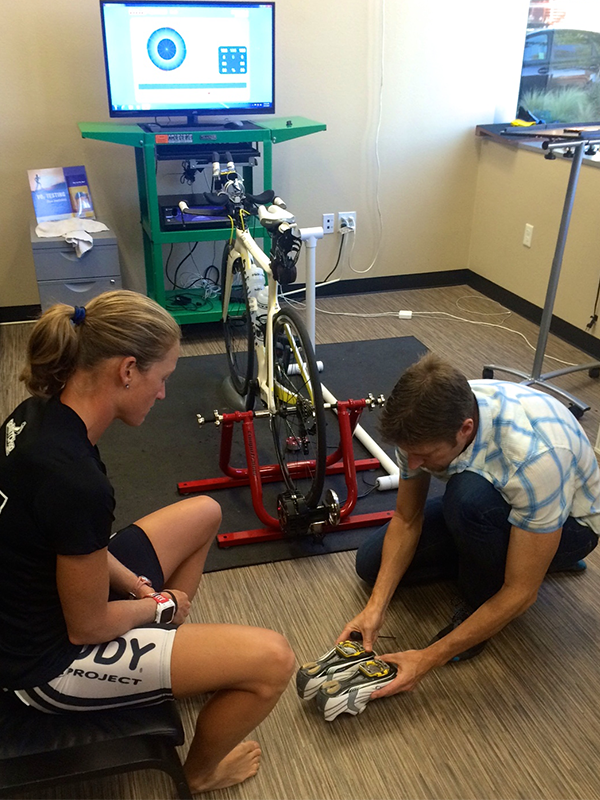
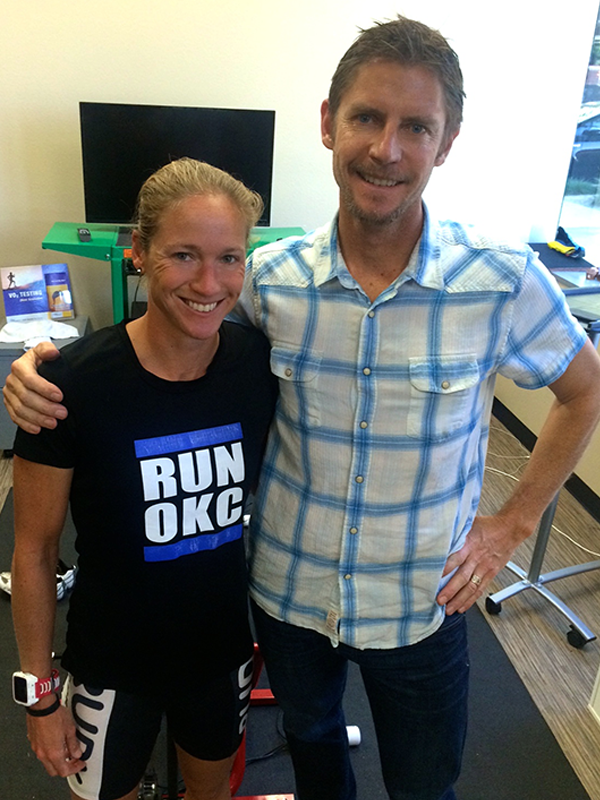
Amanda Stevens—professional triathlete/medical doctor/multiple-time IRONMAN champion/all-the-time rockstar—traveled from Arizona to Laguna Niguel, Calif. for recovery treatment and performance services at Rausch PT on Friday. After spending some time on the table for a little TLC from our A.R.T. expert Lawrence Van Lingen, Amanda hopped on two wheels for a “Bike Right” Advanced Bike Analysis session. Thanks for visiting us, Doc! Good luck this upcoming season, and we’ll see you at your next checkup!
A lesson in mental toughness from Russell Wilson
I don’t know Russell Wilson personally, but in my practice as a Professional Sport Psychologist for the past 33 years, I know a thing or two about what it takes to become a champion, about mental toughness and resilience to adversity, all of which Russell and the Seahawks displayed so beautifully in the NFC Championship game on Sunday.
Like NFL quarterbacks, all athletes have to deal with obstacles, challenges and setbacks. Will they fold under such circumstances, believing that they cannot succeed and wait for the next opportunity to prove themselves?
 Or…like Russell Wilson, will they embrace the mindset of a champion, by maintaining supreme confidence in the face of adversity and bounce back from setbacks? Do you have a game plan on the back burner to deal with unforeseen setbacks in your sport? Do you have the confidence and mental toughness to be resilient in the face of adversity?
One important lesson to be learned from Russell Wilson is that we all have choices regarding how to assess a really devastating situation. During the first half of his game against Green Bay, his performance was so poor that he had a zero quarterback rating, and he was playing the worst game of his NFL career. With his team down by a score of 16-0, one choice Russell had was to admit to himself that it wasn’t his or the Seahawks’ day, lose the belief that a victory was possible, and just try to get through the second half without more embarrassment. In other words, play it safe, while expecting to lose.
But neither Russell Wilson nor the Seahawks think that way. Even with only a few minutes left in the game, with his team still trailing by 12 points, he trusted his ability to bring victory to the Seahawks. Mental toughness is the ability to sustain your intensity and bounce back, despite setbacks, adversity, and unexpected obstacles. And that kind of mental toughness paid off.
Mental toughness skills include confidence building, resiliency, and developing an “identity statement” that an athlete can repeat, along with other positive affirmations each day.
An “identity statement” is a realistic reminder (no room for modesty here) of the real qualities you possess as an elite athlete and the vision you have of your future performance. The purpose of such a statement is to enhance your self-esteem and confidence, especially when you begin to doubt yourself. Here is an example:
“I am intelligent and I know my sport better than anyone on my team. I have the greatest work ethic and I will eventually be an all-star.”
Combining such a statement with relaxing breathing and visualizing past successes builds the mental toughness necessary for bouncing back from setbacks. Certainly Russell Wilson, the Seattle Seahawks and the coaching all practice mental toughness and it really paid off big time in the NFC championship game!
 Jack N. Singer, Ph.D. is a licensed and certified Clinical/Sport Psychologist and Performance Success Coach, based in Mission Viejo, CA. For more information and a FREE 15 minute consultation for all Rausch PT clients and family, contact Jack at 949-481-5660. www.drjacksinger.com
How to Prevent Throwing Injuries in Youth Baseball
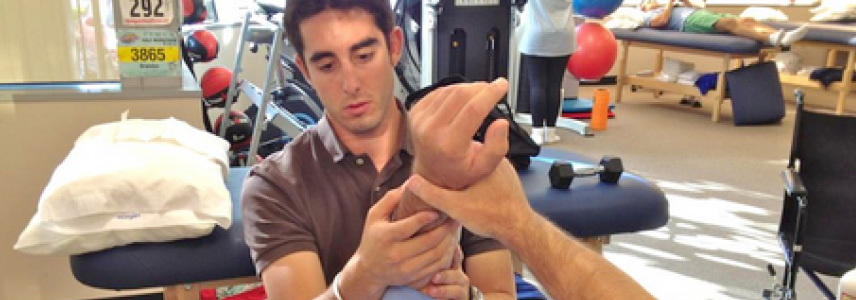
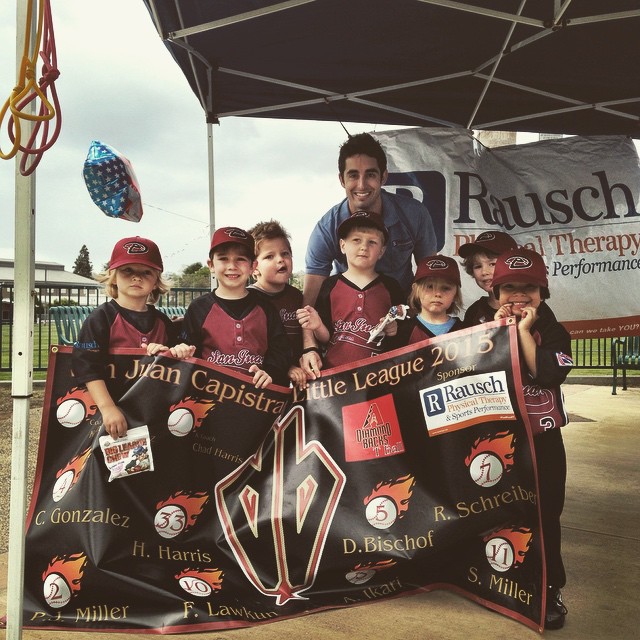
Around the office, they call me “The Baseball Guy.” My years of clinical treatment of ballplayers at Rausch Physical Therapy and Sports Performance, coupled with my interest in biomechanical research, has motivated me to find new ways to reverse the alarming increase in youth baseball arm injuries. In fact, for the past two years I have been developing injury prevention programs for southern Orange County baseball leagues to help protect our youth’s elbows and shoulders.
And it looks like I am not the only one getting on base with this initiative. Major League Baseball and USA Baseball recently teamed up to launch their Pitch Smart program, which is designed to educate parents, coaches and young athletes about how to avoid overuse injuries. It includes information on pitching guidelines, injury risk factors, Tommy John surgery and more.
I have found that out of all the risk factors that can cause injury, the number one is pitching too much, both in a game and in any given year. New research is coming out every month about the correlation of throwing too much and arm injuries in little league athletes. Did you know:
- If you pitch more than 100 innings in a year, whether little league, club or showcase, it will increase your risk of injury by 3.5x
- If you pitch greater than 8 months in a year, it will increase risk of surgery by 5x
- Kids should take off about 2-3 months of competitive pitching in a year and engage in other sports or active rest where they are still using their arms, just not in a pitching motion
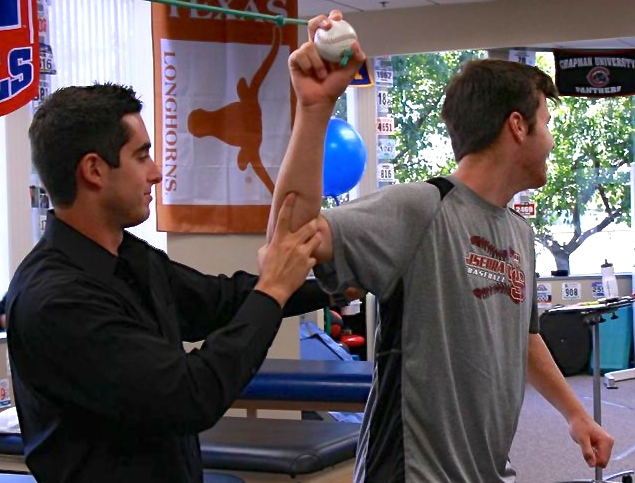
We as medical professionals need to transfer this information to the public so that change can occur in the traditions and schedules of little league baseball. The Pitch Smart initiative proves to me—and hopefully to parents and coaches—how crucial injury awareness and prevention is. I want to take this information and use my skill to prevent, rehabilitate and treat the youth of little league baseball. At Rausch PT, we offer our Throw Right program, which is designed to improve throwing mechanics and decrease risk of injury by evaluating strength, balance and range of motion. It’s a great way for throwing athletes of any age and experience to stay healthy and in the game for many, many years.
If you have any questions about throwing injury prevention or rehabilitation, please send me an email and I will be happy to answer them. For now, take care of those elbows and shoulders!
Sincerely, The Baseball Guy
Jonathan Meltzer, D.P.T.

Jonathan Meltzer graduated from the University of Redlands with a bachelor of arts in biology and a minor in physical education. Following graduation, Jonathan discovered his passion for physical therapy while working as a Physical Therapy Aide. After graduating top of his class from Loma Linda University in 2012 with a Doctorate in Physical Therapy, Jonathan began his career at Rausch Physical Therapy and Sports Performance. Jonathan’s goals are to identify limitations and treat his patients with the most recent and innovative techniques in order to maximize functional independence and obtain his patients’ individual goals.




What our patients are saying

Crista E.
Lynne B.
Everything Rausch has recommended involving treatment for my condition has been appropriate and top-notch!
Allison B.
Michael M.
Vincent M.
Deborah R.
Robert V
Valeria R.
Stay Connected
Sign up to receive monthly specials, events, and expert tips & tricks.