Six Ways to Avoid Painful “Text Neck”


Your screen addiction isn’t just straining your eyes and relationships; over time, your neck muscles can become stretched out and weakened while others become tight and painful as they struggle to stabilize your head in front of your body. Poor posture due to hours of mindless scrolling and tapping could be at the root of the chronic soreness and pain in your head, neck, shoulders, and back. PT Ashley Heller shares her six tips for avoiding the painful condition “Text Neck.”

Ashley-Blog
BY ASHLEY HELLER, PT, MPT, RAUSCH PHYSICAL THERAPY

I constantly notice patients looking down at their phones—texting while in the waiting room, scrolling through Instagram while on the table, checking their work calendar to schedule their next appointment. These days, most everybody relies on their smartphone to stay connected to the world, and almost everyone is guilty of looking down at our phones.

While there’s no question that having technology at our fingertips is entertaining and convenient, it can also be a pain in the neck—literally. So, what can we do to prevent the pain associated with the dreaded “Text Neck?”

What is “Text Neck?”

What many people fail to realize is that repetitive or habitual postures over time related to texting, reading, and working on the computer may lead to long-term effects on the way we feel. Over time, the neck muscles become stretched out and weakened while others become tight and painful as they struggle to stabilize your head in front of your body. Poor posture over a prolonged period of time can lead to postural dysfunction resulting in chronic soreness and pain in your head, neck, shoulders, and back.
[one_half]

What’s the science?

  • Postural syndrome occurs when prolonged stress is placed on the neck
  • The average human head weighs 10-12 pounds in a neutral position
  • The further bent forward your head is, the more weight your neck has to support:
    • 15º =  27 pounds
    • 30º = 40 pounds
    • 45º = 49 pounds
    • 60º = 60 pounds

[/one_half][one_half_last]

Symptoms of Text Neck

  • Headaches or migraines
  • Pain in neck and or between the shoulder blades
  • Numbness or tingling down the arm
  • Shoulder pain

[/one_half_last]

Long-term effects of Text Neck

Prolonged posture strains your neck muscles and cervical facet joints, resulting in soreness and inflammation in that area. It also flattens the normal curve of your neck, which can lead to:

  • Headaches
  • Nerve pain in neck or arms
  • Disc degeneration or herniations
  • Arthritis resulting in neck stiffness, as well as arthritis in the neck joints

Text Neck also can also cause a rounded shoulders posture, which can affect the mechanics of the shoulder and may result in shoulder impingement. You’re also more susceptible to a condition called Upper Crossed Syndrome, which occurs when the muscles in the neck, shoulders, and chest become deformed causing things like a hunched back or chronic shoulder, upper back and neck pain.

Six ways to combat and avoid Text Neck

The good news is that it’s not too late to make changes to undo any damage your screen addiction may be inflicting on your body. These tips can also apply while reading or working on your computer or tablet.

    1. Be aware of your posture. Pay attention to the way you are sitting or standing and how long you have been in that position.
    2. Listen to your body. When you feel neck pain starting, correct your posture immediately by getting out of a slumped position, then find a neutral spine posture by sitting upright while aligning your ears with your shoulders.
    3. Bring your phone up to eye level to reduce strain to your neck while you are texting.


  1. Text with your arms supported to decrease strain to the neck.
  2. Don’t stay in one position for too long. You now know that prolonged postures can lead to muscle strains, so get up and move around! You should also use a foam roll, tennis ball or lacrosse ball to decrease tissue tension in your upper back.
  3. See a physical therapist. If you’re already feeling the painful symptoms of Text Neck in your neck, upper back or shoulders, schedule an appointment with a physical therapist. We’re experts in musculoskeletal dysfunction, and we can create a specific plan of care combining manual therapy and therapeutic exercises to help you find relief and change your texting habits for good.

PT-Headshots-AshleyAshley Heller, MPT is a licensed physical therapist at Rausch Physical Therapy & Sports Performance. She received her Masters of Physical Therapy degree at California State University, Long Beach and is passionate about working with patients with shoulder, knee and ankle injuries. With background in orthopedic-related injuries and post-operative rehabilitation, Ashley believes that the combination of manual therapy and personalized therapeutic exercise program is vital to recovery. Known as the Water Sports PT, Ashley says her goal is to help her patients better understand their injuries and the plan for their road to recovery.

Click to learn more about Ashley and our other physical therapists »
Let’s talk! We are here to help. Give us a call for an initial evaluation and assessment. We would love to meet you.

Did you know there’s no prescription needed from a doctor to see us – but we will communicate your progress and treatment to your doctor if you’d like us too!

(949) 276-5401

RauschPT

Disclaimer — All the information that you find on our blogs and social media pages are for informational purposes only and are not intended to be used as your personal professional diagnosis, or treatment. Come and see us for your excellent, personalized care! https://staging.rauschpt.net/

Proper Pitcher’s Hip Rotation and How to Get It


Remember that game Twister? Every time that spinner landed on a new color, you were forced to reach your hand behind your back, underneath a leg, and across the board, all while trying not to fall. While incredibly entertaining, this silly game can also be a valuable lesson about positional torques, balance, rotation and flexibility—especially when it comes to baseball.

Looking at the specific qualities to win this game can be related to the critical components of the throwing motion in baseball. Often times when assessing a pitcher’s mechanics, there’s a miss in relating the lower half to the upper half of the body.  It is crucial for a pitcher—no matter the age—to begin to learn the importance of max hip rotation in order to achieve full torque of the trunk and obtain maximal velocity through the pitch.

The Sling Shot Effect

The rubber band of a sling shot is wound up with so much tension so that when it’s released, a massive amount of kinetic energy hurls the rock (or projectile of your choice) forward. The pitching motion in baseball is similar in that the lower half of the body, starting with proper foot placement and maximal hip rotation, will create a buildup of kinetic energy through the trunk, shoulder blades, shoulder and finally release through the fingers.

Proper Hip Rotation and How to Get It

Without proper hip rotation, a pitcher’s hips will fly open, which creates torque at the elbow. To avoid this, we want proper hip rotation, which occurs when:

  • The hips are fully rotated just before the lead foot strikes the ground
  • The shoulders are closed with arm extended out into the cocked phase of throwing.

Proper rotation allows for maximal hip-to-shoulder separation, which in turns creates the most amount of torque and velocity possible. There are two specific keys to obtaining this position and preventing further stress on the arm, the lead leg and posture.

The lead leg

The lead leg must be relaxed from the knee down and have proper landing position. Proper landing position includes:

  • Toes pointing slightly towards the right-handers box (if a right-handed pitcher.)
  • The hips will remain closed until just before lead foot strikes the ground.
  • At this time they will lead their front hip towards the plate and really turn open the front hip at the latest possible time.
  • If done properly, the pitcher shoulder feel tightness along their oblique muscles, NOT their back.

Posture

When a pitcher transitions from early-stance phase to the cocked position, their posture can completely affect their ability to rotate through their hips and finish off a throw. For example, if a pitcher is bent too far forward when their foot lands, they will not have the ability to achieve full pelvic rotation, thus not allowing this maximal hip/shoulder separation.

The key for good throwing posture is to focus on balancing and creating extension or back-bending through the middle part of the athlete’s back. It has been statistically proven and correlated that the optimal position of posture is the thoracic spine slightly extended, slight lean towards the back leg, and non-throwing hip flexed up. Therefore, it is important to not allow early rotation of the trunk or shift the center of gravity towards the throwing arm, as both will cause the trunk and shoulders to “open early.” before the hips, and create abnormal stresses on the shoulder and arm.

Maintaining proper foot landing position and rotation of the hips will create the maximal amount of separation leading to good pitching mechanics and increased velocity. Posture is also considerably important and must be taken into account when looking at the ability to create this hip to shoulder separation.

Suggested Training and Exercises


StaffHeadshot-JonJonathan Meltzer graduated from the University of Redlands with a bachelor of arts in biology and a minor in physical education. Following graduation, Jonathan discovered his passion for physical therapy while working as a Physical Therapy Aide. After graduating top of his class from Loma Linda University in 2012 with a Doctorate in Physical Therapy, Jonathan began his career at Rausch Physical Therapy and Sports Performance. Jonathan’s goals are to identify limitations and treat his patients with the most recent and innovative techniques in order to maximize functional independence and obtain his patients’ individual goals.


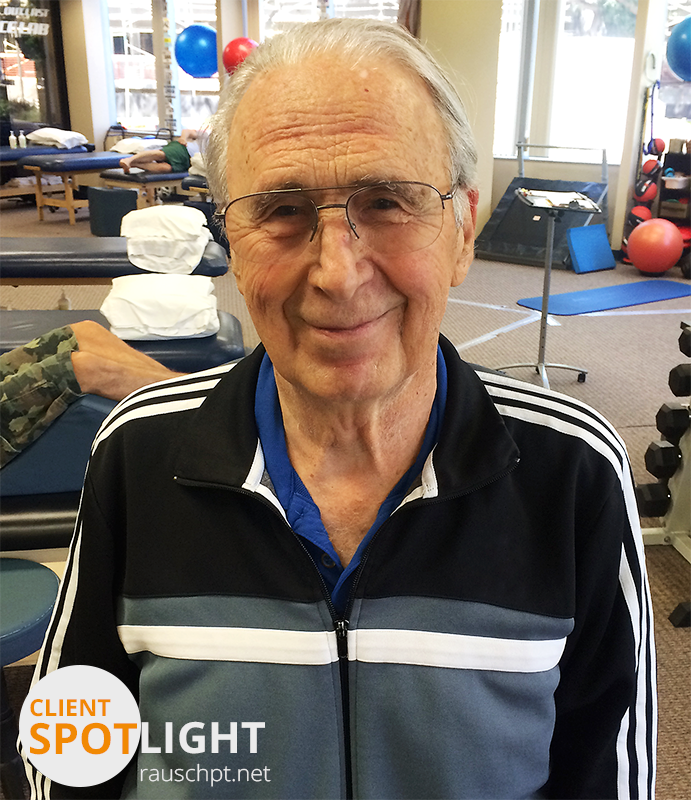
Client Spotlight: Ken Dewhirst

Rausch PT Client Spotlight - Ken Dewhirst
83-year-old Ken Dewhirst is at Rausch PT to strengthen his knee so he can dethrone the current U.S. Table Tennis Champion.
Rausch Physical Therapy & Sports Performance client Ken Dewhirst is gearing up for the comeback of his life. But to be the best, he needs to feel his best first.

“I need to be faster, stronger to be number one.” – Ken Dewhirst

Ken Dewhirst wants you to know that he can get around just fine, thank you very much. At 83 years old, Ken’s here at physical therapy for one reason only: so he can be number one.

Laguna Niguel-resident Ken is currently ranked in the Top 20 in the USA Table Tennis (USATT) Ratings for Men 80+. Ken was rated number four in the country but was sidelined by injury last year. However, Ken has recently made moves to start his climb back to the top, and his first stop? Rausch PT.

“I’m here because I want to up my level and get better so I can be the best in my age group,” Ken said. “I need to be faster, stronger to be number one.”

Ken grew up playing tennis, excelling in high school but eventually gave it up to focus on his college education. He and Rosemarie, his wife of 57 years, spent their days working, raising their children, and traveling the world. But when Ken retired at the age of 60, he knew he had to find something new to keep his mind and body active.

After doing a little research, Ken came across table tennis. He decided to give it a shot… and ranked in his very first tournament. Ever since then, Ken has been working with famous coaches and beating opponents half his age, all the while moving up the ranks.

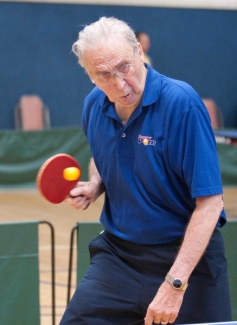
WAYNE MAH, FOR THE REGISTER
Ken Dewhirst in 2009 moving at the speed of players half his age. (WAYNE MAH, FOR THE OC REGISTER.)

“His goal was to reach the middle of the rankings of all age groups,” biggest fan/critic Rosemarie said. “Well, he did that. So now we need a new goal.”

So what’s next on the list for this octogenarian? Dethrone the new kid on the block. At a spry 80 years old, George Braithwaite recently moved into the 80+ group, which has Ken chomping at the bit for a chance to prove himself. Ken says that while George plays at a higher level than him, he has to try.

“[George] is good. I’ll need to play a faster game against him.”

To get there, Ken knows he has to strengthen his knee to have any chance of beating the champ. He’s only visited Rausch Physical Therapy & Sports Performance a couple times so far, but he says he’s confident that his physical therapist Dustin is going to get him off the table so he can get back to the tables.

Visualizing Your Way to a Quicker Recovery

If you are an athlete, odds are you have at one time or another been sidelined by an injury. The frustration that comes with being unable to train and compete can lead to a loss in motivation and a longer recovery process. To combat this, athletes should learn to use visual relaxation and performance techniques and practice them diligently.

There are many forms of relaxation training that athletes can use to help accelerate rehabilitation after injury, including kinesthetic (progressive muscle relaxation), mindfulness (breathing techniques), auditory (listening to calming voices), hypno-relaxation (using hypnosis to induce relaxation, and visual methods (including imagery).

Visual relaxation methods to speed up recovery

  • Remembered imagery. Remember a pleasant and relaxing time in your life. Re-experience it. Become fully absorbed, focusing on what you see, smell, hear and feel against your skin as you visualize that calming scene.
  • Constructed imagery. Imagine a pleasant or relaxing scene in your mind. Step into the picture and experience the scene fully.
  • Hypnotherapy using imagery. Make up a recording or listen to one by a professional hypnotherapist, that includes visualizing healing red blood cells surrounding the injured muscle, tendon, bone, etc. with nutrients, directed at rapid reduction of inflammation and total healing.

Injured athletes should experiment with all available relaxation methods to find the ones that are most comfortable and beneficial. A combination of methods can be used; it’s up to athletes to decide which ones are best suited for them. Once the athlete has become comfortable with a specific technique, it then must be practiced for maximum results.

Three steps to visualize sport performance while injured

If you’re injured, you can still visualize championship-level performance and begin to lay hypnotic tracks in your subconscious mind that will carry over once you’re physically able to perform. Here are some easy steps for visual performance training while you’re still injured:

  1. Watch videos of yourself performing, especially ones highlighting best previous performances. If a personal highlight reel isn’t available, watch training videos of other great athletes in action.
  2. Close your eyes and imagine your ideal performance. Really get a good sense of what you look like and feel like when you perform.
  3. Practice this imagery using the actual time sequence of your average performance. For example, if you’re a track athlete, “run a race” on a stationary bike. If the race is for 400 meters, “race” on a bike for 50 seconds and at the same time visualize your performance.

You may feel a little silly at first, but trust me, this works.

Staying motivated during rehabilitation

After being injured, athletes can lose a sense of identity and become depressed from not being able to compete. That’s why constant feedback and support from coaches and teammates is so crucial to helping an injured athlete stay motivated. Coaches should encourage injured players to make appearances at practices, and athletes need to be proactive about remaining involved in the team and its progress. Coaches can assign certain duties at practice, involve them in strategy sessions, or let them assist in keeping stats. If an athlete has an upper body injury, they can jump on an exercise bike at practice sites to both maintain endurance and still be a part of the team.

If you stay motivated, practice your visual relaxation and performance techniques, and keep up with your physical therapy treatment, you will be ready to physically compete again before you know it.


dr-singer11Jack N. Singer, Ph.D. is a licensed and certified Clinical/Sport Psychologist and Performance Success Coach, based in Mission Viejo, CA.  For more information and a FREE 15 minute consultation for all Rausch PT clients and family, contact Jack at 949-481-5660. www.drjacksinger.com

How to Prevent Postural Pain in Cyclists

Remember the days when you could turn your neck to look behind you as you backed out of a parking space? Or when you could look down and actually see your feet without bending forward? Your inability to make simple movements now-a-days may be a symptom of “Pedal Pushers Postural Pain Syndrome.” It’s what happens when you ride a bike for eight hours per week while also working 55 hours in an office chair. You know the feeling—that lovely stiffness, neck pain, and burning between your shoulder blades that’s oh-so magical.[one_half]Let’s do some quick math to determine how much time the average cyclist spends sitting every day. As an example, let’s use Ted; Ted sells insurance by day and loves to ride his mountain bike in the evenings… and binge watch Real Housewives of Orange County. (No judgement, here.) So, Ted’s daily sitting time looks something like this:

  • Drive to work = 1 hour
  • Work = 8 hours
  • Drive home = 1 hour
  • Bike ride = 2 hours
  • TV time = 2 hours
  • Daily total = 14 hours! In just one day!

[/one_half][one_half_last][/one_half_last]If this sounds eerily familiar, (except maybe you prefer Keeping up with the Kardashians over Real Housewives) consider this: the human body was never designed to sit in a chair for extended periods of time. In fact, our bodies were designed to stand or squat, but not sit.

Sitting for a long time can lead to tight hip flexors, weak butt muscles, and a stiff spine. Ouch. However, I have great news! This stuff is easily fixable; you just have to be diligent and willing to make a few small changes that will significantly improve your quality of life.

Kevin’s Seven Tips for Phasing Out Pedal Pushers Postural Pain:

  1. Get UP! Walk, move, and stretch every 30 minutes throughout your work day.
  2. Take conference calls standing up. Get a wireless headset and pace your office while listening to your boss ramble. Just make sure to put it on mute and watch where you’re going!
  3. Do Yoga or Pilates during your lunch break. Many studios offer abbreviated lunch-time classes for just this reason. I cannot tell you how nice it is to walk on over to ABC Pilates at noon and stretch out my stress.
  4. Learn to love your foam roll. Stretch and foam roll every night. You can buy one for cheap and work out that tension while you’re on your fourth episode of the night.
  5. Get massages frequently. Tissue work helps to clean up the bogginess in your fascia (the connective tissue fibers that surround your muscles) and will have immediate pain relieving effects.
  6. Stretch your hip flexors and strengthen your butt.
  7. Get a great Bike Fit! A proper Bike Fit is a valuable service. These pros can make the necessary adjustments to your machine that will help with comfort, injuries and power output. You can google around for local bike shop that does Bike Fits, or if you’re in South Orange County check out Rausch PT’s tried and true favorites:

Yes, new bikes are pretty, but spend some time on the motor that pushes your bike along: YOU! The more dedicated you are to making these simple changes, the better you’ll feel and the faster, better and longer you’ll ride. To get you started, I’ve made a free cycling-specific exercise program to help with postural pain. Go to www.homeprograms.net, and the login information is:

Your Email Address: bikerider@bike.com

Your Clinic ID: 1006

So get on it and start taking care of your motor today. It totally deserves it.

All the best to your health,

Inbox-35061-messages-1987-unread


Kevin RauschAs the president and founder of Rausch Physical Therapy & Sports Performance, Kevin Rausch, PT, MPT takes great pride in the care of every single patient he treats. Kevin specializes in sacroiliac joint dysfunctions, running and cycling injuries, and return-to-sport planning for athletes. Since the first day he opened his clinic in 2006, Kevin has strived to provide the best in care, service and technology so as to strengthen his patients’ total body health and get them back to doing what they love.

Find Kevin on Google+

What to expect from your Rausch physical therapist

“So, what can I expect from a physical therapist?” I get this question a lot these days, sometimes it’s from a new patient who’s just starting a rehab program, other times it’s a coach looking for more ways to take care of her athletes’ wellness, and sometimes it’s from doctors wanting to know what goes on in our clinic. It’s a complicated but necessary question to answer… after all you should know just who that person is fixing that aching back of yours, right?

Physical therapist 101

First, you need to know what a physical therapist is and what it takes to become one. Physical therapists have undergraduate degrees in exercise physiology or pre-physical therapy. After we’ve graduated from a four-year college, then comes the fun of “PT school.” This physical therapy clinical doctorate degree program is the real deal: three straight years of intensive and clinical education specifically in the field of physical therapy. It’s where you gain the clinical relevance and assertion to examine what’s ailing patients and figure out the best way to treat it—without medication and without surgery. But physical therapy isn’t all athletes and ankle sprains, physical therapists also learn about Burn Unit-wound care, Assisted Living Facility balance training, Trauma ER fracture positioning, and ICU post-stroke care… just to name a few.

Once we’ve graduated from our 7+ years of schooling, we have to take national and state licensing exams. Always make sure your physical therapist has these licenses to ensure that s/he really knows what s/he is doing before s/he looks at your painfully stiff shoulder and tries to tell you exactly what’s wrong.

#FastPassPT

2 color Rausch logo-FPPT copy
Rausch Physical Therapy offers #FastPassPT, meaning you do not need a doctor’s referral to receive immediate treatment.

So now you know about it takes for your physical therapist to be able to work in the clinic, but what does it take to get you in here? Well, that’s the easiest part! In 2014, California enacted a law that allows full Direct Access to Physical Therapy, an idea we in the office lovingly call #FastPassPT. Basically, in the past you needed a doctor’s prescription before you could even come into a physical therapy clinic for treatment. However, thanks to the passing of this bill, you can now come directly into Rausch Physical Therapy at any time for any aches, pains, sprains, etc. Well, at least any time we’re open… and you better call first so the front desk staff doesn’t yell at me! That’s why we call it #FastPassPT! It’s just as quick and convenient as those passes that allow you to jump to the front of the line at Disneyland. Of course, there are some injuries that do require a doctor’s exam and treatment (and sometimes even surgery,) which is why we work closely with the absolute best physicians in our area. You can ask us at any time for our short-yet-detailed list of doctors who are specialists in their fields.

Clinic culture

What can you expect when you walk in the doors? Will you get better, or will you just get an awkward massage and a few complicated exercises that are impossible to replicate at home? Well, we work hard here at Rausch PT to make sure it’s the former.

Rausch physical therapist working with a patient.Your experience will go a little something like this: First, we’ll start with a detailed exam of whatever’s ailing you. We look at the injury, the surrounding tissue, and even the faulty biomechanics that caused the injury in the first place. Then, once we’ve identified the specific problematic tissue, we’ll begin treatment. Treatment at Rausch PT looks like a specific and deep tissue rejuvenation treatment to get rid of your restrictions and scar tissue. Then we mobilize your stiff joints and tissues, and follow that up with a personal therapeutic exercise program. This program is built just for you, your specific injury, and your specific goals. It’s not just the blanket “shoulder program” everyone gets—it’s your shoulder program, which includes a personal login for our unique home exercise site, www.homeprograms.net. Finally, we typically end sessions with healing modalities such as ice, stim, laser and taping to help take the pressure off.

Your follow up visits will be directly scheduled with your physical therapist. We don’t dig the traditional “bouncing around” PT thing. In fact, we know that it’s been proven that you get the best and most specific treatment when you see the same physical therapist every visit. All of our physical therapists have unique clinical specialties to ensure we can help you get back to doing what you love. Each treatment week will be filled with progressive tissue work and exercises to push you and get you back in the game as soon as possible.

So, that’s a little glimpse into what we call Rausch PT. But don’t just take my word for it, read some of our Yelp reviews, or better yet, come in and try it for yourself and feel the difference in your overall health and wellness.

Share your best physical therapist experience with us on Yelp, Facebook or Twitter #FastPassPT #GetPT #RauschPT

All the best to your health,

Inbox-35061-messages-1987-unread