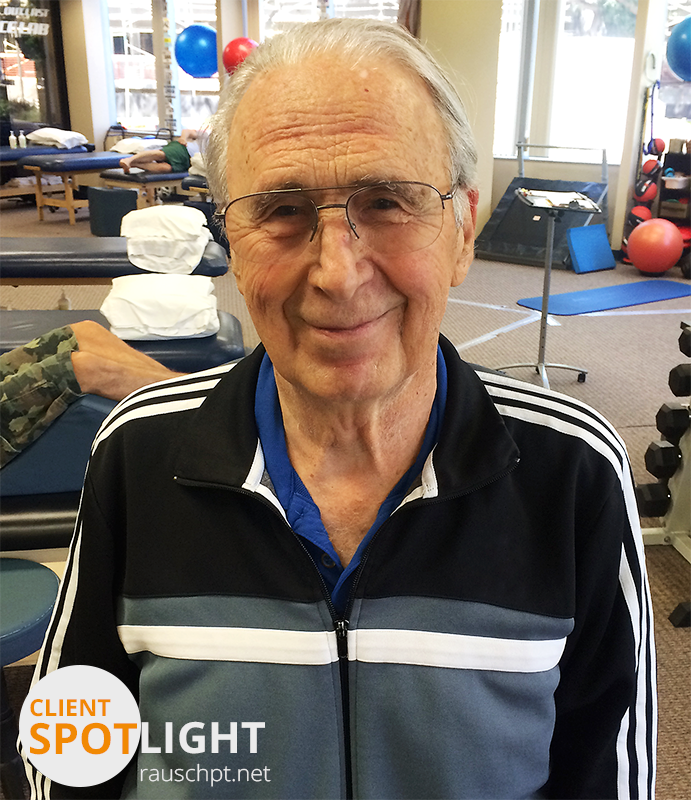
83-year-old Ken Dewhirst is at Rausch PT to strengthen his knee so he can dethrone the current U.S. Table Tennis Champion.
Rausch Physical Therapy & Sports Performance client Ken Dewhirst is gearing up for the comeback of his life. But to be the best, he needs to feel his best first.
“I need to be faster, stronger to be number one.” – Ken Dewhirst
Ken Dewhirst wants you to know that he can get around just fine, thank you very much. At 83 years old, Ken’s here at physical therapy for one reason only: so he can be number one.
Laguna Niguel-resident Ken is currently ranked in the Top 20 in the USA Table Tennis (USATT) Ratings for Men 80+. Ken was rated number four in the country but was sidelined by injury last year. However, Ken has recently made moves to start his climb back to the top, and his first stop? Rausch PT.
“I’m here because I want to up my level and get better so I can be the best in my age group,” Ken said. “I need to be faster, stronger to be number one.”
Ken grew up playing tennis, excelling in high school but eventually gave it up to focus on his college education. He and Rosemarie, his wife of 57 years, spent their days working, raising their children, and traveling the world. But when Ken retired at the age of 60, he knew he had to find something new to keep his mind and body active.
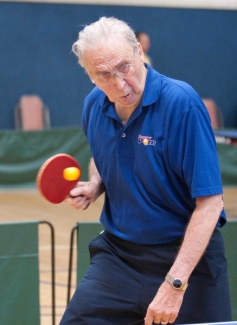
After doing a little research, Ken came across table tennis. He decided to give it a shot… and ranked in his very first tournament. Ever since then, Ken has been working with famous coaches and beating opponents half his age, all the while moving up the ranks.
Ken Dewhirst in 2009 moving at the speed of players half his age. (WAYNE MAH, FOR THE OC REGISTER.)
“His goal was to reach the middle of the rankings of all age groups,” biggest fan/critic Rosemarie said. “Well, he did that. So now we need a new goal.”
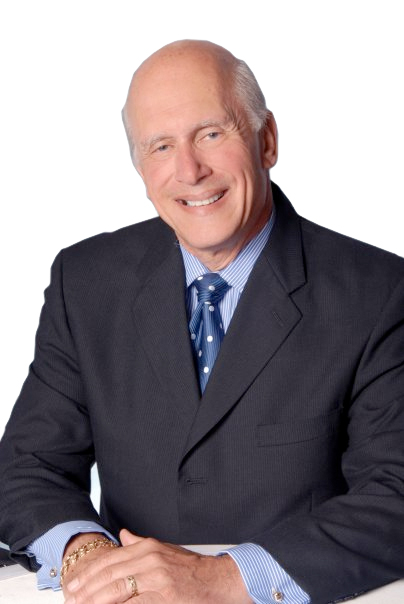
So what’s next on the list for this octogenarian? Dethrone the new kid on the block. At a spry 80 years old, George Braithwaite recently moved into the 80+ group, which has Ken chomping at the bit for a chance to prove himself. Ken says that while George plays at a higher level than him, he has to try.
“[George] is good. I’ll need to play a faster game against him.”
To get there, Ken knows he has to strengthen his knee to have any chance of beating the champ. He’s only visited Rausch Physical Therapy & Sports Performance a couple times so far, but he says he’s confident that his physical therapist Dustin is going to get him off the table so he can get back to the tables.
If you are an athlete, odds are you have at one time or another been sidelined by an injury. The frustration that comes with being unable to train and compete can lead to a loss in motivation and a longer recovery process. To combat this, athletes should learn to use visual relaxation and performance techniques and practice them diligently.
There are many forms of relaxation training that athletes can use to help accelerate rehabilitation after injury, including kinesthetic (progressive muscle relaxation), mindfulness (breathing techniques), auditory (listening to calming voices), hypno-relaxation (using hypnosis to induce relaxation, and visual methods (including imagery).
Visual relaxation methods to speed up recovery
Remembered imagery. Remember a pleasant and relaxing time in your life. Re-experience it. Become fully absorbed, focusing on what you see, smell, hear and feel against your skin as you visualize that calming scene.
Constructed imagery. Imagine a pleasant or relaxing scene in your mind. Step into the picture and experience the scene fully.
Hypnotherapy using imagery. Make up a recording or listen to one by a professional hypnotherapist, that includes visualizing healing red blood cells surrounding the injured muscle, tendon, bone, etc. with nutrients, directed at rapid reduction of inflammation and total healing.
Injured athletes should experiment with all available relaxation methods to find the ones that are most comfortable and beneficial. A combination of methods can be used; it’s up to athletes to decide which ones are best suited for them. Once the athlete has become comfortable with a specific technique, it then must be practiced for maximum results.
Three steps to visualize sport performance while injured
If you’re injured, you can still visualize championship-level performance and begin to lay hypnotic tracks in your subconscious mind that will carry over once you’re physically able to perform. Here are some easy steps for visual performance training while you’re still injured:
Watch videos of yourself performing, especially ones highlighting best previous performances. If a personal highlight reel isn’t available, watch training videos of other great athletes in action.
Close your eyes and imagine your ideal performance. Really get a good sense of what you look like and feel like when you perform.
Practice this imagery using the actual time sequence of your average performance. For example, if you’re a track athlete, “run a race” on a stationary bike. If the race is for 400 meters, “race” on a bike for 50 seconds and at the same time visualize your performance.
You may feel a little silly at first, but trust me, this works.
Staying motivated during rehabilitation
After being injured, athletes can lose a sense of identity and become depressed from not being able to compete. That’s why constant feedback and support from coaches and teammates is so crucial to helping an injured athlete stay motivated. Coaches should encourage injured players to make appearances at practices, and athletes need to be proactive about remaining involved in the team and its progress. Coaches can assign certain duties at practice, involve them in strategy sessions, or let them assist in keeping stats. If an athlete has an upper body injury, they can jump on an exercise bike at practice sites to both maintain endurance and still be a part of the team.
If you stay motivated, practice your visual relaxation and performance techniques, and keep up with your physical therapy treatment, you will be ready to physically compete again before you know it.
Jack N. Singer, Ph.D. is a licensed and certified Clinical/Sport Psychologist and Performance Success Coach, based in Mission Viejo, CA.For more information and a FREE 15 minute consultation for all Rausch PT clients and family, contact Jack at 949-481-5660. www.drjacksinger.com
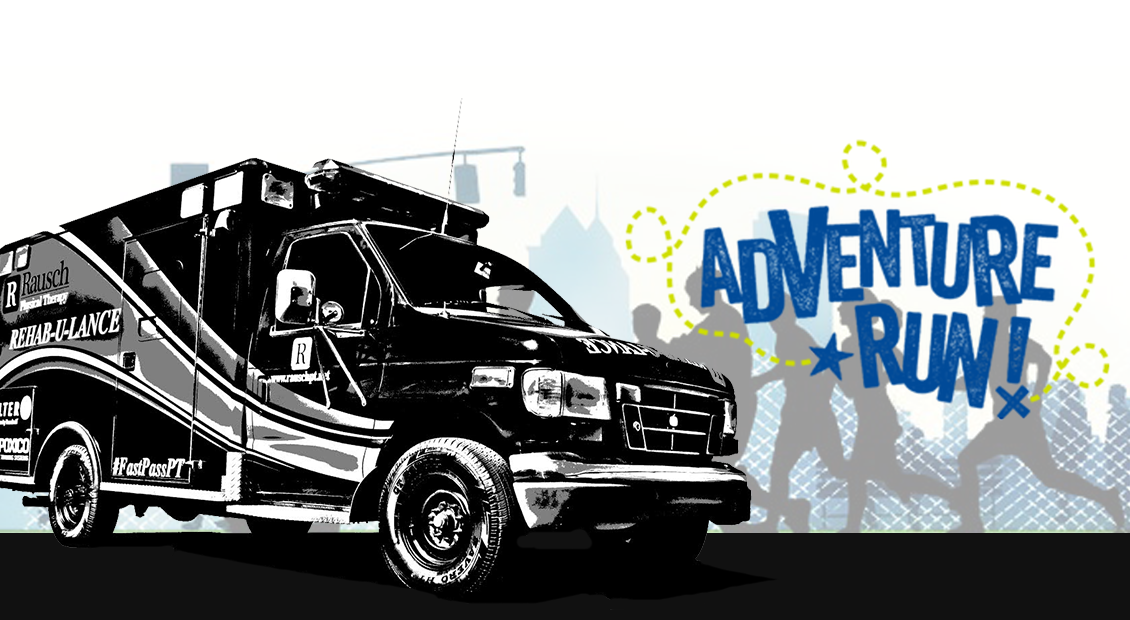
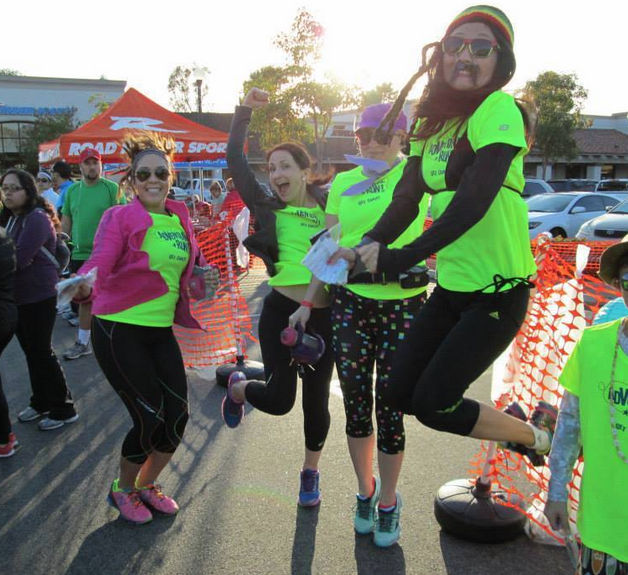
Come scavenge with the Rausch Physical Therapy & Sports Performance team! Laguna Hills Road Runner Sports Adventure Run is a fun, 60-minute scavenger run that draws hundreds of awesome friends of all ages and running levels. Make sure you stop by the Rehabulance, which will be featured as a remote checkpoint! But, to get your raffle tickets from us, you’re going to have to complete the FITNESS GAUNTLET (dun dun dunn…)
It’s totally FREE to run, all you gotta do is sign up! Click here to pre-register and get a complimentary beer ticket, or register before the run as early as 5:30 PM.
P.S. Don’t forget to wear your Rausch PT gear! Want a Rehabulance T-Shirt to rock? Stop by the clinic before April 23 and let the front desk know!
Event Details
What
Laguna Hills Road Runner Sports Adventure Run (Click here for more event info)When
April 23, 2015 (Run starts at 6:30 PM)
Theme
Crazy Pants Make Me Dance
Why
Run to fun checkpoints nearby to grab as many free raffle tickets as you can. The more checkpoints you get to, the more chances you’ll have to win over $3,000 in gift certificates and prizes!
Hundreds of new, crazy friends
Free giveaways and raffle prizes
Music and BEER GARDEN
Where
Laguna Hills Road Runner Sports Store
24291 Avenida De La Carlota
Laguna Hills, CA 92653
Remember the days when you could turn your neck to look behind you as you backed out of a parking space? Or when you could look down and actually see your feet without bending forward? Your inability to make simple movements now-a-days may be a symptom of “Pedal Pushers Postural Pain Syndrome.” It’s what happens when you ride a bike for eight hours per week while also working 55 hours in an office chair. You know the feeling—that lovely stiffness, neck pain, and burning between your shoulder blades that’s oh-so magical.[one_half]Let’s do some quick math to determine how much time the average cyclist spends sitting every day. As an example, let’s use Ted; Ted sells insurance by day and loves to ride his mountain bike in the evenings… and binge watch Real Housewives of Orange County. (No judgement, here.) So, Ted’s daily sitting time looks something like this:
Drive to work = 1 hour
Work = 8 hours
Drive home = 1 hour
Bike ride = 2 hours
TV time = 2 hours
Daily total = 14 hours! In just one day!
[/one_half][one_half_last][/one_half_last]If this sounds eerily familiar, (except maybe you prefer Keeping up with the Kardashians over Real Housewives) consider this: the human body was never designed to sit in a chair for extended periods of time. In fact, our bodies were designed to stand or squat, but not sit.
Sitting for a long time can lead to tight hip flexors, weak butt muscles, and a stiff spine. Ouch. However, I have great news! This stuff is easily fixable; you just have to be diligent and willing to make a few small changes that will significantly improve your quality of life.
Kevin’s Seven Tips for Phasing Out Pedal Pushers Postural Pain:
Get UP! Walk, move, and stretch every 30 minutes throughout your work day.
Take conference calls standing up. Get a wireless headset and pace your office while listening to your boss ramble. Just make sure to put it on mute and watch where you’re going!
Do Yoga or Pilates during your lunch break. Many studios offer abbreviated lunch-time classes for just this reason. I cannot tell you how nice it is to walk on over to ABC Pilates at noon and stretch out my stress.
Learn to love your foam roll. Stretch and foam roll every night. You can buy one for cheap and work out that tension while you’re on your fourth episode of the night.
Get massages frequently. Tissue work helps to clean up the bogginess in your fascia (the connective tissue fibers that surround your muscles) and will have immediate pain relieving effects.
Stretch your hip flexors and strengthen your butt.
Get a great Bike Fit! A proper Bike Fit is a valuable service. These pros can make the necessary adjustments to your machine that will help with comfort, injuries and power output. You can google around for local bike shop that does Bike Fits, or if you’re in South Orange County check out Rausch PT’s tried and true favorites:
Yes, new bikes are pretty, but spend some time on the motor that pushes your bike along: YOU! The more dedicated you are to making these simple changes, the better you’ll feel and the faster, better and longer you’ll ride. To get you started, I’ve made a free cycling-specific exercise program to help with postural pain. Go to www.homeprograms.net, and the login information is:
Your Email Address: bikerider@bike.com
Your Clinic ID: 1006
So get on it and start taking care of your motor today. It totally deserves it.
All the best to your health,
As the president and founder of Rausch Physical Therapy & Sports Performance, Kevin Rausch, PT, MPT takes great pride in the care of every single patient he treats. Kevin specializes in sacroiliac joint dysfunctions, running and cycling injuries, and return-to-sport planning for athletes. Since the first day he opened his clinic in 2006, Kevin has strived to provide the best in care, service and technology so as to strengthen his patients’ total body health and get them back to doing what they love.
Professional triathlete “Doc” Amanda Stevens visits Rausch PT
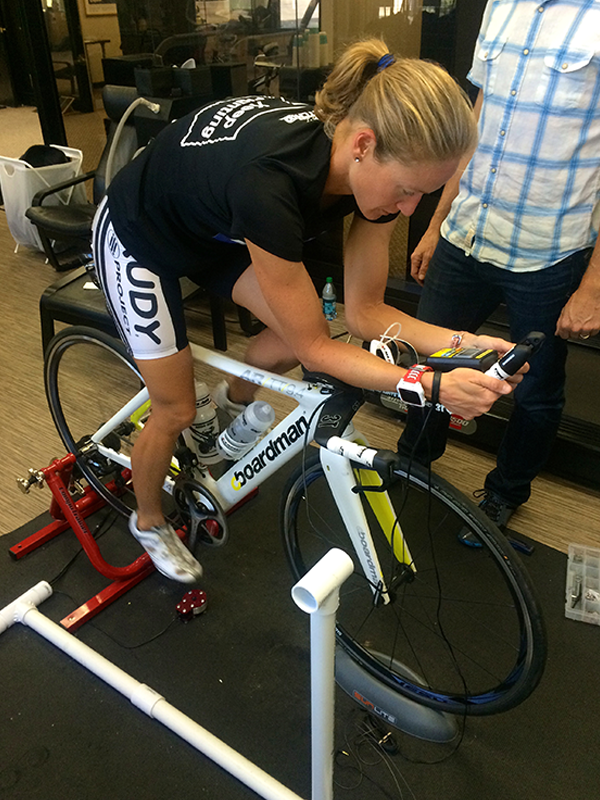
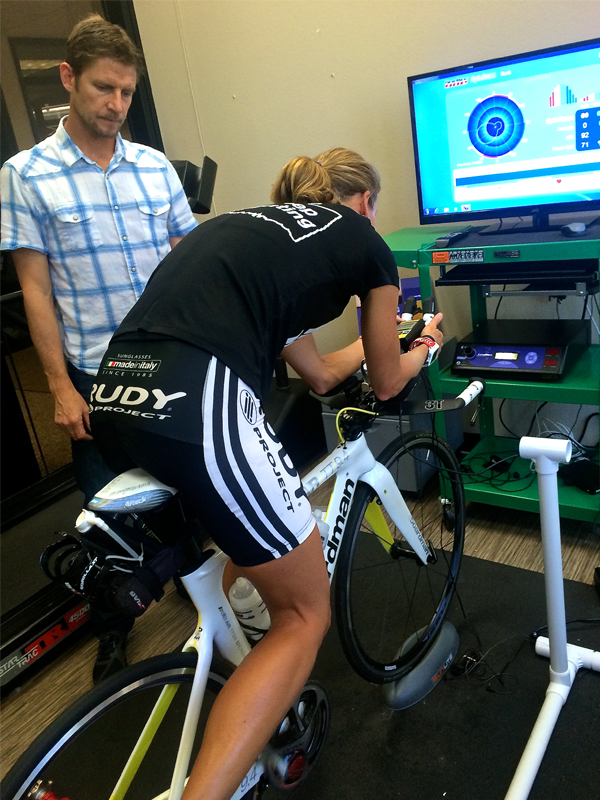
Amanda Stevens—professional triathlete/medical doctor/multiple-time IRONMAN champion/all-the-time rockstar—traveled from Arizona to Laguna Niguel, Calif. for recovery treatment and performance services at Rausch PT on Friday. After spending some time on the table for a little TLC from our A.R.T. expert Lawrence Van Lingen, Amanda hopped on two wheels for a “Bike Right” Advanced Bike Analysis session. Thanks for visiting us, Doc! Good luck this upcoming season, and we’ll see you at your next checkup!
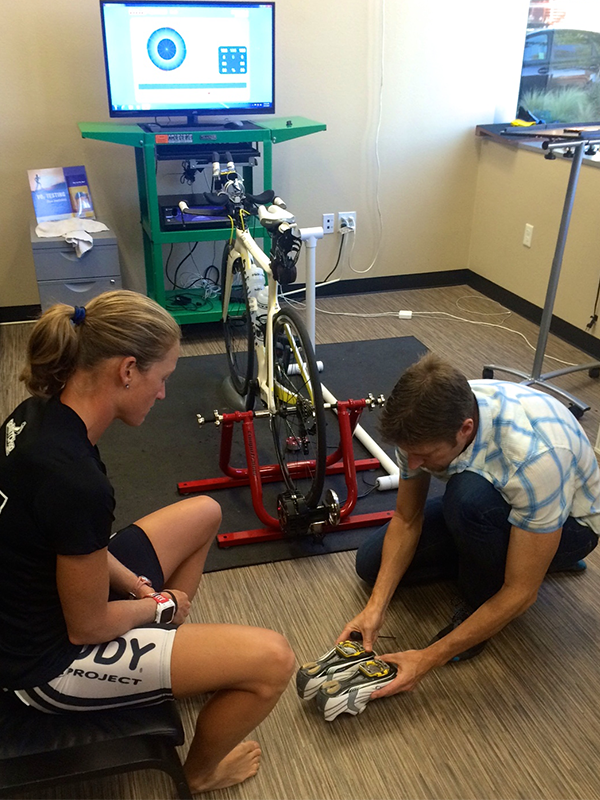
Lawrence analyzing Amanda Stevens on the Bike Right system to check her form to avoid injuries and maximize performance.Bike Right uses video and audio analysis to find cycling form flaws that lead to power leaks and injuries.Lawrence analyzing Amanda Stevens’ shoes to determine if they’re a perfect fit to avoid injuries.
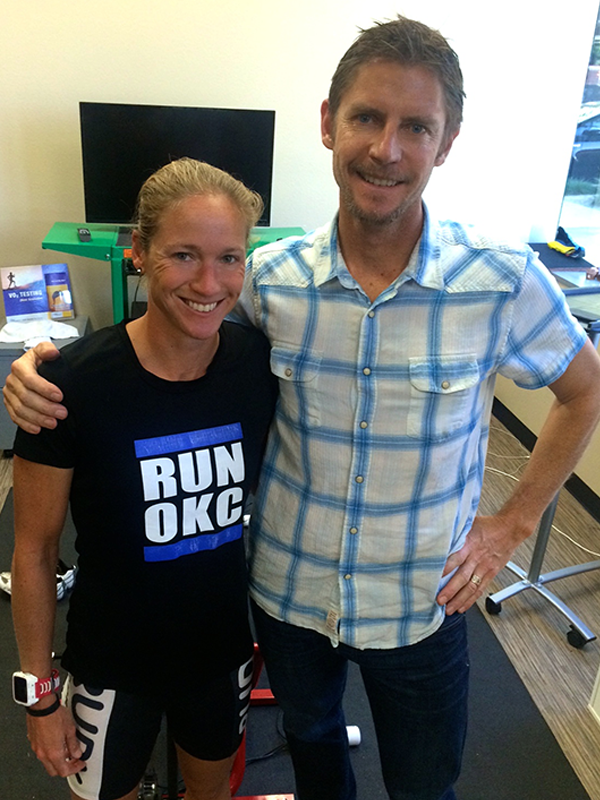
Amanda Stevens with Lawrence, Rausch PT’s sports chiropractor and manual soft tissue therapist.
“So, what can I expect from a physical therapist?” I get this question a lot these days, sometimes it’s from a new patient who’s just starting a rehab program, other times it’s a coach looking for more ways to take care of her athletes’ wellness, and sometimes it’s from doctors wanting to know what goes on in our clinic. It’s a complicated but necessary question to answer… after all you should know just who that person is fixing that aching back of yours, right?
Physical therapist 101
First, you need to know what a physical therapist is and what it takes to become one. Physical therapists have undergraduate degrees in exercise physiology or pre-physical therapy. After we’ve graduated from a four-year college, then comes the fun of “PT school.” This physical therapy clinical doctorate degree program is the real deal: three straight years of intensive and clinical education specifically in the field of physical therapy. It’s where you gain the clinical relevance and assertion to examine what’s ailing patients and figure out the best way to treat it—without medication and without surgery. But physical therapy isn’t all athletes and ankle sprains, physical therapists also learn about Burn Unit-wound care, Assisted Living Facility balance training, Trauma ER fracture positioning, and ICU post-stroke care… just to name a few.
Once we’ve graduated from our 7+ years of schooling, we have to take national and state licensing exams. Always make sure your physical therapist has these licenses to ensure that s/he really knows what s/he is doing before s/he looks at your painfully stiff shoulder and tries to tell you exactly what’s wrong.
#FastPassPT
Rausch Physical Therapy offers #FastPassPT, meaning you do not need a doctor’s referral to receive immediate treatment.
So now you know about it takes for your physical therapist to be able to work in the clinic, but what does it take to get you in here? Well, that’s the easiest part! In 2014, California enacted a law that allows full Direct Access to Physical Therapy, an idea we in the office lovingly call #FastPassPT. Basically, in the past you needed a doctor’s prescription before you could even come into a physical therapy clinic for treatment. However, thanks to the passing of this bill, you can now come directly into Rausch Physical Therapy at any time for any aches, pains, sprains, etc. Well, at least any time we’re open… and you better call first so the front desk staff doesn’t yell at me! That’s why we call it #FastPassPT! It’s just as quick and convenient as those passes that allow you to jump to the front of the line at Disneyland. Of course, there are some injuries that do require a doctor’s exam and treatment (and sometimes even surgery,) which is why we work closely with the absolute best physicians in our area. You can ask us at any time for our short-yet-detailed list of doctors who are specialists in their fields.
Clinic culture
What can you expect when you walk in the doors? Will you get better, or will you just get an awkward massage and a few complicated exercises that are impossible to replicate at home? Well, we work hard here at Rausch PT to make sure it’s the former.
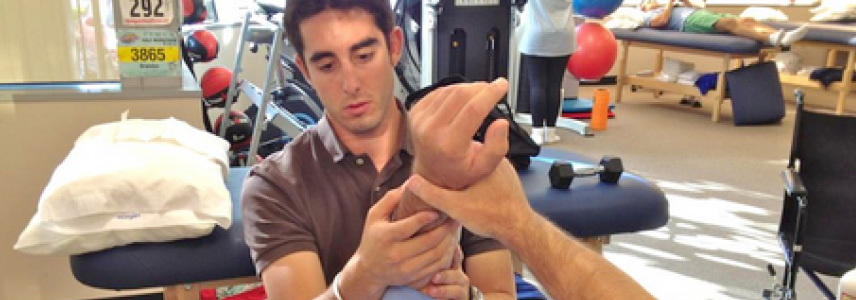
Rausch physical therapist working with a patient.Your experience will go a little something like this: First, we’ll start with a detailed exam of whatever’s ailing you. We look at the injury, the surrounding tissue, and even the faulty biomechanics that caused the injury in the first place. Then, once we’ve identified the specific problematic tissue, we’ll begin treatment. Treatment at Rausch PT looks like a specific and deep tissue rejuvenation treatment to get rid of your restrictions and scar tissue. Then we mobilize your stiff joints and tissues, and follow that up with a personal therapeutic exercise program. This program is built just for you, your specific injury, and your specific goals. It’s not just the blanket “shoulder program” everyone gets—it’s your shoulder program, which includes a personal login for our unique home exercise site, www.homeprograms.net. Finally, we typically end sessions with healing modalities such as ice, stim, laser and taping to help take the pressure off.
Your follow up visits will be directly scheduled with your physical therapist. We don’t dig the traditional “bouncing around” PT thing. In fact, we know that it’s been proven that you get the best and most specific treatment when you see the same physical therapist every visit. All of our physical therapists have unique clinical specialties to ensure we can help you get back to doing what you love. Each treatment week will be filled with progressive tissue work and exercises to push you and get you back in the game as soon as possible.
So, that’s a little glimpse into what we call Rausch PT. But don’t just take my word for it, read some of our Yelp reviews, or better yet, come in and try it for yourself and feel the difference in your overall health and wellness.
Share your best physical therapist experience with us on Yelp, Facebook or Twitter #FastPassPT #GetPT #RauschPT
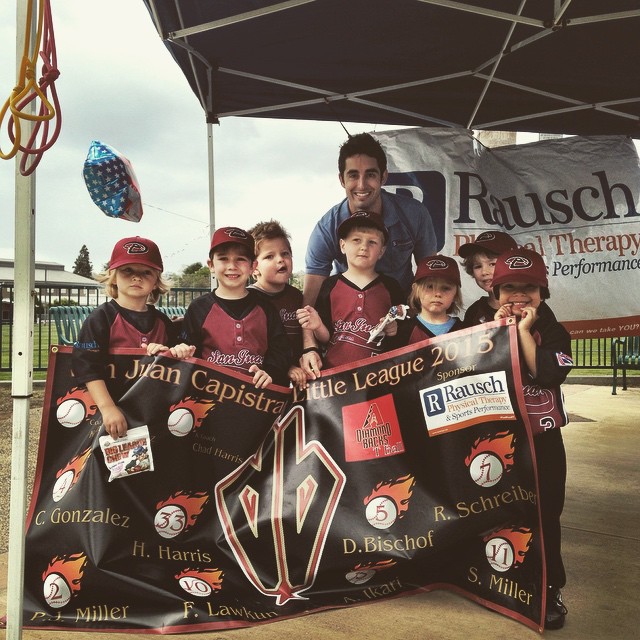
Start ’em young! Jonathan in the community educating little leaguers and their parents about youth baseball injury prevention.
Around the office, they call me “The Baseball Guy.” My years of clinical treatment of ballplayers at Rausch Physical Therapy and Sports Performance, coupled with my interest in biomechanical research, has motivated me to find new ways to reverse the alarming increase in youth baseball arm injuries. In fact, for the past two years I have been developing injury prevention programs for southern Orange County baseball leagues to help protect our youth’s elbows and shoulders.
And it looks like I am not the only one getting on base with this initiative. Major League Baseball and USA Baseball recently teamed up to launch their Pitch Smart program, which is designed to educate parents, coaches and young athletes about how to avoid overuse injuries. It includes information on pitching guidelines, injury risk factors, Tommy John surgery and more.
I have found that out of all the risk factors that can cause injury, the number one is pitching too much, both in a game and in any given year. New research is coming out every month about the correlation of throwing too much and arm injuries in little league athletes. Did you know:
If you pitch more than 100 innings in a year, whether little league, club or showcase, it will increase your risk of injury by 3.5x
If you pitch greater than 8 months in a year, it will increase risk of surgery by 5x
Kids should take off about 2-3 months of competitive pitching in a year and engage in other sports or active rest where they are still using their arms, just not in a pitching motion
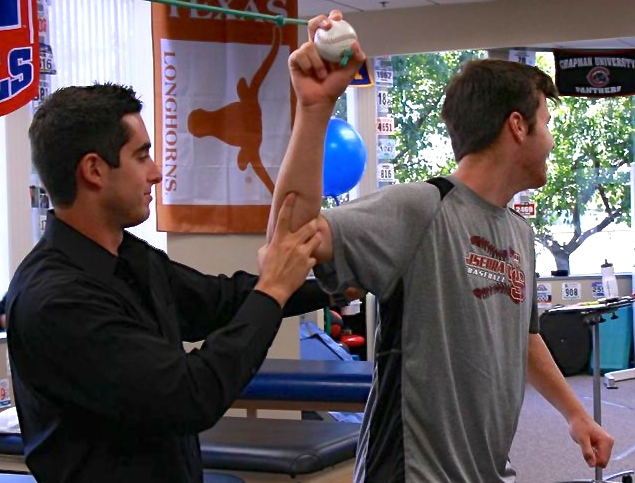
Jonathan taking a patient through Rausch Physical Therapy Throw Right program.
We as medical professionals need to transfer this information to the public so that change can occur in the traditions and schedules of little league baseball. The Pitch Smart initiative proves to me—and hopefully to parents and coaches—how crucial injury awareness and prevention is. I want to take this information and use my skill to prevent, rehabilitate and treat the youth of little league baseball. At Rausch PT, we offer our Throw Right program, which is designed to improve throwing mechanics and decrease risk of injury by evaluating strength, balance and range of motion. It’s a great way for throwing athletes of any age and experience to stay healthy and in the game for many, many years.
If you have any questions about throwing injury prevention or rehabilitation, please send me an email and I will be happy to answer them. For now, take care of those elbows and shoulders!
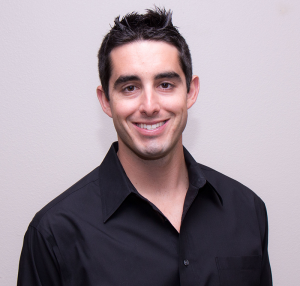
Jonathan Meltzer graduated from the University of Redlands with a bachelor of arts in biology and a minor in physical education. Following graduation, Jonathan discovered his passion for physical therapy while working as a Physical Therapy Aide. After graduating top of his class from Loma Linda University in 2012 with a Doctorate in Physical Therapy, Jonathan began his career at Rausch Physical Therapy and Sports Performance. Jonathan’s goals are to identify limitations and treat his patients with the most recent and innovative techniques in order to maximize functional independence and obtain his patients’ individual goals.