
Blog

4 Most Common Cycling Injuries – and How to Avoid Them

Cycling improves overall function in your lower body and strengthens your leg muscles without overstressing them. It targets your quads, glutes, hamstrings, and calves. Although it’s inherently a low-impact exercise on your joints, there are some precautions people should take. Check out the four most common cycling injuries – and, most importantly, how to avoid them! Need our guidance and support? We are here!

Cycling – whether indoor or outdoor – gets a reputation as a pretty “easy on the body” venture.

After all, while cycling is a great way to strengthen your heart and lungs, it’s inherently low-impact on your joints.

It’s also scalable, making it an excellent workout for cardio newbies and endurance veterans alike.

That said, just like with any exercise, if your technique isn’t on point, cycling injuries are more likely to hit your body.

We’re not just talking about traumatic injuries like a pulled muscle or broken bone from falling off of your bike.

Incorrect set-up and riding mechanics can lead to overuse (aka wear-and-tear) injuries that can very quickly drain the fun from your workouts — or halt them altogether.

Here, experts share the four most common cycling injuries, along with the best ways to prevent aches and pains while cycling.

1. Saddle Sores

Every cyclist knows the literal pain in the butt that starting a biking routine can be.

But sometimes, it’s not just general groin soreness that’s a problem.

Many riders can develop straight-up saddle sores when cycling.

What are saddle sores?

They are patches of skin on the buttocks or groin that, due to friction against the bike seat, get irritated, inflamed, and if they open, can even get infected, explains professional cycling coach Garret Seacat, CSCS.

How to Avoid Them

As common as saddle sores are, they are not OK, or something to just accept will happen.

When getting started with a new bike – or if you have any discomfort – Seacat recommends going to a specialty bike shop to get fitted for a bike seat.

“There is often a device you can sit on that will measure where your sitz bones are,” he says.

When riding, you should be perched on top of these sitz bones (aka the ischial tuberosities) and not scoot back and forth.

Seacat says that when people have rear-end pain, they often look for a wider seat, but a narrower one may actually be what enables you to get into a correct, more comfortable position.

And while you’re at it, buy special cycling shorts.

“When you’re cycling, without a doubt, the best investment you can make is the bike itself, but close behind are cycling shorts,” Seacat says.

Look for a pair ergonomically cut for your biological sex, he says.

Resist the urge to wear underwear with them; doing so increases your risk of chafing.

2. Knee Pain

There’s a reason that patellofemoral syndrome – pain at the front of the knee, around the kneecap – is sometimes called “cyclist’s knee.”

“People who cycle tend to get a lot of knee injuries due to muscular imbalances,” says kinesiologist Jake Harcoff, C.S.C.S.

One primary reason: Cycling develops the quads and hip flexors while keeping them in a shortened, flexed position.

“The quads can get so tight they pull on the tendon that goes over the top of the kneecap,” he explains.

It’s also common for cyclists to have their seats incorrectly positioned, which can dump more stress into overly tight, overworked tendons and ligaments, he says.

How to Avoid It

For immediate relief, check your bike seat’s height. When you stand next to the bike, it should be at hip height.

And when you’re cycling, your knee should never completely straighten, Seacat explains.

(Remember, you should pedal through the balls of your feet, not your heels.)

Over the long-term, focus on integrating posterior-chain-strengthening exercises like deadlifts, hip thrusts, and reverse lunges into your workout routine.

Doing this will strengthen the muscles that connect to the back of your knee, helping to balance out your leg musculature and reduce your risk of cycling injuries, according to Harcoff.

3. Lower Back Pain

Tight hip flexors can make more than your knees ache. They can also throw your lower back out of whack, Harcoff says.

He explains that it’s common to see cyclists have what’s called an anterior pelvic tilt.

With such a tilt, the hip flexors pull the front of the pelvis toward the floor, angling the buttocks upward and making the lower back arch excessively.

That can stress both the spine and the muscles and tissues that help support it.

How to Avoid It

Cycling tightens the hip flexors, so you need to perform stretches dedicated to relaxing them.

Harcoff says one of the best stretches you can do to relieve tension in the front of your hips is the couch stretch.

To perform the couch stretch:

  • Get on one knee facing away from a couch.
  • Raise your back foot until your foot is directly above your back knee, then scoot back to brace your shin against the couch.
  • With your opposite foot on the floor in front of you, squeeze your glutes and breathe. You should feel a deep stretch in your back leg’s hip and thigh.
  • Work up to holding the stretch for 90 seconds or longer, and never push through the pain.

4. Elbow and Wrist Pain

While anyone who keeps their arms locked out or leans forward when cycling is likely to experience some upper-body joint pain, these cycling injuries are most common among people who take indoor cycling classes, Harcoff says.

Because indoor cycling classes typically involve a lot of upper-body movements that use the handlebars, many class-goers (and instructors) lean forward excessively when riding.

As a result, they can stress out their elbows and wrists.

How to Avoid It

You shouldn’t need to put a ton of pressure on your arms to keep from falling forward on your bike whether you’re sitting or standing.

If you’re unable to perform upper-body moves or hold onto the handles without dumping your weight into your hands or locking out your elbows, you likely need to spend the bulk of your time riding upright.

Then, between classes, you can work on developing the core strength necessary to take a more forward posture without potentially irritating your arms.

Focus on stability and anti-rotation exercises like the planks, dead bug, and Pallof press.

Regain strength and reclaim your mobility with Rausch PT. Your physical therapist will create a customized program just for you and your needs. Start your journey to recovery today — (949) 276-5401. Don’t forget to join us on our Facebook page.


You can contact  from https://www.trainabsolute.com to learn more about cycling and endurance training!

Reference: [https://www.beachbodyondemand.com/blog/cycling-injuries]
Why Do I Feel Pain After Exercise?

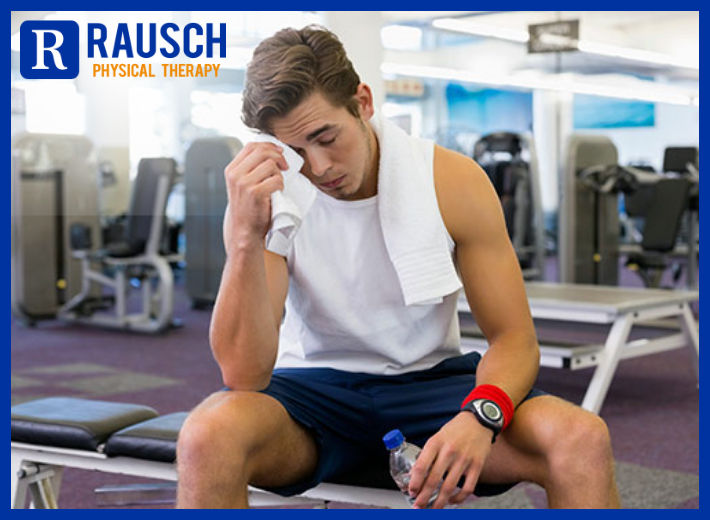
Mild soreness after a workout can cause discomfort but it is generally not a bad thing. It’s just a sign that the muscle has been taxed. The stress on the muscle causes a microscopic breakdown of muscle fibers, which in turn causes discomfort. The muscle breakdown serves a purpose: when those fibers rebuild, the muscle is stronger. This leads us to this funny fact: it’s not working out that makes you stronger, it’s the rest between the workouts. For more information about the pain that you feel after working out, read below.

Have you ever felt sore after starting a new activity or pushing yourself harder than usual during a workout?

Muscle pain that shows up a day or two after exercising can affect anyone, regardless of your fitness level.

But don’t be put off. This type of muscle stiffness or achiness is normal, doesn’t last long, and is actually a sign of your improving fitness.

Why do my muscles feel sore after exercising?

Sore muscles after physical activity, known as delayed onset muscle soreness (DOMS), can occur when you start a new exercise program, change your exercise routine, or increase the duration or intensity of your regular workout.

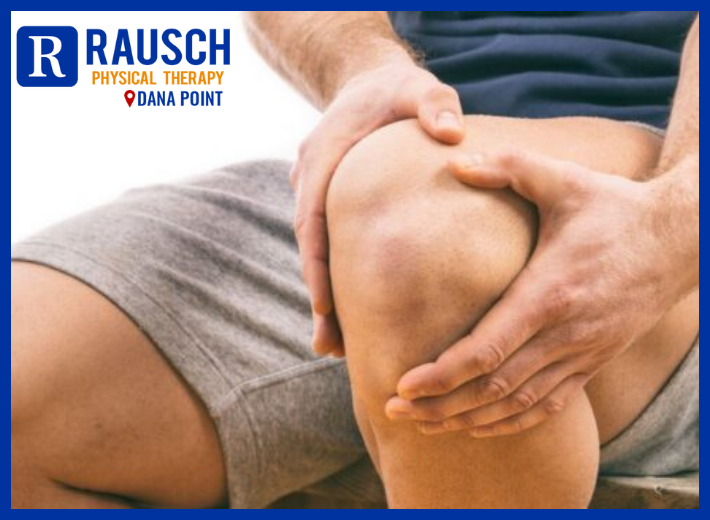
When muscles are required to work harder than they’re used to, or in a different way, it’s believed to cause microscopic damage to the muscle fibers, resulting in muscle soreness or stiffness.

DOMS is often mistakenly believed to be caused by lactic acid build up, but lactic acid isn’t involved in this process.

Who can DOMS affect?

Anyone can develop DOMS, even those who have been exercising for years, including elite athletes.

It can be alarming for people who are new to exercise, and it may dent their initial enthusiasm to get fit. The good news is that the pain will decrease as your muscles get used to the new physical demands being placed upon them.

The soreness is part of an adaptation process that leads to greater stamina and strength as the muscles recover and build. Unless you push yourself hard, you’re unlikely to develop DOMS after your next exercise session.

What type of activities can cause DOMS?

Any movement you’re not used to can cause DOMS – in particular, movements that cause the muscle to contract while it lengthens, called eccentric muscle contractions.

Examples of eccentric muscle contractions include going down stairs, jogging or running downhill, lowering weights (such as the lowering phase of a bicep curl), and the downward motion of squats and push-ups.

How long does DOMS last for?

DOMS typically lasts between three and five days. The pain, which can range from mild to severe, usually occurs one or two days after the exercise.

This sort of muscle pain shouldn’t be confused with any kind of pain you might experience during exercise, such as the acute, sudden and sharp pain of an injury, such as muscle strains or sprains.

How can I treat DOMS?

There’s no one simple way to treat DOMS. Nothing is proven to be 100% effective. Treatments such as ice packs, massage, tender-point acupressure, anti-inflammatory drugs (such as aspirin or ibuprofen), and rest may help ease some of the symptoms.

DOMS doesn’t generally require medical intervention. However, seek medical advice if the pain becomes debilitating, you experience heavy swelling, or your urine becomes dark.

How can I prevent DOMS?

One of the best ways to prevent DOMS is to start any new activity program gently and gradually. Allowing the muscle time to adapt to new movements should help minimize soreness.

There’s little evidence that warming-up will be effective in preventing DOMS. But exercising with warmed-up muscles will reduce your chance of injury and improve your performance.

While stretching has many benefits, there’s currently no evidence stretching before or after exercise helps reduce or prevent DOMS.

Can I continue exercising with DOMS?

You can exercise with DOMS, although it may feel uncomfortable, especially during the warm-up phase. You may find the pain goes away during the session, but returns after exercising once your muscles have cooled down.

If the pain makes it hard to exercise, it’s advisable to refrain from the activity for a few days until the pain eases. Alternatively, you could focus on exercises targeting less affected muscles to allow the most affected muscle groups time to recover.

Will I keep getting DOMS?

DOMS is a type of muscle conditioning, which means your muscles are adapting to the new activity. The next time you perform the same activity, or exercise at the same intensity, there’ll be less muscle tissue damage, less soreness, and a faster recovery.

Just one bout of DOMS actually develops a partially protective effect that reduces the chances of developing soreness in that same activity for the following weeks or months.

Looking for personalized treatment and professionals who care? At Rausch Physical Therapy, we will help you recover, improve mobility, and make sure you’re ready for the next adventure you plan – or life throws your way. Contact us today at (949) 276-5401 and join our Facebook community.


Reference: [https://www.livehealthily.com/sports-injuries/why-do-i-feel-pain-after-exercise]

What to Know About Muscle Soreness

Whether you’ve recently engaged in a particularly intense workout or just a walk around the park, many people believe that muscle soreness after such activities is simply a body’s way of complaining as it gets stronger. Though the sensation is typically nothing to worry about, it’s necessary to know why muscle soreness occurs. In some cases, watch out for the pain that might be indicating a problem to be checked out and come see us if you are concerned. 

Any physical activity that places too much or unusual strain on the muscles can lead to soreness. Everyone can experience muscle soreness, even people who exercise regularly and have good physical fitness.

Muscle soreness can be uncomfortable and disruptive. However, the pain typically disappears within a few days.

This article outlines the causes of muscle soreness and the typical duration of symptoms. We also list the treatments that may help to relieve muscle soreness, along with research into their effectiveness.

Causes

During physical activity, the body’s muscles extend and contract to support movement. Prolonged or repetitive physical activity can overexert the muscles. This activity can lead to muscle soreness.

Overexertion and muscle soreness are more likely to occur after physical activity that differs from normal. This could be due to:

  • exercising more often than usual
  • doing higher intensity workouts
  • performing longer workouts
  • introducing new exercises to a routine

Muscle soreness usually occurs several hours after physical activity. For this reason, doctors refer to the condition as delayed onset muscle soreness (DOMS). Most people experience DOMS at some point, regardless of their physical fitness.

The exact cause of DOMS is still unclear. Some experts believe it may be due to microscopic tears in the muscle fibers, which can develop during exercise. They believe that muscle soreness is the result of the body healing these tears. DOMS is not due to a buildup of lactic acid in the muscles.

How long does it last?

According to the American College of Sports Medicine (ACSM), muscle soreness usually begins 12–24 hours following exercise. The muscle soreness then tends to peak around 24–72 hours after the exercise. After this time, the pain should start to go away.

The level of soreness a person feels during DOMS depends on the type, duration, and frequency of the activity that caused the pain.

It is possible to continue exercising with muscle soreness, but it can be uncomfortable.

Sharp pains that occur immediately after activity could be a sign of injuries, such as strains or sprains. These injuries are the result of a muscle, tendon, or ligament becoming stretched or torn and are more severe than DOMS, possibly requiring medical attention.

Relieving muscle soreness

Muscle soreness is normal and rarely requires medical attention. In most cases, symptoms go away on their own within a few days. In the meantime, it is best to avoid putting too much strain on the injured muscles.

People sometimes recommend the following treatments to alleviate muscle soreness following exercise:

Massage: A qualified sports massage therapist or physiotherapist can provide massages for alleviating muscle soreness. Massages increase blood flow to the injured area, which may promote healing and help to relieve the pain.

Heat therapy: Taking a warm bath or applying heat pads can also stimulate blood flow to the injured muscles. Heat therapy tends to offer only temporary symptom relief.

Cold therapy: Cold packs or immersion in cold water can reduce inflammation and swelling in the muscles. Cold therapy is, therefore, useful as a longer-term treatment for muscle injuries.

Light exercise: Keeping the muscles active may help to reduce pain. It is important to keep the intensity light and avoid movements that put too much strain on injured muscles. Examples of light exercises include walking and gentle stretching.

Pain medication: Over-the-counter nonsteroidal anti-inflammatory drugs (NSAIDs) can help to reduce muscle inflammation and associated pain.

What the research says

A 2012 meta-analysis investigated the effectiveness of four popular DOMS treatments. The meta-analysis included 35 studies, each of which investigated one of the following treatments:

  • massage
  • cold therapy, or “cryotherapy“
  • stretching
  • light exercise

The meta-analysis revealed that massage was effective in treating the signs and symptoms of DOMS in some people. However, the effect was small and was not significant across the group as a whole. There was no evidence to support the use of cryotherapy, stretching, or light exercise in treating DOMS.

A 2011 meta-analysisTrusted Source also found that stretching before or after exercise does not lead to a noticeable reduction in DOMS.

A 2016 meta-analysis investigated whether a type of cryotherapy called cold water immersion (CWI) helps to alleviate muscle soreness. The results showed that CWI was slightly more effective than no treatment. Bathing in water temperatures between 11°C–15°C for 11–15 minutes provided the best results.

Overall, these studies indicate that there are few scientifically proven treatments for DOMS. Those that are effective appear to provide only a slight benefit. Nonetheless, some people may find the treatments helpful.

Importantly, while a treatment may help to alleviate pain, it will not undo the underlying muscle damage or improve muscle function.

Rausch PT wants to help you feel good and pain-free. We prepare your body for whatever it is you want to try next. Keep moving and living life to the fullest. Schedule your appointment today at (949) 276-5401 or visit our Facebook page. Remember, we also offer Rx Massage to enhance your PT treatments — and also to help when you get sore and to increase recovery from hearty exercise or race events.


Reference: [https://www.medicalnewstoday.com/articles/327138#how-long-does-it-last]

5 Warm-Up Mistakes That Can Ruin Your Workout and Leave You Injured

Injuries can happen for many different reasons, but a common one is related to skipping your warm-up before exercising. Not properly preparing for a workout can lead to creaky joints and achy muscles – or worse. Before hitting the weights or heading out for a long run, start with a good warm-up. Here are some tips for warming up the right way and to avoid injuries.

Warm-ups and cool downs are essential to your workouts. Done correctly, warming up may help reduce the risk of injury and improve your athletic performance and results, according to the American Heart Association.

Even though it only takes a few extra minutes, it’s easy to fall into the habit of skipping this essential step before your workout. So before your next sweat session, try a three- to 10-minute warm-up (depending on the length and intensity of your main workout) that includes light cardio to increase your heart rate and dynamic stretches that get your muscles ready to move.

Keep these five tips in mind, and you’ll give your body the best chance to stay healthy and free of injury.

1. Skipping Your Warm-Up Entirely

Avoiding a warm-up may be tempting, especially if you’re pressed for time, but it can do more harm than good.

“The main purpose of the warm-up is to raise the body temperature via increases in your heart rate and blood pressure and loosen tissues to perform work, as well as release hormones associated with exercise,” says Geoff Tripp, CSCS, head of fitness science at Trainiac.

With that in mind, Tripp says the warm-up should closely mimic the types of movements and intensities that you’ll be performing during your workout to prepare the body and brain for what’s to come.

“A short warm-up is better than nothing, but it should be specific, with some intensity to prepare your body for work,” he says.

2. Starting Off With Too Much Intensity

Slow and steady wins the race! A solid warm-up should mimic what you plan on doing in your workout but at a much lighter and gentler pace. Think of it as your workout in slow motion or at a lower intensity.

“We call this style of warm-up dynamic,” says Kelsey Decker, certified personal trainer and Education Coordinator for Stretch Lab. “You are preparing your body for an activity with movement that mimics what you will do in your workout or fitness activity but not at full capacity.”

When you do dynamic movements prior to a workout, Decker says you’re increasing oxygen consumption, blood flow and body temperature before diving straight into full activity.

“When the body is not properly warmed up, you have a higher chance of an injury happening, Decker says.” But if you spend time performing a good warm-up, your body will be ready for more intense activity, according to the American Academy of Orthopedic Surgeons.

3. Doing Static Stretches First

Stretching is vital to your fitness, but only when it’s the right kind of stretching. Decker says there’s a lot of misinformation about stretching and flexibility training, and most of it stems from confusion around the idea of stretching before exercise.

Static stretching (holding a stretch for 30 seconds or more) improves flexibility, increases range of motion and can help increase blood flow and oxygen distribution throughout the body, but it isn’t recommended for warm-ups, Decker says.

In fact, it might even hinder your workout performance. An April 2013 review published in the Scandinavian Journal of Medicine & Science in Sports found that static stretches can reduce muscle strength by nearly 5.5 percent (or more when a stretch is held longer!), cut muscle power by 2 percent and reduce power by nearly 3 percent.

4. Not Warming Up Long Enough

Most of us have been guilty of it at some point: Two minutes on the treadmill, and we’re done with our warm-up!

But the National Strength and Conditioning Association says that an effective warm-up should last between five and 10 minutes and consist of low-to-moderate intensity cardiorespiratory exercise, followed by less intense movements similar to the sport or activity about to be performed.

More specifically, Tripp says that the length of your warm-up is usually determined by a few factors such as the duration and intensity of the activity.

“We usually see that as exercise length increases, intensity lowers, so a less intense warm-up is needed. But as exercise length decreases, and intensity increases, a longer warm-up is beneficial,” he says.

5. Performing the Same Warm-Up for Every Workout

You generally wouldn’t do the exact same workout each day, and Tripp says we should approach the warm-up in a similar fashion. “A warm-up specific to your activity will better prepare your body for the work you need to perform,” he says.

Tripp looks at a warm-up as a very condensed version of the workout, since it prepares the mind and body for what is to come. An easy way to think about this, says Tripp, is that your warm-up is key for optimal performance, injury prevention and reductions in muscle soreness post-exercise.

Push your limits and elevate your performance with a customized physical therapy program.  Let us help you perfect your form and increase performance. Contact our experts today at (949) 276-5401 and join our Facebook community here. Remember, we also offer Rx Massage to enhance your PT treatments — and also to help when you get sore and to increase recovery from hearty exercise or race events.


Reference: [https://www.livestrong.com/article/13728066-warm-up-mistakes/]

Patient Spotlight- Dr. Renee & Brooke

Initially, Brooke came to Rausch PT in January of 2021 with left hamstring pain.

Brooke plays basketball on her High School Varsity team as well as on a club team. Up until she began her rehab at Rausch PT with Dr. Renee, Brooke was playing through this hamstring pain until it got to the point where playing basketball was unbearable. Brooke initially started her treatment for this hamstring strain but as the pain didn’t subside, it was recommended to see a doctor and he highly suggested an MRI. The results came back showing that she had a herniated disc in her back (L5S1) that was pressing down on the nerve running down her left leg, which was causing the hamstring pain. When she returned to physical therapy with Dr. Renee, they started with a new set of exercises to try to push the disc back in place and alleviate her nerve pain. Even with extensive physical therapy and a steroid shot as well, Brooke still continued to have pain in her leg. After talking with Dr. Renee and her parents, it was decided that surgery was the best option at that point.

At the end of April 2021, Brooke got a microdiscectomy, and the doctors were able to successfully remove part of the disc that was pressing on her nerve.  She returned back to Rausch PT after the surgery and continued to work with Dr. Renee throughout her recovery and she remains pain-free to this day. With a combination of her surgery and dedication to her PT, Brooke was able to fully recover and get back to the same level of basketball that she was at pre-surgery and is now happily back to playing basketball with her teams!

Brooke’s life has improved tremendously as a whole through physical therapy. Throughout her pre and post-surgery physical therapy treatments, she was able to learn more about her body and how she could manage injuries in the future. Brooke now has a better understanding of what she can do and when she needs to stop pushing herself as an athlete. She contributes a lot of the mobility exercises that helped her move better and ultimately lead to her successful recovery. It was important for her to address the tightness in her hips, so Dr. Renee had her work through different exercises to open them up. Along with some exercises such as “open books” and nerve glides, she also contributes the additional deep tissue massage and cupping at Rx Massage that she added to her rehab in order to reach her ultimate successful recovery.


RauschPT-logo

Let’s talk! We are here to help. Give us a call for a complimentary consultation. We would love to meet you.

Did you know there’s no prescription needed from a doctor to see us – but we will communicate your progress and treatment to your doctor if you’d like us to! (949) 276-5401
    

Disclaimer — All the information that you find on our blogs and social media pages is for informational purposes only and is not intended to be used as your personal professional diagnosis, or treatment. Come and see us for your excellent, personalized care! https://staging.rauschpt.net/

Learn How to Improve Your Running Speed With These Simple Tips

Running is a great and motivating exercise. Many new runners, however, struggle to keep challenging their bodies and increase their speed and performance. If that is your goal, this article brings interesting insights on how to improve running, highlighting the role of muscle memories and muscle groups to improve speed.  

For the art of running, endurance is the basic building block. But to push yourself to excel, it’s important to have a decent amount of speed in your stride.
It’s important to understand, however, that increasing speed is not just about pushing yourself in every run. There is a systematic approach that involves strengthening specific muscles, adjusting your form and even training your muscles to retain data, or muscle memory.
Here are tips from Adidas Runners’ coaches from Bengaluru, Anil Mahoba and Rashmi Gupta, on how to improve running speed.


How does muscle memory come into play?

While working on speed interval training, the muscles start to get used to working at a specific pace for a specific amount of time. Accordingly you can understand how much your body can be pushed for greater speed.
For example, if you constantly cover five kilometres in 30 minutes, your body gets used burning a certain amount of energy to maintain a steady pace to complete the course in that time.
“When you do your normal run, your legs have muscle memory. Once you do speed workouts, and later go for your normal run, with the muscle memory you realise you did a run at a faster pace than normal,” says Gupta.
“Once you start enjoying your speed interval training, the muscles build up memory and just move along.”

Which muscle groups have to be worked on to increase speed?

The main muscle groups responsible for speed are the quadriceps, hamstrings and glutes.
“Glutes are the biggest muscles in your body, they hold your body erect,” Gupta adds.

Which workouts can help increase speed?

Planks are a good way to increase strength in the core. For seasoned runners, either increasing the duration of a plank or adding weights on your back is a good way to increase core strength.
“Squats, weighted squats, lunges and weighted lunges are very handy,” says Bengaluru-based Adidas runners coach Anil Mahoba.
“Then you can use the bouncing ball to help balance, because running is all about balancing on one leg as you stride. You can also work with resistance bands.”
Weight exercises do have merit, for both the upper and lower body. But it’s advised not to use heavy weights.
“Go for lighter weights, but more reps and functional exercises. Around 5kg or 7.5kg weights are adequate. Anything heavier means you’re starting to bulk up (which reduces flexibility),” Mahoba says.
“If you do use heavier weights, then reduce repetitions.”

Does form make a difference?

Yes, and it is very important for speed.
The arms play a big role, but they only activate if they’re swinging straight front and back, and not sideways. The movement helps the forward drive, and just tweaking a possible side-to-side movement to front-back movement tends to bring about significant improvement.
Then there’s the head positioning.

“Looking down is not good,” explains Gupta. “When you look down and run, the oxygen intake capacity decreases. You should always look forward, keep your chin parallel to the ground and run.”


In terms of the lower body, the push should be forward rather than the legs pushing into the ground.
The posture needs to be nice and straight without a slouch, which can be improved with strength training.
“The core of our body, neck to pelvis, that region has to be very stable when we run. Even though it’s an activity that focuses mainly on your lower body, if the upper body is not straight, the lower body will not be able to manage it,” she adds.
It’s also important to understand that ‘form’ does not just pertain to running, but also in the gym during training.
“[For running,] form is very important when you do any kind of workout – not the number of reps – which people tend to forget. When the adrenaline kicks in and you are pumped up, you forget what your body is doing,” Gupta says.

Is there an element of natural running form that does not need to be tinkered with?

Yes. Gupta encourages the natural landing stride – which is what area of the foot lands first – should not be changed.
“We have something called heel-striker, mid-foot striker, fore-foot striker. About 95% of runners all over the world are heel-strikers. I was a heel-striker. When I tried to change it to mid or fore-foot strike, I started developing pain in my arches. That’s the point I realized that when your body is used to a certain running form for a long amount of time and it’s not giving you problems, don’t change it,” she concludes.


Physical therapy prepares your body for whatever it is you want to try next. Let us help you boost your performance while preventing injury.  Come meet our team! (949) 276-5401. Check out our Facebook page here.

Don’t forget to mark your calendars for Tuesday’s TNR! You don’t want to miss it — fun and unexpected things always happen. Literally 𝙚𝙫𝙚𝙧𝙮𝙤𝙣𝙚 is welcome to join — from runners to walkers, strollers, and dogs, all ages and fitness levels.

➡️ EVERY Tuesday at 6 pm — we meet at Rausch Physical Therapy & Sports Performance — 30100 Town Center Dr # Y/Z, Laguna Niguel, CA 92677).📱 Call us at 949.276.5401 today to learn more.

Reference: [https://www.redbull.com/in-en/how-to-improve-running-speed]

MUSCLE SPASMS: HOW TO PREVENT LEG CRAMPS

Muscle spasms – What are they anyway? Muscle spasms occur when your muscle involuntarily and forcibly contracts uncontrollably and can’t relax. And they can be mad painful! They can happen during or after exercise (and often at night) and with no warning whatsoever! Read on to find out the factors which cause muscle spasms and ways to prevent them from happening.

Muscle spasms like calf cramps can be a painful companion on the path to your fitness goal. Muscle fibers contract unexpectedly and sometimes without warning, causing pain. This can happen during or after exercise (and often at night).

The most commonly affected areas are the calves, feet, and thighs. A muscle cramp can sneak up on anyone – from beginners to professionals.

WHAT CAUSES LEG CRAMPS

For a long time it was believed that fluid or mineral imbalances were the main cause of muscle cramps. However, to date there is no evidence on what really causes muscle cramps. What we know is that the cramps are connected to how the motor neurons function.

Still, different factors might be contributing to cramps:

  • heavy training loads
  • high temperatures
  • ageing
  • diabetes
  • lack of sleep
  • as well as the fluid and mineral imbalances (magnesium, potassium etc.)

Most likely a combination of these will lead to chaotic electrical impulses in the muscles, which then cause a painful cramp.

A lot of people suffer from muscle spasms and are woken up in the middle of the night by the sharp pain of calf cramps. One reason for this may be that the level of magnesium in the body drops while we’re sleeping. If it gets too low, it can result in painful leg cramps. We can take action to prevent this and stretch during the day when we notice the first signs. Unfortunately, it’s usually too late when we notice muscle contractions at night, and the pain wakes us up.

Good to know:

Cramps can be experienced in different forms. Generally, if a cramp is caused by fatigue, most likely during exercise, it is usually localized in one muscle (like calf cramps) and happens suddenly. However, cramps might also develop over time, be felt on both sides, and be accompanied by lots of sweating and other signs of dehydration.

WHAT TO DO IF YOU GET A MUSCLE CRAMP

If you experience a muscle spasm while you are working out, take a short break from your activity. There is still no evidence-based treatment, but the following approaches seem to be helpful for many cases of muscle cramps:

  • Hydrate: Replacing water and electrolytes lost during exercise is advised. Even if this won’t be a remedy for everyone, avid exercisers who are more prone to cramps are likely to benefit from this approach.
  • Stretch: If the cramp is caused by fatigue due to excessive training load, you will probably find relief through light stretching and massage. Stretch the affected muscle gently while you have the cramp to help release some tension.
  • HeatHeat relaxes your muscles. Try a warm compress on your calves or a relaxing bath to prevent muscle contractions.
  • Massage: Massage stimulates your circulation, which helps loosen your muscles.

But the best thing is not to let it get this far.

HOW TO PREVENT MUSCLE CRAMPS

Here are a few tips for preventing muscle cramps:

  • Keep your muscles loose. Incorporate stretching and relaxation exercises into your training plan and massage your legs (or better – get a massage).
  • Eat a balanced diet and include minerals. Magnesium comes in different forms, one of which is effervescent tablets. It is also found in whole-grain products, green vegetables, and bananas. Good sources of calcium, which is essential for muscle contraction, are dairy products, spinach, and egg yolks.
  • Give yourself time and increase the workout intensity graduallyYour body first needs to get used to the new training sessions.
  • Even if dehydration is not the main cause of cramps, drinking enough fluids during sports is importantespecially on hot days (or if you sweat a lot during your workout).

Do you have problems with any kind of pain or injury? Do you have questions on how to improve your PR’s  – or just recover from a nagging injury? Let us help you get back into action and boost your performance — all while preventing further injury. Get in touch with our team today at (949) 276-5401 or on our Facebook page.


Reference: [https://www.runtastic.com/blog/en/muscle-cramps/]

Shoulder Impingement

Shoulder impingement is a common potential cause of shoulder pain. However, this condition is often misunderstood. This article will help you better understand shoulder pain and ways to treat it. Although this pain can be frustrating and impede on your life, the good news is in most cases, it responds well to conservative care, such as physical therapy. Rausch PT can help you understand your pain and address the proper way to heal.

What is shoulder impingement?

Shoulder impingement is a common cause of shoulder pain. It’s also known as impingement syndrome or swimmer’s shoulder, since it’s common in swimmers. It’s also common in other athletes who use their shoulders a lot, such as baseball or softball players.

Your rotator cuff is a group of muscles and tendons that attach your upper arm bone to your shoulder. They help you lift and rotate your arm. The rotator cuff sits under the top of the shoulder, which is called the acromion. If you have shoulder impingement, your rotator cuff catches or rubs against the acromion. When you lift your arm, the space (bursa) between the rotator cuff and acromion narrows, which increases pressure. The increased pressure irritates the rotator cuff, leading to impingement.

What are the symptoms?

The main symptom of shoulder impingement is sudden pain in your shoulder when you lift your arm overhead or backward. Other symptoms include:

  • minor but constant pain in your arm
  • pain that goes from the front of your shoulder to the side of your arm
  • pain that gets worse at night
  • shoulder or arm weakness

What causes it?

Many cases of shoulder impingement are caused by overuse. Repeated use of the shoulder can make the tendons in your shoulder swell, leading them to “catch” on your upper shoulder bone. In other cases, there’s no known cause.

Who’s at risk of having it?

Playing sports that require using your shoulders for overhead or forceful motion is the biggest risk factor for developing shoulder impingement. Common activities that could cause this include:

  • swimming
  • tennis
  • baseball

Occupations that require lots of heavy lifting or arm movement also increase your risk. These include:

  • construction work
  • moving boxes
  • painting

Both old age and previous shoulder injuries, such as a dislocation, are also risk factors for shoulder impingement. Some people also have an unusually shaped acromion that increases their risk.

How is it diagnosed?

Your doctor may start by asking you some questions about any previous injuries as well as your exercise habits. Next, they may ask you to do a series of motions using your shoulder while they check for any unusual movement. This will also help your doctor rule out other conditions, such as a pinched nerve.

In some cases, you may also need an X-ray to rule out arthritis or check for bone changes, such as a spur, that could lead to impingement.

If your doctor thinks that you have a more serious rotator cuff injury or they still can’t diagnose you, they might use an MRI scan to get a better look at your shoulder.

How is it treated?

There are many types of treatment available for shoulder impingement, depending on how severe your case is.

Home care

Rest is very important when it comes to treating shoulder impingement. Avoid strenuous exercise or any movements that make the pain worse. This is especially important if you’re an athlete

While it’s best to not move your shoulder too much, avoid using a sling to immobilize your arm completely. This can lead to more weakness and stiffness in your shoulder.

Try placing an ice pack on your shoulder for 10 to 15 minutes at a time, a few times a day, to reduce pain and any swelling you might have.

Physical therapy

Shoulder impingement usually responds well to physical therapy, which uses gentle exercises to rebuild strength and range of motion. Your doctor can refer you to a physical therapist who specializes in shoulder injuries.

Your physical therapy sessions will likely focus on the muscles in your shoulder, arm, and chest, which can help to improve the function of your rotator cuff. If you’re an athlete or work in a field that requires frequent use of your shoulder, your physical therapist can teach you proper techniques to reduce your chance of recurrence.

They may also give you some exercises that you can do at home, which may help you recover faster. Just make sure you don’t overdo it.

Medication

Taking nonsteroidal anti-inflammatory drugs, such as ibuprofen (Advil, Motrin), can help reduce swelling and shoulder pain. If these medications, along with ice and rest, don’t reduce your pain, your doctor might prescribe steroid injections to reduce swelling and pain.

Surgery

If other treatments don’t seem to work, you may need surgery to widen the space around your rotator cuff. This allows it to move freely without catching or rubbing on your bone. This can usually be done with minimally invasive arthroscopic surgery, though more severe cases may need traditional open surgery. A recent study has questioned the benefit of removing the bone just for impingement.

In rare, advanced cases of shoulder impingement, your rotator cuff can tear. If this happens, you’ll likely need surgery to repair the tear.

Following any type of shoulder surgery, you may need to briefly wear an arm sling. Your orthopedic surgeon will determine when you can remove the sling.

Recovery time

Shoulder impingement usually takes about three to six months to heal completely. More severe cases can take up to a year to heal. However, you can usually start returning to your normal activities within two to four weeks. Just make sure you regularly check in with your doctor to make sure you aren’t overdoing it. This can increase your recovery time or lead to other injuries.

Exercise do’s and don’ts

During your recovery from shoulder impingement, you should avoid any activities that involve throwing, especially with your arms overheard, such as tennis, baseball, and softball. You should also avoid certain types of weightlifting, such as overhead presses or pull downs. If you’re a swimmer, you should take some time off from training to allow the recovery process to progress.

While it’s important to rest your shoulder, you can do some light exercising to strengthen your rotator cuff and stretch the muscles in your arm, shoulder, and chest.

Try these exercises:

  • Stand with your arms at your sides and your palms facing forward. Squeeze your shoulder blades together and hold for five to ten seconds. Repeat a few times.
  • Stretch your arm straight in front of you and move it forward using only your shoulder. Then move your shoulder as far back as you can without moving your neck or back, or bending your arm.
  • Lie on your unaffected side and bend your top arm in a 90-degree angle. Keep your elbow on your hip and rotate your lower arm up toward the ceiling. Repeat 10 to 20 times.
  • Stand in a doorway, holding the side of the frame with your arm slightly below shoulder height. Turn your upper body away from that arm until you feel a slight stretch, and hold.

If any of these exercises cause pain, stop doing them or try holding them for a shorter period of time.

Living with shoulder impingement

While shoulder impingement can be painful and affect your daily activities, most people make a full recovery within a few months. In many cases, you’ll just need some rest and physical therapy. If those don’t provide relief, you may need surgery, which can add a few months to your recovery time.

Physical therapy is a natural and healthier solution to many pain problems. Our team can teach you proper techniques to reduce your chances of recurrence. If you’re facing shoulder impingement symptoms or other conditions, try a PT session. Find our team at (949) 276-5401 or meet us on our Facebook page.


Reference: [https://www.healthline.com/health/shoulder-impingement#exercise]

Benefits Beyond The Mat

Yoga has been practiced by individuals for over a thousand years. It was said that yoga was meant to bring about awareness to a person’s self with the universe. Now, yoga is practiced in various settings and continues to show its health benefits towards individuals who practice almost daily. Even in the field of physical therapy, we incorporate different poses into our patients’ therapeutic exercise routines so they can receive the benefits and improve their overall health. 

Decreased Low back Pain 


Since the start of the COVID-19 pandemic, many individuals were required by the “stay-at-home” mandate to work from their homes. This forced individuals to create home offices. Many patients who experience lower back pain come into physical therapy to find relief and manage their back pain. There are certain yoga poses we demonstrate to patients that they can use to alleviate it. For example, the child’s pose can create an elongation of the muscles in our lower backs, which helps reduce tension. As shown in the picture above, the individual should gradually lower their bodies until their glutes are touching the heels of their feet. For an added stretch, extend your arms above your head and feel a gentle stretch in your shoulders.

Improving Flexibility


As time goes on and we age, our bodies begin to become stiff. This can lead to injuries such as muscle strains when performing quick movements. Performing daily can improve our flexibility in different areas of our bodies. Finding different poses to improve flexibility can reduce the risk of injury. Poses such as the downward dog (as shown in the picture above) can create length in our hamstrings and calf muscles. When these muscles are at an optimal length, injuries are less likely.

Improving Strength 


In addition to flexibility, there is also a strength component that goes along with yoga. Poses where you hold positions for a certain length of time can assist in increasing functional strength, as well as core strength. For example, performing poses such as the boat pose (shown above) can increase core strength. As you continue to incorporate yoga into your daily routine, you will start to notice an increase in your strength. 

Managing Stress 


Not only does yoga bring about physical benefits, but it also improves our mental health. Being able to perform meditation with yoga can decrease stress levels. When we are stressed, our body’s immune system is lowered, which can cause a spike in illnesses such as the common cold. By allowing ourselves to take a break and to reflect on our breathing patterns, we gain mental clarity. Try sitting in a crossed-legged position with your hands on your knees, eyes closed, and focus on breathing from your diaphragm.

Starting Out 

While there are many benefits of performing daily yoga, individuals who are beginning to incorporate yoga into their daily routines should consult with their healthcare provider to determine if they are ready. Starting with 15 minutes 2 times a week is good for beginners. Always start out easy and ease yourself into the poses. As you begin to see a difference in your overall strength and flexibility, you can gradually increase the frequency of your practice.

Let’s talk! We are here to help. Give us a call for a complimentary consultation. We would love to meet you.

Did you know there’s no prescription needed from a doctor to see us – but we will communicate your progress and treatment to your doctor if you’d like us to!
(949) 276-5401


Disclaimer — All the information that you find on our blogs and social media pages is for informational purposes only and is not intended to be used as your personal professional diagnosis, or treatment. Come and see us for your excellent, personalized care! https://staging.rauschpt.net/

How To Increase Your Stamina For Running

Running is an activity that unites people of all age groups across the world. However, some might find it hard to get started or improve. That’s why knowing how to develop running stamina becomes essential. Read more about some heartily followed Golden Rules on how to increase your running performance. Also, a good physical therapist will provide you the tools and resources to build resilience and physical capacity for your exercising routine. That’s us! Come see us to avoid injury, recover, or enhance your performance.

Exercise keeps you healthy in mind and body. Engaging in any kind of sport, whether it is swimming, running, basketball or football, requires stamina. Running is an activity, which unites people of all age groups across the world. Therefore, knowing how to develop running stamina becomes of the essence.

Exercise keeps you healthy in mind and body. Engaging in any kind of sport, whether it is swimming, running, basketball or football, requires stamina. Running is an activity, which unites people of all age groups across the world. Therefore, knowing how to develop running stamina becomes of the essence.

Running stamina is a word that is universally used to express your body’s capacity to sustain effort or to cover huge distances at a fast pace. Running is a sport that encourages us to challenge ourselves each day and improve from being a novice to an experienced and skilled runner. You are at the perfect destination if you’re looking to find some tricks and tips about improving your running stamina. Read our blog to learn how to run more miles, faster, with the same effort.

Table of Contents

  1. How to Increase your Stamina for Running – In general
  2. How to Increase Running Stamina – For Beginners
  3. How to Increase Running Stamina – For Speed
  4. How to Increase Running Stamina – On a Treadmill
  5. Other Running Tips and Techniques
  6. FAQs

1. How to Increase your Stamina for Running – In general

Follow the following golden rules to increase your general stamina for running:

  • Slow and steady wins the race: Patience is key when it comes to improving your running stamina and time. Set small milestones for yourself. For instance, if you run a mile every day, increase it by 10% the following week. An incremental increase will help you avoid injury and will increase your lung capacity.
  • Be consistent: Consistency is an integral part of any sport. Develop a running schedule and keep up with it. You can also include other exercise regimens if you want.
  • Walk, walk and walk: Walking significantly improves running stamina and builds endurance. You should include walking in your daily routine, as it is a stepping-stone to improved running stamina.
  • Interval RunsMany health experts suggest interval runs which increase efficiency and aid you in covering long distances without being bummed out. All you need to do is alternate between walking and running or between slow and fast running. It is that simple!

2. How to Increase Running Stamina – For Beginners

As a beginner, there are certain things that you should always keep in your mind. Eventually, they will become a habit for you. Begin improving your posture, muscle strength and balance.

  • Gradually increase mileageYou should work towards eventually improving mileage as it ensures improved stamina and also reduces the risk of injuries.
  • Eat healthy: Running requires an ample amount of calories. A balanced diet of vitamins, minerals and proteins is essential for you. Avoid junk foods and packed foods with preservatives.
  • Warm-up: Warming-up is not an option. Exercises like spot jumping and body rotations are a necessity as they help avoid injury.

3. How to Increase Running Stamina – For Speed

You can increase your running speed and endurance through the following ways:

  • Ensure speed in long runs:  Experts suggest that fatigue is a given at the end of your running sessions. So, try to defeat it by maintaining your pace even in the last few minutes of your workout.
  • SprintsSprint intervals facilitate endurance and speed in runners. This training is quite intense and is recommended for trained runners.
  • Strength and drill Training:  Strength training strengthens your leg muscles and prepares them for injury-free running. Drill training like acceleration strides boost your running speed and improve coordination.

4. How to Increase Running Stamina – on Trademill

Follow the suggestions mentioned below to improve your treadmill running stamina:

  • Stay hydrated While working out on a treadmill, the cooling effect on your body is less as compared to when you are outdoors. Therefore, staying hydrated before and after your running sessions is crucial.
  • Incline: Running on the treadmill requires a particular posture and style. Inclining your body to a specific degree can increase your stamina on the treadmill. Certain experts suggest an incline of 0.5 to 1%.
  • LIT and HIT: Health experts suggest a healthy combination of low and high-intensity training to burn extra calories and improve your stamina. HIT is exhausting but very productive. These training routines transform your body and improve your endurance. Try them out today!

5. Other Running Tips and Techniques

These bonus tips for increasing your running speed, stamina and endurance can make your life easier

  • You can always mix it up! Go out for running on alternate days of the week or combine your running sessions with other workouts.
  • Ensure that your running shoes haven’t lost their grip as that can lead to serious injuries. It is better to be safe than sorry!
  • Your mental strength plays as much a role in your health as physical exercise. If you hit a plateau, don’t lose faith in yourself. Your optimism and mental strategy can help you overcome any snag. Be patient and continue training.
  • Listening to music while running can be a great source of enthusiasm and resilience. Run to the rhythm and beats of the song to exercise longer and better!
  • Stamping your feet on the ground while running can cause a lot of pain. Try to land softly, on your heels. Being comfortable while exercising is very important.

6. Frequently Asked Questions (FAQs)

  • How can I increase my lung capacity for running?

First and foremost, start slow. Remember that running naturally deprives the body of oxygen. If you’re a beginner, it is normal to feel breathless. The greater is your lung capacity, the more oxygen they can hold. Therefore, it is imperative to improve your lung capacity to build stamina. There are a plethora of breathing exercises, which can increase the endurance and capacity of your lungs. Try them out today! Also, make sure that you use both your nose and your mouth to breathe. The more air in your lungs, the more is your stamina.

  • What should I do before running?

Stretching your body and warming up is extremely important before running. Giving yourself a head start improves your stamina and endurance. Some common warm-up exercises include single-leg squatting, walking hip stretch, lizard and walking lunge. Warming up activates the systems of the body, increases alertness and loosens the muscles so that the chances of injuries are less. Even simple warm-up sessions with exercises like spot jumping are essential. No matter what sport you engage in, always remember to warm up first. Keep this in mind and all is golden!

  • What is a good running technique?

A good running technique is clean, saves energy, increases endurance and speed, and reduces the risks of an injury. An important component of your running technique is your posture. Make sure that your upper body is straight, your eyes look ahead and your shoulders are relaxed.

You also need to ensure that you have a strong core. Incorporate core-strengthening exercises in your routine to train your core and provide stability to your body. Finally, indulge in ABC drills. These are exercises that improve your coordination. For instance, a straight-leg run involves keeping your body straight, pointing toes upwards and swinging your arms next to your body.

Whether you are a beginner or an expert, the running techniques and tips that we discussed can positively impact your running stamina. If you’re running on a treadmill or in the park, technique always comes into play.
Without the right technique, you might be simply wasting your time exercising without any concrete results. At times, it’s better to work smarter than work harder.

We want to remind you that any kind of workout that you engage in takes time to give results.
Improvement is not a magic wand that will go swish! And boom! You’ve lost 10 pounds. It doesn’t work like that. Be resilient and consistent with your running schedule. Once you are ready to put your heart and soul into the activity, the above-mentioned tips and techniques will guide you along the way to becoming a running maestro! Run smarter, better, longer and faster!

Whether you are a 5k beginner or a competitive marathoner, it’s important to keep in mind all the ways to avoid injuries. Our team can teach you more about how your running can benefit from physical therapy. Schedule an appointment at (949) 276-5401 or contact us on our Facebook page. 

Don’t forget, we have a Tuesday Night Run (TNR) group full of AWESOME people — all levels of runners! We meet at 6 PM (Rausch Physical Therapy – 30100 Town Center Dr #Y/Z, Laguna Niguel, CA 92677) and have a great time! Learn more on our Facebook page.


Reference: [https://blog.decathlon.in/articles/how-to-increase-your-stamina-for-running#article-body]

4 ways you make running harder than it should be and how to fix them

We are always looking for ways to get faster while running, but instead of looking at the things to make you faster, let’s focus on the things that are slowing you down — and work to minimize their effects. 

Sitting too much:

We spend a lot of time sitting: sitting in the car, sitting at work, sitting at school, and sitting in front of the TV. The list goes on and on. Sitting may be comfortable and a useful low energy position, but it can be killing your running ability. By sitting on your glutes, you are deactivating the most powerful and important muscle for running. You are putting your hip flexors in a shortened position which will reduce your ability to extend your hips, another key part of running. 

The Fix:

Get up and move!! This is one of the easiest ways to combat too much sitting. Get up and move around every 20 min or so, add some deep squats, lunge anything to get you out of that seated position for a litte. This is where a sit-to-stand desk can come in handy, allowing you to spend time in alternate positions. Also, shoot for a minimum of 5000 steps a day. These can add up quickly: Just walk to places you would otherwise drive to, park a little farther away or go for a short walk during your lunch break. 

Slumping while sitting:

As if sitting by itself wasn’t bad enough, we tend to sit in a slumped posture with our heads jutted forward to try and be closer to the computer screen or looking down at a desk all day. This will make everything mentioned above worse, plus it affects your upper body posture. Your head will move forward, which will place more strain on your lower back as you try to hold your “bowling ball” with outstretched arms instead of close and stacked over your pelvis. Your shoulders are rounded which will reduce your ability to complete a natural arm swing motion while both running and walking.

The Fix:

Again, getting up and moving around is the most important fix. No posture is truly bad, the only bad part is how long you stay in any given posture. Check the ergonomics of your desk, and make sure you bring your computer screen towards your face — not your face towards the screen. Stretch your pecs in the doorway or while lying on a foam roll to balance out the rounded posture. 

Bad footwear:

Many people spend a lot of time discussing the importance of X or Y type of running shoes and why each one is special or “faster”. But no one really puts much focus on the shoes they wear most of the day. You can wreak havoc on your feet by wearing hard, stiff, lifted heel shoes all day that stiffen up and weaken your feet’s joints and muscles, making it hard for your feet to complete their job as your initial contact to the ground while running. 

The Fix:

Try and get shoes with thin and flexible soles that allow your feet to move freely on the ground and adjust to variances in terrain and make the muscles of your feet work. Even better: Try to fit in some barefoot time every day. You can add a little bit of barefoot running in grass or sand to the end of your runs to help your feet remain strong and flexible, allowing you to run better. 

You just run to run: 

Running is a great way to exercise and improve your overall fitness, but there are many things outside of running you can and should do to prepare yourself to run further, better and faster. Ideally, you get into running with some level of fitness behind you or you build your way slowly and with the proper progressions. Instead, you run the same speed, distance, and/or route over and over. 

The Fix:

Get your running form looked at by a professional to optimize your stride and become more aware of how you’re running. It’s also to mix up the distances and paces at which you run to create varying stresses that your body must adapt to in order to make you a stronger and more resilient runner. There are also plenty of great strengthening and alternative aerobic training activities that can greatly improve your running. 

Also, remember that physical therapy can also be a preventative approach! A licensed physical therapist can help evaluate and assess you for any mobility restrictions or muscular imbalances and recommend a proper program!


Clay Simons

clay@rauschpt.net

Did you know there’s no prescription needed from a doctor to see us – but we will communicate your progress and treatment to your doctor if you’d like us to!  (949) 276-5401

Disclaimer — All the information that you find on our blogs and social media pages is for informational purposes only and is not intended to be used as your personal professional diagnosis, or treatment. Come and see us for your excellent, personalized care! RauschPT.net

Seven Scapula-Focused Exercises to Help You Swim Faster

Most overhead athletes, especially swimmers, know that strengthening the rotator cuff is important for performance. While rotator cuff strengthening is a vital part of maintaining shoulder joint stability and proper joint mechanics, many swimmers, unfortunately, overlook the shoulder blade, the scapula. All that work on stabilization at the shoulder joint/rotator cuff is pointless if the shoulder blade itself is not stable.

Understanding the Scapula

The scapula contains the glenoid fossa, where the humeral head sits and is actively anchored in by multiple structures, mainly the rotator cuff musculature. Because it does not have a direct articulation with the spine or ribs like a typical joint would, the scapula must be controlled by multiple muscles that anchor it to the axial skeleton to provide a stable platform for the humerus (arm) to move on.

Your posture has a big effect on scapular stabilization. For example, the common “forward head/rounded shoulder posture” forces the scapula to alter its path as it moves over a more rounded rib cage into a more forward position (adducted.) This causes the scapular stabilizers to sit in a stretched position, causing the muscles to fire outside of their optimal position and weaken them through the prolonged stretch.

Before you can start working to improve your scapular mobility for a stronger stroke, you first have to learn how to properly recruit the muscles of the scapula. I suggest reading my colleague Sean Swopes, PT, DPT, CSCS article, How to Activate Your Scapular Muscles to Alleviate Pain, to learn how to do this correctly and achieve optimal posture.

Seven Scapula-Focused Exercises to Help You Swim Faster

Once you understand exactly how the scapula needs to move, you can begin an exercise program that helps improve your scapular mobility and posture, creating a stronger platform for your shoulder to help you swim faster.

FR: T/S Extensions and Supine Angels
Serratus punches/push-ups
Rows (isometric scap)
I’s, T’s, Y’s
Prone 90/90s
While lying on the SB in the same position as for I’s, T’s, or Y’s, raise your arms to shoulder height with good scapular squeeze then rotate your shoulders 90 degrees so that your arms are even with your shoulders and hands up next to your head, hold this position for 2-3 sec then lower your hands down toward the floor and relax your arms. 3×10
SB walkouts
Step overs
Hold a good plank position with hands directly under your shoulders, step your hand sideways up onto a small step then step up with the other hand and down on the other side. 3×10


Clay Simons

clay@rauschpt.net

Did you know there’s no prescription needed from a doctor to see us – but we will communicate your progress and treatment to your doctor if you’d like us to!  (949) 276-5401

Disclaimer — All the information that you find on our blogs and social media pages is for informational purposes only and is not intended to be used as your personal professional diagnosis, or treatment. Come and see us for your excellent, personalized care! RauschPT.net